Yes, Ash of Gods: The Way is worth playing in 2026—especially if you want a compact, story-heavy strategy game that blends lane-based card combat with the pressure of a difficult journey. Its presentation is rough around the edges and its campaign can feel repetitive, but the tactical core remains smart, tense, and far more distinctive than another disposable deckbuilder.
Developed by AurumDust and released on Steam in 2022, The Way is both a standalone follow-up to Ash of Gods: Redemption and an approachable entry point into the setting of Terminum. You play as Finn, a young man trained to survive a brutal card game used by the powerful. The setup sounds strange until the battles start: every match is a compact war of lanes, armor, positioning, timing, and calculated sacrifice.
What makes The Way different from other deckbuilders?
The first thing to understand is that Ash of Gods: The Way isn't trying to be Slay the Spire with a fantasy skin. You don't climb a randomly generated tower, stack absurd relic combinations, or endlessly refine one perfect run. Instead, the game delivers a curated campaign with hand-built encounters, narrative decisions, training matches, and a growing collection of cards.
Combat takes place across four horizontal lanes. Units are deployed into those lanes, then attack opposing cards or push damage toward the enemy's side. A unit's position matters because a powerful attacker in the wrong lane can spend several turns hitting a blocker while an undefended lane becomes a liability. You also need to read the board before committing cards: an apparently safe attack can expose a fragile archer, waste a protection effect, or leave you without enough bodies to stop the next wave.
The card pool is built around units, equipment, and skills rather than a single resource gimmick. Units establish the frontline; equipment improves or modifies them; skills create sudden swings in damage, defense, or tempo. The result is closer to a tactical skirmish than a traditional card duel. You win by assembling a formation that works, not merely by drawing the highest numbers.
That structure is also why the game remains replayable after the main story. You can approach the same encounter with an aggressive damage deck, a defensive formation, or a build focused on improving a few durable units. The campaign's fixed battles won't offer infinite variety, but they do give your deck choices a clear purpose.

🎮 Ash of Gods: The Way
Looking to experience this game? Grab your digital key directly on our store for $7.49.
View on Steammoz Store →How the tactical combat actually works
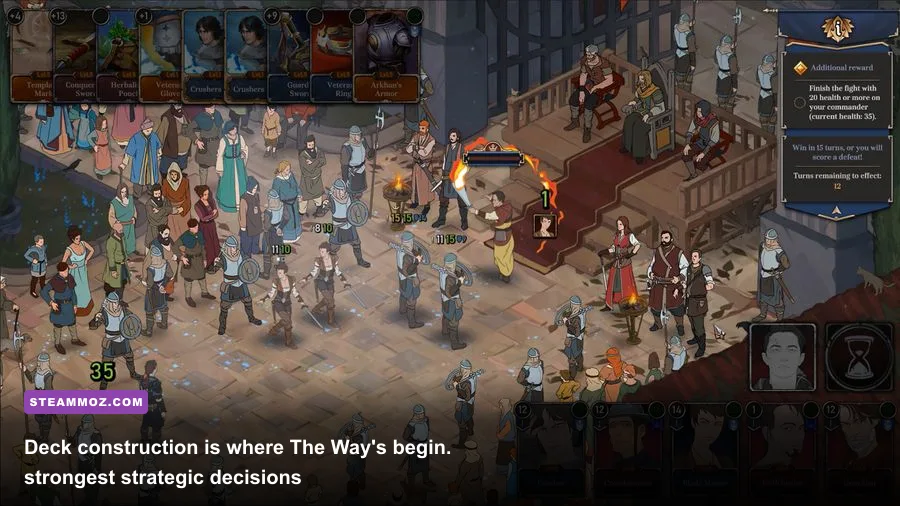
The most important combat lesson is simple: don't treat every card as immediate damage. A unit that survives one extra turn can be worth more than a larger unit that dies after a single attack. This is particularly true when equipment or skills reward a developed board. Think in terms of turns, not individual exchanges.
Frontline units absorb pressure and keep lanes occupied. Ranged units are safer when protected, but they become poor investments if your opponent can reach them immediately. Skills are strongest when they convert an existing advantage into a decisive push. Playing a buff on a unit that is about to be destroyed feels good for half a second; holding it until the opponent commits often wins the entire lane.
Armor creates another layer of decision-making. A heavily protected unit can blunt repeated attacks, but armor isn't a license to ignore positioning. Several smaller attacks, piercing effects, or a coordinated strike can still remove it. Conversely, wasting multiple cards into a fortified defender is one of the fastest ways to lose control of the battlefield.
| Combat role | Best use | Common mistake | Practical correction |
|---|---|---|---|
| Frontline unit | Hold a lane and buy time | Deploying alone without follow-up | Support it with equipment or a second body |
| Ranged unit | Deal safe pressure behind a blocker | Exposing it to an open lane | Place protection first, then attack |
| Equipment | Turn a survivor into a win condition | Using it on a disposable card | Wait for a unit likely to survive two turns |
| Skill card | Break a key lane or save tempo | Spending it for minor damage | Use it when it changes the board state |
The campaign teaches these ideas gradually, but it occasionally assumes you've learned them faster than you have. If a battle feels unfair, look at the replay from the first two turns. Most losses begin with an overextended lane, a premature skill, or a hand clogged with expensive cards.
Deckbuilding, progression, and the best early approach
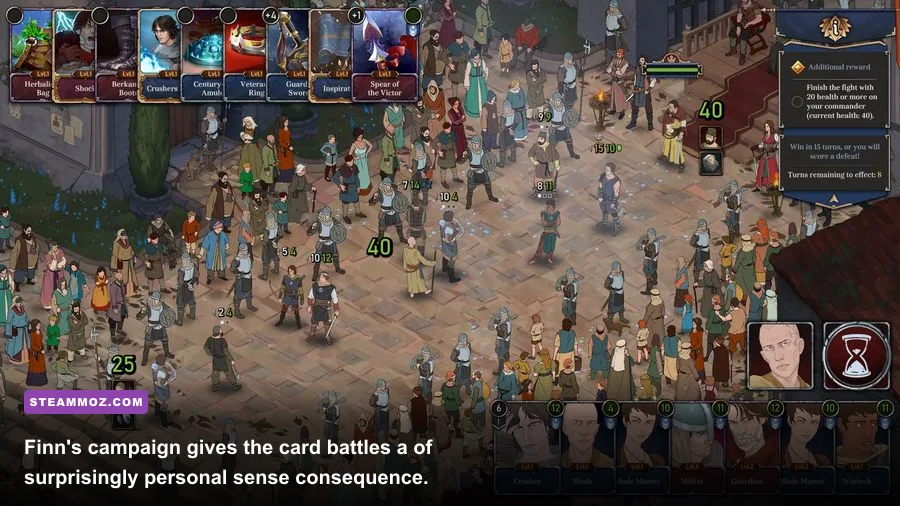
Finn's deck evolves through story progress, rewards, and card purchases. The best early approach isn't to collect everything. Build a deck with a reliable curve: enough cheap units to establish the first turn, a stable middle of durable attackers and support cards, and only a handful of expensive finishers.
New players should resist the temptation to replace every starting card immediately. Starter cards are often valuable because they give you consistency. A deck full of impressive high-cost units may look stronger in the collection screen, but it will lose if the opening hand can't contest two lanes. Keep your early deck focused, then test additions one at a time so you know which card actually improved the list.
There are also different combat schools and card identities throughout the campaign, and each encourages a slightly different rhythm. Some battles reward direct pressure; others are built to punish aggression with durable blockers and counterattacks. Don't force one deck to solve every encounter. Changing a few cards before a difficult match is part of the intended loop, not an admission that your main strategy failed.
| Deck plan | Priority | Strength | Weakness |
|---|---|---|---|
| Wide pressure | Cheap units across multiple lanes | Excellent tempo and board coverage | Struggles against efficient area control |
| Armored core | Protect a small number of durable units | Wins prolonged exchanges | Can lose before the engine starts |
| Ranged support | Blockers plus protected ranged attackers | Strong lane-by-lane damage | Collapses when the backline is exposed |
| Skill tempo | Use tactical effects to swing turns | Can punish predictable formations | Weak if the opening hand lacks units |
My recommendation is a wide-pressure core with enough protection to keep one attacker alive. It teaches the game's fundamentals better than an overly defensive list, and it doesn't depend on drawing one specific card. Save your most dramatic effects for the turn when they either remove a blocker or secure a lane; small, visible gains are less important than changing who controls the board.
Story, choices, and presentation in 2026
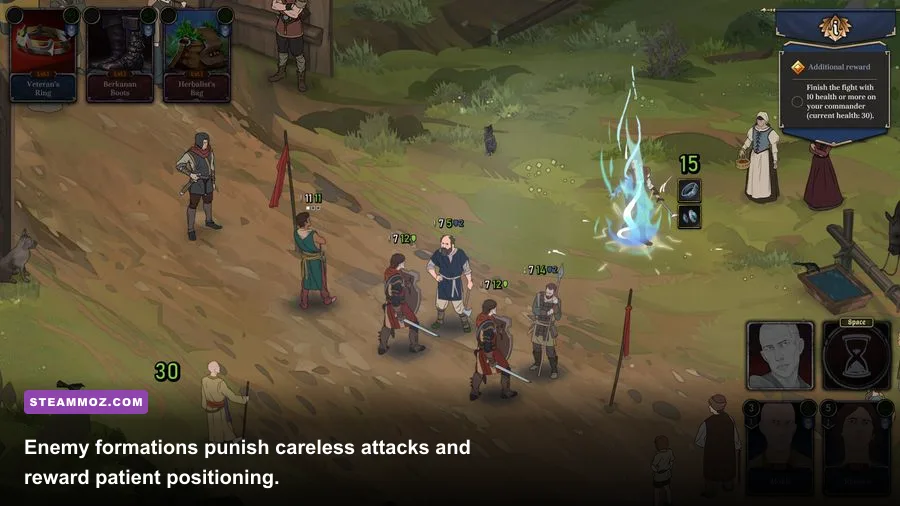
The story is one of The Way's strongest reasons to exist. Finn's journey through Terminum isn't just an excuse to connect matches. Dialogue choices shape relationships, alter the tone of scenes, and give the campaign a sense of momentum. The writing can be melodramatic, but it commits to a bleak fantasy world where loyalty, survival, and political power rarely line up neatly.
You don't need to play Redemption first, although returning players will catch more references and recognize the setting's larger conflicts. The game does a reasonable job explaining its immediate stakes. Finn's personal motivation keeps the opening accessible, while later chapters widen the lens toward the world around him.
The hand-drawn art remains distinctive, especially during character portraits and illustrated story moments. Animation is limited and some interfaces feel dated, but the visual identity is much stronger than the production budget suggests. The soundtrack also understands restraint: quiet travel scenes and tense match setups have more atmosphere than their simple presentation might imply.
The catch is pacing. Some narrative stretches interrupt the tactical flow, while certain battles feel like variations on an earlier lesson rather than meaningful new tests. If you need a constantly escalating roguelike challenge, the fixed campaign may feel restrictive. If you enjoy seeing a strategy game build toward authored set pieces, that structure works in its favor.
For more story-focused comparisons, Steamoz's Fade to Silence review covers another harsh journey where atmosphere carries as much weight as mechanics.
Performance, value, and the 2026 verdict

Ash of Gods: The Way is a lightweight PC game by modern standards. Its 2D presentation and modest battlefields don't demand a powerful graphics card, and the game is better judged by its interface responsiveness and loading behavior than by visual spectacle. A mouse and keyboard remain the best way to manage cards, inspect the battlefield, and make precise lane decisions.
The larger question is value. The campaign offers a focused experience rather than a bottomless one, and its appeal depends heavily on whether you enjoy replaying authored tactical encounters. It isn't the ideal purchase for someone searching for multiplayer competition or an endlessly expanding live-service deckbuilder. It is a strong pick for players who want a complete single-player strategy game with a clear narrative finish.
| Player type | 2026 recommendation | Why |
|---|---|---|
| Story-driven strategy fan | Buy | Choices and battles reinforce one another |
| Competitive card-game player | Try on sale | Good tactics, but no equivalent ranked ecosystem |
| Roguelike deckbuilder fan | Try on sale | Curated campaign instead of procedural runs |
| New strategy player | Buy | Readable lanes and gradual mechanical learning |
| Graphics-first player | Wait for a discount | Atmospheric art, but limited animation and effects |
Before buying, check the official Steam page for current editions, controller information, and platform details. The AurumDust developer site is also worth visiting if you want to see how the studio connects The Way to the wider Ash of Gods setting. The official Ash of Gods website provides additional world and series context.
For general PC troubleshooting, Steamoz's guides to turning stutters into smoother performance and locking a stable 60 FPS are useful references, although The Way itself is far less demanding than either comparison suggests.
Final verdict: 8/10. Ash of Gods: The Way is worth playing in 2026 if you want tactical card battles with a beginning, middle, and end. Its best encounters make every lane feel like a separate emergency, and its story gives each hard decision a human cost. The rough pacing and limited replay structure keep it from becoming a genre classic, but the combination of authored storytelling, deliberate deckbuilding, and tense four-lane combat still feels refreshingly focused. Grab it at full price if you already love narrative strategy games; otherwise, a sale makes this an easy recommendation.