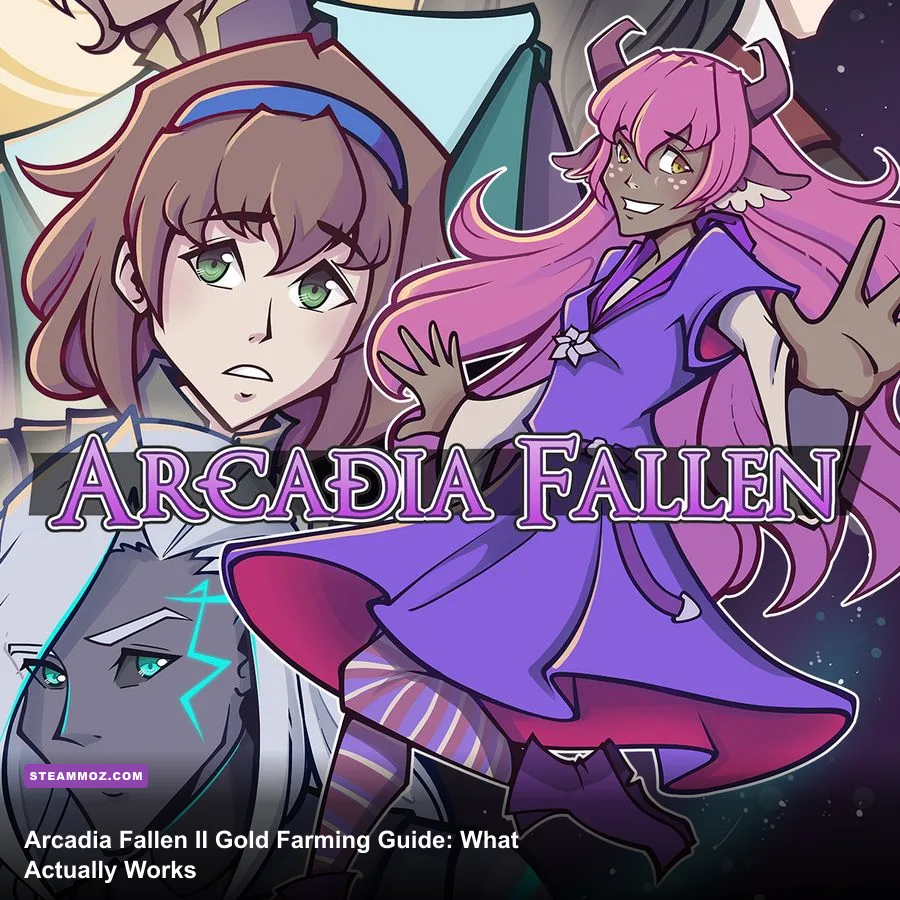
Short answer: there is no verified release of Arcadia Fallen II, and the original Arcadia Fallen does not contain traditional character levels, gold drops, respawning enemies, or a farmable currency loop. That means the usual “fast leveling and gold farming” route doesn’t exist. The efficient strategy is to solve alchemy puzzles cleanly, search each scene before advancing, avoid wasting consumables, and treat dialogue decisions as your real progression system.
That distinction matters because plenty of search results now blur the first game with an imaginary sequel or invent systems that simply aren’t there. You won’t find a dungeon called Emberdeep, a gold multiplier, a best early weapon, or an enemy camp that resets every in-game day. If a guide promises those things, it’s sending you in the wrong direction. This guide separates confirmed mechanics from speculation and gives new players the fastest practical route through the game that actually exists.
Arcadia Fallen on Steam is a narrative adventure from Galdra Studios. The official store page describes its focus clearly: you play an alchemist caught in a conflict involving spirits, magic, and a dangerous spreading corruption. Its systems reward observation and decision-making, not repeated combat encounters.
First, understand what Arcadia Fallen II actually is
As of this guide’s publication, Galdra Studios has not announced a released game titled Arcadia Fallen II through the official channels commonly used for the series. The playable title available on PC is Arcadia Fallen, released in 2021. It is a choice-driven adventure with visual-novel presentation, exploration, character bonding, and puzzle-based alchemy.
The original game has no conventional experience bar. Anja does not gain levels after battles because there is no normal battle loop. There are no strength, agility, intelligence, or luck attributes to distribute. Likewise, the game does not use a standard gold economy for buying swords, armor, or healing items. You can’t improve your run by killing the same group of monsters for an hour.
That doesn’t make efficiency irrelevant. It simply changes what “leveling” means. A fast player is someone who understands the alchemy interface, checks interactive objects before leaving a scene, and makes deliberate relationship choices without constantly reloading. A wealthy player, in the language of a conventional RPG, is really a player who avoids missed interactions and doesn’t burn time chasing nonexistent loot.
| Common RPG expectation | Arcadia Fallen reality | Best replacement strategy |
|---|---|---|
| Experience points | No traditional XP or character-level system | Complete story objectives and alchemy puzzles |
| Gold drops | No confirmed repeatable gold-farming economy | Inspect scenes and collect every available interaction |
| Enemy grinding | No conventional combat farming route | Use clues, dialogue, and puzzle logic |
| Gear upgrades | No standard weapon-and-armor progression | Invest attention in recipes and relationship outcomes |
| Daily respawns | No confirmed reset loop for resources | Make each visit count before progressing the story |
For official updates, check the Galdra Studios website and the developer’s official announcements rather than relying on scraped “sequel” pages. Until a real sequel is announced with a published systems breakdown, any claimed Arcadia Fallen II gold route should be treated as unverified.

🎮 Arcadia Fallen II
Looking to experience this game? Grab your digital key directly on our store for $23.99.
View on Steammoz Store →The fastest legitimate progression route in Arcadia Fallen
Your best route is a disciplined three-pass routine for every new location. First, advance the conversation far enough to understand the immediate objective. Second, inspect the entire screen for clickable objects, characters, and environmental clues. Third, open the alchemy interface and solve every available recipe before leaving, provided the game has already supplied the relevant ingredients or clues.
Don’t click through dialogue at maximum speed. Arcadia Fallen hides useful context in conversations, and puzzle prompts often become easier once you understand why a character needs a particular solution. Read the objective, inspect nearby evidence, then return to the relevant character. This is faster than guessing, failing, reloading, and repeating the same conversation.
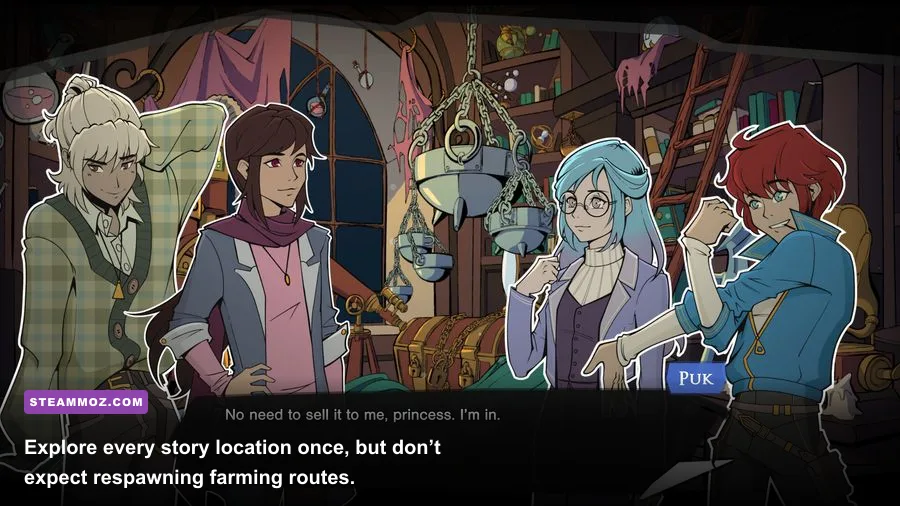
When a scene contains several interactable objects, sweep from left to right and then check the foreground. That simple habit prevents the most common form of “lost progression”: leaving a location before examining a clue that would have made the next alchemy step obvious. The game generally expects you to notice relationships between ingredients, symbols, and narrative hints rather than memorize a combat recipe.
There is also no advantage to hoarding every possible decision for a mythical endgame build. Your choices shape conversations, character relationships, and story outcomes. They don’t create a permanent damage multiplier or unlock a hidden gold bonus. Choose based on the kind of Anja you want to role-play, and save before major decision points if you want to explore alternate outcomes later.
| Stage | What to do | Why it saves time | What not to do |
|---|---|---|---|
| Objective setup | Read the current goal and speak to the relevant character | Reveals the puzzle’s narrative context | Guess at recipes immediately |
| Scene sweep | Inspect characters, containers, signs, and unusual objects | Finds clues before the area changes | Leave after the first dialogue |
| Alchemy pass | Review available ingredients and test only logical combinations | Reduces failed attempts and backtracking | Combine items randomly |
| Decision point | Save before a major relationship or story choice | Makes alternate outcomes easy to view | Reload every minor line |
This is the closest equivalent to a fast-leveling build. There are no stat priorities to optimize, so your real advantage is information. A careful first pass beats a rushed player who spends the next 20 minutes retracing the same hallway.
How to handle alchemy without wasting attempts
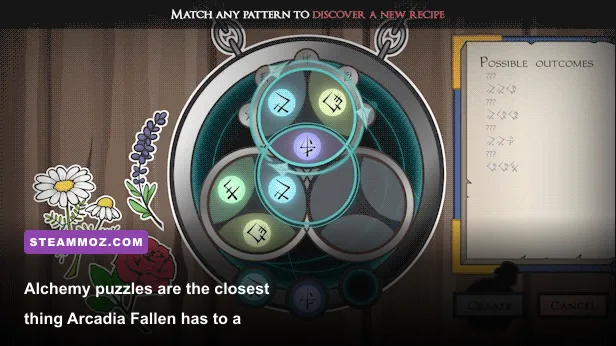
Alchemy is where players most often assume Arcadia Fallen has a hidden resource grind. It doesn’t. The puzzle system is designed around reading clues and identifying the intended transformation, not repeatedly crafting items to sell. You should approach every recipe as a logic problem with narrative evidence attached.
Start by identifying the requested result and the properties the scene has already emphasized. If a character describes an effect, treat that description as a clue rather than flavor text. Then inspect ingredient names, visual symbols, and any available recipe information. Keep track of what each item appears to represent. This prevents the classic mistake of trying every combination simply because the interface allows it.
Use a small handwritten or digital note for combinations you’ve already tested. That sounds excessive for a short adventure, but it’s useful if you’re pursuing an alternate route or replaying after a choice. The note should record the result and the context, not just a raw ingredient string: “cooling effect helped with the heat problem” is more useful than a list you can’t interpret later.
Failed experiments are not a gold loss because the game is not built around buying replacement ingredients with currency. Still, random experimentation costs time and can obscure the intended clue chain. If a recipe won’t work, stop and return to the scene. You probably missed a conversation, visual prompt, or environmental interaction rather than needing a rare drop.
For players coming from heavier RPGs, this is a major mindset shift. Don’t search for an S-tier catalyst, a legendary cauldron, or an alchemy skill tree. Arcadia Fallen’s strength is that the puzzle is connected to the story. The answer should feel earned by understanding the situation, not by grinding a higher crafting stat.
Where the “gold farming” misconception comes from
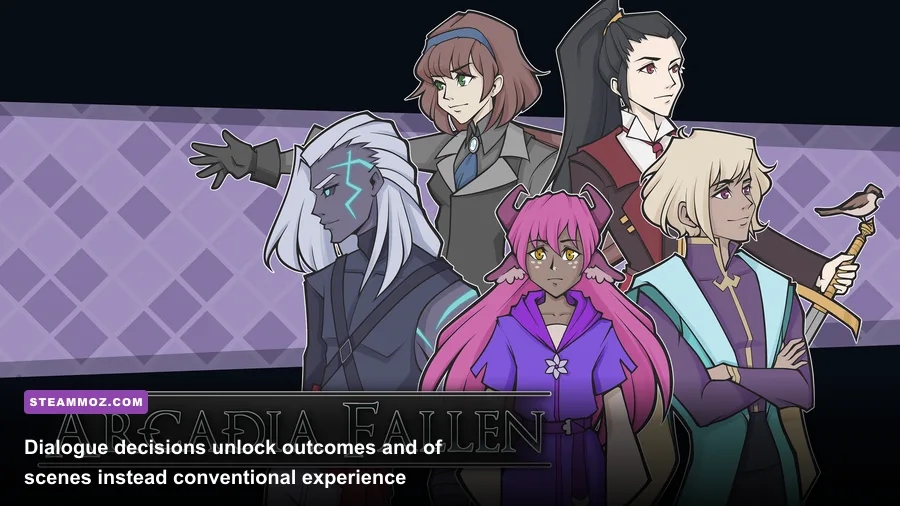
Search traffic around the game often mixes up several different ideas: resources in other fantasy RPGs, walkthrough language that calls progress “rewards,” and speculation about a possible sequel. In Arcadia Fallen, completing a scene can feel like earning a reward because it unlocks new dialogue, relationship moments, and story information. That is progression, but it isn’t gold farming.
There is no confirmed route where you travel between a town merchant and a respawning wilderness zone, sell monster materials, rest, and repeat. There is also no official evidence for an exploit involving menu resets, dialogue reloads, or duplicated alchemical ingredients. Be suspicious of guides that provide exact gold-per-minute figures without naming a real in-game currency screen or a repeatable location.
The same warning applies to “best gear” claims. The game’s protagonists and companions are important because of their personalities and choices, not because one character has a hidden 25 percent critical-hit passive. A guide that lists weapons, armor tiers, or numerical damage scaling is almost certainly describing another title.
| Claim you may see online | Verified status | Practical advice |
|---|---|---|
| Farm gold in a respawning dungeon | Not supported by the original game’s documented structure | Ignore the route and focus on scene completion |
| Grind enemies for XP | Arcadia Fallen is not built around conventional combat grinding | Read objectives and solve alchemy puzzles |
| Buy stronger weapons with gold | No standard weapon economy is established | Don’t save currency for a nonexistent vendor upgrade |
| Duplicate ingredients through a menu exploit | No reliable official confirmation | Avoid unofficial downloads and cheat tools |
| Arcadia Fallen II has a finalized farming meta | No verified released sequel system to analyze | Check official developer and Steam announcements |
If you’re looking for a game with a genuine economy loop, our Banners of Ruin farming guide covers a title where money, deck progression, and repeatable runs really do matter. For a different kind of resource hunt, see our Blood Rush secret locations guide.
Relationship progression is the real build system
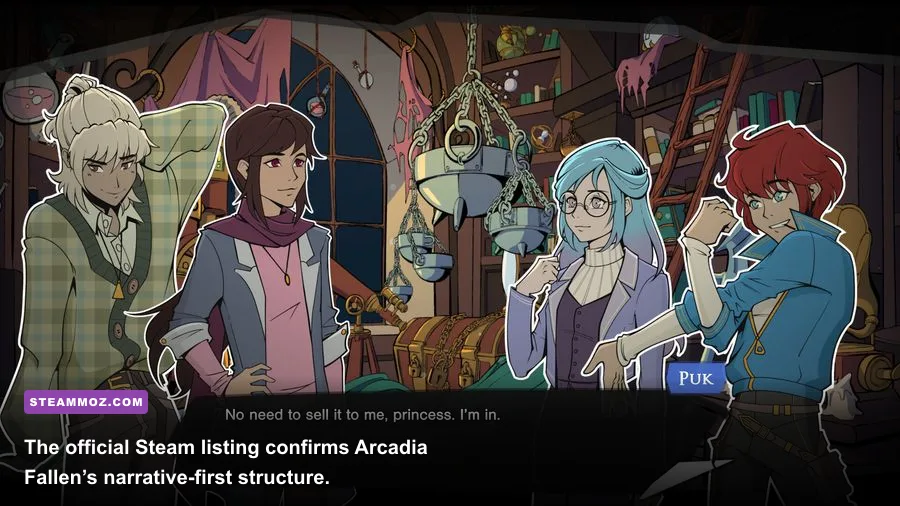
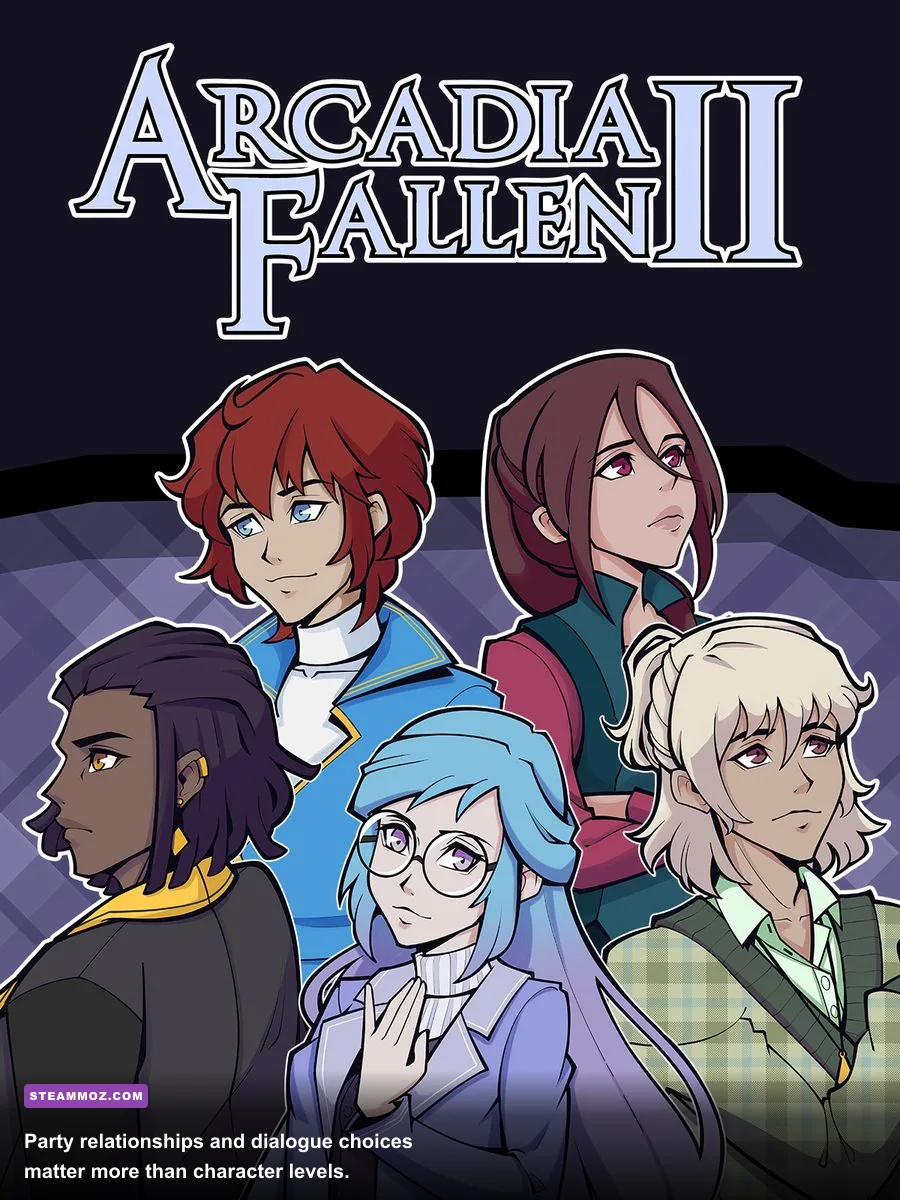
Arcadia Fallen gives you a party of memorable characters, including Anja, Ahru, Kirsi, and Thora, but they aren’t traditional RPG companions with skill trees and equipment loadouts. Your interactions with them are the meaningful form of customization. Dialogue choices influence how scenes unfold and which emotional beats land hardest.
That means the strongest “build” is the one that matches your intended playthrough. If you want to see a specific relationship develop, consistently choose responses that reflect trust, curiosity, or directness rather than selecting whatever line seems most efficient. There isn’t a universally best answer that grants more XP. The reward is a different version of the story.
Pay attention to tone. A response that solves an immediate argument may close off a more revealing conversation later, while a gentler answer can preserve a relationship at the cost of a short-term advantage. These are narrative trade-offs, not stat checks. You’re not trying to hit a hidden charisma threshold; you’re shaping the party’s view of Anja.
For a first run, resist the urge to reload after every imperfect answer. Constant resets flatten the impact of the choices and turn a character-driven adventure into a spreadsheet. Save before major branches, then accept the smaller consequences. On a second run, target the relationships and scenes you missed.
Players who want a more traditional party-building experience may enjoy our Blackguards beginner build guide. It’s a useful comparison because Blackguards actually uses combat stats, party roles, and equipment decisions, while Arcadia Fallen deliberately keeps its focus on story and puzzles.
Performance settings for a smoother first playthrough
Arcadia Fallen is not a demanding 3D action game. Its illustrated scenes and interface run comfortably on modest hardware, so chasing extremely high frame rates won’t unlock faster dialogue, better alchemy outcomes, or additional story content. Stability matters more than competitive latency.
Start with the default profile. If you notice stutter during transitions, lower resolution scaling only after checking whether another background application is causing the issue. Close browser tabs, overlays, recording software, and animated desktop tools first. Because the game is largely presentation-driven, inconsistent frame pacing can be more distracting than a modestly reduced resolution.
Keep text readable. Don’t lower the game’s output resolution so aggressively that dialogue becomes difficult to follow; the writing is the game. If your display is high-refresh, a stable 60 frames per second is already more than enough for the interface and scene transitions. V-Sync can help eliminate tearing, while borderless windowed mode is convenient for checking notes during alchemy puzzles.
| Setting or option | Recommended value | Performance impact | Visual note |
|---|---|---|---|
| Resolution | Native display resolution | Low to moderate | Keeps illustrated scenes and text sharp |
| Frame-rate cap | 60 FPS | Reduces needless GPU load | More than sufficient for this interface-led adventure |
| V-Sync | On if tearing appears | Minimal on modern systems | Smoother scene transitions |
| Display mode | Borderless windowed | Negligible | Useful for notes and quick reference checks |
| Overlays | Disable if stutter occurs | Can improve frame pacing | Removes unnecessary notifications over dialogue |
For broader PC troubleshooting, Steamoz’s PC fixes for crashes and low FPS offers a useful checklist, while our maximum-FPS settings guide is aimed at a much more demanding 3D game. Don’t apply aggressive performance tweaks blindly to a lightweight narrative title.
A practical no-waste checklist for every chapter
Before leaving a location, speak to every available character at least once. Revisit anyone whose dialogue changes after an alchemy result or major discovery. Inspect objects that look visually distinct from the background. If the objective still feels vague, read the journal or current task text rather than wandering until something triggers.
Before starting an alchemy solution, identify the desired effect and write down the clues that point toward it. Test the most thematically obvious combination first. If it fails, don’t immediately cycle through every ingredient. Return to the last conversation and search the scene again. The missing information is usually there.
Before making a major choice, create a manual save. Keep two or three rotating saves instead of overwriting one file. That gives you room to revisit a branch without losing the rest of the playthrough. It’s the closest thing the game offers to protecting a valuable resource, and it costs nothing.
Finally, don’t let the keyword “fast leveling” push you into playing the wrong game. Arcadia Fallen is meant to be consumed like an interactive fantasy novel with puzzles: move decisively, but pay attention. The fastest route is not skipping every line; it’s understanding the clue chain well enough that you never need to backtrack.
| Before progressing | Quick check | Payoff |
|---|---|---|
| Dialogue | Have all currently available characters been spoken to? | Prevents missed clues and optional scenes |
| Exploration | Have unusual objects and background prompts been inspected? | Reveals context for the next puzzle |
| Alchemy | Have you solved every currently supported recipe? | Moves the objective forward without guessing |
| Save management | Did you save before a major decision? | Protects alternate story routes |
| Source checking | Does a sequel or farming claim link to an official source? | Avoids following fabricated mechanics |
The honest answer to “How do I farm gold and level quickly in Arcadia Fallen II?” is that you can’t—not in a confirmed released game with those systems. In the original Arcadia Fallen, efficient progress comes from careful exploration, clue-led alchemy, and thoughtful relationship choices. Follow that route and you’ll finish the adventure faster, with fewer reloads, and without wasting time hunting for a currency loop the game never promised.