
Nostalgia can be a funny thing in gaming. If you grew up during the 8-bit and 16-bit eras, you probably remember the original Final Fantasy games through rose-tinted glasses—epic stories, unforgettable chiptune music, and incredible pixel art. But if you try booted up an unmodded original Famicom or Super Famicom cartridge today, reality hits hard. Brutal random encounter rates every three steps, agonizingly slow battle speeds, cryptic dungeon layouts, and hours upon hours of mindless leveling grinds can make retro titles feel more like a full-time job than an enjoyable hobby.
That is precisely why the Final Fantasy Pixel Remaster quality of life changes are a complete revelation. When Square Enix bundled games I through VI into the Pixel Remaster series, they did far more than touch up the sprite art and clean up the audio. They fundamentally modernized how these games play, respecting the player's time while retaining every drop of their timeless magic. Whether you are playing on PC, console, or picking up top turn-based RPG games for mobile, these updates transform classic adventures into modern masterclasses. Let's break down every single quality-of-life upgrade that completely saved these vintage JRPGs.
1. Modernizing the Classic Grind: EXP and Gil Boosters

Let’s be honest: grinding in 1990 was designed to pad out game length because storage space on cartridges was tiny. If you arrived at a new boss in original Final Fantasy III or Final Fantasy IV without spending two hours running in circles outside a town, you were getting wiped out in one turn. The Pixel Remaster collection solves this completely with its customizable Boost feature.
Accessible directly from the pause menu at any point during gameplay, the Boost mechanics allow you to adjust your gains from 0x all the way up to 4x for:
- Experience Points (EXP): Crank it to 2x or 4x to eliminate grinding entirely, or drop it to 0x if you want a hardcore low-level challenge.
- Gil (Gold): Double or quadruple your money so you can comfortably buy full weapon and armor sets at every new town. Check out our Pixel Remaster armor guide to know exactly which pieces are worth buying!
- ABP / Ability Points: In Final Fantasy V, boosting ABP allows you to master jobs like Ninja, Dual Wield, and Time Mage in a fraction of the original play time.
- Magic Points / Spell Uses: In Final Fantasy II, where stats grow based on usage, booster toggles let you level up spell proficiencies rapidly.
What makes this system brilliant is its total flexibility. You aren't stuck on an 'Easy Mode' that ruins the narrative tension. You can keep gains at 1x for normal dungeon crawling, then flip on 4x EXP for 10 minutes when you just want to catch up a newly recruited party member. It puts complete pacing power directly in the hands of the gamer.
2. Turning Off Random Encounters: Freedom to Explore

There is nothing quite as agonizing as being one step away from a dungeon's exit, carrying a legendary sword with 12 HP left on your White Mage, only to be yanked into a random battle against four high-level monsters. It ruined pacing and made backtracking an absolute nightmare in classic gaming.
With the Pixel Remaster quality of life changes, random encounters can now be toggled on or off with a single button press or menu switch. This simple feature changes how you interact with game worlds in several game-changing ways:
- Backtracking Without Tears: Realized you missed an item three floors back? Turn off encounters, sprint back down, open the chest, and run back out in 30 seconds flat.
- Stress-Free Dungeon Mapping: You can fully explore branching paths and maze-like catacombs without having your train of thought broken by a battle transition every four seconds.
- Low-Level Runs and Speedruns: Hardcore players can turn off encounters completely to challenge bosses at absolute minimum levels, creating entirely new ways to replay these classics.
If you're picking up these games via the Final Fantasy Steam Store page, the encounter toggle alone makes replaying Final Fantasy II and Final Fantasy III infinitely more pleasant than their original NES releases.
3. Auto-Battle and Fast-Forward Mechanics
In classic turn-based JRPGs, 80% of fights are against standard trash mobs where your strategy is simple: tap "Attack" with every character until everything dies. Doing this manually thousands of times over a 30-hour campaign causes literal physical fatigue.
The Pixel Remaster series fixes this by introducing a robust Auto-Battle system paired with speed acceleration:
- Command Memory: When you trigger Auto-Battle, every party member immediately repeats the exact action they performed on their previous turn. If your Black Mage cast Thundaga and your White Mage cast Curaga, they will repeat those exact spells continuously.
- Double Battle Speed: While Auto-Battle is active, combat speed doubles or triples. Monster animations, health bar drain, and turn transitions execute in hyper-speed.
- Instant Manual Override: Pressing the button again instantly returns combat to manual control, letting you react if an unexpected boss mechanic or tricky status effect pops up.
Combined with the boost options, auto-battle makes clearing minor encounters a breeze, letting you save your tactical brainpower for epic multi-phase boss fights. If you love deep mechanics like this, check out our broader RPG section for coverage on modern and retro tactical games alike.
4. Comprehensive In-Game Maps and Bestiary Access

Back in the 1990s, if you wanted to make sure you found every secret chest in Final Fantasy VI's Cave to the Sealed Gate, you needed a physical strategy guide, a printed magazine map, or handwritten grid paper. Dungeons had blind turns, hidden wall passages, and zero map overlays.
Square Enix overhauled the navigation systems across all six games to deliver modern exploration standards without spoiling secrets:
Dungeon and World Minimaps
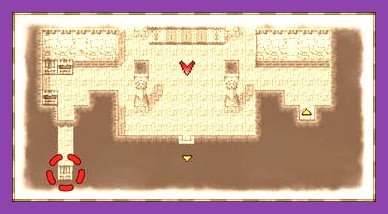
Every area now features a clean overhead minimap in the top corner of the screen. It reveals the layout of rooms, staircases, and exits. More importantly, the map screen displays a completion counter showing exactly how many total treasure chests exist in the current area and how many you have opened (e.g., "Chests: 4/5"). You never have to wonder if you left a rare piece of gear behind!
Interactive Bestiary and Location Trackers
accessible right from the main menu, the brand-new Bestiary logs every monster you encounter across the world. It tracks drop rates, stealable items, elemental weaknesses, and HP stats. Even cooler, the Bestiary features a world map view showing exact spawn habitats for every enemy, making 100% completion hunts far less frustrating. If you're a fan of collection mechanics and completionist guides, explore our gaming guides hub for more breakdown content.
5. Rearranged Audio and Retro Font Switching

Sound design is half the battle in classic RPGs. Legendary composer Nobuo Uematsu personally oversaw the rearranged soundtracks for all six Pixel Remaster games. The results are breathtaking, replacing old synth chiptunes with full orchestral recordings, acoustic guitars, and acoustic solos that bring iconic tracks like Terra's Theme and Dancing Mad to life.
However, Square Enix listened closely to fan feedback after launch and added crucial customization toggles across PC and console updates:
- Soundtrack Swap: You can swap between the newly arranged orchestral soundtracks and the original vintage 8-bit/16-bit chiptune audio anytime in the settings menu.
- Console Pixel Font Option: Initial PC releases shipped with a thin, compressed modern font that looked out of place against 16-bit sprites. Recent updates brought the retro pixel font option to all platforms, restoring authentic retro aesthetics.
- Sound Player Feature: Want to just sit back and listen to the OST? The main menu includes a built-in music player featuring all tracks with interactive visualizers.
For gamers playing on handheld setups or budget hardware, these visual and audio options run flawlessly. If you enjoy playing great games on portable screens, check out our list of the best battery-friendly RPGs for mobile devices.
6. Quick Saves, Autosaves, and Quality-of-Life Combat Tweaks
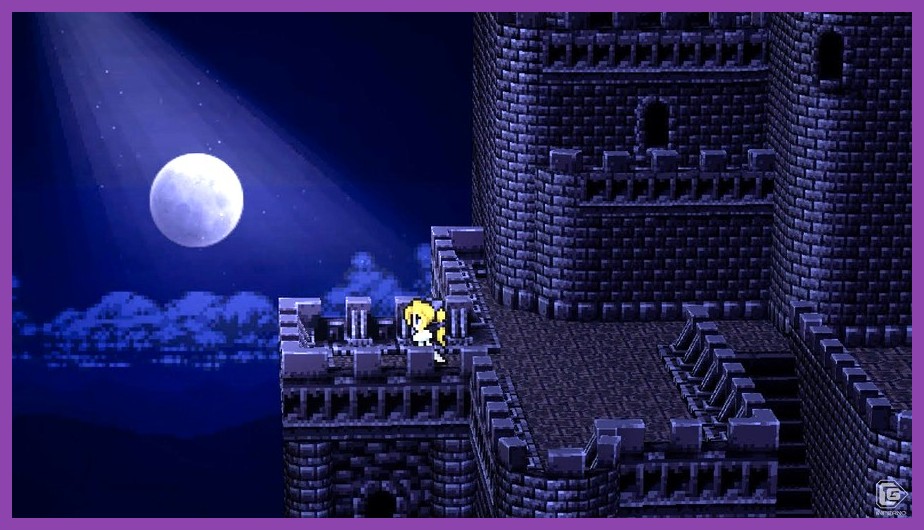
In the original games, losing a boss battle meant losing hours of progress if you hadn't saved at a distant save point. The Pixel Remaster collection introduces a modern safety net that guarantees you will never lose progress to an unfair wipe again.
The Multi-Tier Save System
The save architecture now consists of three distinct safety layers:
- Autosave: The game automatically saves your progress every single time you enter a new room, drop down a floor, or walk out of a building. If your power cuts out or your game crashes, you resume right at the entrance of the current room.
- Quick Save Anywhere: You can create a temporary quick save anywhere in the game—including inside dangerous dungeons right outside boss chambers.
- Manual Save Slots: Multiple manual save slots allow you to keep separate saves before major point-of-no-return story events.
Movement and Interface Refinement
Beyond saving, movement mechanics received a massive coat of polish. Characters now possess full 8-directional movement rather than stiff 4-way grid walking. A dedicated Sprint button (or auto-dash toggle) doubles walking speed in towns and dungeons, cutting down travel time significantly. Furthermore, battle interfaces now clearly display status effect icons above character sprites, target selection displays elemental weaknesses directly on enemies once discovered, and magic menus automatically filter unusable spells.
7. How These QoL Features Transform Each Game (FF1 Through FF6)
While every entry in the collection shares these quality-of-life updates, their impact varies depending on the specific game's original design quirks. Here is how the upgrades reshape each specific title:
Final Fantasy I & II
Final Fantasy I drops the restrictive spell slot charges in favor of modern MP pools (or classic MP depending on settings), making mages far more viable in prolonged dungeon delves. In Final Fantasy II, stat growth tracking is displayed clearly after battle, taking the guesswork out of its infamous "learn-by-doing" progression system. Read more about early game strategies on the Official Final Fantasy Portal Site.
Final Fantasy III & IV
Final Fantasy III benefits hugely from job-swapping tweaks. Original NES versions penalized players heavily with stat drops when changing jobs; Pixel Remaster removes job transition penalties entirely, encouraging players to experiment with Scholar, Viking, and Dragoon setups freely. In Final Fantasy IV, active-time battle (ATB) timers are visibly tracked, and auto-battle removes the slog from Cecil's grinding phases.
Final Fantasy V & VI
For Final Fantasy V, the 4x ABP boost toggle turns one of the greatest job systems in JRPG history into an absolute playground where you can master multiple jobs without grinding for 50 hours. In Final Fantasy VI, high-definition 2.5D backgrounds (like the famous opera house scene) blend seamlessly with modernized pixel sprites, and chest indicators ensure you never miss magic magicite or secret Relics hidden in Narshe.
If you enjoy classic tactical depth and modern enhancements, don't miss our reviews on top PC gaming titles and retro remasters dominating the scene today!
Final Verdict: The Gold Standard for JRPG Preservation
The Final Fantasy Pixel Remaster series sets a benchmark for how retro game preservation should be handled. By adding 4x EXP/Gil boosters, random encounter toggles, full minimaps with chest counts, auto-battle fast-forwarding, and customizable audio/font settings, Square Enix eliminated decades of archaic friction while preserving the underlying art, story, and combat logic that made these games legends in the first place.
Whether you are a veteran looking to re-experience Terra, Cecil, and Bartz's journeys without the grind, or a newcomer eager to see where modern RPGs originated, these quality of life changes make the Pixel Remaster collection the definitive way to play six of the greatest RPGs ever made.