If you keep a Windows 7 machine running—whether it's an indestructible ThinkPad, a dedicated offline gaming box, or an aging family desktop—you don't have to suffer through modern microtransactions or browser garbage to get brilliant games. Some of the most ambitious, mechanically inventive PC titles ever coded are standalone freeware releases that cost literally zero dollars and run with velvet-smooth frame pacing on legacy operating systems. We aren't talking about demo-sized novelties or abandoned open-beta cash grabs; these are full-length, masterclass experiences built by passionate creators who prioritized tactical depth and tight controls over predatory monetization.
Because Windows 7 doesn't drag the background telemetry, aggressive background updates, and memory bloat of newer operating systems, it functions as an absolute paradise for lightweight DirectX 9, OpenGL, and legacy C++ runtime projects. While modern blockbusters require troubleshooting guides just to hit 30 FPS—much like our breakdowns for fixing heavy frame drops in modern RPGs or sorting out annoying PC crashes—the obscure gems below fire up instantly, sip hardware resources, and deliver dozens of hours of elite gameplay without costing you a single cent.
1. Iji: The Definitive Sci-Fi Platformer You Never Paid For
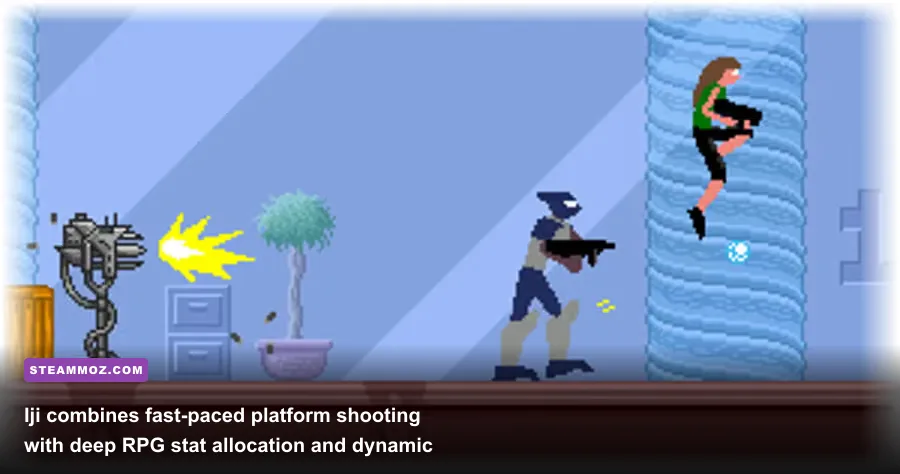
Released by Swedish developer Daniel Remar after years of painstaking solo iteration, Iji is an astonishing high-water mark for indie 2D action platformers. You step into the combat boots of Iji Katayanagi, a young woman augmented with alien nanotechnology after a planetary bombardment by a faction known as the Tasen. What looks on the surface like a standard run-and-gun platformer quickly unfurls into an intricate, system-heavy hybrid of System Shock and Metroid, featuring branching narrative outcomes, multiple distinct endings, and a staggering weapon fusion system.
The mechanical brilliance of Iji lies in its upgrade terminal loop. Defeated enemies drop Nanofield sparks that fill your level-up meter. When you reach a station, you allocate stats across seven distinct attributes: Health, Attack, Assimilate, Strength, Crack, Tas传送 (Tasen tech), and Komato tech. Leveling your Crack skill lets you hack locked security doors, disable enemy automated turrets, or re-code hostile patrol drones to clear out alien commanders for you. Meanwhile, high Assimilate ranks unlock weapon crafting at nanoforge stations.
Instead of merely swapping through generic blasters, you actively splice weapon archetypes together:
- Shotgun + Rocket Launcher = Buster Gun: Fires an explosive slug that shatters armored bulkheads and vaporizes frontline Tasen grunts.
- Machine Gun + Shocksplinter = Plasma Cannon: Blasts high-voltage bursts that track along metallic floorboards to wipe out subterranean security swarms.
- Resonance Reflector + Nanosplinter = Hyper Pulse: Creates a devastating perimeter barrier that bounces incoming artillery back into the firing unit's chassis.
What elevates Iji to legendary status is its pacifist architecture. You can complete the entire game without killing a single alien. Bosses have alternate puzzle-like resolutions, enemy commanders beg for their lives, and the dialogue shifts dramatically based on your body count. The game runs on a heavily optimized GameMaker 7 engine compilation that locks at 60 FPS on any dual-core machine with 512MB of RAM, making it a dream run on Windows 7. You can grab the full standalone installer directly from the Remar Games Official Iji Portal without dealing with account setups or third-party launchers.
2. OFF: Mortis Ghost’s Unsettling, Genre-Bending Freeware Masterpiece
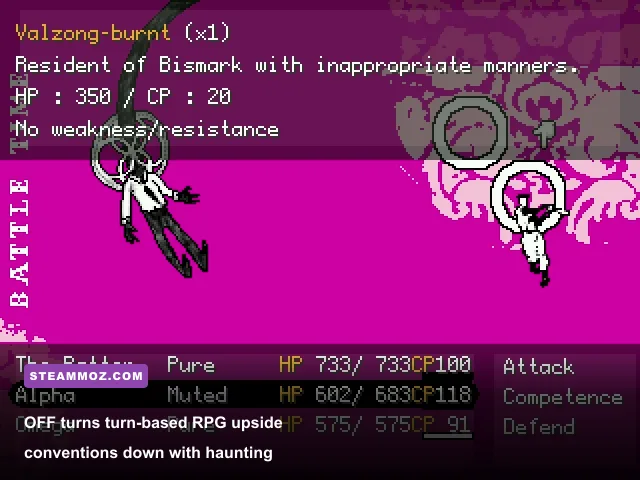
Before games like Undertale popularized the subversion of classic turn-based combat tropes, Belgian creator Mortis Ghost unleashed OFF. Created in RPG Maker 2003 and translated by a passionate grassroots community, OFF casts you not as the protagonist, but as a spectral puppet master guiding "The Batter"—an enigmatic figure dressed in clean baseball whites on an uncompromising holy crusade to "purify" a surreal, bureaucratic dystopia.
Beneath its minimalist, monochrome visual flair lies a frantic Active-Time Battle (ATB) engine that demands serious tactical engagement. Combat does not wait for you to ponder options over a cup of coffee. Enemy timers tick continuously, requiring you to balance the Batter's homerun swings and status-clearing skills against the support abilities of your "Add-ons"—floating circular familiars named Alpha, Omega, and Epsilon. Each Add-on functions like a specialized combat module:
- Alpha: Your primary status-inflictor and single-target physical breaker, utilizing skills like Averted Optical to inflict Blindness and drop enemy hit ratios.
- Omega: The party's tactical surgeon, dishing out severe elemental strikes aligned to the four surreal materials of the game's world: Plastic, Smoke, Meat, and Metal.
- Epsilon: Your dedicated line-backer, controlling team CP (Competence Points) recovery, party shields, and health stabilization.
Enemies in OFF boast bizarre, horrifying attack rotations that inflict debilitating afflictions like "Furious" (which forces units into berserk basic attacks) or "Palsy" (which completely freezes turn gauges). Navigating the zones—ranging from an industrial plastic-mining facility to an eerie, saccharine theme park run by giant, grotesque specters—requires sharp spatial puzzle-solving and moral stamina. Much like checking point-and-click system requirements for classic puzzle adventures, OFF requires essentially nothing from modern hardware, operating effortlessly within Windows 7’s native DirectDraw framework.
3. Barkley, Shut Up and Jam: Gaiden: The Best Post-Apocalyptic B-Ball RPG
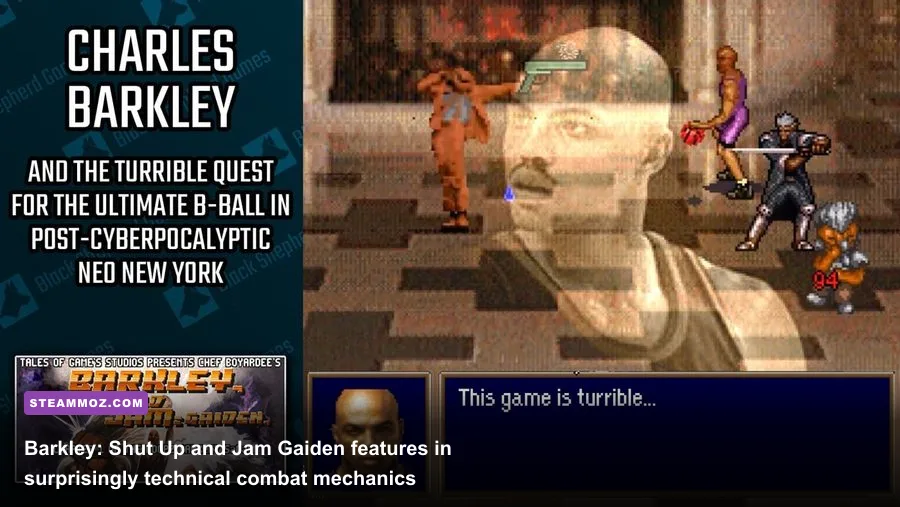
Do not let the utterly unhinged title fool you: Tales of Game's Studios Presents Barkley, Shut Up and Jam: Gaiden, Chapter 1 of the Hoopz Barkley SaGa is a legit, hyper-competent tactical JRPG that happens to be one of the funniest video games ever created. Set in 2041 Neo New York, twelve years after Charles Barkley accidentally unleashed a "Chaos Dunk" that wiped Manhattan off the face of the Earth, basketball has been outlawed globally, and b-ball players are hunted down by the malevolent B-Ball Removal Squad.
While the narrative is a glorious satire of 90s cyberpunk anime, Squaresoft RPGs, and sports fandom, the combat engine is razor-sharp. Pulling inspiration directly from Chrono Trigger and Super Mario RPG, attacks rely on real-time execution commands rather than static menu choices. When Charles Barkley steps up to strike, you don't just click "Attack"; you select between four distinct dribble styles (Pass, Jab, Crossover, Pump Fake) mapped to directional inputs, finishing the sequence with a timed jump-shot release that calculates critical damage based on your precision.
Your adventuring party includes some of the wildest combat classes ever committed to code:
- Charles Barkley: High physical striker who manages both VP (Vitality Points) and BP (Ball Points) to string together multi-hit dribble combos and the earth-shattering "Showstopper."
- Balthios James: The great-grandson of LeBron James, an Zauber-wielding mystic who charges his Zauber gauge to cast lethal elemental gun-magic while exploiting enemy elemental weaknesses.
- Cyberdwarf: A defensive tank and status cleanser whose mechanics revolve around absorbing kinetic impacts to unleash punishing mid-court counterattacks.
- Hoopz Barkley: A ranged sharpshooter whose turn involves a literal crosshair minigame where your mouse-aiming reflexes dictate damage falloff and headshot multipliers.
There are no arbitrary random encounters; enemies patrol the overworld, giving you complete control over pacing. The game runs without hitching on legacy hardware, demanding less than 128MB of VRAM and maintaining a flat 60 FPS line even on aged integrated chipsets. It proves that mechanical polish doesn't require modern graphical engines—a dynamic we often point out when tuning tactical puzzle games for peak performance.
4. The Battle for Wesnoth: A Turn-Based Strategy Giant Masquerading as Freeware
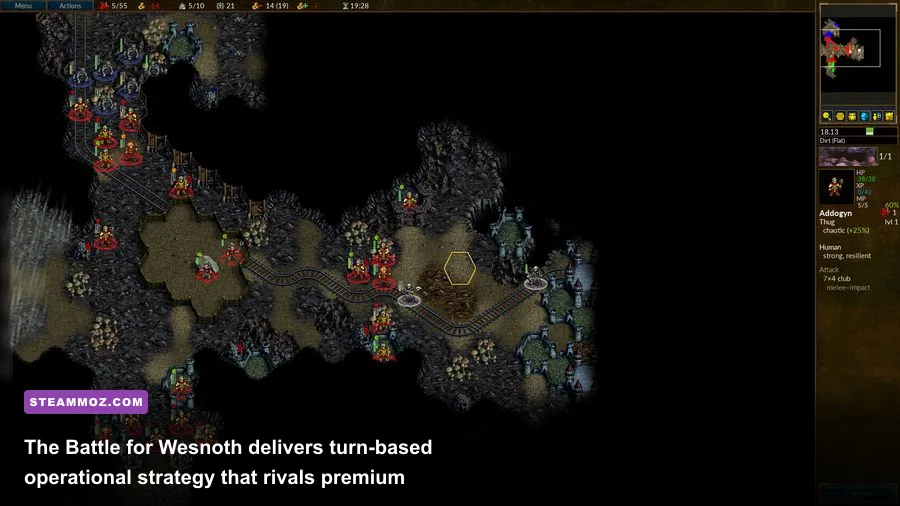
If your gaming tastes lean toward hex-grid tactical wargames like Panzer General or Fire Emblem, The Battle for Wesnoth will easily consume hundreds of hours of your life. Maintained continuously for over two decades by an international cadre of open-source developers and competitive strategists, Wesnoth provides an absurd amount of content completely free: over sixteen sprawling single-player campaigns, hundreds of hand-crafted skirmish maps, fully functional online multiplayer, and a built-in user-content addon manager.
Wesnoth's combat math is brutally transparent. Every single tile on the map provides a specific defensive cover percentage depending on the unit type occupying it. Elvish Archers stationed in deep forest tiles gain a massive 70% defense rating—meaning attackers only have a 30% flat chance to land a hit. Move that same elf onto open grassland, however, and their defense plunges to 40%, leaving them vulnerable to heavy cavalry charges. Understanding terrain advantages isn't optional; it is the fundamental difference between victory and watching your veteran army get annihilated.
Compounding this is the game's ruthless Time of Day mechanic, which rotates through a six-turn schedule (Dawn, Morning, Midday, Dusk, First Watch, Second Watch):
- Lawful Units (Humans, Elves): Deal +25% bonus damage during daylight hours, but suffer a crippling -25% damage penalty in the dead of night.
- Chaotic Units (Orcs, Undead): Thrive in pitch darkness with a +25% damage modifier during the Watch phases, but weaken severely when the sun peaks.
- Neutral Units (Dwarves, Drakes): Ignore solar cycles entirely, delivering flat, reliable damage across every combat phase.
Every unit that survives combat earns experience points, carrying over across campaign missions to level into specialized tier-2 and tier-3 combat roles. Lose your level-3 Iron Mauler in a careless flank assault, and that veteran is gone permanently. Because Wesnoth utilizes clean SDL libraries and lightweight 2D sprite sheets, it starts up instantly on Windows 7 systems and consumes under 300MB of RAM. You can review unit stats, documentation, and the latest stable legacy builds directly on the Battle for Wesnoth Official Project site.
5. Hero Core and Princess Remedy: Bite-Sized Retro Brilliance
Sometimes you don't want a 40-hour tactical wargame; you want tight, responsive, arcade-pure game loops that challenge your twitch reflexes. Two distinct freeware titles deserve immediate installation on your legacy machine for this exact reason: Daniel Remar’s Hero Core and Ludosity’s Princess Remedy in a World of Hurt.
Hero Core: Minimalist Metroidvania Precision
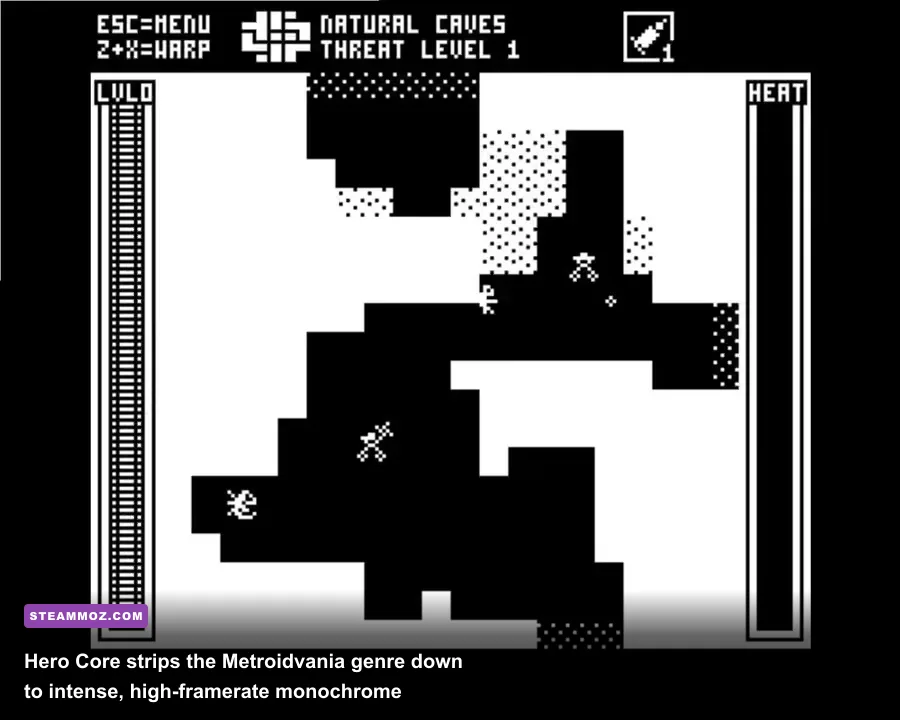
Hero Core strips away graphical excess in favor of a stark, high-contrast, black-and-white vector presentation. You control Flip, a small mechanoid armed with rapid-fire twin blasters, navigating an open-ended subterranean labyrinth to eliminate the rogue warlord machine Cruiser Tetron. What makes Hero Core an absolute joy to run on older Windows 7 setups is its uncompromising adherence to fluid mechanics. You fly with full 360-degree mobility while firing left and right via dedicated directional buttons, weaving between massive swarms of automated laser turrets and geometric boss encounters that rival modern bullet hell titles.
Every boss fight tests attack pattern memorization and aggressive positioning. The Cruiser machine cores telegraphed waves of ring-lasers, tracking homing torpedoes, and sweeping beam weaponry that force you to exploit split-second invulnerability dash frames. With zero installation bloat and an executable size under 20MB, it runs at a buttery smooth 60 frames per second without generating any hardware heat.
Princess Remedy in a World of Hurt
Created during a game jam by the developers who later brought us Slap City, Princess Remedy in a World of Hurt blends top-down adventure exploration with frenetic single-screen shooter battles. You play as Remedy, a graduate of the Saturnian Healing School tasked with curing the ailments of sixty bizarre patients throughout the realm.
Entering a patient initiates an instantaneous, bullet-hell medical combat sequence. Rather than firing mundane bullets, Remedy launches healing flasks, syringes, and multi-directional bandages at manifestations of physical and psychological trauma. Defeating enemies lets you choose between immediate stat upgrades:
- Flask Synergy: Increases your explosive spread radius to hit clusters of airborne ailments.
- Hypodermic Needle Focus: Increases raw single-target DPS to melt high-HP infection bosses before battle timers expire.
- Bandage Recovery: Drops passive regeneration pools across the medical grid to recover lost hearts.
It's quirky, delightfully fast, and completely free on Steam without microtransactions. You can verify its simple hardware footprint on the Princess Remedy Steam Store Page, where it remains one of the highest-rated freeware titles in the platform's history.
Windows 7 Performance Matrix and System Resource Breakdown
To help you choose the right game for your specific hardware limitations, we have benchmarked each title across legacy computing profiles. Whether you are running an aging single-core netbook or a classic quad-core gaming desktop from the golden era of PC gaming—akin to hardware profiles discussed in our Far Cry 2 legacy PC specs breakdown—these games maintain uncompromising performance.
| Game Title | Engine / Backend | RAM Footprint | API / Render Mode | Target Framerate | Storage Required |
|---|---|---|---|---|---|
| Iji | GameMaker 7 (C++) | ~140 MB | DirectX 8/9 / DirectDraw | 60 FPS (Fixed) | 35 MB |
| OFF | RPG Maker 2003 | ~65 MB | DirectDraw / GDI+ | 60 FPS (V-Sync) | 75 MB |
| Barkley: Shut Up and Jam | GameMaker 8 | ~210 MB | Direct3D 9 | 60 FPS (Fixed) | 110 MB |
| The Battle for Wesnoth | C++ / SDL 2.0 | ~280 MB | OpenGL / Direct3D | 60-144 FPS | 650 MB |
| Hero Core | GameMaker 7 | ~45 MB | DirectDraw | 60 FPS (Fixed) | 18 MB |
| Princess Remedy | Custom C++ | ~95 MB | DirectX 9 / OpenGL | 60 FPS (Fixed) | 85 MB |
Beyond raw performance metrics, each title satisfies a completely different style of gamer. Here is how their tactical loops, progression curves, and difficulty ceilings stack up against each other:
| Game Title | Primary Genre | Key Combat Mechanic | Campaign Length | Difficulty Rating | Best Quality |
|---|---|---|---|---|---|
| Iji | Action Platformer / Metroidvania | Nanotech Stat Allocation & Weapon Splicing | 8-12 Hours | Challenging (Scaleable) | Extreme narrative branching & pacifist route |
| OFF | Surreal Turn-Based RPG | Fast-Paced ATB with Status Management | 6-9 Hours | Moderate | Unmatched psychological atmosphere & lore |
| Barkley: Gaiden | JRPG / Parody | Timed Action-Command Button Inputs | 5-8 Hours | Moderate / High | Hilarious script combined with tight combat |
| Battle for Wesnoth | Turn-Based Hex Strategy | Terrain Defense Math & Day/Night Modifiers | 100+ Hours | Brutal (Tactical) | Endless tactical depth and community campaigns |
| Hero Core | Open-World Shmup | 360° Flight with Directional Dodge-Shooting | 2-4 Hours | High (Arcade) | Flawless boss pattern designs |
| Princess Remedy | Action / Bullet-Hell RPG | Top-Down Rapid Shot Medical Healing | 1-2 Hours | Casual / Moderate | Pure, dopamine-heavy arcade gameplay |
Looking at that list, you're looking at games that treat your time with respect. If you miss the era when action titles gave you punchy, high-impact arsenals—the exact vibe we celebrate in our ranking of iconic retro-styled weapons—diving into Iji's experimental high-tier arsenal scratches that exact mechanical itch without demanding a modern GPU.
Legacy OS Tuning: How to Keep Freeware Running Butter-Smooth on Win7
While Windows 7 handles classic software far better than modern OS counterparts, running decades-old freeware engines on legacy operating systems can occasionally present minor display quirks, aspect ratio stretching, or audio synchronization glitches. Following these optimization steps guarantees that every game runs at its intended frame pacing.
1. Tame the Desktop Window Manager (DWM) for DirectDraw Titles
Games built on legacy engines (like early GameMaker builds and RPG Maker 2003) rely on DirectDraw. Windows 7’s beautiful Aero Glass theme uses the Desktop Window Manager (DWM) to composite windows, which forces a system-level double-buffering that can introduce micro-stutter into older 2D titles. To eliminate this:
- Right-click the game’s executable file (e.g.,
iji.exeorRPG_RT.exe) and select Properties. - Navigate to the Compatibility tab.
- Check the box labeled Disable desktop composition.
- Check the box labeled Disable visual themes.
When you launch the game, Windows 7 temporarily drops the Aero Glass transparent borders, giving the game engine unhindered, low-latency access to the video buffer. The second you quit the game, your desktop aesthetics restore automatically.
2. Implement Wrapper DLLs for Aspect Ratio Correction
If you run a modern widescreen LCD monitor connected to your Windows 7 PC, ancient 4:3 resolutions (like 640x480 or 320x240) may appear unpleasantly stretched by your graphics card driver. Instead of tolerating smeared pixel art, drop a modern wrapper directly into the game's executable directory. The gold standard for this is the open-source dgVoodoo2 Official Graphics Wrapper.
By placing dgVoodoo2's D3D8.dll, D3D9.dll, or DDraw.dll into the installation folder, the wrapper intercepts legacy draw calls and translates them into clean DirectX 11 instructions that Windows 7 natively supports. This allows you to force crisp integer scaling, preserve perfect 4:3 pillarboxing, and even inject subtle CRT scanline filters to keep sprites pixel-sharp.
3. Core Affinity and Process Prioritization
Older engines like GameMaker 7 and 8 were coded long before multi-threading was standard in budget processors. If you notice strange audio hitches or uneven frame drops in games like Barkley, Shut Up and Jam: Gaiden, your modern multi-core CPU might be cycling the single-threaded process across different CPU cores to balance thermal loads. You can fix this in seconds:
- Launch the game, press Ctrl + Shift + Esc to open Windows Task Manager.
- Right-click the game process under the Processes tab and select Set Affinity.
- Uncheck all processors except CPU 0 or CPU 1.
- Right-click the process again, select Set Priority, and change it from Normal to Above Normal.
Locking the process to a single dedicated core eliminates core-hopping latency, ensuring rock-solid frame pacing from the title screen to the final credits roll. Windows 7 remains a powerhouse for offline, low-overhead gaming—and with titles like these completely free for the taking, you'll never run out of incredible virtual worlds to explore.