If Finding the Soul Orb hooked you with its compact mystery, lonely exploration, and sense that every unusual object might matter, start with TUNIC, Animal Well, and Outer Wilds. They offer the closest mix of environmental clues and satisfying discovery, while Darkwood and Hollow Knight are better picks if you want the same curiosity with heavier survival or combat.
These aren't random indie recommendations. Each game earns its place because it understands the magic behind an orb hunt: the player should feel clever for connecting clues, not simply rewarded for clearing a quest marker. The best alternatives also respect your attention. They give you a strange room, an incomplete map, or a suspiciously placed symbol, then let you decide what it means.
The best games like Finding the Soul Orb at a glance
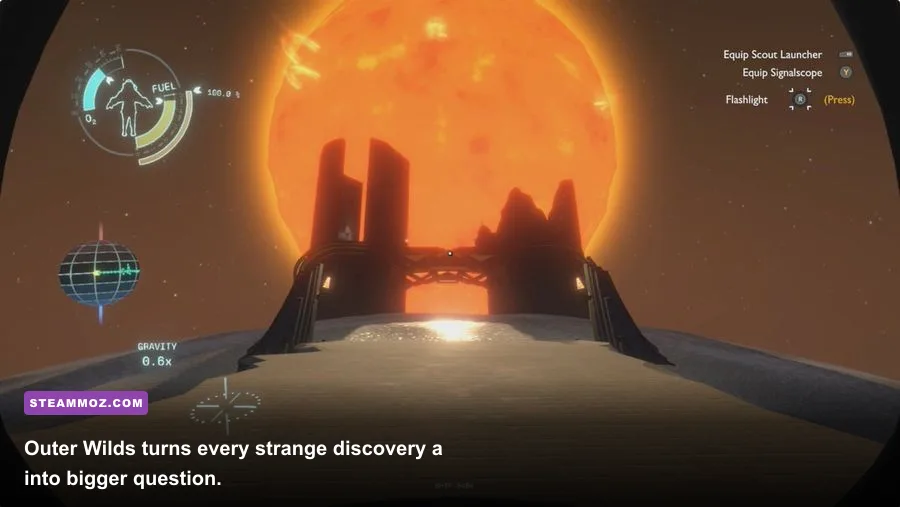
The strongest match depends on which part of the experience you want to preserve. TUNIC is the closest overall fit for secret language, hidden routes, and cryptic visual information. Animal Well is more platform-focused but has an even denser layer of optional discoveries. Outer Wilds delivers the biggest “I finally understand it” moments, although it trades fantasy corridors for a solar system built around a 22-minute time loop.
| Game | Closest shared strength | Combat pressure | Best for |
|---|---|---|---|
| TUNIC | Cryptic clues and hidden pathways | Medium | Players who want a fantasy mystery |
| Animal Well | Layered exploration and secrets | Low | Curious players who love backtracking |
| Outer Wilds | Knowledge-driven progression | Low | Big discoveries and cosmic mysteries |
| Darkwood | Isolation and escalating tension | High | Players who want genuine horror |
| Hollow Knight | Atmospheric world-building and exploration | High | Metroidvania fans who want a longer journey |
For a shorter, more immediately readable adventure, choose TUNIC. For a game that keeps revealing new secrets long after the apparent ending, choose Animal Well. If the mystery itself matters more than swordplay, Outer Wilds is the essential recommendation.

🎮 Finding the Soul Orb
Looking to experience this game? Grab your digital key directly on our store for $2.99.
View on Steammoz Store →1. TUNIC is the closest match for secret-hunting players
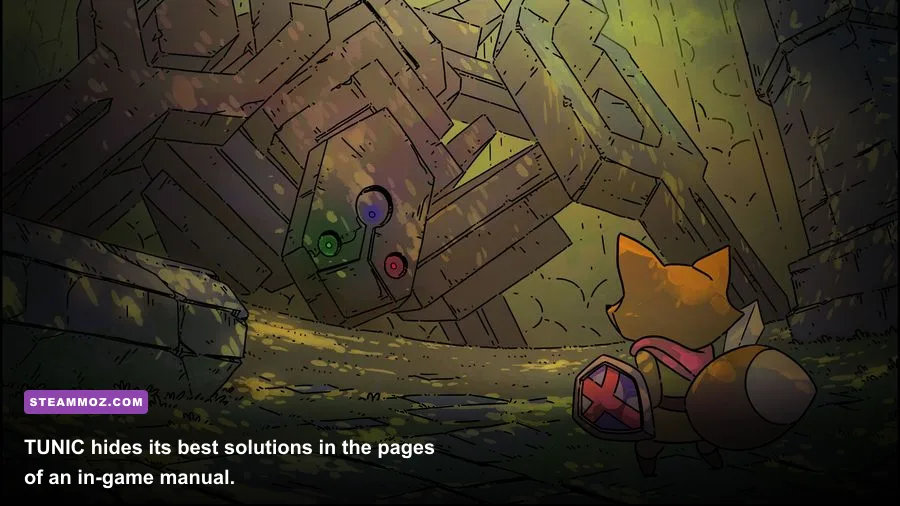
TUNIC is the obvious first stop because it turns discovery into a mechanic. You play as a small fox carrying a sword and shield, but the real progression comes from collecting pages of a fragmented instruction manual. Those pages show maps, attack notes, language clues, item diagrams, and seemingly decorative symbols. The game never hands you a clean explanation of the world; it asks you to read between the lines.
Its combat is sharper than Finding the Soul Orb, too. The fox can attack, dodge, block with the shield, and use items such as the Fire Bomb and Ice Bomb. Stamina matters: repeated dodges and shield use can leave you exposed, so button-mashing becomes dangerous surprisingly early. The Librarian and Siege Engine are especially good tests of whether you've learned to attack during openings instead of swinging through every animation.
The manual also creates a terrific progression curve. At first, a page simply teaches controls. Later, the same visual language points toward the Golden Path, hidden fairies, and alternate solutions. Don't rush to translate every symbol online. The fun comes from recognizing that a page's diagram, color, and placement may be instructions rather than decoration.
Why TUNIC ranks S-Tier
TUNIC earns the top spot because it captures the “the game has been telling me this all along” feeling better than almost anything released in the last decade. Its 2D isometric camera can make a few routes fiddly, and the combat may feel punishing until you upgrade your flask and learn enemy timings. Still, the density of meaningful clues is exceptional.
Play it on the official Steam page, and check our secret-location guide if you enjoy games that hide rewards in plain sight.
2. Animal Well turns every screen into a puzzle
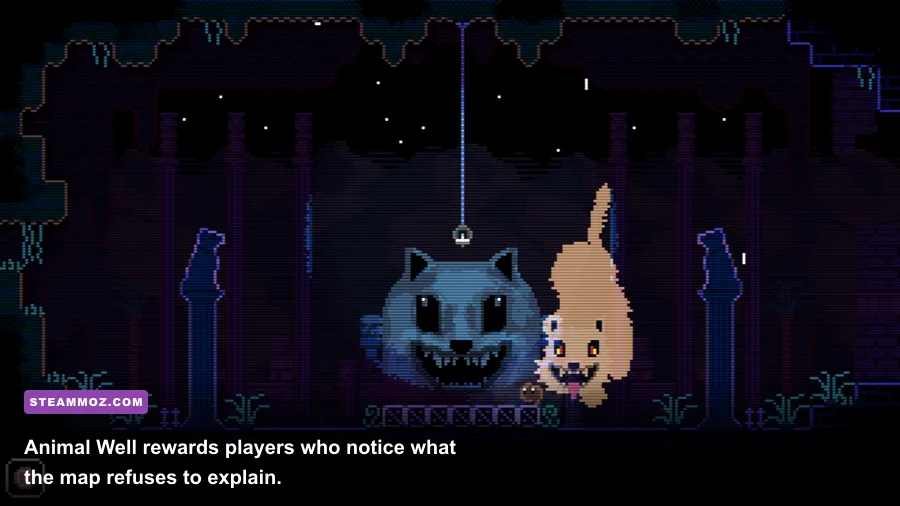
Animal Well looks gentler than Finding the Soul Orb, but its design is just as suspicious. The player controls a small blob-like creature moving through a fluorescent underground labyrinth, collecting tools and learning how those tools interact with the environment. The Bubble Wand lets you create temporary platforms, the Disc can hit switches or distract creatures, and the Remote enables completely different routes once you understand its behavior.
The clever part is that progress isn't always tied to a visible objective. A passage may be blocked by a creature that you shouldn't fight. A background shape may reveal a platform. A sound cue can indicate that something changed several rooms away. The map records rooms, but it doesn't solve them for you, so screenshots and handwritten notes are genuinely useful.
Animal Well's main route is approachable, but its post-game layers are where it becomes a secret-hunter's dream. Collectible eggs, rabbits, candles, and hidden switches form an enormous second layer. The game rarely announces that you've entered it. If you enjoyed testing every suspicious corner in Finding the Soul Orb, this is the pick most likely to consume an entire weekend.
| Tool or system | What it changes | Best use | Learning curve |
|---|---|---|---|
| Bubble Wand | Creates temporary bubble platforms | Vertical routes and timing puzzles | Low |
| Disc | Activates objects and manipulates enemies | Switches, distractions, and ricochet puzzles | Medium |
| Remote | Reveals unusual movement and interaction options | Late-game secrets and alternate paths | High |
| Map | Records explored rooms without solving them | Planning backtracking routes | Low |
Animal Well is also an excellent low-spec recommendation. Its pixel-art presentation is crisp at high frame rates, but the real performance win is that it doesn't bury its visual clues under excessive effects. If you want more games built around compact maps and hidden systems, Steamoz's Everafter Falls tips are worth bookmarking.
3. Outer Wilds makes knowledge your only upgrade
Outer Wilds is the most ambitious recommendation here. You are an astronaut exploring a miniature solar system trapped in a repeating 22-minute cycle. When the loop ends, you return to the starting point with your equipment reset—but your knowledge remains. There are no traditional levels, weapon trees, or permanent stat boosts. If you learn what a Nomai text means or how a planet's sand shifts, that understanding is your progression.
The game rewards the exact habit that makes an orb hunt satisfying: follow the detail that feels slightly out of place. A broken mural leads to a Nomai settlement. A strange signal points toward a new location. A rumor on the ship's log connects two discoveries that seemed unrelated. The rumor mode is especially useful because it creates a web of clues rather than a flat checklist.
Its hazards are precise rather than combat-heavy. Brittle Hollow collapses as debris falls through its crust. Giant's Deep hides dangerous currents and storm systems. Dark Bramble distorts navigation and punishes careless engine noise. Don't treat these as conventional enemies; observe the rules first. Outer Wilds becomes much easier once you stop asking “What can I kill?” and start asking “What changes over time?”
There is one warning: spoilers destroy a large part of the experience. Avoid walkthrough thumbnails, achievement lists, and late-game discussions until you've reached your own conclusions. Buy it from Outer Wilds on Steam, and give yourself permission to get stuck for a while.
4. Darkwood is Finding the Soul Orb with the lights off
Darkwood is the choice for players who want the lonely atmosphere pushed into outright survival horror. Its top-down perspective doesn't make the forest feel safe. During the day, you scavenge, craft, and search procedurally generated areas. At night, you return to a hideout, place furniture and traps, and survive until morning.
The day-night structure creates a completely different kind of exploration pressure. You can spend too long investigating a suspicious room, then face a dark trek home with limited supplies. The game uses sound brilliantly: distant movement, breaking boards, and footsteps outside your barricades can be more frightening than a visible monster. Weapons also have weight and risk. A crude weapon may stagger an enemy, but missed swings and poor positioning can drain stamina before the real threat arrives.
| Phase | Main priority | Common mistake | Reliable tactic |
|---|---|---|---|
| Morning | Search nearby rooms and collect wood | Spending all daylight on one detour | Set a return route before exploring |
| Afternoon | Craft tools and reinforce the hideout | Ignoring fuel and barricade materials | Keep resources for the coming night |
| Night | Hold the hideout and listen | Opening doors during every noise | Use choke points and conserve stamina |
| Early progression | Upgrade Workshop and unlock recipes | Buying damage upgrades blindly | Prioritize survivability and dependable healing |
Darkwood isn't a relaxed puzzle adventure, and its story is more opaque than Finding the Soul Orb. But if the original game's isolation was your favorite ingredient, this is the most intense upgrade. Expect a slower pace, scarce healing, and decisions that can permanently change how an area feels.
5. Hollow Knight delivers the biggest atmospheric journey
Hollow Knight is the longest recommendation and the least direct match, but its ruined kingdom of Hallownest shares the same appetite for quiet discovery. You begin with a basic Nail and gradually unlock movement tools such as Mothwing Cloak, Mantis Claw, Crystal Heart, and Monarch Wings. Each one recontextualizes earlier rooms, turning familiar dead ends into routes worth revisiting.
The combat is exacting. The False Knight teaches patience through clear overhead telegraphs, Hornet punishes greedy attacks with fast lunges, and later bosses demand deliberate charm choices. Focus lets you heal, but healing consumes Soul—the same resource used for spells such as Vengeful Spirit and Desolate Dive. That trade-off gives every fight a tactical edge: do you spend Soul on damage now or save it for one recovery?
For exploration, start with the Gathering Swarm and Wayward Compass if you're still learning Hallownest. Later, experiment with Quick Focus, Mark of Pride, Shaman Stone, and Spell Twister depending on whether you prefer safer healing, longer Nail range, or spell damage. The game offers more than 40 charms, so there isn't one mandatory setup, but charm notches make every loadout decision meaningful.
Hollow Knight is available through its official Steam listing. If performance problems are your concern, compare the optimization advice in Steamoz's Eiyuden Chronicle settings guide and Citizen Sleeper 2 PC fixes; both explain the practical troubleshooting steps that matter more than blindly lowering every setting.
Which game should you play first in 2026?
Pick TUNIC if you want the closest fantasy equivalent and love decoding instructions that the game never fully spells out. Pick Animal Well if your favorite part of Finding the Soul Orb was checking every wall, object, and suspicious gap. Pick Outer Wilds if you want discovery to permanently change what you understand rather than what your character can equip.
Choose Darkwood for dread, resource management, and a world that becomes more hostile after sunset. Choose Hollow Knight for a much larger metroidvania with hard bosses, layered lore, and movement upgrades that constantly reshape the map. My personal order is TUNIC first, Outer Wilds second, then Animal Well—but the right choice depends on whether you want clues, cosmic revelation, or secrets stacked behind secrets.
The common thread is simple: none of these games treat exploration as walking between objective markers. They make you observe, remember, test theories, and occasionally get lost. That's precisely why they belong beside Finding the Soul Orb on your 2026 playlist.