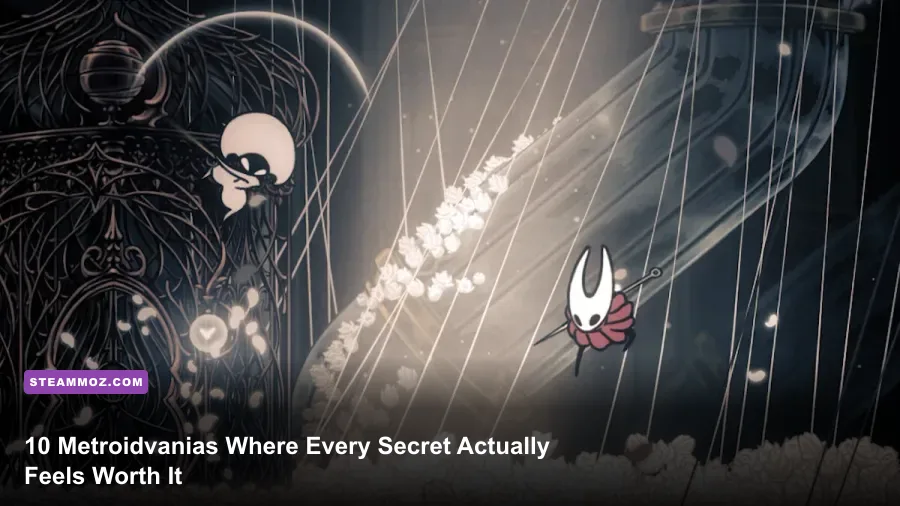
The metroidvanias that stick with you aren't the ones with the biggest maps — they're the ones where getting a new movement tech instantly makes you think "wait, I bet that ledge I couldn't reach three hours ago..." That itch, that immediate urge to backtrack because you *know* the game is rewarding your curiosity, is the whole genre distilled into one feeling. Below are ten games that nail it, ranked by how satisfying their secrets and traversal actually feel to discover and master.
What Actually Makes a Metroidvania's Secrets "Rewarding"?

Before diving into the list, let's get specific about the criteria, because "secrets" and "movement" get thrown around loosely. A rewarding secret isn't just a hidden chest — it's a location that requires you to combine two or three abilities in a way the game never explicitly taught you. Think Super Metroid's wall-jump shortcuts or Hollow Knight's Shade Cloak dash through spikes. Great movement, meanwhile, means the traversal itself is fun on a frame-by-frame level — momentum, air control, cancel windows — not just a means to an end.
I judged each entry on four things: ability-gating design (does unlocking a skill genuinely reopen the map?), movement tech depth (dash-cancels, wall-clings, chain-dashes), secret density relative to map size, and whether the game punishes or rewards obsessive backtracking. Games that fail even one of these get docked hard, no matter how pretty they are.
The Full Ranking Breakdown
| Rank | Game | Signature Movement Tech | Best Secret Reward |
|---|---|---|---|
| 1 | Hollow Knight | Shade Cloak dash + Mothwing Cloak chaining | Void Heart charm in the Abyss |
| 2 | Ori and the Will of the Wisps | Bash + Launch combo chains | Secret Spirit Trial shortcuts |
| 3 | Axiom Verge | Address Disruptor wall-glitching | Hidden lab revealing the true plot |
| 4 | Guacamelee 2 | Rooster Uppercut + Dash combos | Golden luchador masks in Chicken World |
| 5 | Animal Well | Disc + Slinky physics puzzles | Hidden eggs unlocking true ending |
| 6 | Super Metroid | Wall-jump + Shinespark | Early Wave Beam speedrun room |
| 7 | Metroid Dread | Slide + Spider Magnet chains | Hidden Missile+ tanks via EMMI zones |
| 8 | Blasphemous 2 | Sword-swap air dashes | Hidden Rosary Beads combos |
| 9 | Rain World | Momentum-based creature climbing | Ascension ending path |
| 10 | Death's Gambit: Afterlife | Dash-cancel attacks | Secret boss-tier weapons |
S-Tier Picks: Hollow Knight, Ori, and Axiom Verge
Hollow Knight is still the gold standard, and honestly, nothing's dethroned it since 2017. The Shade Cloak alone rewrites your entire understanding of Hallownest — that spike gauntlet in the Path of Pain? It's brutal on purpose, gating one of the toughest optional challenges behind pixel-perfect dash timing. What makes it "rewarding" rather than just hard is that every secret ties back into lore, charms, or the true ending via the Abyss and the Void Heart. If you've been waiting on Silksong's official page for updates, replaying the original with a 112% completion run is basically mandatory homework.
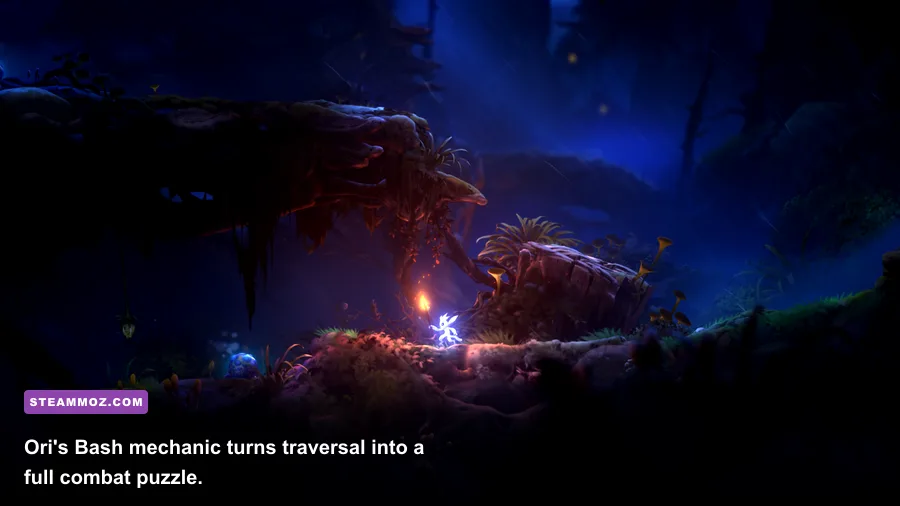
Ori and the Will of the Wisps earns its spot purely on movement feel. The Bash mechanic — redirecting projectiles and enemies to launch yourself — turns combat encounters into improvised traversal puzzles. Moon Studios built entire optional zones, like the Windswept Wastes' upper reaches, that are borderline unreachable without mastering Bash-into-Launch chains. It's punishing in the best way; you fail, you laugh, you try again because the movement itself feels incredible even when you're falling to your death.
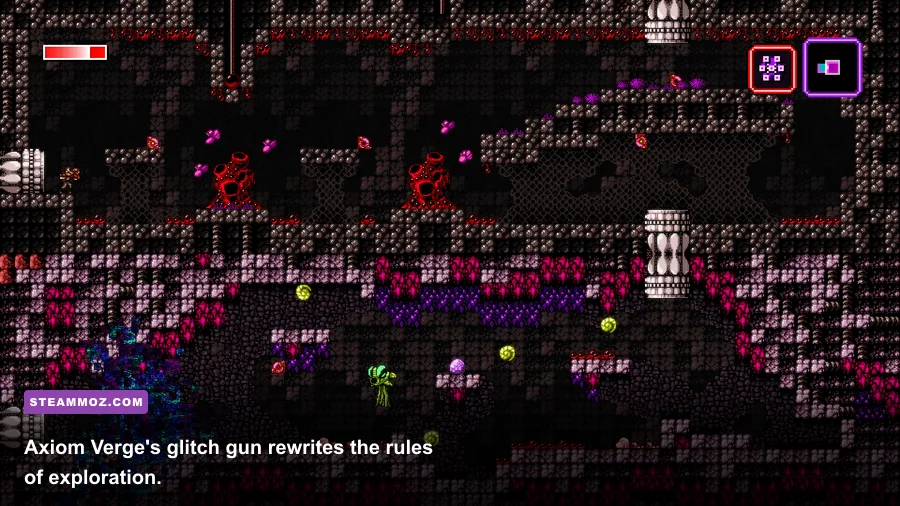
Axiom Verge deserves more credit than it gets. The Address Disruptor lets you glitch through specific wall textures, and the game plants entire rooms that only make sense once you realize the "glitch" is diegetic — it's literally corrupting the game world's code. Finding those glitch-walls feels like uncovering a genuine developer secret, not just a level design gimmick.
A-Tier: Guacamelee 2, Animal Well, and the Metroid Classics

Guacamelee 2 doesn't get enough love in these conversations because people write it off as a "beat 'em up." But the movement — dash, uppercut, chicken-form squeeze-throughs — is some of the tightest platforming combat in the genre. Secrets are gated behind combo execution, not just ability ownership, which means skill actually matters for 100% completion.
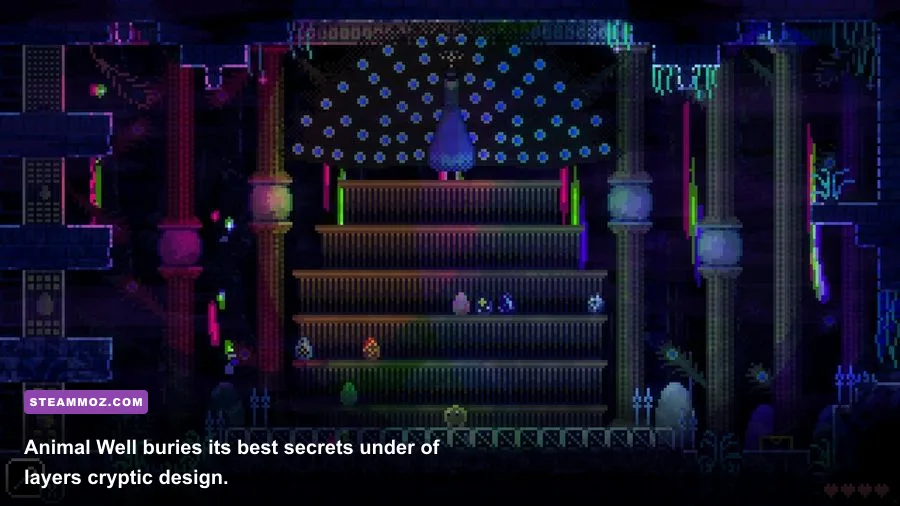
Animal Well is the newest entry here and it's an outlier — there's barely any combat, and the "movement" is mostly physics-based puzzle-solving with the Disc and Slinky items. But the secret density is absurd. Billy Basso hid layers on layers of ARG-style puzzles that the community is still cracking. If cryptic, obsessive exploration is your thing, nothing else on this list scratches that itch quite like it.
Super Metroid and Metroid Dread both make the cut for very different reasons. Super Metroid invented half this genre's vocabulary — Shinesparking through breakable blocks to grab an item three rooms early is still one of gaming's greatest "I'm not supposed to be here" feelings. Dread modernizes it with the Slide and Spin Boost, letting you chain momentum through EMMI zones you're supposed to be terrified of, which adds genuine tension to backtracking.
Movement Tech Deep Dive: Why Dash-Canceling Matters
Here's the mechanical detail most lists skip: the difference between "fine" traversal and "great" traversal usually comes down to input buffering and cancel windows. In Hollow Knight, you can cancel the recovery frames of a downward pogo bounce into a dash, letting skilled players chain across spike pits that look impassable to newcomers. Blasphemous 2 does something similar with its sword-swap system — canceling an air combo into a dash-attack with a different weapon gives you extra horizontal distance that the game never explicitly tells you about.
Rain World is the wildcard of this list because it rejects traditional ability-gating almost entirely. There's no double jump to unlock — instead, you learn creature behavior and momentum physics through sheer trial and death. It's less "rewarding secrets" in the classic sense and more "the entire game is a secret you have to decode," but the movement mastery curve is so steep and so satisfying once it clicks that it earns its spot.
| Game | Key Ability Gate | Backtracking Reward Type | Difficulty Curve |
|---|---|---|---|
| Hollow Knight | Mantis Claw / Shade Cloak | Charms, lore, true ending | Steep late-game |
| Ori WotW | Bash / Launch | Ability upgrades, health cells | Moderate, spikes on optional content |
| Axiom Verge | Address Disruptor | Weapon upgrades, plot reveals | Gentle, glitch-hunting heavy |
| Metroid Dread | Spider Magnet / Slide | Missile tanks, energy parts | Steady, EMMI tension spikes |
| Animal Well | Disc / Slinky combos | Cryptic true-ending items | Puzzle-heavy, not combat |
B-Tier and Honorable Mentions
Blasphemous 2, Rain World, and Death's Gambit: Afterlife round out the list not because they're weak games, but because their secret design leans more on combat challenge than pure movement mastery. Death's Gambit in particular hides some of its best gear behind optional bosses rather than platforming puzzles, which is satisfying but a different flavor of "reward" than what Hollow Knight or Ori deliver.
Worth namedropping outside the top ten: Hyper Light Drifter for its dash-slash cancel tech, and Guacamelee 1 if you want the rougher, more chaotic predecessor to the sequel above. Neither quite matches the secret density of the ranked list, but both are worth a weekend if you've cleared everything else here.
One tip that applies across nearly every game on this list: don't chase 100% completion on your first playthrough. Let yourself get soft-locked out of an area, feel that frustration, then come back once you've got the right ability. That contrast — impossible, then trivial — is literally the emotional engine the entire genre runs on. If you're grinding through other genres for that same "power spike" satisfaction, the leveling curve breakdowns in our Kakarot leveling guide or the Empires of the Undergrowth farming guide scratch a similar itch in totally different genres.
And if performance issues are getting between you and speedrunning your favorite secret routes, it's worth checking general troubleshooting approaches like the ones in our Everspace 2 crash-fix breakdown — a lot of the frame-pacing fixes there apply broadly to indie engines too. For secret-hunting inspiration beyond metroidvanias, our deep dives into Everspace 2's hidden rewards and Eternal Destiny's secret locations show the same design philosophy translated into open-world and RPG spaces.
At the end of the day, the metroidvanias that last aren't the longest or the hardest — they're the ones where every new ability makes you want to open the map and start circling back immediately. That's the real test. If a game's movement doesn't make you itch to backtrack the second you unlock something new, it's not doing its job. Every entry on this list passes that test with room to spare.