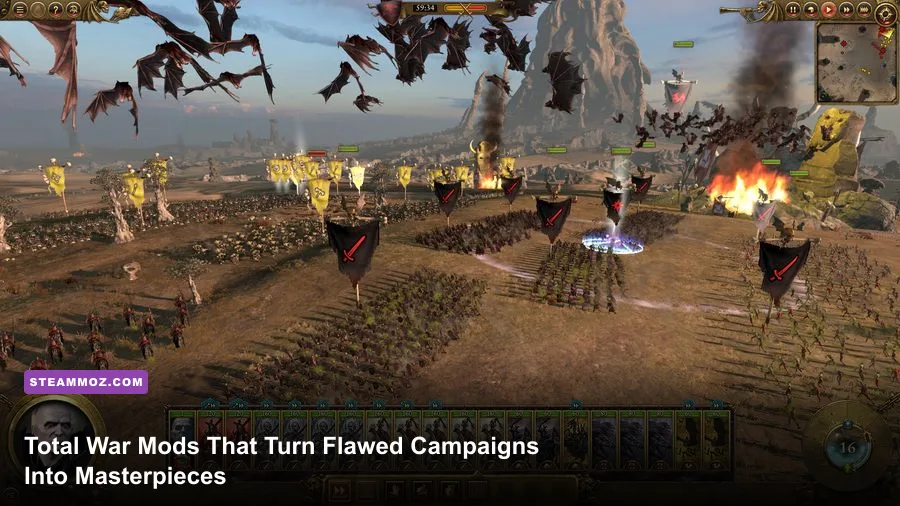
Vanilla Total War games are notorious for launching with grand visual promises, only to stumble under shallow diplomacy, hyper-fast arcade combat, brain-dead campaign AI, and broken siege pathfinding. If you have ever watched your veteran frontline dissolve in ninety seconds flat or watched an enemy faction bypass three garrisoned fortresses to torch a minor fishing village, you know the vanilla experience leaves immense strategic potential on the table. Transforming these games into the deep, unforgiving strategy simulators they were meant to be comes down to a curated roster of community-built overhauls, mechanical fixes, and tactical AI re-engineers that fundamentally rewrite how Creative Assembly's engines calculate battlefield friction and empire management.
The Total War Overhaul Tier List: From Shallow Skirmishes to Grand Strategy
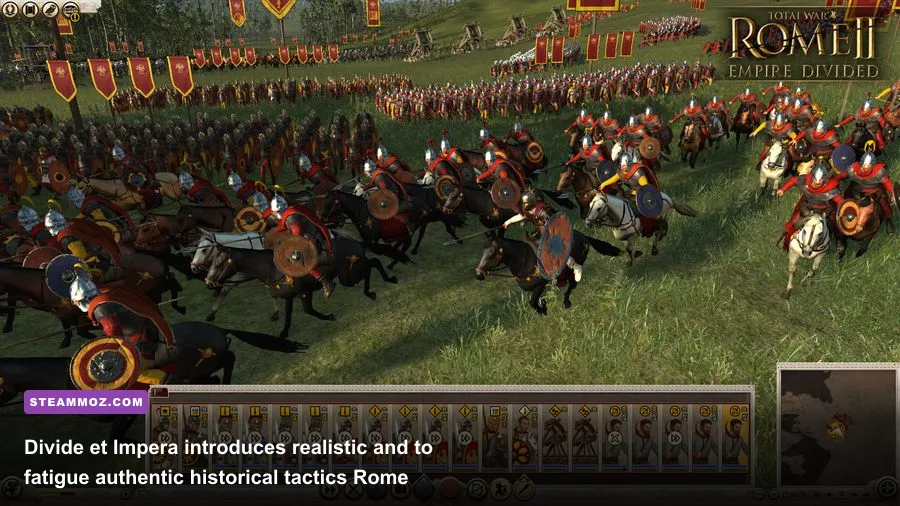
Comprehensive overhauls do far more than tweak numeric tables; they tear down vanilla combat math and rebuild unit collision, morale thresholds, and logistical depth from scratch. When you install an S-Tier total overhaul, you are discarding the floaty, rapid route-fests of the base games in favor of methodical tactical maneuvers where unit exhaustion, terrain elevation, and supply logistics actually decide engagements.
In standard vanilla titles, battles are often won purely on unit stats and automated kill-animations. Overhauls alter mass, acceleration, weapon reach, and projectile penetration curves to enforce historical or lore-accurate tactical cohesion. Instead of your frontlines collapsing into messy scrums within two minutes, a well-built overhaul keeps battle lines locked for prolonged meat-grinder engagements, giving you the breathing room to execute wide flanking maneuvers, manage rotating reserve lines, and leverage shock cavalry charges with catastrophic kinetic impact. If you have spent time fine-tuning other demanding PC titles using settings designed to stabilize heavy campaign stutter, you know that keeping your frame rates fluid while rendering thousands of fully collision-calculated soldiers requires both engine awareness and well-optimized modding frameworks.
Before overhauling your install, you need to understand how each major mod scales campaign complexity and system overhead. Here is how the most prominent overhauls across the franchise rank when evaluated on mechanical depth, balance, and stability:
| Overhaul Mod | Base Game | Tier Rating | Core Mechanical Rework | End-Turn & CPU Impact |
|---|---|---|---|---|
| Divide et Impera (DeI) | Total War: Rome II | S-Tier | 4-tier population classes, realistic supply trains, authentic lethality, historical formations | Moderate (longer turn calculation times due to population scripts) |
| SFO: Grimhammer III | Total War: Warhammer III | S-Tier | Lore-accurate unit caps, complete magic rebalance, expanded faction tech trees, dynamic combat pacing | Low-to-Moderate (minor RAM overhead, excellent stability) |
| Medieval Kingdoms 1212 AD | Total War: Attila | S-Tier | Full medieval conversion, feudal vassal levying, Pope/Crusade mechanics, era-specific upgrades | High (heavy draw calls on custom high-poly unit armors) |
| Stainless Steel 6.4 | Medieval II: Total War | S-Tier | Byg's Grim Reality sub-logic, hyper-intelligent Savage AI, real combat physics, traits rework | Extremely Low (engine-bound, solved via 4GB LAA patch) |
| Radious Total War | Multiple Games | B-Tier | Huge unit roster bloat, aggressive economy buffs, arcade unit uptime, hyper-abundant money | Low (primarily table tweaks, minor script overhead) |
| DarthMod | Empire / Napoleon | A-Tier | Massive 40-unit armies, smoke particle immersion, amplified line infantry accuracy drop-offs | Moderate (particle physics require custom GPU profiling) |
While packages like Radious cater to gamers who want hundreds of varied troop variants and endless gold per turn, purists seeking punishing strategic realities should gravitate towards Divide et Impera or SFO. These packages force you to weigh the economic and demographic cost of every single spearman sent to the front line.

🎮 FORM
Looking to experience this game? Grab your digital key directly on our store for $14.99.
View on Steammoz Store →Warhammer III: Fixing Campaign Mechanics and Lore Balance
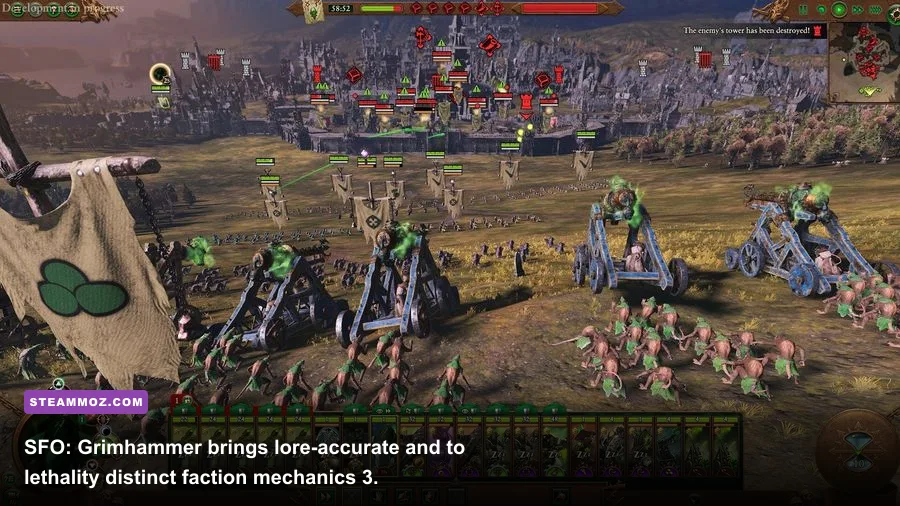
Total War: Warhammer III is a sprawling canvas, but its vanilla release is plagued by identity homogenization, weak mid-tier infantry units, and trivialized magic. In vanilla, single-entity monsters and generic high-tier ranged doomstacks routinely wipe elite lore-accurate foot soldiers without breaking a sweat. When units like Chosen of Chaos or Phoenix Guard fold to cheap AP ranged spam in seconds, the fantasy power balance shatters completely.
The single most mandatory overhaul for Creative Assembly's flagship fantasy title is SFO: Grimhammer III, managed by a dedicated modding collective on the Total War: Warhammer III Steam Workshop. SFO tackles the doomstack meta by introducing optional, hard unit caps based on army or faction tier, directly mirroring tabletop rules. An Empire general can no longer field nineteen Steam Tanks without facing staggering economic penalties. Furthermore, SFO recalibrates unit mass, meaning a charging Bloodthirster hits infantry lines like an armored freight train rather than sliding off spearmen like butter. Elite infantry receive substantial HP pools and high physical resistances, turning veteran heavy infantry into impenetrable meat walls that allow tactical maneuvering.
To flesh out the campaign map alongside SFO, you need a precise modular ecosystem of supplementary mods:
- Community Bug Fix Mod: The unsung hero of the entire ecosystem. It patches hundreds of broken campaign skill triggers, erroneous database values, missing voice lines, and quest-battle scripts that official patches overlook for months.
- Mixu's Legendary Lords: Infuses the Empire, Bretonnia, and High Elves with lore-accurate Elector Counts and Duke characters, complete with custom 3D models, unique skill lines, and faction-specific mechanics that make sub-factions play like entirely independent DLCs.
- Mod Configuration Tool (MCT): A foundational utility that adds an in-game UI tab allowing you to toggle mod mechanics on the fly—such as adjusting lethality percentage sliders, turning off anti-player AI bias, or re-enabling restricted legendary lord defeat traits.
- Custom Campaign Customizer: Perfect for sandbox enthusiasts who want to disable end-game crisis teleports, randomize starting faction settlements, or buff underdog AI factions to prevent total map bloat by turn 60.
Managing an empire under heavy tactical strain demands the same resource vigilance you would apply when tackling economy optimization and resource distribution in strategic builders. If you fail to balance replenishment bonuses against SFO's harsh casualty recovery debuffs, a single pyrrhic victory deep in enemy territory will leave your legendary lord stranded and ripe for ambush.
Historical Realism: Transforming Rome II and Attila into Logistical Nightmares
Vanilla Total War: Rome II remains an arcade simulation where you can recruit a full legion of Triarii from a barren conquered desert village in two turns. Historical immersion is shattered when manpower feels infinite and supply trains do not exist. To fix this fundamentally flawed gameplay loop, Divide et Impera (DeI) is not just recommended; it is practically a replacement executable.
DeI implements a brutal, four-tier demographic system: Patricians (Nobles), Equites (Knights/Warriors), Plebeians (Commoners), and Peregrini (Foreigners/Slaves). If you want to train veteran Triarii, Praetorians, or Companion Cavalry, you must draw directly from your noble population pool. If a bloody siege wipes out your noble core, you cannot train elite shock troops in that province for dozens of turns until the demographic balances recover. This mechanic completely eliminates mindless doomstacking and forces you to garrison provinces using auxiliary local skirmishers and cheap native levies.
DeI also introduces a deep supply line system. Marching your legions across desert sands or snowy mountain passes without dedicated baggage trains or allied supply hubs introduces progressive attrition, devastating combat morale debuffs, and movement range penalties. Combat itself is lengthened substantially. Frontal engagements turn into exhausting, gritty grinds where shield walls hold for ten to fifteen minutes, making stamina management the deciding factor. If your legionaries become "Exhausted," their melee defense and armor effectiveness drop by up to 50%, leaving them vulnerable to rear cavalry charges or fresh reserve rotations.
Meanwhile, for owners of Total War: Attila, the masterpiece mod is undeniably Medieval Kingdoms 1212 AD. Rather than dealing with Attila's apocalyptic climate-change survival mechanics, 1212 AD ports the game into the High Middle Ages. It delivers:
- Over 50 fully playable historical factions ranging from the Holy Roman Empire and Kingdom of France to the Sultanate of Rum and Ayyubid Sultanate.
- A feudal annexing and levying framework where vassal management determines your military strength, mirroring medieval oaths of fealty.
- The Papacy and Crusade mechanics, complete with excommunication risks, holy wars, and cardinal elections.
- Three progressive visual armor tiers for every single unit across three centuries, swapping out chainmail coifs for polished plate armor as technological eras progress.
Just be prepared for technical demand. The high-polygon armor meshes in 1212 AD can severely stress hardware during full 40v40 stack sieges. Just like troubleshooting severe frame drops and bottlenecks in physics-heavy games, you will want to drop shadow resolution and unit detail by one tier to keep your frame rates steady when thousands of mounted knights clash outside Paris or Constantinople.
Tactical AI, Camera Fixes, and Battle Immersion Tuning
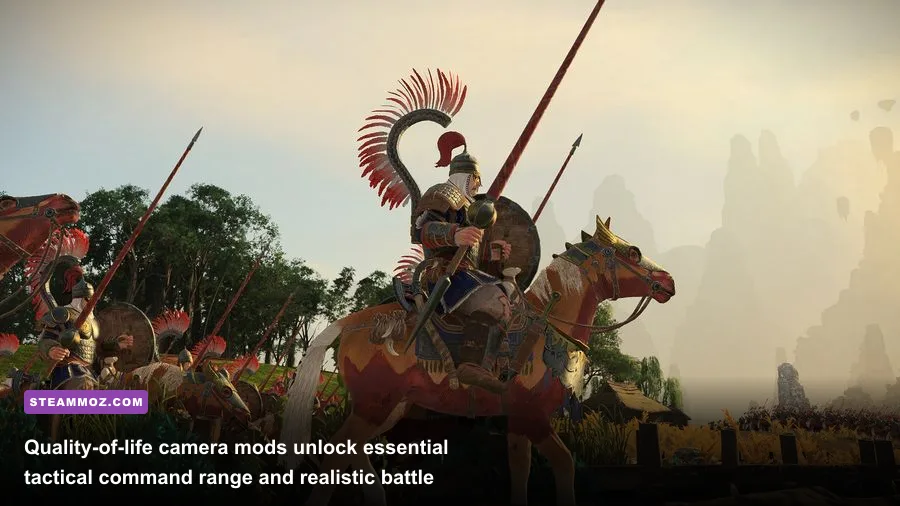
Even if you prefer sticking close to vanilla campaign balances, standard Total War battlefields are plagued by an agonizingly restrictive tactical camera and erratic AI unit pathfinding. The default camera anchor sits frustratingly close to the ground, preventing you from evaluating wide frontline flanks or surveying terrain depressions where hidden enemy cavalry lurk. Installing a Better Camera Mod is an unconditional, day-one requirement for every single Total War title in existence.
A tactical camera script removes the hard ceiling altitude lock and lowers the minimum terrain tracking limit. This enables you to zoom out to a true bird's-eye strategic view to command expansive pincer movements, while also allowing you to zoom down to unit-level eye height to capture cinematic screenshots of shield clashes and cavalry charges. Beyond camera functionality, tactical behavior mods are critical to stopping the AI from exhibiting its classic "blobbing" behavior in narrow city chokepoints.
The following setup focuses on fixing unit behavior, animations, and battlefield responsiveness without overhauling campaign data:
| Tactical / QoL Mod | Engine Target | Strategic Problem Solved | Practical In-Game Result |
|---|---|---|---|
| Better Camera Mod | All Modern TW Titles | Restrictive zoom boundaries and aggressive camera acceleration smoothing | Unlocks orbital strategic viewing and cinematic ground-level camera placement |
| AI Battle Behavior Rework | Rome II / Attila / WH3 | AI rushes all units into single chokepoints, ignoring flanks and burning stamina | Forces AI to hold wider battle lines, flank with cavalry, and protect archers |
| Less Blood, Less Gore | Warhammer III / Three Kingdoms | Over-the-top ketchup effects that coat entire units in flat, glossy red paint | Restores subtle blood splatter and realistic weapon gore without frame-rate dips |
| Realistic Weapon Range Mod | Empire / Napoleon | Muskets firing with laser accuracy across half a mile; cavalry instantly routed | Restores historical volley dispersion, smoke fog-of-war, and brutal close-range fire |
| UI Modernization / MCT | Warhammer Series | Opaque, clunky menus blocking critical unit statistics during fast-paced micro | Transparent stat cards, custom damage readouts, and clear collision metrics |
If you encounter engine lockups or infinite loading screens when stacking battle behavior mods with graphical particle tweaks, applying general tactics that stop engine crashes and stabilize FPS will save your campaign from corrupted battle saves. Always ensure your mods do not alter identical database keys in the game's pack files.
The Immortal Era: Why Medieval II Conversions Still Dominate
It is an open secret among strategy enthusiasts that the older generation of Total War titles—specifically Medieval II: Total War running on Creative Assembly's legacy engine—offers tactile battlefield physics and modding freedom that modern titles struggle to replicate. In Medieval II, arrows are modeled as physical ballistic objects with independent hitboxes rather than pre-calculated stat rolls. If an arrow strikes a physical wooden shield, it sticks; if it hits a helmet at an oblique angle, it deflects. This underlying physics framework has allowed classic modders to build absolute masterpieces that rival full commercial releases.
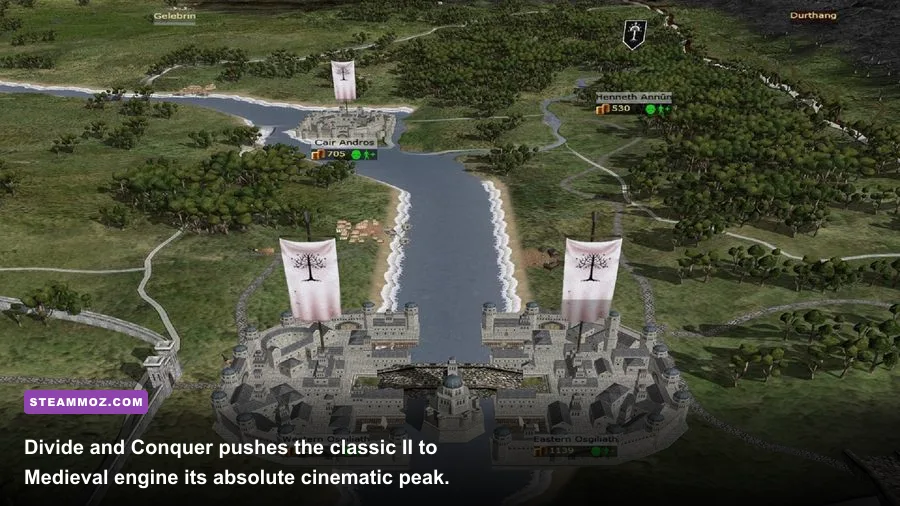
Standing head and shoulders above all fantasy gaming mods is Third Age: Total War, especially when paired with its premier standalone submod, Divide and Conquer (DaC). DaC is the definitive Middle-earth grand strategy experience. Available through archives on ModDB, it models every faction from the Kingdom of Gondor and the Horse-lords of Rohan to the shadowy remnants of Angmar and the Dwarven realms of Khazad-dûm.
What sets Divide and Conquer apart is its incredible custom tactical battlefield architecture. When you defend the white stone rings of Minas Tirith, the mountain fortress of Helm's Deep, or the subterranean caverns of Erebor, you are not fighting on generic stone wall templates. These settlements are bespoke 3D assets matching the visual descriptions of Tolkien's lore down to individual gatehouses and inner keeps. Scripts govern epic historical events: reforging the Sword That Was Broken, scouring the lands for the One Ring, or resurrecting the ancient kingdom of Arnor through dynamic settlement restoration chains.
For historical purists, Stainless Steel 6.4 remains the gold standard of high medieval gaming. Incorporating Byg's Grim Reality submods, Stainless Steel challenges your generalship through supply lines, knightly code-of-honor systems, and feudal loyalty mechanics. If you send a general on campaign without proper funding, food supplies, or high authority, his loyalty will plummet, and his entire army can desert or turn rebel mid-march.
To run these classic Medieval II titans on modern operating systems without crashing, you must execute two critical technical steps:
- Apply the 4GB / LAA (Large Address Aware) Patch: The Medieval II executable is a legacy 32-bit application limited to 2GB of virtual memory by default. Heavy mods with high-definition unit textures will instantly trigger "unspecified error" desktop crashes the second memory allocation exceeds this ceiling. Applying a 4GB patch to
medieval2.exeunlocks the full 4GB memory space and prevents 99% of siege memory crashes. - Disable Windows DPI Scaling Overrides: Right-click the game executable, navigate to Properties > Compatibility, and check "Override high DPI scaling behavior." This fixes mouse cursor offset bugs and campaign map edge-scrolling stutters on high-resolution displays, ensuring crystal-clear graphical fidelity similar to balancing resolution scaling and rendering clarity in visual puzzle engines.
Curating Your Ultimate Campaign Load Order
Transforming your Total War library requires a thoughtful, disciplined approach to load order management. Stacking dozens of disparate script mods without checking for conflicting database tables will inevitably crash your campaign thirty turns in. Always start by auditing the foundational core: install the Community Bug Fix Mod or specific engine memory patches first, layer your chosen total conversion overhaul directly beneath it, and finalize your list with lightweight aesthetic, camera, and audio tweaks.
The vanilla campaigns provided by Creative Assembly's official game releases serve as excellent structural foundations, but the modding community is where the series truly earns its crown as the pinnacle of PC strategy gaming. Whether you are holding a crumbling shield wall at the Battle of Cannae in Divide et Impera, purging Chaos incursions with tabletop-accurate unit caps in SFO: Grimhammer, or repelling orcish hordes from the walls of the White City in Divide and Conquer, these essential mods discard arcade simplifications and deliver the deep, demanding, and cinematic warfare you always wanted.