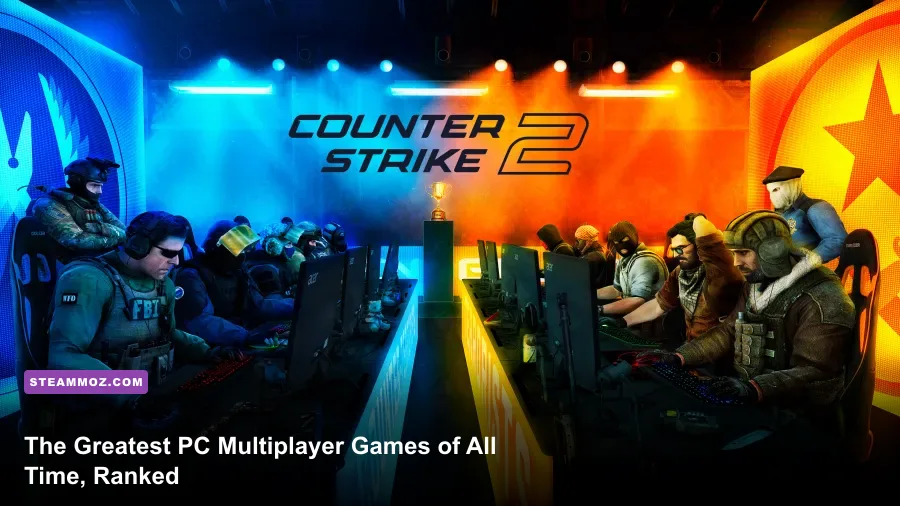
If you ask a room of veteran PC gamers to crown the undisputed king of online multiplayer, the room will instantly divide into factions waving banners for Counter-Strike, Dota 2, and World of Warcraft. The true benchmark of a legendary PC multiplayer game isn't launch-week hype or temporary Twitch viewership; it comes down to mechanical depth, netcode precision, tactical longevity, and an engine flexible enough to support thousands of hours of high-skill play. Based on decades of player consensus, tournament prestige, and active daily server populations, we have ranked the absolute greatest PC multiplayer titles to ever grace our monitors.
S-Tier Legends: The Unstoppable Pillars of PC Multiplayer
At the absolute summit of multiplayer history sit the games that shaped entire genres, spawned esports industries, and proved that PC gaming is the ultimate platform for raw, unadulterated skill expression. These three titles have survived multiple engine overhauls, decades of balance patches, and shifts in gamer demographics without losing their stranglehold on player counts.
Counter-Strike (1.6, CS:GO, CS2): No shooter in history matches the pure mechanical purity of Valve's tactical titan. From the golden days of 1.6 on LAN to modern sub-tick warfare in Counter-Strike 2 on Steam, the game's core formula has never wavered: two bomb sites, two squads, and lethal gunplay where a single stray AK-47 bullet to the forehead ends your round. The beauty lies in the micro-mechanics—counter-strafing to arrest momentum for pinpoint accuracy, managing spray recoil across a 30-round magazine, and executing coordinated execute smokes with 128-tick lineup precision. Every dollar spent on an AWP carries real team economic weight, making eco-round decisions just as vital as raw crosshair placement.
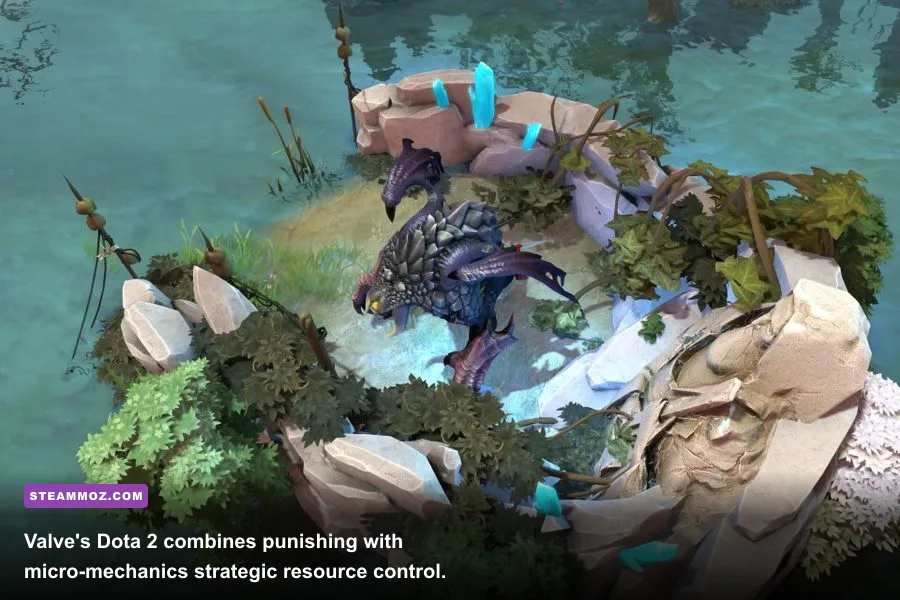
Dota 2: While other MOBAs sanded down the rough edges to appeal to casual audiences, Valve's official Dota 2 hub doubled down on unforgiving mechanical complexity. With over 120 heroes, distinct hero turn rates (varying from 0.5 to 0.7 seconds), creep pulling, camp stacking, and high-ground vision penalties, the game demands total cognitive focus. Buying an item isn't just about raw stats; deploying a Black King Bar for temporary spell immunity, executing an unreactable blink-Dagger initiation, or managing buyback cooldowns during a 70-minute slugfest turns every teamfight into high-stakes chess.
World of Warcraft (Classic through Wrath of the Lich King): Before modern MMOs scattered players into matchmaking lobbies, Azeroth was a living, breathing social experiment. The thrill of organizing a 40-man Molten Core raid, timing crowd control diminishing returns in rated 3v3 Arena matches, and skirmishing outside Tarren Mill created multiplayer memories that no modern game has replicated. The tight 1.0-to-1.5-second Global Cooldown (GCD) combat system turns competitive PvP into a flurry of interrupt baits, trinket swaps, and defensive cooldown rotations.
🎮 1bitHeart
Looking to experience this game? Grab your digital key directly on our store for $2.99.
View on Steammoz Store →A-Tier Titans: High Skill Ceilings and Endless Replayability
Sitting just beneath the holy trinity are games that pushed physics, destruction, and movement mechanics into uncharted territory. If you want games that challenge your reflex speed, situational awareness, and creative problem solving, this tier represents PC design at its peak.
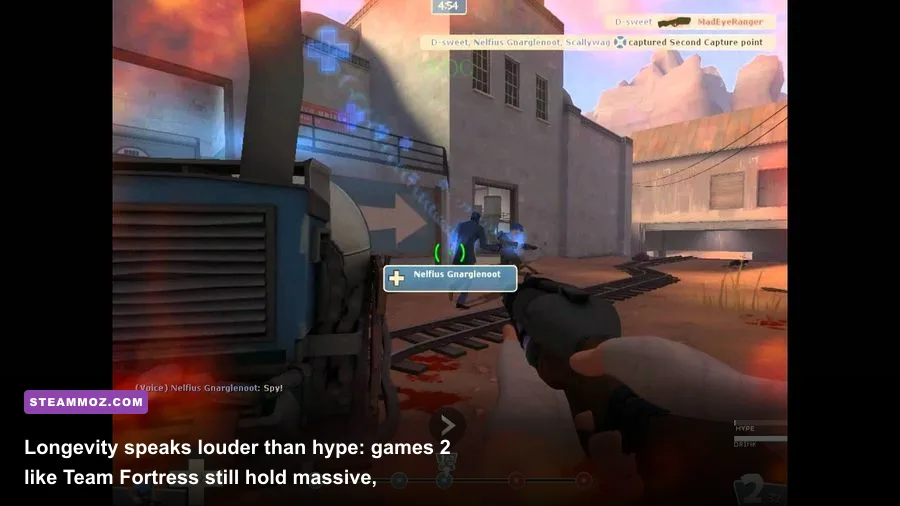
Team Fortress 2: Released back in 2007, Valve's class-based shooter remains a masterclass in Source engine movement physics. A skilled Soldier doesn't just run across the map; they crouch-jump, detonate a rocket at their own feet, and ride the blast wave at over 1,100 Hammer velocity units to drop out of the sky onto a Medic. The dynamic push-and-pull between an invulnerable ÜberCharge push and a well-placed Pyro airblast represents some of the smartest team-fight dynamics ever coded. If you love dissecting weapon balance and niche equipment synergies, check out how loadout metas compare to our Far Cry 3 Blood Dragon weapons tier list for a different spin on shooter arsenals.
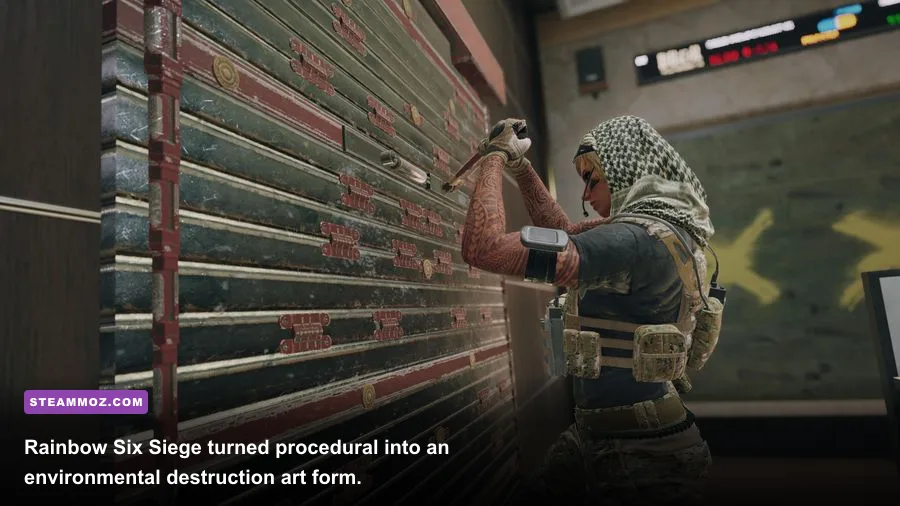
Rainbow Six Siege: Ubisoft took the slow, methodical planning of classic tactical shooters and smashed it against the AnvilNext engine's procedural destruction. In Siege, walls aren't boundaries—they are sightlines waiting to be punched open with a shotgun. Mastering Siege requires memorizing floorboard layouts for vertical grenade angles, countering hard-breachers with precise Bandit-battery battery tricking, and managing audio cues down to the decibel. Just like tuning complex competitive setups, ensuring smooth frame delivery is critical; you can consult our advice on optimizing Far Cry 6 for max FPS to see how display optimizations impact reaction times in high-stress engines. Check out Ubisoft's Rainbow Six Siege hub to jump into the tactical crossfire.
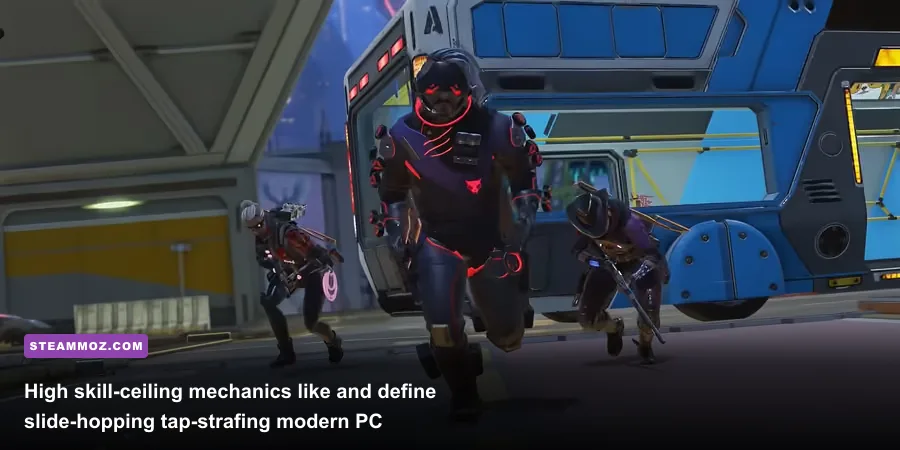
Apex Legends: Built on a heavily modified version of the Source engine, Respawn Entertainment gave battle royale enthusiasts the most fluid movement tech on the market. Slide-jumping down hills to preserve kinetic energy, wall-bouncing off doorframes, and chaining tap-strafes mid-air allows players to out-maneuver entire squads. The time-to-kill (TTK) is deliberately tuned long enough to prioritize gunskill consistency—tracking targets through erratic zig-zags with an R-301 or Flatline—over blind ambush luck.
Master Table: How PC Gaming’s Greatest Multiplayer Titans Compare
To understand why these games dominate player hours decade after decade, let's break down the mechanical foundations that set them apart. The table below evaluates core genres, server performance standards, mechanical ceilings, and optimal match pacing across the PC pantheon.
| Game Title | Tier Rating | Core Genre Hook | Mechanical Skill Ceiling | Baseline Server Architecture | Optimal Match Pacing |
|---|---|---|---|---|---|
| Counter-Strike 2 | S-Tier | One-tap gunplay, map control, economy | 10 / 10 | Sub-tick server architecture | Methodical tactical rounds (1:55 min) |
| Dota 2 | S-Tier | Macro strategy, camp stacking, cooldowns | 10 / 10 | 30-tick authoritative Valve servers | Long-form tactical siege (35–55 min) |
| World of Warcraft (Classic) | S-Tier | Raid coordination, GCD Arena rotations | 9 / 10 | Dynamic batching / tick engine | Protracted resource wars (2–25 min) |
| Team Fortress 2 | A-Tier | Rocket jumping, class counter-picks | 9 / 10 | 66-tick Source dedicated servers | Objective momentum pushes (10–20 min) |
| Rainbow Six Siege | A-Tier | Procedural destruction, drone scouting | 9.5 / 10 | 60-tick dedicated cloud clusters | Tense site-breach skirmishes (3:00 min) |
| Apex Legends | A-Tier | Momentum tech, armor swapping, tracking | 8.5 / 10 | 20-tick hybrid servers | Fast-paced BR rotations (15–22 min) |
| Battlefield 4 | B-Tier | 64-player combined arms, vehicle dogfights | 8 / 10 | 60Hz / 120Hz community servers | All-out attrition warfare (20–40 min) |
| Left 4 Dead 2 | B-Tier | AI Director stress-budgeting, co-op clearing | 7.5 / 10 | 30Hz to 100Hz tick Source servers | Linear survival gauntlet (15–30 min) |
Whether you're executing a high-damage rotation in an MMO or punishing an open angle with a sniper, split-second input response matters. Just like managing active frame data—which we dissected in our Fatal Fury City of the Wolves specs breakdown—multiplayer shooters demand relentless focus on input latency and system stability.
Co-op and Chaos: The Community Giants That Refuse to Die
Not every multiplayer masterpiece requires sweaty ranked ladders and toxic voice comms. Some of the greatest online experiences ever built on PC prioritize four-player coordination or massive 64-player vehicular sandbox warfare.
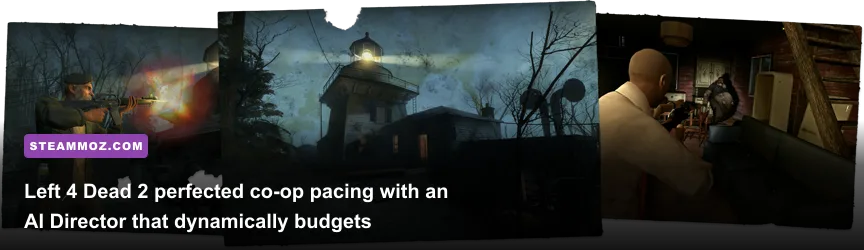
Left 4 Dead 2: Valve’s 2009 zombie shooter remains the platinum standard for cooperative gameplay. The secret sauce is the AI Director, an unseen algorithmic puppet master that tracks your squad's health pools, ammo reserves, and proximity to calculate pacing. If your team is breezing through the Mercy Hospital corridors, the Director deploys a Tank around the corner coupled with a Smoker pulling your rearguard into the shadows. Jump onto Team Fortress 2 on Steam or fire up L4D2's custom campaigns via the Steam Workshop to experience how community modding keeps classic multiplayer alive.
Battlefield 4: DICE’s military opus had a disastrous launch, but after community test environment patches overhauled its tick rates from a sluggish 30Hz up to 60Hz and 120Hz high-frequency community servers, BF4 evolved into the definitive sandbox war simulator. Flying a Little Bird helicopter through the collapsing skyscraper dust of Siege of Shanghai while 64 players clash over infantry choke points delivers a brand of chaotic emergent warfare that modern titles still struggle to capture. When unexpected frame drops disrupt massive combined-arms battles, applying foundational engine tweaks like those in our guide to troubleshooting PC crashes and framerate drops will keep your combat fluid.
Netcode, Tick Rates, and Input Lag: What Makes PC Multiplayer Great
Console players enjoy convenience, but PC gamers demand competitive integrity. The platform's superiority in the multiplayer arena stems from an obsession with hardware synergy: 1,000Hz to 8,000Hz mouse polling rates, ultra-low input lag on 240Hz+ displays, and uncompressed dedicated server options. When server netcode drops packets or fails to compensate for player latency, the competitive illusion collapses.
| Netcode Architecture | How It Works | Primary Advantage | Main Competitive Vulnerability |
|---|---|---|---|
| Dedicated Sub-Tick (CS2) | Timestamps client actions between traditional server ticks | Click-instant accuracy regardless of refresh window | Visual animations can desync slightly from registered hits |
| High-Tick Dedicated (128Hz) | Server processes game world state 128 times per second | Extreme hit registration precision; predictable physics | Heavy server-side CPU utilization and hosting costs |
| Deterministic Rollback | Predicts remote player inputs and rolls back state on desync | Virtually eliminates perceived input lag over long distances | Visual teleportation or "snapping" during packet drops |
| Standard Cloud Clusters (20-30Hz) | Updates world state 20-30 times per second to save bandwidth | Cheaper hosting; easy matchmaking scalability | "Dying behind cover" artifacts; peeker's advantage |
To squeeze every ounce of responsiveness out of these network models, maintaining a stable frametime curve is non-negotiable. Stutters don't just look ugly; they eat your client-side inputs. Following principles like our walkthrough on tuning display settings for steady frametimes gives you a consistent foundation before hopping into competitive queues.
The Final Verdict: Which PC Multiplayer Titan Deserves Your Drive Space?
The beauty of PC multiplayer is that you don't have to settle for shallow gameplay loops or aggressive microtransaction-riddled battle passes unless you choose to. If you want pure, razor-sharp mechanical combat where individual skill reigns supreme, download Counter-Strike 2. If you want a deep strategic rabbit hole that takes thousands of hours to genuinely comprehend, master Dota 2. And if you crave lightning-fast mobility where movement is an offensive weapon, slide into Apex Legends.
These games haven't survived by accident. They earned their spots on this list through decades of blood, sweat, and millions of clutch rounds won in the dead of night. Clear some room on your SSD, grab your favorite headset, and jump in—the server is waiting.