
When you ask the PC gaming community to crown the greatest war games ever built, the answer never boils down to twitch reflexes or cinematic killstreaks. Players revere authentic operational friction, relentless logistical headaches, ballistic authenticity, and the crushing psychological weight of a single tactical blunder. Across thousands of community surveys, Steam review archives, and competitive forum debates, four titles consistently battle for the absolute summit: Arma 3, Squad, Hearts of Iron IV, and Company of Heroes. Whether you prefer leading a 9-man fireteam through an insurgent valley or balancing division-level fuel reserves across the Eastern Front, these games deliver an uncompromising theater of digital war that arcade shooters simply cannot replicate.
What Defines the Greatest PC War Games: Realism, Scale, and Agency
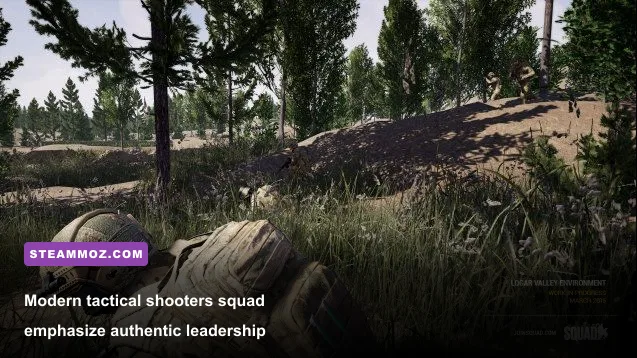
War on PC occupies a spectrum that no console ecosystem can touch. At its best, PC war gaming discards linear corridors in favor of expansive physical sandboxes, modular ballistic engines, and punishing tactical consequences. If you run out into an open field without suppressive fire, you don't regenerate shield health behind a wooden crate; you catch a 7.62x54mmR round through the clavicle from an unseen marksman 600 meters away and bleed out in thirty seconds.
Community rankings consistently prioritize three core design pillars when judging the genre's elite:
- Ballistic & Mechanical Authenticity: Bullets are modeled as physical projectiles subject to muzzle velocity drop, windage drift, air resistance, and material penetration. Vehicles feature modular sub-systems—engines, ammo racks, transmission housings, and crew compartments—rather than arbitrary overall hit-point bars.
- Logistical Friction: Glorious charges fail without fuel, ammo crates, forward operating bases (FOBs), and clear supply chains. Games that force players to haul trucks, build defensive garrisons, and allocate industrial output score higher than titles offering instant respawns.
- Emergent Strategic Agency: Scripted dramatic set pieces fade quickly. True military masterpieces give commanders and grunts the structural freedom to execute ambushes, combined-arms maneuvers, flanking wedges, or catastrophic logistical blunders entirely of their own making.
Much like dialing in your combat performance in Far Cry 2's harsh environmental mechanics, gritty military simulators refuse to hold your hand. Before we dissect the mechanical guts of each masterpiece, here is the community-voted hierarchy of digital warfare on PC.
| Game | Tier Rating | Primary Combat Scale | Signature Mechanical Hook | Community Consensus |
|---|---|---|---|---|
| Arma 3 | S-Tier | Theater-wide Sandbox (1-100+ km) | Complete ballistic simulation & modular sandbox engine | The undisputed king of military sandboxes; unmatched mod flexibility. |
| Squad | S-Tier | Tactical Company (50v50) | Integrated squad radio hierarchy & FOB logistics loops | The gold standard for modern multiplayer combined-arms teamwork. |
| Hearts of Iron IV | S-Tier | Global Grand Strategy | Industrial supply lines & division template meta | The ultimate operational-level WWII strategy wargame on earth. |
| Company of Heroes | S-Tier | Company Tactical RTS | Directional armor deflection & dynamic cover destruction | Pioneered cover-based tactical RTS micro; still unmatched in kinetic impact. |
| Hell Let Loose | A-Tier | Platoon to Company (50v50) | 50v50 frontlines with garrison network meta | Terrifying sensory immersion, brutal time-to-kill, and frontline pushes. |
| War Thunder | A-Tier | Combined-Arms Arena | Volumetric spall calculation & modular vehicle X-ray damage | Incomparable vehicle combat physics weighed down by free-to-play economy. |
| Steel Division 2 | A-Tier | Operational Tactical RTS | 1:1 scale battlegroups with phased deployment | Brilliant operational scale and realistic engagement ranges. |
| Red Orchestra 2 | B-Tier | Infantry/Armor Tactical (32v32) | Manual bolt cycling, barrel swapping & psychological suppression | A legendary cult classic that pioneered visceral infantry PTSD. |
| Combat Mission: Shock Force 2 | B-Tier | Battalion Hardcore Tactical | 60-second WEGO command execution with true NATO doctrine | Visually austere, but the most tactically accurate professional simulation available. |
🎮 1bitHeart
Looking to experience this game? Grab your digital key directly on our store for $2.99.
View on Steammoz Store →S-Tier: The Undisputed Titans of PC Warfare

Arma 3
Bohemia Interactive's flagship military sandbox remains an incomparable technical achievement. Launching across the sprawling 270-square-kilometer Mediterranean terrain of Altis, Arma 3 on Steam isn't merely an infantry shooter—it is an all-encompassing military operating system. Bullets don't spawn from an imaginary center-screen reticle; they leave your barrel at calculated muzzle velocities, suffering barrel thermal degradation, air-friction slowdown, and gyroscopic drift over distance.
When combined with the legendary community modifications ACE3 (Advanced Combat Environment) and TFAR (Task Force Arrow Radio), the depth becomes staggering. Medics must calculate blood loss, tourniquet arterial bleeding, administer epinephrine based on heart rate, and account for saline fluid volume. Radio operators must adjust frequencies based on radio wattage, atmospheric conditions, and terrain elevation blocking ultra-high frequency lines of sight. It's clunky, it demands substantial single-core CPU horsepower, but nothing else captures the terrifying vertigo of a nighttime helicopter insertion under active surface-to-air missile radar lock.
Squad
Developed by Offworld Industries—a team born from the famed Project Reality mod for Battlefield 2—Squad on Steam solved the ancient tactical shooter dilemma: how do you force fifty strangers on the internet to talk, plan, and bleed together? The answer lies in its structural game loops. Squad Leaders possess exclusive command radio channels, fireteam markers, and construction authority. Without designated supply logi trucks hauling construction points and ammunition crates from the main base, your squad cannot establish a Forward Operating Base (FOB) or drop a HAB (Hesco Accommodation Bunker) spawn point.
Gunfights in Squad are harrowing affairs. The Infantry Overhaul Update fundamentally altered combat pacing by introducing aggressive weapon sway, eye-blurring suppression effects, and realistic cheek-weld alignment penalties. You cannot sprint across an open street, instantly snap onto an optic, and click heads like a parkour athlete. You must steady your breathing, conserve stamina, coordinate bounding Overwatch fire with your battle buddy, and rely on vehicle support to breach hardened strongpoints.
Hearts of Iron IV
For gamers whose battlefield vision extends to global maps, railway bottlenecks, and factory output charts, Paradox Interactive's Hearts of Iron IV represents the pinnacle of grand strategic simulation. You aren't aiming a rifle; you are designing the tank that carries the gun, converting civilian factories into military production lines, and drafting doctrine templates that will either encircle an enemy army group or freeze to death outside Moscow.
The true genius of HOI4 lies in its granular logistical simulation. Winning campaigns hinges on combat width optimization (balancing your 15-width defensive infantry against 35-width heavy armor spearheads), motorizing supply hubs, managing air superiority percentage values to shred moving convoys via CAS (Close Air Support), and avoiding crippling resource deficits. If rubber shipments from Southeast Asia get raided by enemy submarine wolfpacks, your aircraft production stops, your frontline loses air cover, and your infantry divisions are pulverized by enemy tactical bombers within weeks.
Company of Heroes
Released in 2006 by Relic Entertainment, the original Company of Heroes revolutionized real-time strategy forever. Throwing aside the static resource gathering of traditional RTS games, CoH introduced dynamic sector control, true directional armor deflection, and environmental physical destruction powered by the Essence Engine.
Positioning is everything. An American 57mm anti-tank gun concealed behind light wooden fencing will bounce every standard round off the frontal sloped glacis of a German Panther tank. To survive, you must execute precise flanking maneuvers to strike the thin rear engine armor while your riflemen deploy sticky bombs to snap the tank's treads. Suppression mechanics force pinned infantry to hit the dirt, lowering their offensive damage to near zero while opening them up to lethal mortar sweeps. While fast micro management in games like Empires of the Undergrowth focuses on organic swarm paths, Company of Heroes remains a masterclass in reading ballistic sightlines and utilizing real-world tactical bounding on the fly.
A-Tier: Exceptional Grit and Frontline Authenticity
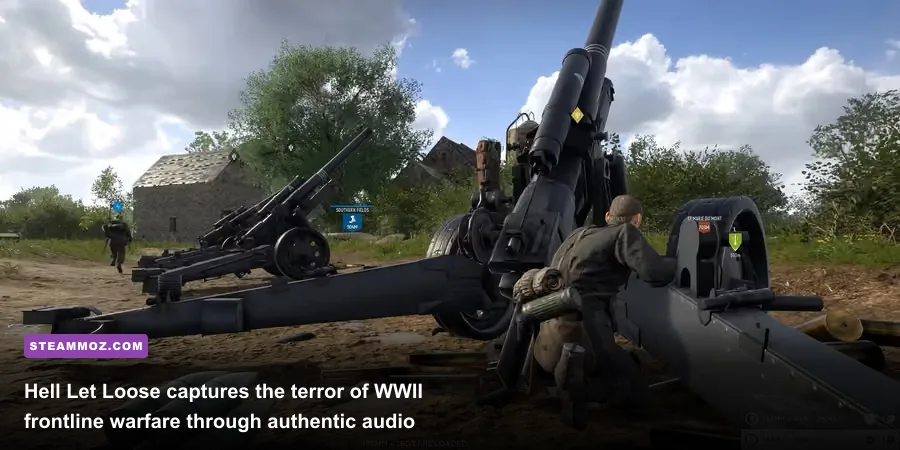
Hell Let Loose
Where Squad delivers modern communication-heavy warfare, Hell Let Loose drops you into the slaughterhouse of World War II. Set across 50v50 recreations of Carentan, Omaha Beach, Kursk, and Foy, HLL strips away comfortable modern shooter amenities: there are no hit-markers, no red crosshairs, and zero third-person peeking. If an artillery shell lands within fifteen meters, you don't take 80 damage; your character is instantly dismantled into red mist.
The core meta revolves around the Officer and Commander role constructing Garrisons (team-wide spawn nodes) and Outposts (squad-only spawns). An army with world-class marksmen will still suffer total defeat if its support players fail to drop 50-supply boxes to seed flank garrisons. The contrast in infantry weapons feels distinct and asymmetric: the American M1 Garand grants massive semi-automatic volume of fire at close-to-medium ranges, while the German Wehrmacht relies heavily on the terrifying 1,200-rounds-per-minute cyclic rate of the MG42 machine gun to pin entire battalions across hedgerows.
War Thunder
Gaijin's vehicular juggernaut boasts the most sophisticated vehicular ballistic damage model in video game history. Operating via the War Thunder official portal, the game completely discards traditional hit-point bars in favor of dynamic component damage and volumetric shell interactions. When your 88mm KwK 36 shell hits an enemy tank, the Dagor Engine computes the exact strike angle, shell velocity drop, steel armor thickness at that direct incidence vector, dynamic ricochet risk, and post-penetration spalling fragments tearing through internal crew compartments.
In Ground Realistic and Simulator battles, you have no neon nameplates or arcade target leads. You must visually identify vehicle silhouettes through binocular optics, manually gauge target range via mil-hash reticles, dial your cannon elevation, and calculate lead against moving targets. While its aggressive free-to-play progression mechanics draw legitimate community criticism, its pure combat physics and physics-based flight models remain unrivaled on PC.
Steel Division 2
Eugen Systems’ Steel Division 2 offers the definitive depiction of Operation Bagration on the Eastern Front. Unlike standard RTS titles that compress engagement ranges to fifty yards, Steel Division 2 models warfare at authentic 1:1 scale. Engagements unfold across massive multi-kilometer maps where tanks exchange armor-piercing kinetic rounds at ranges exceeding 2,000 meters.
Its defining system is the dynamic frontline mechanic: the game world literally shifts color based on which side projects territorial dominance through frontline combat presence. Deploying units occurs across three distinct game phases (Phase A, B, and C), forcing players to make brutal strategic decisions. Do you build an early Phase A deck packed with cheap reconnaissance units and light armored cars to grab forward high ground, or do you survive the initial assault with minimal forces to unleash an unstoppable wave of heavy IS-2 tanks during Phase C?
B-Tier: Deep Simulation and Cult Hardcore Favorites
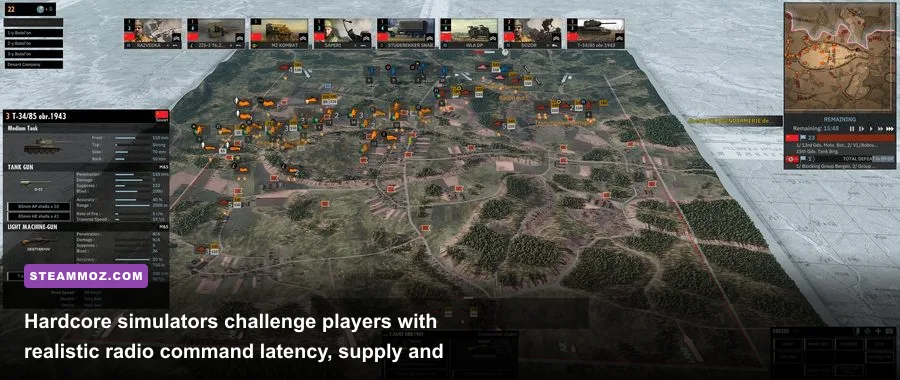
Combat Mission: Shock Force 2
If you walked into a defense department war-college computer lab, you would likely find a variant of Battlefront’s Combat Mission series running on the workstations. Shock Force 2 drops players into a hypothetical NATO intervention in Syria, utilizing an unforgiving WEGO tactical system. In WEGO, you issue intricate orders to squads, vehicles, and fireteams—setting movement speeds, weapon deployments, facing directions, and target arcs—and then hit 'End Turn' to watch sixty seconds of simultaneous, unpausable real-time combat execution.
The digital command-and-control (C2) simulation here is merciless. If an infantry squad loses radio or visual contact with its platoon commander, their response to incoming fire plummets, panic sets in, and movement orders become fatally delayed. It looks visually aged, its user interface feels like an industrial spreadsheet, but no other game on earth delivers higher tactical fidelity.
Red Orchestra 2: Heroes of Stalingrad
Tripwire Interactive's 2011 masterpiece remains the blueprint for visceral, psychological infantry combat. RO2 captured the absolute horror of close-quarters urban butchery during the battle of Stalingrad. It was one of the first PC games to introduce realistic blind-firing over debris, manual bolt-action rifle cycling, barrel meltdown mechanics on stationary machine guns, and a dynamic suppression system that turned your screen monochromatic and trembling as heavy artillery pounded the rubble around you.
Much like ranking the high-octane lethality of sci-fi arsenals in Far Cry 3: Blood Dragon's weapon tiers, Red Orchestra 2 balanced its infantry firearms with lethal authenticity. A single shot to the chest from a Mosin-Nagant bolt-action rifle was fatal 95% of the time, demanding patients, cover awareness, and ruthless patience.
War Game Architecture: Performance, Hardware Demands, and Engine Optimization
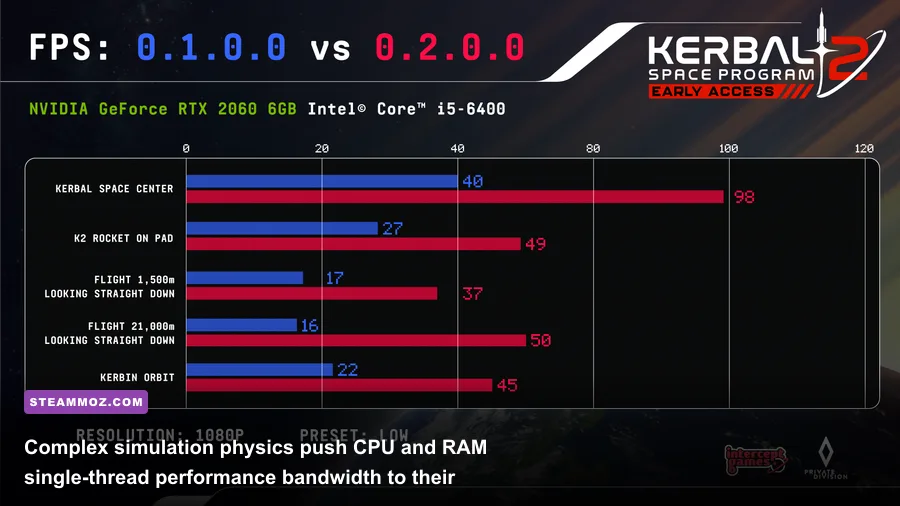
War games place extraordinary demands on PC gaming rigs. While standard competitive shooters prioritize GPU rasterization to pump high frame rates in enclosed arenas, massive war games hammer single-core CPU throughput, memory bandwidth, and real-time physics calculations. When 100 players in Squad exchange thousands of ballistic projectiles across an active 4x4-kilometer map while artillery deformations rewrite terrain geometry, weak hardware bottlenecks immediately trigger severe micro-stutters and frame drops.
If you have struggled with engine crashes and frame stutters in sprawling open worlds—similar to the issues we diagnosed in our Elex PC troubleshooting and stability guide—wargames require specific optimization steps. Arma 3’s aging Real Virtuality engine notoriously offloads massive script processing to a single CPU core. Meanwhile, modern Unreal Engine 4 war simulators like Squad and Hell Let Loose lean heavily on asset streaming and multi-threaded audio calculations.
To ensure smooth engagement tracking during intense crossfire, consult our hardware optimization matrix below for tuning high-stress war titles:
| Simulation Title | Game Engine | Primary Hardware Bottleneck | Crucial Graphic/Setting Profile | Target Competitive Frame Rate |
|---|---|---|---|---|
| Arma 3 | Real Virtuality 4 | Single-Core CPU Clock Speed & RAM Latency | Set Object View Distance to <2500m; Shadow Quality to Ultra (forces GPU render) | 50-70 FPS (Stable on Multiplayer Servers) |
| Squad | Unreal Engine 4 (OWI Core) | CPU Cache & VRAM Texture Streaming | Enable DX11 Mode if DX12 stutters; Set Particle Effects to Medium | 75-100 FPS (Critical for scope alignment) |
| Hearts of Iron IV | Clausewitz Engine | Single-Threaded CPU Calculation (Late-game AI) | Disable 3D Unit Models & Weather Shaders in late-game 1944+ states | Simulation Speed 5 without tick delay |
| Hell Let Loose | Unreal Engine 4 | Draw Distance & Volumetric Fog Shaders | Add '-dx12' launch command; Drop Shadows and Post-Processing to Medium | 80-120 FPS (Trench and smoke clarity) |
| Company of Heroes 3 | Essence Engine 5 | GPU VRAM and Geometric Mesh Physics | Texture Resolution to High; Physics Particle Detail to Medium | 90-144 FPS (Prevents micro-stutter during shell bursts) |
Just as we demonstrated when tuning graphical scalability for massive draw distances in our guide to Far Cry 6 maximum FPS graphic profiles, keeping your frametimes stable in war games is life or death. Dropping your screen resolution to chase an extra 10 FPS is useless if your CPU is locking up trying to calculate artillery trajectories across five kilometers of virtual terrain.
Ultimately, PC war games stand apart because they respect your intelligence. They offer no training wheels, no glowing radar pings pointing toward your next target, and no forgiveness for poor coordination. Whether you're coordinating an eighty-player motorized assault across the desert plateaus of Altis or micro-managing tank engine flanks in the smoking ruins of Saint-Lô, the PC remains the undisputed home of authentic virtual warfare.