The best online PC games of all time are World of Warcraft, Counter-Strike 2, Minecraft, League of Legends, Fortnite, Dota 2, Final Fantasy XIV, Grand Theft Auto Online, Rocket League, and Valorant. That order reflects the qualities gamers keep rewarding years after launch: mechanical depth, a healthy reason to return, memorable communities, competitive credibility, and the ability to create stories that single-player games simply can't match.
This isn't a ranking of whichever title has the biggest player spike this month. It weighs longevity, cultural impact, quality of the multiplayer loop, accessibility, and how much each game still offers in 2026. Live-service games change constantly, so the real question is more useful: which online PC games have earned a permanent place in gaming history?
S-Tier online PC games that changed multiplayer forever
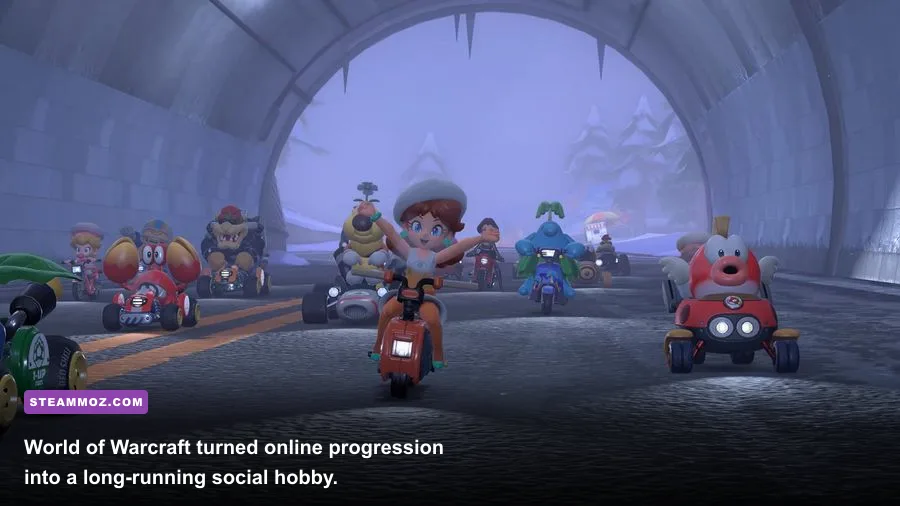
S-Tier means more than being popular. These are games that created habits, vocabulary, esports scenes, communities, and in some cases entire genres. They remain easy to recommend because their central loop still feels excellent, not merely familiar.
| Rank | Game | Best multiplayer strength | Biggest barrier |
|---|---|---|---|
| 1 | World of Warcraft | Long-term character progression and social raids | Huge time commitment and subscription |
| 2 | Counter-Strike 2 | Round-based tactical precision | Extremely punishing learning curve |
| 3 | Minecraft | Creative freedom and shared worlds | Limited direction without self-made goals |
| 4 | League of Legends | Strategic team play and champion mastery | Steep knowledge curve and toxic matches |
| 5 | Fortnite | Accessible battle royale and constant reinvention | Frequent updates can overwhelm returning players |
1. World of Warcraft
World of Warcraft remains the benchmark because it makes progression feel social at every scale. A new player can level through quests in Elwynn Forest or the Dragon Isles, while veterans coordinate Mythic+ dungeons, rated battlegrounds, and raids that demand exact roles. The trinity still works: tanks control threat and positioning, healers manage predictable damage windows, and damage dealers execute rotations without standing in avoidable effects.
Its greatest strength isn't any single expansion. It's the density of systems built over two decades. Professions, transmog collecting, guild calendars, pet battles, achievement hunting, and class identity all give players a reason to log in even after a raid tier loses its shine. A Protection Warrior using Shield Block and Ignore Pain feels fundamentally different from a Restoration Druid managing HoTs, and that class personality is why people keep returning.
The cost is commitment. A modern raid can require hours of preparation, and Mythic+ becomes genuinely demanding once affixes punish sloppy interrupts or poor route planning. Still, few games have made an online world feel this alive. Blizzard's official World of Warcraft site remains the best place to check current systems and expansion details.
2. Counter-Strike 2
Counter-Strike 2 is the cleanest competitive shooter ever made because its rules are brutally readable. Every round starts with a buy decision, every death matters, and a missed smoke or late rotation can cost the entire half. The AK-47 kills an unarmored opponent with a headshot, the M4A1-S rewards controlled bursts, and the AWP turns a well-held angle into a terrifying no-go zone.
CS2's skill ceiling comes from layers rather than gimmicks. Counter-strafing lets you stop instantly before firing, recoil patterns reward muscle memory, and utility lineups turn maps such as Mirage, Inferno, and Ancient into tactical puzzles. Premier mode adds a rating ladder and map veto process, while Counter-Strike's professional scene keeps demonstrating strategies that eventually filter down to ordinary players.
The warning is simple: don't judge it by your first ten matches. New players need to learn crosshair placement, economy management, common grenade timings, and how to clear angles without exposing themselves to three opponents. Valve's official Steam page for Counter-Strike 2 confirms the game is free to play, but the competitive education is anything but free.
3. Minecraft
Minecraft is the most flexible online game ever released. A group can spend one evening fighting the Ender Dragon and the next building a working railway, trading villagers, or exploring a server's Nether hub. Its core survival numbers are simple but meaningful: diamond gear, enchantments such as Mending and Protection IV, and access to the Nether and End create a satisfying arc without forcing everyone into the same checklist.
Multiplayer transforms the sandbox. One player farms wheat, another designs redstone automation, and someone else maps unexplored terrain. Java Edition servers support enormous modding communities, while Realms offers a lower-friction private world. The game also respects different ages and skill levels better than almost any competitive title; a child can build a house beside an expert technical player without either one ruining the other's fun.
Minecraft's weakness is direction. Once the dragon is defeated, the game only works if the group invents a project. That freedom is also its genius. Mojang's official Minecraft site remains the starting point for editions, Realms, and update information.
4. League of Legends
League of Legends is a five-versus-five strategy game disguised as an action game. Each match revolves around champions, minion waves, towers, dragons, and Baron Nashor, but the real contest is information. A top laner who freezes a wave can deny farm without landing a single flashy ability; a jungler who secures Rift Herald at the right time can convert one kill into multiple towers.
Its 160-plus champion roster creates an almost absurd mastery curve. Ahri demands charm accuracy and mobility management, Thresh rewards prediction with Death Sentence and Lantern saves, while Orianna's Command: Shockwave can decide a team fight before opponents understand what happened. Items and runes change the answer from patch to patch, but fundamentals survive: farm safely, track summoner spells, respect fog of war, and don't take Baron because your team won one isolated skirmish.
League ranks below the first three only because its onboarding is harsher and its social friction is real. Yet its spectator clarity, strategic depth, and incredible longevity make it one of gaming's unavoidable masterpieces. Riot's official League of Legends website provides champion and patch information before you queue.
5. Fortnite
Fortnite started as a battle royale and became an entertainment platform. The original building mechanics created a dramatic skill gap between a player who held low ground and one who could edit a wall, place a ramp, and take a protected shotgun angle in seconds. Zero Build later opened the game to players who wanted Fortnite's weapons, movement, and events without learning rapid construction.
Its durability comes from reinvention. Seasonal map changes, live concerts, LEGO Fortnite, racing, creator-made islands, and collaborations with films and music keep Fortnite visible beyond the battle royale audience. Weapons such as the Pump Shotgun and assault rifles provide familiar foundations, while mobility items and limited-time mechanics prevent the standard match from becoming static.
The downside is sensory overload. A returning player can feel lost among modes, quests, currencies, and crossover cosmetics. But no other game has made the jump from competitive shooter to all-purpose social space this convincingly.
🎮 1bitHeart
Looking to experience this game? Grab your digital key directly on our store for $2.99.
View on Steammoz Store →A-Tier games that still belong in every PC library
A-Tier games don't lack quality; they simply specialize more heavily or carry a larger weakness. Each one can become your main game for years, especially if its particular form of competition or cooperation matches your taste.
| Rank | Game | Core loop | Best for |
|---|---|---|---|
| 6 | Dota 2 | Deep hero drafting and map control | Players who want maximum strategic complexity |
| 7 | Final Fantasy XIV | Story-driven MMO progression and raids | Solo-friendly MMO players and RPG fans |
| 8 | Grand Theft Auto Online | Open-world crime businesses and mayhem | Long-term co-op sandbox sessions |
| 9 | Rocket League | Physics-based football with cars | Short competitive matches and mechanical mastery |
| 10 | Valorant | CS-style gunplay plus agent abilities | Tactical FPS players who want character roles |
6. Dota 2
Dota 2 is arguably the deepest competitive game on this list. Its heroes can change roles depending on the draft, items, and lane state. A Shadow Fiend might dominate mid with ranged last hits and Requiem of Souls, while a support Rubick can steal a game-winning spell. Teleportation, buybacks, neutral items, high-ground defense, and illusion management create an enormous strategic vocabulary.
The reward is unmatched agency. A well-timed Black King Bar can invalidate enemy magic damage, a Smoke of Deceit rotation can break a deadlock, and Roshan control forces teams to balance ambition against risk. The punishment is equally severe. New players face a huge number of interactions before they understand why a fight was lost. Valve's official Dota 2 site is useful for hero, patch, and tournament information, but expect to learn through many painful matches.
7. Final Fantasy XIV
Final Fantasy XIV succeeds where many MMOs fail: it makes the story worth playing even if you never join a hardcore guild. The Main Scenario Quest leads players through Eorzea, Shadowbringers, Endwalker, and beyond, while the Duty Finder lets a mostly solo player enter dungeons and trials with a clear role.
Its combat is built around a global cooldown, off-global abilities, and boss telegraphs. A Black Mage plans movement around cast times, a Gunbreaker juggles cartridges and No Mercy windows, and a Scholar places shields before incoming raid damage rather than simply reacting afterward. High-end encounters such as The Epic of Alexander demand memorized mechanics, but ordinary dungeons are welcoming enough for beginners.
The long story is both its selling point and its hurdle. Reaching current content can take hundreds of hours, although the free trial provides a generous way to test the early game. Square Enix's official Final Fantasy XIV site lists current expansions, jobs, and community events.
8. Grand Theft Auto Online
Grand Theft Auto Online turns Los Santos into a persistent co-op playground. Heists remain the star attraction: the original Pacific Standard Job teaches crew coordination, while The Doomsday Heist and The Diamond Casino Heist add more elaborate preparation and role choices. Businesses such as the Bunker, Nightclub, and Acid Lab give players a progression path outside missions.
Its strongest moments are emergent. A routine delivery becomes a police chase, a friend arrives in an Oppressor Mk II, and a quiet drive turns into an improvised stunt session. The economy can be grind-heavy, and public-lobby griefing remains a nuisance, but private sessions and invite-only activities make the experience much more manageable than it was at launch.
9. Rocket League
Rocket League has the perfect arcade premise: football, but every player controls a rocket-powered car. The rules are easy to understand, yet the ceiling is ridiculous. A beginner learns to hit the ball; an expert learns fast aerials, wave dashes, half-flips, ceiling shots, and backboard reads.
Its three-minute matches make it an ideal competitive game for a busy evening. The physics are consistent enough that every miss feels learnable, although the jump from Gold to Champion can demand hundreds of hours of deliberate practice. Rocket League is also one of the best games for couch-style online sessions because a party can switch between casual, ranked, hoops, and private matches without a lengthy setup.
10. Valorant
Valorant borrows Counter-Strike's economy and instant-kill gunfights, then layers agents over the top. Sova's Recon Bolt reveals positions, Killjoy's turret and Alarmbot lock down space, and Omen's smokes let a team attack from unexpected angles. The result is tactical FPS combat where utility timing matters as much as raw aim.
It ranks below CS2 because agent abilities can occasionally obscure the fundamental duel, but Valorant's structured roles make it easier for some teams to communicate. Learn one map's callouts, master two agents, and focus on trading kills instead of hunting highlight clips. That disciplined approach will carry you much farther than changing agents after every defeat.
Why these games outlast newer online releases
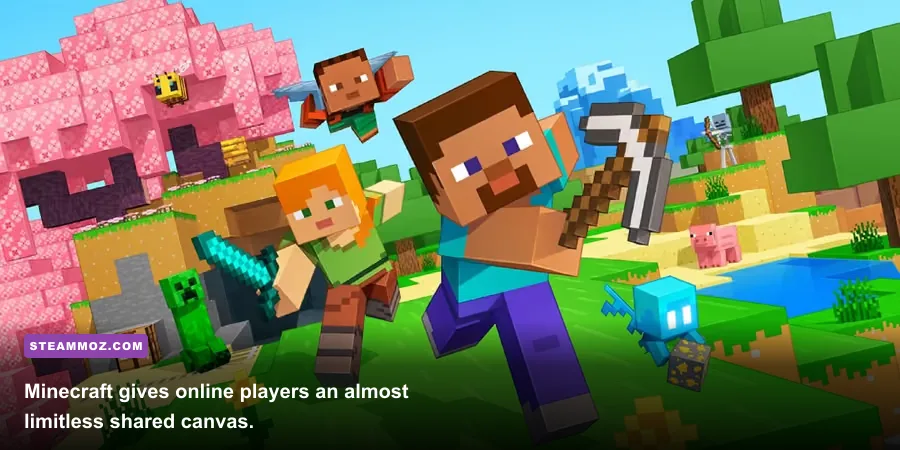
Longevity isn't just a matter of updates. The best online games create a loop that improves when other humans enter it. World of Warcraft makes a raid victory memorable because twenty people solved it together. Counter-Strike makes a smoke lineup meaningful because opponents can adapt. Minecraft creates value through shared ownership of a world, while Rocket League turns a basic physics system into a personal skill journey.
| Game | Primary retention loop | Skill or progression ceiling | Social strength |
|---|---|---|---|
| World of Warcraft | Gear, raids, Mythic+, collection | Very high | Guilds and scheduled groups |
| Counter-Strike 2 | Rating, aim, map mastery | Extreme | Reliable five-player teamwork |
| Minecraft | Building, exploration, automation | Self-defined | Shared persistent worlds |
| League of Legends | Ranked improvement and champion mastery | Extreme | Strong team identity, higher toxicity risk |
| Final Fantasy XIV | Story, jobs, raids, collections | Very high | Free companies and community events |
The other crucial factor is comeback potential. A good online game gives a losing player something to improve rather than making every defeat feel random. In CS2, review your crosshair placement. In League, study wave timing. In FFXIV, watch the boss's cast bar and learn the mechanic. In Minecraft, redesign the farm that keeps jamming. Those feedback loops are why these games remain active long after their launch trailers disappear.
They also support different session lengths. Fortnite and Rocket League can deliver a complete match in minutes. GTA Online works as a social sandbox for an entire evening. An MMO can absorb a weekend. That flexibility matters more than flashy launch content because real players don't all have the same schedule.
The best online PC game for every type of gamer
There isn't one universal winner. The number-one choice depends on what you want your time online to produce: mastery, relaxation, social stories, or a long-term character. This shortlist is more useful than pretending every player values the same thing.
| If you want... | Start with... | Why it fits | First target |
|---|---|---|---|
| A serious competitive shooter | Counter-Strike 2 | Pure gunplay and readable round economy | Learn Mirage utility and counter-strafing |
| A strategy-heavy MOBA | League of Legends | Clear roles and a vast champion roster | Master one lane and three champions |
| A creative co-op sandbox | Minecraft | Every server can become its own adventure | Build a shared base with a Nether route |
| A story-rich MMO | Final Fantasy XIV | Excellent solo onboarding and cinematic quests | Complete the free-trial Main Scenario |
| Quick matches | Rocket League | Instant action with no long progression grind | Practice aerials in free play |
| An open-world social game | GTA Online | Heists, businesses, vehicles, and chaos | Save for a reliable first business |
For a low-pressure start, Minecraft is still the safest recommendation. There are no ranks to protect, no teammates to disappoint, and no mandatory build order. For serious improvement, Counter-Strike 2 and Rocket League offer the clearest feedback. For a role-playing identity that can last years, World of Warcraft and Final Fantasy XIV are in a different class.
PC performance can affect those choices more than people admit. Competitive shooters benefit from stable frame times, so reduce shadows and effects before chasing maximum resolution. MMO players usually care more about CPU performance in crowded cities and raids. If an older system struggles, Steamoz's PC crash and FPS fixes for ELEX and high-FPS settings guide for Far Cry 6 cover the same practical troubleshooting principles.
How to get the most from these online classics
The fastest way to enjoy any game on this list is to choose a narrow first goal. Don't try to understand every champion in League, every hero in Dota 2, or every job in FFXIV. Pick one role, learn its basic responsibilities, and repeat the same situations until they stop feeling chaotic.
Use a deliberate first-week plan
- Competitive FPS: Play deathmatch to warm up, then spend ten minutes in a practice range. In CS2, learn one smoke for each bombsite before worrying about advanced lineups. In Valorant, understand your agent's smoke, flash, or information tool before chasing kills.
- MOBA: Use one simple champion or hero and track deaths rather than kills. League players should practice last-hitting under tower and checking the minimap every few seconds. Dota 2 players should learn teleport timing, creep aggro, and when to buy a Town Portal Scroll.
- MMO: Follow the main story and avoid turning gear optimization into homework too early. In FFXIV, learn your job's two-minute burst window; in WoW, practice interrupting casts and moving out of ground effects before pushing Mythic difficulty.
- Sandbox and social games: Set a group project. A Minecraft village, a GTA Online heist chain, or a Fortnite creator island gives everyone a shared reason to return.
Performance matters too. A steady 120 frames per second usually feels better in CS2 or Valorant than a prettier but unstable sixty frames. Enable a sensible frame cap, keep mouse input consistent, and avoid changing sensitivity every time you lose a duel. In MMO raids, prioritize stable frame pacing and readable spell effects; turning down shadows or volumetric fog is often more useful than lowering texture quality.
Steamoz has additional practical resources for players dealing with older hardware, including Far Cry 2 PC specifications, higher-FPS settings for Filament, and crash and low-FPS troubleshooting for EscapeVR. The exact menus differ, but the principle is universal: stable frame times beat cosmetic detail when a match is decided in milliseconds.
After decades of online releases, these ten games remain the safest recommendations because they offer more than content. They offer a reason to improve, a place to meet friends, and stories that only happen when real people share the same rules. World of Warcraft is the strongest all-round online world, Counter-Strike 2 is the purest competitive test, and Minecraft is the most endlessly adaptable. Start with the one that matches your mood, then give it enough time to reveal its depth.