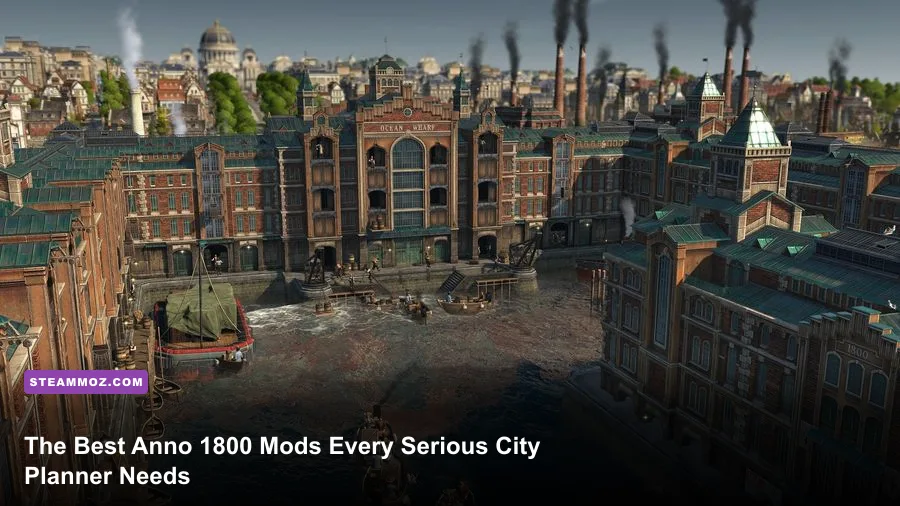
If you're sinking hundreds of hours into Anno 1800 Complete Edition, you already know the brutal truth: balancing logistics across five distinct regions—the Old World, Cape Trelawney, the New World, Enbesa, and the Arctic—inevitably crashes into frustrating design bottlenecks. Between suffocating shoreline restrictions, redundant workforce micro-management in tropical colonies, and punishing public building radiuses, vanilla mechanics can drain the fun out of your late-game empire. The right community mods do not just tweak numbers; they strip away tedious micro-management, restore building freedom, and turn Ubisoft's industrial masterpiece into the seamless builder it was born to be.

How the Modern Mod Loader Changed Anno 1800 Forever
Gone are the days when modding this game required manually injecting raw python35.dll files into your system binaries or sweating through every major patch update. With Game Update 17 and Ubisoft's subsequent collaboration with the modding community, Anno 1800 integrated an official in-game mod browser directly supported by mod.io alongside the enduring XML-based standalone mod loader. You can browse, toggle, and update modifications right from the main menu, minimizing the configuration nightmares that plagued earlier editions.
However, running the Complete Edition means your CPU is simultaneously tracking tens of thousands of trade goods, production cycles, and citizen needs across multiple massive regional maps. Adding mods casually without understanding their engine footprint can destabilize your simulation ticks. Just as we see when fine-tuning hardware in guides like our Filament settings guide for higher FPS, stability in deep PC simulation games relies on smart configuration rather than stacking every shiny asset pack you find. Focus on essential, high-stability modifications that tackle mechanics first and cosmetics second.
🎮 Anno 1800
Looking to experience this game? Grab your digital key directly on our store for $59.99.
View on Steammoz Store →S-Tier Quality of Life Mods You Cannot Play Without

The definitive gold standard for modding this game is the legendary Spice it Up collection. Rather than forcing a singular vision upon your save file, it operates as a modular package where you can enable or disable specific folders according to your taste. Within this collection and the broader modding ecosystem, three specific modifications stand out as absolute game-changers for any empire builder.
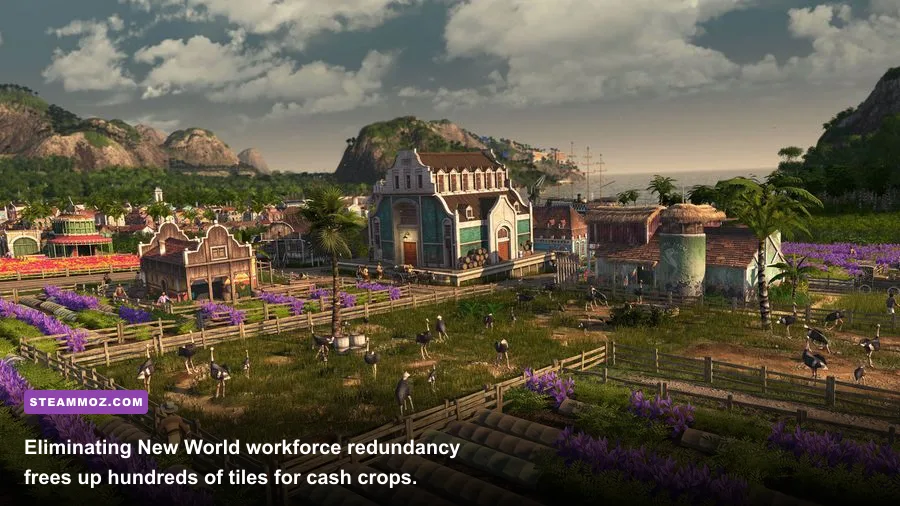
First on your list must be New World Commuter Pier. In vanilla Anno 1800, the Old World enjoys high-tier infrastructure that shares workforce pools across islands via the Commuter Pier, while the New World forces you to build identical, repetitive Jornalero and Obrero villages on every single fertile outcrop just to harvest coffee or tobacco. This mod replicates the Commuter Pier logic in the southern session, unlocking dramatic land-use efficiency. It cuts out hours of mindless, low-tier residential zoning so you can dedicate precious Caribbean real estate to pure agriculture.
Second is Harborlife. Vanilla harbor design is notoriously claustrophobic; coastal cliffs, shallow waters, and rigid building envelopes choke your coastal logistics. Harborlife unlocks the maritime grid, allowing you to construct residential houses, production sites, and storage depots directly onto quay walls and open water. If you've spent dozens of hours cursing Crown Falls' shoreline while trying to organize hundreds of steam cargo ships, Harborlife fundamentally rescues your harbor architecture.
| Mod Name | Tier Rating | Key Tactical Synergy | Engine / Balance Impact |
|---|---|---|---|
| Spice it Up (Modular Core) | S-Tier | Global baseline overhaul; customizes radiuses, trade speeds, incidents | Negligible CPU overhead; fully customizable via sub-folder toggles |
| New World Commuter Pier | S-Tier | Eliminates redundant low-tier housing farms across tropical islands | Massively streamlines trade paths; reduces pathfinding calculations |
| Harborlife | S-Tier | Enables building construction on open coastal water and quay tiles | Slightly increases harbor polygon draw calls; high visual payout |
| Buildable Culture Modules | A-Tier | Removes rigid street connectivity rules for Zoos and Museums | Zero performance penalty; radically improves urban design flow |
| City Ornaments 2.0 | A-Tier | Adds hundreds of Belle Époque plazas, statues, fences, and alleys | Increases VRAM allocation; can cause minor asset-streaming pop-in |
| Metropolitan Skyline | B-Tier | Expands skyscraper models and height profiles for Tier 5 residences | Heavy GPU shadow draw; best reserved for high-end systems |
The third indispensable upgrade is Buildable Culture Modules. The vanilla game requires every single Zoo enclosure, Museum pavilion, and Botanical garden plot to snap directly to one another in an unbroken chain. This rigid layout ruins natural park designs, forcing your cultural centers to look like sprawling concrete airport terminals. This mod decouples module snapping, allowing you to run pedestrian paths, canals, and green spaces naturally through your cultural quarters without forfeiting set bonuses.
Streamlining Grid Frustration: Range and Logistics Tweaks
City builders often thrive on constraints, but arbitrary operational limits only cause headaches in late-game sessions. In vanilla play, basic public infrastructure like Fire Stations, Hospitals, and Police Stations operate on strict, unforgiving street-distance radiuses. You end up littering gorgeous avenues with identical utilitarian brick buildings just to keep a single warehouse from spontaneously catching fire. Much like optimizing resource distribution in titles analyzed in our Empires of the Undergrowth resource and leveling guide, logistics should reward foresight, not repetitive busywork.
The Increased Radius for Public Buildings module within Spice it Up multiplies service reach by 1.5x to 2x along paved roads. This subtle change respects your time without completely breaking balance. It enables clean town planning where central public squares properly anchor an entire residential district. Pair this with Easy Seed Searcher or mods that remove artificial fertility locks, and you bypass the frustrating RNG of island discovery. You can focus your strategic attention on macro-economic routes and diplomatic diplomacy across the Anno Union community ecosystem.
Another common frustration is trade route congestion. When thirty steamships descend on a single harbor dock simultaneously, cargo ships queue endlessly in open water, starving mainland factories of crucial raw imports like Caoutchouc, Zinc, or Coal. The Advanced Pier Logistics mod expands pier berthing speeds and adds dedicated item-filtered docks. This ensures your high-priority oil tankers never get stalled behind a slow-moving grain schooner.
Visual Splendor: Transforming Blocks into Belle Époque Art

Once your balance sheet prints millions of credits every tick and your Investor population is secure, Anno 1800 transitions from a survival-style logistics puzzle into a high-stakes digital diorama. If you find yourself constrained by vanilla ornamental packs, community creators have authored stunning historical expansions that turn rigid 10x10 city blocks into authentic 19th-century marvels.
City Ornaments 2.0, crafted by modder Muggenstuermer, remains an essential addition. It adds hundreds of era-accurate assets: working street kiosks, open-air vegetable markets, cast-iron park gates, and variable paving materials that snap directly to default road networks. To expand your creative toolkit even further, Jacob’s Collection introduces mid-tier commercial shopfronts, suburban terraced housing, and fire escapes that bridge the jarring aesthetic gap between modest Worker cottages and towering Artisan flats.
If you love taking sweeping panoramic screenshots of your industrial achievements, install Free Camera Zoom & Tilt. The vanilla camera locking mechanism keeps your perspective tethered at an aggressive downward tilt, obscuring the horizon line and making your magnificent skyscrapers look flat. Unlocking full camera mobility allows you to drop down to street level, capturing sunbeams cutting through factory smog and showcasing the immense verticality of your world.
Optimizing Engine Stability, Memory Leaks, and Mod Orders

Modding a game as computationally dense as the Anno 1800 Complete Edition demands respect for your hardware. Late-game saves routinely track over 200,000 citizens, hundreds of trade ships navigating dynamic currents, and multiple distinct regional simulations running in real-time background threads. Adding dozens of complex scripts or heavy visual assets will expose any weakness in your system setup.
Memory leaks are the number one culprit behind sudden desktop crashes during intense multi-hour sessions. The Anno 1800 engine loves RAM; in heavily modded late-game configurations, the executable can easily chew through 22 to 26 GB of system memory. If you run a standard 16 GB setup, you will encounter pagefile thrashing and aggressive stuttering when switching rapidly between regions like the Old World and Enbesa. This is reminiscent of memory-handling bugs covered in our ELEX PC crash and fps fixes, or the resource bottlenecks detailed in our Everspace 2 crashing and frame-pacing breakdown.
| Performance Parameter | Stock Game Baseline | Modded Setup (15+ Mods) | Pro-Tuned Recommendation |
|---|---|---|---|
| System RAM Footprint | 12 GB – 16 GB | 20 GB – 28 GB | 32 GB Dual-Channel DDR4/DDR5 |
| VRAM Usage (4K / Ultra) | 6 GB – 8 GB | 10 GB – 12 GB | Minimum 12 GB Dedicated VRAM |
| Session Swap Load Time | 1.5 – 3.0 Seconds | 4.0 – 8.0 Seconds | High-speed NVMe PCIe 4.0 Storage |
| DirectX API Selection | DirectX 11 / 12 | DirectX 12 (Critical) | DirectX 12 for multi-core thread balancing |
To keep your modded game running smoothly without constant crashes, apply these hard-earned tactical rules:
- Lock in DirectX 12: While earlier builds had DirectX 12 stability quirks, modern game revisions use it to distribute CPU draw calls far more evenly across your processor cores. In a modded session with hundreds of extra decorative assets, DX11 will hit a severe single-thread wall.
- Audit Your Active Mods: Avoid stacking mods that alter the exact same XML asset balance nodes. For example, if you run a mod that modifies shipyard build speeds alongside an overhaul that changes ship maintenance costs, ensure they load without contradictory parameters.
- Expand Your Windows Pagefile: If you are gaming on 16 GB of physical RAM, set a static Windows virtual memory pagefile of at least 16,384 MB on your fastest NVMe SSD. This prevents hard crashes when the engine caches asset banks from multiple sessions simultaneously.
- Verify Game Files Post-Update: Whenever Ubisoft pushes an official maintenance patch, verify your local installation via the Anno 1800 Steam page or Ubisoft Connect client before relaunching your custom mod profiles.
If you want to double-check whether your rig's baseline hardware can handle this processing overhead, check out our baseline system comparisons in articles like our modern PC specs breakdown. Once you configure these essential modifications properly, Anno 1800 shakes off its lingering design annoyances. It becomes an expansive, deeply satisfying canvas where your industrial ambitions can flourish completely unhindered.