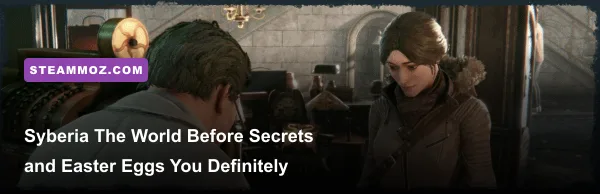
You can beat Syberia: The World Before in twelve hours without ever discovering the hidden Voralberg sketches tucked beneath the antique shop floorboards, the acoustic Amerzone tribute in the Silberspiegel refuge, or the secret dialogue triggered by playing a forbidden waltz in the town square. Microids built this dual-timeline masterpiece as a profound farewell to series creator Benoît Sokal, scattering deeply disguised environmental storytelling, missable secondary objectives, and tactile secrets across both 1937 and 2004. If you rush through the main storyline following only the mandatory objective markers, you miss more than a third of the game's rich narrative tissue.
Uncovering these hidden locations isn't just about satisfying trophy hunters chasing 100% completion—it fundamentally enriches how Dana Roze's pre-war tragedy mirrors Kate Walker's quest for identity. Just as tracking down obscure gear transforms titles in our Everspace 2 secret locations guide, peeling back the intricate mechanical layers of Vaghen rewards inquisitive players with poignant character revelations. From forgotten diary pages inside locked armoires to clever call-backs honoring Sokal’s earlier graphic novels, here are the best secret locations, missable interactions, and hidden Easter eggs you completely missed in Syberia: The World Before.
The Amerzone Connections: Uncovering Benoît Sokal’s Original Universe
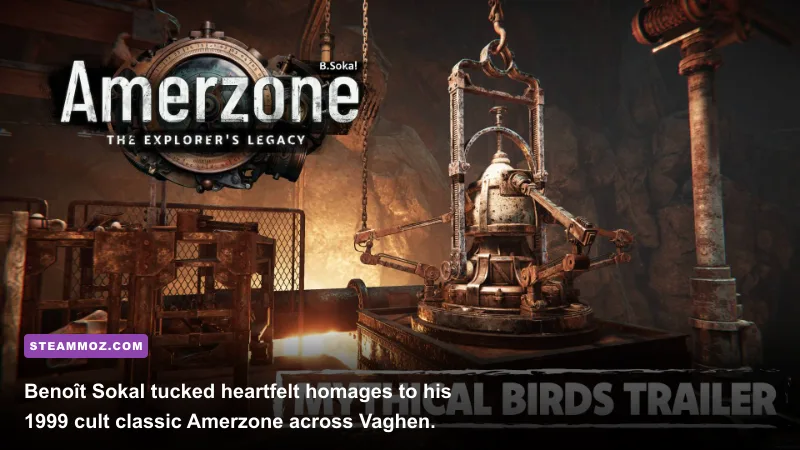
Long before Kate Walker stepped onto the snowy platform of Valadilène in 2002, Benoît Sokal captured the imagination of adventure gamers with his 1999 debut, Amerzone: The Explorer's Legacy. In The World Before, the developers didn't settle for a subtle wink; they wove direct physical relics from the Amerzone expedition into the very fabric of Osterthal. If you love classic point-and-click depth reminiscent of our retrospective on Edna & Harvey PC exploration, tracking down these Sokal relics feels deeply satisfying.
The premier Amerzone easter egg hides inside the Silberspiegel refuge during Kate’s investigation in the 2004 timeline. When examining the private guest quarters on the upper floor, players routinely inspect the central desk and move on. However, if you steer Kate toward the low credenza tucked behind the partition screen near the corner window, you can interact with a weathered leather field case. Inside sits an antique field journal labeled with the initials "A.V."—a direct nod to Alexandre Valembois, the protagonist of Amerzone. Paging through reveals sketches of the legendary White Birds alongside botanical notes detailing the fictional South American jungle flora.
Another brilliant nod awaits in Dana’s timeline during Chapter 2. While walking through the commercial district of Vaghen, step off the main cobblestone avenue into the narrow cul-de-sac adjacent to the music conservatory. Leaning against a brick archway is an intricately painted ceramic decorative plate showcasing a flock of white birds soaring over a volcanic ridge. Interacting with the plate prompts Dana to hum a faint four-note melody, which is the exact opening acoustic phrase from the 1999 Amerzone soundtrack composed by Dimitri Bodiansky.

🎮 Syberia
Looking to experience this game? Grab your digital key directly on our store for $12.99.
View on Steammoz Store →Vaghen’s Hidden Clockwork Relics and Hans Voralberg’s Forgotten Sketches
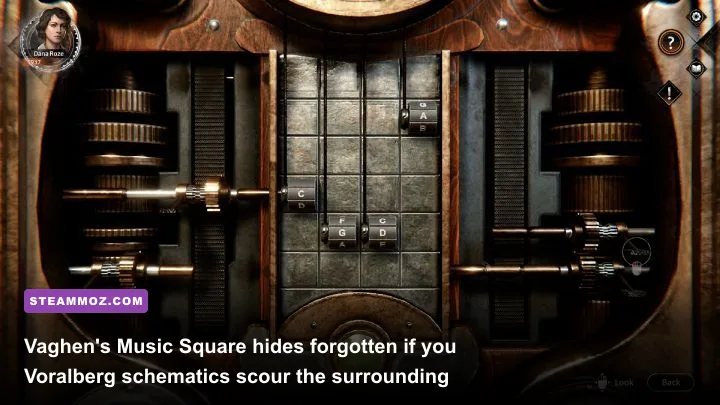
Every corner of Vaghen breathes automaton history, but several mechanical secrets require surgical observation to trigger. Hans Voralberg didn't just design the grand musical mechanism in the town center; he left behind experimental prototypes that casual players sprint straight past while tracking down story clues.
During Kate's exploration of the Music Square in the contemporary era, you are tasked with aligning the mechanism to play the Hymn of Vaghen. Most players solve the primary gear puzzle, trigger the cutscene, and immediately head toward the tram station. If you instead walk down to the maintenance basin beneath the orchestra platform—an area marked by damp stone stairs that look like decorative background dressing—you can access a locked brass junction box. Solving the three-stage tumbler puzzle on this panel opens a hidden compartment holding Hans Voralberg's original discarded design parchment for a mechanical cellist that never saw full assembly.
Finding this blueprint doesn't just grant an unlisted codex entry; it changes Kate's subsequent monologue when examining the antique shop's mechanical displays. Much like optimizing performance profiles in our breakdown of Filament Marmalade Edition settings, uncovering every structural detail here reveals the astonishing mechanical logic Microids embedded within the game world.
The Secret Melodies of the Vaghen Carillon
The massive carillon in the square isn't locked to a single script. When you take control of Dana in 1937 during her graduation performance preparation, you are instructed to input the precise civic melody from her sheet music. However, if you deliberately ignore the marked keys and input the five-tone motif from the original Syberia (2002) theme song (specifically: Low G, B-flat, C, D, High G), the automaton bell-ringer performs a whimsical alternate solo.
Herr Gustav will momentarily stop smoking his pipe, glance up in stunned disbelief, and mutters: "Where did you hear that northern cadence, child?" It’s a breathtaking moment that bridges twenty years of real-world gaming history through five simple bell strikes.
Exhaustive Guide to Missable Secondary Objectives
Unlike previous installments that followed strict linear progression, The World Before introduces branching optional objectives. Completing these side tasks does more than inflate your achievement tally; it unlocks emotional context that paints the antagonistic factions, the Brown Shadows, and local townsfolk in far more complex shades.
Below is a comprehensive breakdown of the most critical missable secondary interactions, where to pinpoint them, and the exclusive narrative context they provide:
| Chapter & Character | Secret Objective / Location | Exact Trigger Condition | Missable Risk Factor | Narrative & Lore Reward |
|---|---|---|---|---|
| Ch. 1: Taiga Salt Mine (Kate) | Katyusha’s Hidden Locket | Inspect the loose floorboard under the northern bunk before approaching the mining cart. | High (Irreversible point of escape) | Reveals Katyusha's real hometown and foreshadows the mountain resistance movement. |
| Ch. 4: Music Square (Dana) | The Florist’s Secret Letter | Speak twice with Frau Beckmann before tuning the carillon; retrieve her misplaced satchel. | Medium (Locks after stage performance) | Exposes early political tension and Brown Shadow extortion schemes in Osterthal. |
| Ch. 11: Antique Shop (Kate) | The Cellar Blueprint Safe | Use the micro-lens on the shopkeeper’s magnifying stand to inspect the brass clock face. | Very High (Easy to leave building) | Unlocks Hans Voralberg’s personal correspondence regarding the mechanical heart patent. |
| Ch. 17: Silberspiegel (Kate) | Leni’s Hidden Tree Carving | Follow the narrow cliffside trail south past the terrace telescope before going indoors. | Medium (Snowstorm locks exterior) | Uncovers the romantic truth regarding Leon Kobatis and Dana's summer stay. |
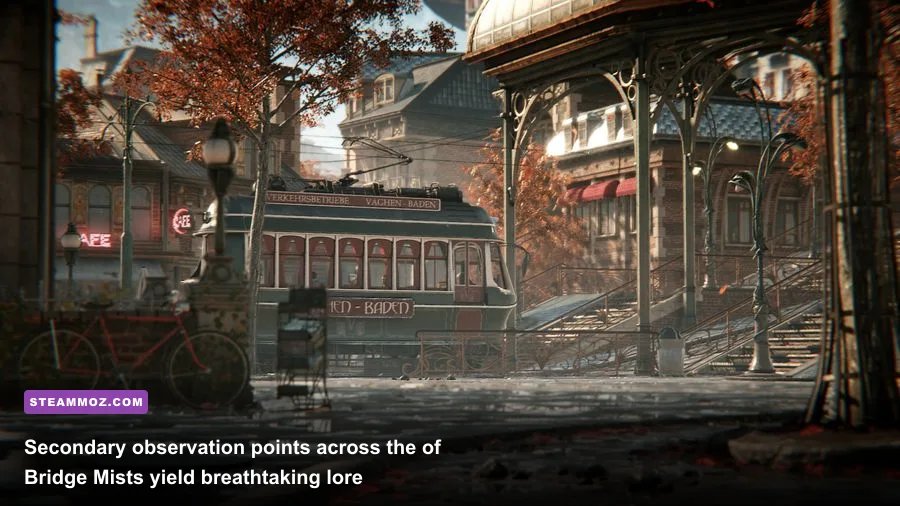
| Ch. 24: Bridge of Mists (Kate) | The Tramway Inspector's Log | Pry open the electrical service cabinet behind the rusted ticket booth using the knife. | High (Proceeding across bridge locks area) | Documents the night the bridge was sabotaged during the fascist retreat in 1944. |
Skipping any of these tasks means missing out on the "Super Sleuth" and "Nothing Escapes Her" achievements, but more importantly, you lose the subtle psychological framing that makes Kate Walker's evolution so resonant. For players who love hunting down every piece of hidden environmental lore, our guide on Eternal Destiny secret locations explores similar investigative satisfaction.
Oscar’s Hidden Heartbeats and the Valadilène Souvenirs

Oscar, the finicky, hyper-articulated automaton companion who stole hearts in the first two games, plays a crucial role in The World Before. But beyond his central presence, Sokal and Microids peppered the environments with tiny, heartbreaking details referencing his long journey from the assembly line of Valadilène.
When you inspect Kate’s inventory duffel bag early in the journey, take the time to rotate and examine every single personal keepsake in 3D. Nestled inside an internal zippered pocket is a tarnished miniature gear stamped with the production year 2002. Rotating it to catch the light reveals an inscription: "Valadilène Factory - Specimen 03 - Precision Calibration." Kate whispers a brief, affectionate sigh when you trigger this specific inspect angle, a subtle voice line entirely missed if you merely glance at the item's default orientation.
Even more profound is the secret interaction during Kate's restoration of the mechanical arm inside the workshop. If you deliberately apply pressure to the pneumatic balance regulator three times without setting the tension pin, Oscar’s voice processor emits a brief burst of static followed by his iconic line from the first game: "Kate Walker, I must remind you that my train tickets are strictly valid for official company business." It's a bittersweet phantom memory that hit veteran franchise fans right in the chest when the game launched on Steam.
The Silberspiegel Refuge Secrets: Forgotten Letters and the Piano Duet
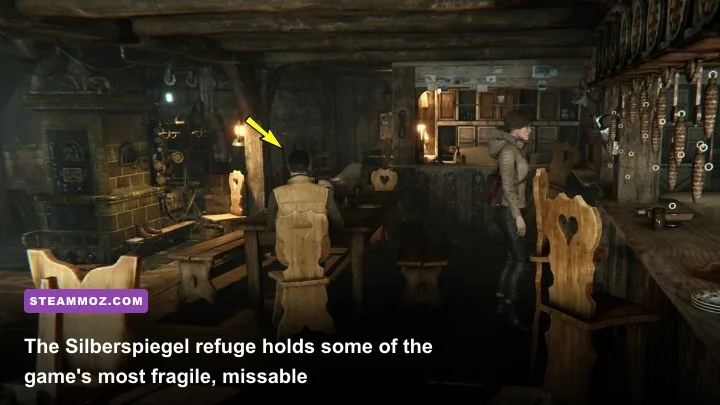
The Silberspiegel mountain refuge serves as the narrative pivot point where the timelines of Dana Roze and Kate Walker physically intersect across sixty-seven years of history. Because the mountain lodge changes drastically between its lively 1937 heyday and its abandoned, snow-battered state in 2004, it holds the highest density of missable environmental secrets in the entire adventure.
One of the easiest secrets to skip occurs when playing as Kate inside the central salon. After restoring power to the heating furnace, the ice on the bay windows begins to thaw. If you approach the grand piano in the corner, the prompt simply indicates an inspection point. However, if you previously uncovered Dana’s handwritten sheet music inside the attic trunk upstairs, Kate can sit down and begin playing the exact melody Dana practiced on that same bench decades earlier.
As the music plays, Microids employs a breathtaking seamless split-screen sequence. If you manipulated the small metronome sitting atop the piano lid earlier during Dana's sequence, the metronome in Kate's timeline will miraculously be resting in the exact same mechanical position. The developers even included subtle environmental audio cues: the wood stove creaks, wind howls through the valley, and the ghostly echo of Dana's laughter can be heard fading into the mountain draft. Just like diagnosing tricky performance bugs in demanding adventure engines like our EscapeVR troubleshooting guide, patience and spatial awareness reveal the intricate craftsmanship behind this location.
The Hidden Cellar Cache
Before leaving the refuge to track down the cemetery clues, take Kate down the cellar ramp outside the kitchen. Hidden behind three wine barrels is a recessed wall niche sealed with a simple latch. Inside rests a sealed biscuit tin containing three wartime photographs: Leon Kobatis preparing his biplane for reconnaissance, young Leni Renner laughing by the terrace railing, and an unposted postcard addressed directly to an art gallery in Paris. This single missable biscuit tin bridges the emotional gaps regarding why Leon kept his wartime secrets guarded until his death.
The Antiquary Shop: Sokal’s Personal Art Gallery
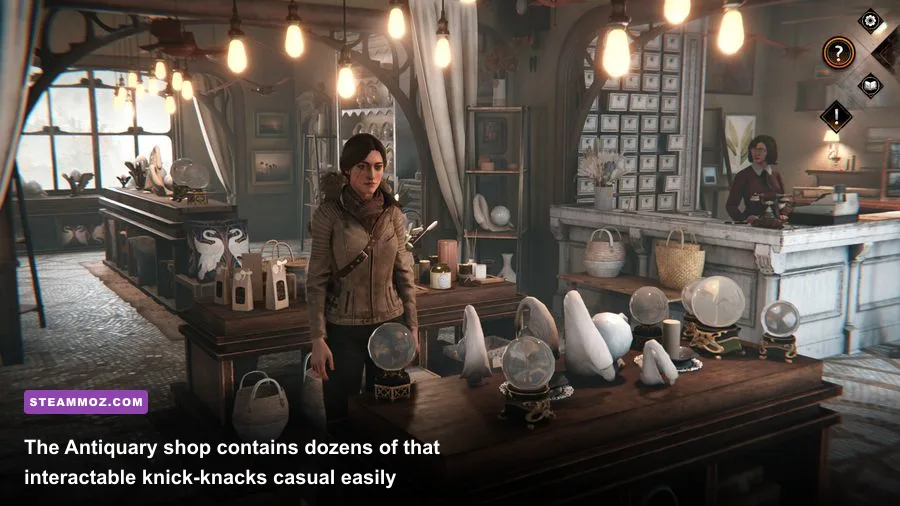
The antique shop in Vaghen is practically a living museum honoring European comic book history and Benoît Sokal's broader bibliography outside of gaming. While you're scouring the shelves for clues about the mysterious portrait, you can discover several mind-bending Easter eggs if you take the time to inspect objects that lack active gold quest markers.
Perched on a bookshelf near the spiral staircase is a stack of European graphic novel albums. Zooming in reveals distinct covers from Sokal’s acclaimed graphic novel series, Inspector Canardo, the hard-boiled anthropomorphic duck detective that launched Sokal’s career in Belgian comic circles back in 1978. Beside the Canardo books sits an illustrated naturalist volume showing sketches of colossal beasts from Kraa, another of Sokal's legendary graphic novel works.
For more deep-dive analyses on how world design enhances storytelling, check out our piece on immersive environmental exploration across modern adventure titles. Microids poured endless love into every shelf of this boutique, ensuring that long-time followers of Belgian graphic literature would feel right at home among the dusty clock dials and vintage phonographs.
Ranking the Top Hidden Secrets by Difficulty and Narrative Impact
Not all Easter eggs in Syberia: The World Before carry the same weight. Some are simple visual gags meant to bring a quick smile to Sokal purists, while others re-contextualize entire character motivations and offer crucial answers about the fate of the Roze family. The following evaluation matrix ranks the game's top five hidden secrets based on how hard they are to find without a walkthrough, along with their narrative importance:
| Easter Egg / Secret | Category | Discovery Difficulty (1-5) | Narrative Significance | Why Most Players Miss It |
|---|---|---|---|---|
| The Alexandre Valembois Field Journal | Franchise Lore / Homage | 4 / 5 | High: Unifies Amerzone and Syberia into one connected fictional universe. | Tucked inside an unassuming side credenza during an urgent story investigation. |
| Carillon Alternate Syberia 1 Theme | Interactive Audio Secret | 5 / 5 | Moderate: A deeply nostalgic audio tribute honoring Kate's origins. | Requires intentionally disregarding the explicit puzzle instructions in Dana's music book. |
| Leon Kobatis' Biscuit Tin Photographs | Character Lore / Story Context | 3 / 5 | Critical: Completely clarifies the romantic subtext between Dana, Leon, and Leni. | Located down an exterior cellar pathway that lacks any mandatory objective marker. |
| Inspector Canardo Comic Collection | Visual Easter Egg | 2 / 5 | Low: Pure authorial easter egg celebrating Sokal’s comic book roots. | Easy to walk past on a shelf when focusing strictly on the portrait investigation. |
| Oscar's Pneumatic Static Glitch | Audio / Nostalgia Trigger | 5 / 5 | High: Brings back Oscar's original dialogue voice actor in a haunting audio cameo. | Requires failing a delicate repair minigame calibration multiple times in a row. |
How Dual-Timeline Switching Uncovers Ghost Mechanics
The dual-timeline mechanic isn't just a puzzle tool; it's a vehicle for subtle environmental storytelling that most players never fully exploit. During several segments where you control both Dana in 1937 and Kate in 2004 simultaneously, you can manipulate the past to manifest immediate physical changes in the present.
A prime example takes place in the courtyard behind the music academy. As Dana, you can choose to water a newly planted seedling in a stone basin or leave it alone. If you water the seedling, when the game switches to Kate in 2004, that small seedling has transformed into an overgrown, sprawling ivy bush that covers a cracked wall plaque. Cleaning the plaque reveals a heartfelt commemorative poem dedicated to the student orchestra members who were lost during the fascist occupation.
Similarly, in the antique shop cellar, opening a high transom window as Dana in 1937 to let in fresh air results in decades of windblown autumn leaves piling up in the corner of the cellar during Kate’s timeline in 2004. Digging through that dried pile of leaves as Kate rewards you with an antique fountain pen bearing the Voralberg crest—an item completely unobtainable if Dana kept the transom window latched tight. Official production archives on the Microids official website highlight this mechanical continuity as one of the hardest technical hurdles the development team tackled.
Why These Hidden Details Make Syberia: The World Before Unforgettable
In an industry filled with bloated open-world checklists, Syberia: The World Before stands tall as a masterclass in deliberate, handcrafted adventure design. Every hidden diary, forgotten musical scale, and dust-covered blueprint isn't filler; it’s an invitation to slow down, observe your surroundings, and truly live within Benoît Sokal’s poetic world.
By taking the time to seek out the Amerzone journals in the mountain refuge, decipher the hidden inscriptions on Oscar’s mechanical heart, and trigger the secret melodies of the Vaghen carillon, you experience the game the way its creators intended: not as a checklist of puzzles to solve, but as an unforgettable, emotional journey across time, memory, and art.