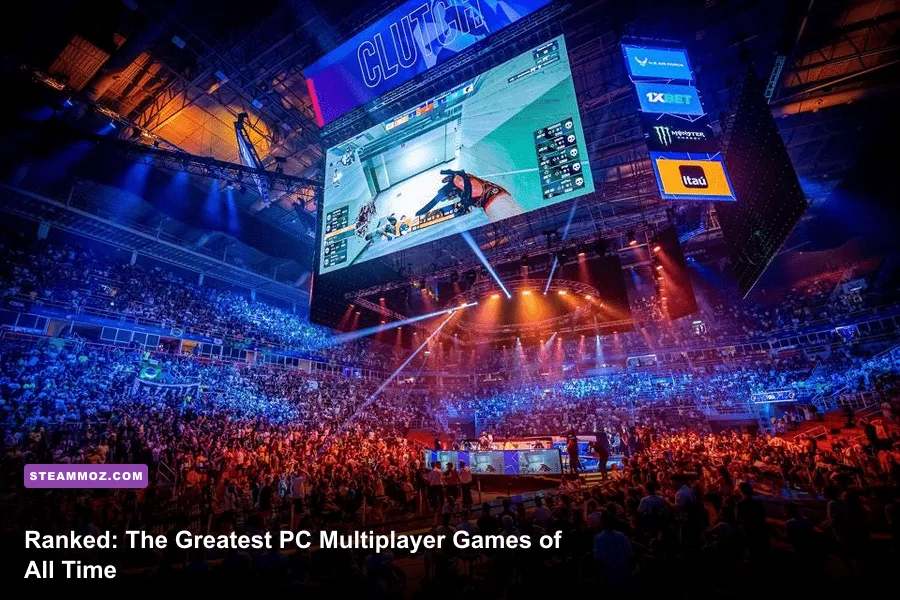
When you poll millions of PC players, analyze decades of active Steam concurrents, and measure pure competitive longevity, five games tower above all others in the multiplayer pantheon: Counter-Strike, Dota 2, World of Warcraft, Team Fortress 2, and StarCraft: Brood War. These aren't just commercial hits that enjoyed a fleeting six-month honeymoon; they are architectural marvels of game design built on unforgiving skill ceilings, razor-sharp input fidelity, and community ecosystems that have survived multiple hardware generations. What separates an all-time great PC multiplayer title from the seasonal hype cycle is simple: absolute mechanical agency where victory is earned through game sense, reflex precision, and unshakeable teamwork.
The S-Tier Immortals: Counter-Strike and Dota 2
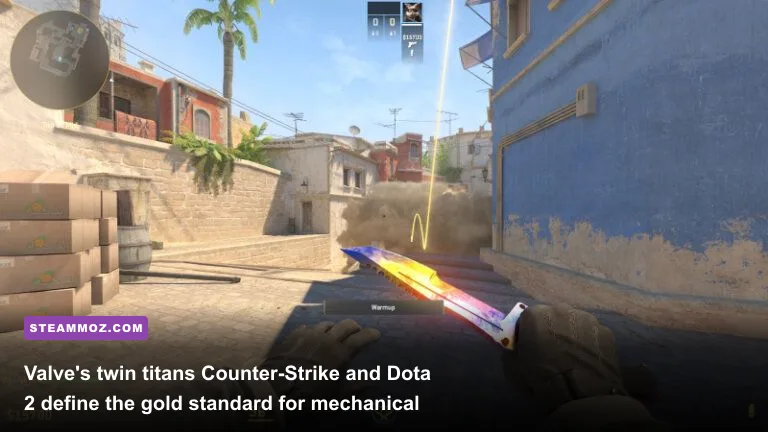
No conversation about PC multiplayer legitimacy begins anywhere other than Valve’s two foundational pillars. Counter-Strike 2, carrying the unbroken lineage of CS 1.6, Source, and CS:GO, remains the absolute zenith of tactical shooting. The game strips away sprint mechanics, aim-down-sights crutches, and hero abilities in favor of pristine fundamentals: counter-strafing, crosshair placement, spray pattern compensation, and ruthless economic calculation. When you buy an AK-47, you aren't just purchasing a one-tap headshot machine; you are managing round loss bonuses ($1,400 scaling up to $3,400 across a 5-round loss streak), calculating utility lineups, and executing split-second trades. The transition to CS2’s sub-tick engine architecture sparked passionate debate across the community, yet the core loop—where a 1-millimeter mouse adjustment decides a $1,000,000 Major—remains untouchable.
Then there is Dota 2. While other MOBAs streamlined their systems for broader accessibility, IceFrog’s masterpiece doubled down on punishing complexity. Turn rates prevent instantaneous kiting; creep equilibrium manipulation requires precise pull timings at the :15 and :45-second marks; and the dynamic vision mechanics of day/night cycles demand relentless awareness. In Dota 2, an item isn't merely a stat stick—activating a Black King Bar for spell immunity or executing a five-man Blink Dagger initiate with Enigma’s Black Hole can instantly flip a 60-minute match. The sheer depth of draft synergies, buyback economics (costing hundreds of gold plus a 480-second cooldown penalty), and high-ground siege dynamics gives Dota 2 an infinite skill ceiling that no rival has ever matched.
🎮 1bitHeart
Looking to experience this game? Grab your digital key directly on our store for $2.99.
View on Steammoz Store →The Tactical and Arena Pioneers: Quake III Arena and Team Fortress 2
Long before modern hero shooters flooded digital storefronts, id Software laid the blueprint for twitch-aim multiplayer with Quake III Arena. Quake introduced PC gamers to the raw kinetic thrill of strafe-jumping, plasma climbing, and precision rocket leading. In Quake, map control is a live mathematical puzzle: tracking Megahealth (35-second respawn) and Heavy Armor (25-second respawn) while navigating duel arenas at 600+ units of game speed. The mechanical requirements—combining lightning-fast flick shots with predictive projectile trajectory—crafted a breed of competitive player whose mechanical precision still influences modern shooter design.
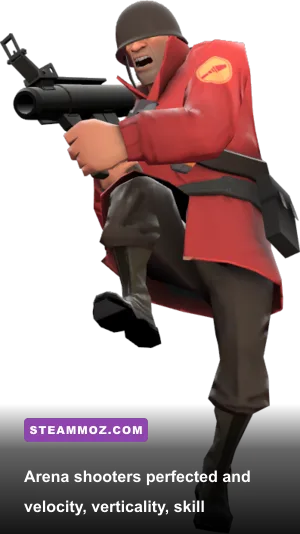
Rising from that arena DNA, Team Fortress 2 turned class-based combat into a timeless art form. Powered by Valve’s Source engine, TF2 gave birth to physics-defying movement tech that players still drill thousands of hours into mastering. A Soldier executing a frame-perfect c-tap rocket jump can traverse entire maps like Badlands or cp_process in seconds, converting horizontal velocity into devastating splash damage bombs. Meanwhile, the game's Ubercharge economy—where a Medic builds invulnerability at 2.5% per second (halved if the heal target sits above 142.5% overheal)—creates distinct crescendos of attack and retreat that modern tactical shooters still try to emulate. If you need your frame times locked to execute those air-strafes cleanly, fine-tuning your rig with tips from our guide on optimizing frame pacing and visual clarity ensures zero input stutter during chaotic payload scrambles.
The Definitive PC Multiplayer Tier List: Metrics and Mastery
To rank multiplayer games fairly, you have to look past nostalgia and measure four distinct pillars: mechanical ceiling, community longevity, tactical depth, and network integrity. A title that survives on PC for over a decade must deliver an input environment where player skill is rewarded with total consistency.
| Game Title | Tier Rating | Genre | Skill Floor / Ceiling | Defining Mechanical Pillar |
|---|---|---|---|---|
| Counter-Strike (1.6 / CS:GO / CS2) | S+ | Tactical FPS | Low / Infinite | Recoil compensation, counter-strafing, economy management |
| Dota 2 | S+ | MOBA | Brutal / Infinite | Creep aggro, turn rates, buyback resource management |
| StarCraft: Brood War / SC2 | S+ | RTS | Inaccessible / Superhuman | 300+ APM macro production cycles & split micro |
| Team Fortress 2 | S | Class Arena Shooter | Moderate / Extremely High | Source engine air-strafing, rocket jumping, Ubercharge pacing |
| World of Warcraft (Classic/Retail) | S | MMORPG | Moderate / Very High | Global Cooldown management, crowd control DRs, raid positioning |
| Tom Clancy’s Rainbow Six Siege | A+ | Tactical Destruction FPS | High / Extreme | Procedural destruction, vertical angles, intel economy |
| Apex Legends | A | Movement Battle Royale | Moderate / Very High | Tap-strafing, supergliding, armor swap inventory micro |
The Massive-Scale Epics: World of Warcraft and StarCraft II
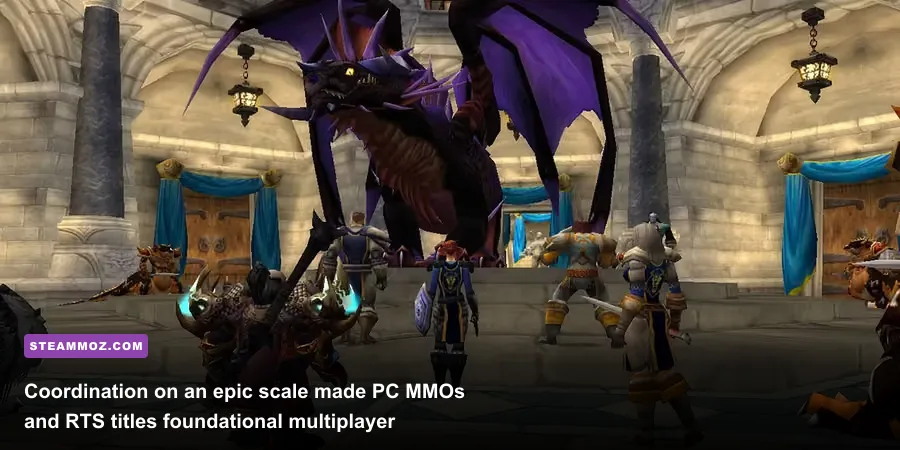
Competitive PC gaming isn't confined to small-sided five-versus-five lobbies; it also conquered industrial-scale real-time strategy and coordinated online roleplaying. Blizzard's golden era produced two titans that altered PC culture forever. World of Warcraft transformed cooperative multiplayer from niche muds into a mainstream cultural juggernaut. Conquering a 40-player encounter in Molten Core or executing a mythic progression boss requires corporate-grade logistical coordination. In the high-stakes world of WoW’s 3v3 Arena, the game transforms into high-speed tactical chess governed by the Global Cooldown (GCD), Diminishing Returns (DR) on crowd control categories, and relentless defensive cooldown trading. When multiple spell visual effects flood your display during dense combat, preventing frame dropouts is crucial—much like the performance triage discussed in our breakdown on tackling PC frame drops and engine hitches.
Meanwhile, StarCraft II (alongside its legendary predecessor Brood War) set the benchmark for individual human performance. Playing competitive StarCraft at master rank or above demands sustained actions-per-minute (APM) exceeding 300. You aren't just directing armies; you are executing an uninterrupted production cycle every single second—injecting larvae on queens every 29 seconds, dropping mules, and micro-splitting Terran bio forces to evade Baneling acid splashes. It remains the most punishing, unyielding one-versus-one multiplayer trial ever coded for a computer keyboard.
Modern Competitive Masterpieces: Rainbow Six Siege and Apex Legends

Modern developers haven't sat idle. Over the past decade, two distinct shooters carved out legendary status by redefining environmental destruction and momentum-based gunplay. Ubisoft’s Tom Clancy’s Rainbow Six Siege fundamentally changed the shooter landscape by making the map itself a dynamic weapon. Through its proprietary procedural destruction engine, wooden floors, drywall, and reinforced ceilings become lethal sightlines. Success in Siege isn't purely about clicking heads; it's about droning, vertical cross-fire setups (opening floors with Buck or Sledge to flush out anchor defenders below), and countering utility walls with precise gadget timing.
For weapon lethality and tier balance comparisons reminiscent of the classic FPS meta, check our analysis in weapon ranking tiers and lethality curves.
On the battle royale front, Respawn Entertainment’s Apex Legends extracted the fluid kinetic movement of Titanfall and melded it with squad-based shooter dynamics. PC players rapidly elevated Apex's movement engine, discovering advanced techniques like tap-strafing (redirecting 180 degrees of momentum without losing velocity by binding forward movement to the scroll wheel), wall bouncing, and frame-perfect superglides off mantle edges. In Apex, outplaying a squad often comes down to armor swapping from a death box in under 0.4 seconds mid-firefight. To maintain total tracking precision during these blisteringly fast engagements, pushing your panel to the limit using high-refresh optimizations like those outlined in our high refresh rate graphical configurations guide makes a massive competitive difference.
Hardware, Netcode, and Engine Benchmarks: Why These Games Survived
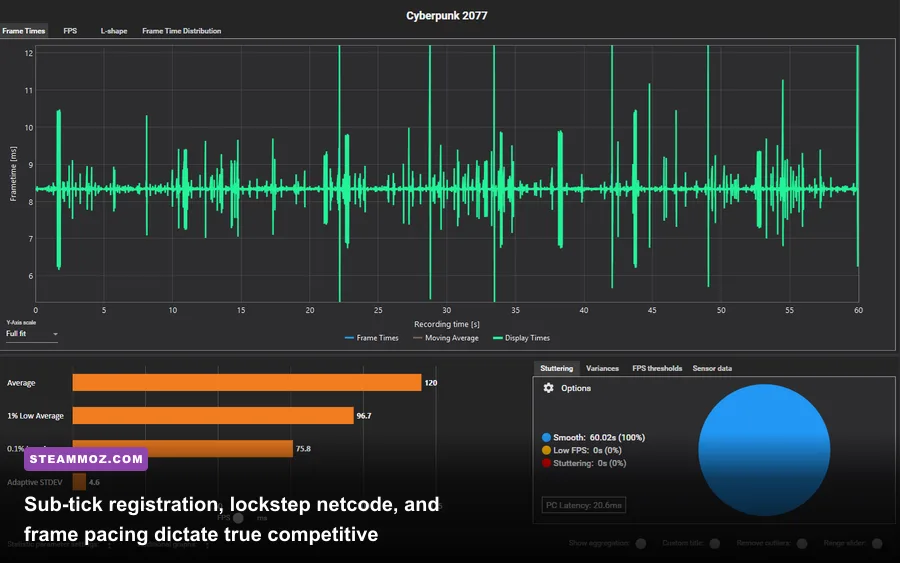
Every multiplayer game on this list achieved immortality because of what happens under the hood. A shooter with breathtaking visuals will crumble within months if its netcode suffers from high latency desync, lag compensation bugs, or unpredictable tick rates. The PC platform thrives on hardware scalability: running at 240Hz, 360Hz, or beyond with zero input latency.
| Game Title | Engine Technology | Native Server Tickrate | Latency Tolerance | Frame Time Target (Competitive) |
|---|---|---|---|---|
| Counter-Strike 2 | Source 2 | Sub-Tick Architecture | < 35ms (Crucial) | < 4.1ms (240 FPS+) |
| Dota 2 | Source 2 | 30 Hz Server Tick | < 60ms (Acceptable) | < 6.9ms (144 FPS+) |
| Rainbow Six Siege | AnvilNext 2.0 | 60 Hz Dedicated | < 40ms (High Impact) | < 5.5ms (180 FPS+) |
| Apex Legends | Modified Source (Titanfall) | 20 Hz Dedicated | < 65ms (Moderate) | < 5.2ms (190 FPS Cap) |
| StarCraft II | Proprietary Deterministic | Lockstep Engine | < 75ms (Fair) | < 8.3ms (120 FPS) |
As network requirements and engine performance continue to dictate esports viability—much like the hardware thresholds outlined in our look at competitive frame timing and hardware demands—these legendary titles remain king. Whether you're coordinating spatial pushes in tactical shooters or hunting tactical advantages like the map routes covered in our navigating high-density spatial arenas guide, the games at the top of the PC multiplayer podium stand unbroken because they respect the player's investment, provide flawless competitive integrity, and deliver memories that last a lifetime.