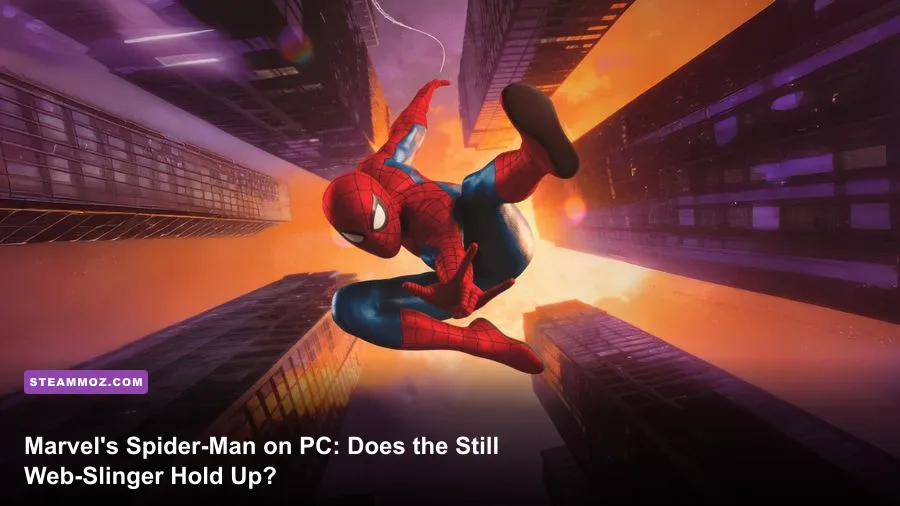
Yes, Marvel’s Spider-Man Remastered on PC is still absolutely worth playing, even years after its original console debut and subsequent Windows conversion. Port specialist Nixxes Software handed PC players what remains one of the absolute gold standards in PlayStation-to-PC translations. Featuring an uncapped frame rate, expansive ultrawide support, cutting-edge upscalers, and responsive mouse-and-keyboard input, this release bypasses the typical console compromises. If you want kinetic traversal that feels unmatched, razor-sharp combat fundamentals, and a comic book storyline that hits with authentic emotional gravity, Insomniac’s inaugural web-slinging adventure justifies every gigabyte on your storage drive.
The Core Traversal: Why Web-Swinging Still Shames Modern Competitors
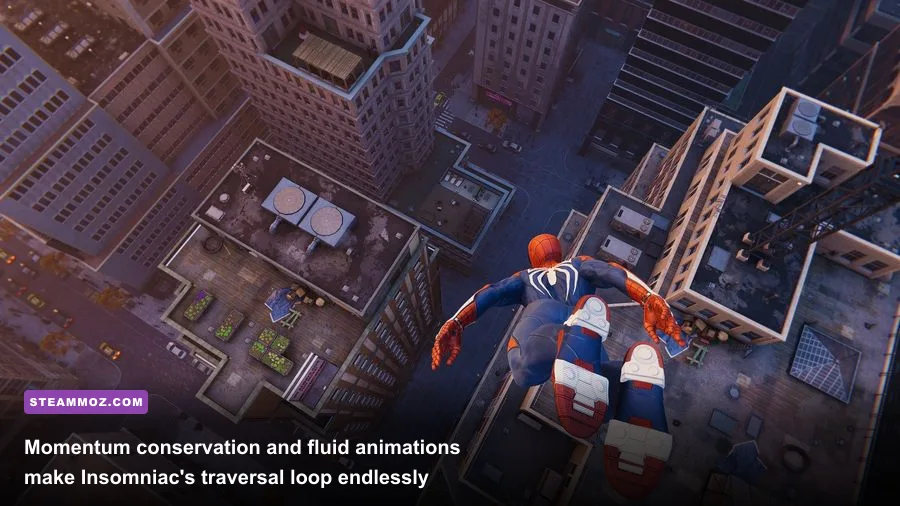
Traversal in open-world titles is so frequently treated as dead air—a hollow stretch of holding the left analog stick forward while watching stamina meters drain. Marvel's Spider-Man completely rejects that philosophy. Even after thousands of hours across modern sandboxes, diving off the spire of the One World Trade Center, tucking into a terminal velocity freefall, and anchoring a web line at the absolute last microsecond produces a rush few games can match.
What makes the web mechanics work so brilliantly isn't just the sheer spectacle; it is how Insomniac modeled the physical anchoring. Webs actually connect to physical buildings, cranes, and lampposts. If you swing down a wide avenue like Broadway, your arc drifts depending on whether your anchor point snagged a skyscraper on the left or a low-rise storefront on the right. You constantly balance height against velocity. Holding your swing to the apex launches you skyward for maximum altitude, while releasing at the nadir flings you forward like a stone from a catapult.
On PC, this mechanic ascends to an entirely different tier of tactile satisfaction when rendered at 120 FPS or higher. Input latency drops to near zero, turning micro-adjustments—such as tapping the Web Zip button to thread between two billboards or nailing a Point Launch cancel off a rooftop radio antenna—into pure muscle memory. If you've been playing titles that suffer from erratic frame pacing or clunky movement mechanics, such as unoptimized action sandboxes covered in our PC fix guide for open-world games, the sheer buttery smoothness of swinging through Manhattan feels downright therapeutic.

🎮 Pid
Looking to experience this game? Grab your digital key directly on our store for $9.99.
View on Steammoz Store →Combat Mechanics and Gadgets: Rhythm, Flow, and Crowd Control
Critics initially dismissed the combat as an iterative clone of Rocksteady's Batman: Arkham series. That surface-level comparison falls apart the moment you engage your first squad of rocket-toting Inner Demons. While both franchises rely on incoming threat telegraphs via Spider-Sense, Peter Parker is fragile. He cannot stand his ground and counter heavy attacks through brute force. Survival on higher difficulties demands constant aerial supremacy, split-second target prioritization, and ruthless gadget combinations.
The combat loop thrives on vertical juggling. Launching a brute into the stratosphere with an uppercut, slamming him back down with an Aerial War Cry, and instantly webbing him to the asphalt before he recovers eliminates threats without wasting time chipping away at swollen health pools. The sandbox empowers creative improvisation. You can yank car doors off sedans to pulverize shielded guards, ricochet off walls to shatter defensive stances, and redirect incoming RPG fire back into the sniper nest that spawned it.
| Gadget / Ability | Utility Tier | Primary Synergies | Optimal Tactical Application |
|---|---|---|---|
| Web Bomb + Concussion Blast | S-Tier | Suspension Matrix, Wall Kicks | Deploy into dense clusters; follow instantly with Concussion Blast to glue entire squads to nearby walls and vehicles. |
| Impact Web | S-Tier | Perfect Dodge, Web Strike | Instantly neutralizes priority targets near surfaces. Nailing an airborne enemy sends them hurtling into geometry for an instant KO. |
| Electric Web | A-Tier | Web Blossom, Off-the-Wall Strike | Chain stuns mechanical enemies, stun-baton mercenaries, and Brutes. Interrupts unblockable attack windups instantly. |
| Suspension Matrix | A-Tier | Ground Strike, Trip Mine | Lifts heavy units into the air, stripping their guard completely and leaving them exposed to gadget attachment traps. |
| Spider-Drone | B-Tier | Resupply Suit Power | Passive crowd distraction. Chip damage is modest, but it reliably breaks enemy sniper line-of-sight during frantic brawls. |
Suit Powers add another layer of build crafting. Pairing the Web Blossom power with gadgets turns high-density combat arenas into immediate triumphs. If you lean toward technical parrying, running Battle Focus ensures a near-infinite stream of Focus bar charges, allowing you to cycle instant Finishers or heal through incoming chip damage on the fly. It feels like an authentic comic book brawl where intellect and improvisation trump raw firepower, echoing the creative weapon juggling highlighted in our definitive weapon rankings for retro shooters.
PC Port Longevity: Nixxes Optimization, Ultrawide, and Steam Deck
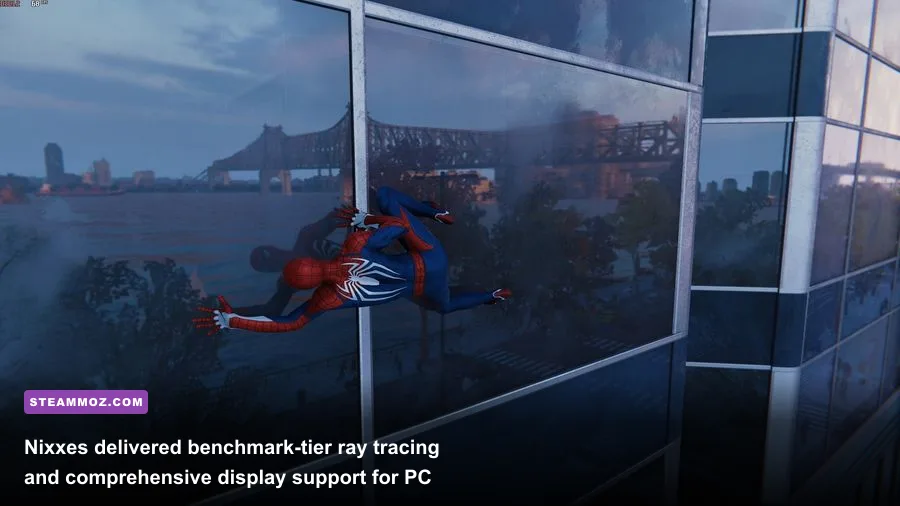
Nixxes Software proved why they are the undisputed kings of PC conversions when they handled this port. Rather than shipping a bare-bones conversion, the PC version launched with native support for 21:9 and 32:9 aspect ratios, fully configurable ray-traced reflections, NVIDIA DLSS 3 Frame Generation, AMD FSR 3.1, and Intel XeSS. Even if you're running hardware with quirky hardware profiles, as outlined in our analysis of modern PC specification demands, this game scales with exceptional grace.
The visual payoff of ray tracing in Manhattan cannot be overstated. Office towers made of reflective plate glass mirror the skyline, dynamic traffic reflections shimmer across rain-slicked streets, and sunset hues bounce accurately through urban corridors. However, ray tracing in this engine is notoriously CPU-heavy. Because the streaming engine must constantly feed high-speed geometry data while Spidey traverses at 60 miles per hour, high BVH (Bounding Volume Hierarchy) overhead can choke older quad-core or entry-level six-core processors.
| Graphic Setting | Recommended Tuning | Performance Cost | Visual Impact & Optimization Notes |
|---|---|---|---|
| Ray-Traced Reflections | High (Geometry High) | Very Heavy (-25% to -35% FPS) | Transforms urban immersion. Drop Object Range to 6 to preserve frame pacing when swinging at maximum velocity. |
| Crowd Density | Medium | Moderate (CPU Bound) | High settings flood sidewalks with civilian NPCs, significantly increasing CPU draw calls in Times Square and Financial District. |
| Traffic Density | Medium | Moderate (CPU Bound) | Keeps avenues looking populated without choking the thread scheduler during fast camera sweeps across intersections. |
| Shadow Quality | High (Skip Very High) | Low to Medium (-8% FPS) | High provides sharp ambient cutoffs under fire escapes and vehicles; Very High hits raster performance with minimal visual uplift. |
| Weather Particle Quality | Medium | Low (-4% FPS) | Reduces alpha-blending overhead during rainstorms and smoke-heavy rooftop encounters without visible fidelity loss. |
On portable hardware like the Steam Deck and ROG Ally, Marvel's Spider-Man is a marvel. By locking the display refresh rate to 45Hz or 40Hz and setting dynamic resolution scaling with FSR 2.2, you can achieve rock-solid performance with crisp image clarity. Much like fine-tuning visual parameters seen in our guide to optimizing competitive and puzzle PC settings, adjusting your frame cap prevents the CPU from overheating when rendering complex street-level pedestrian crowds.
Open-World Bloat vs. Narrative Punch: Where the Cracks Show
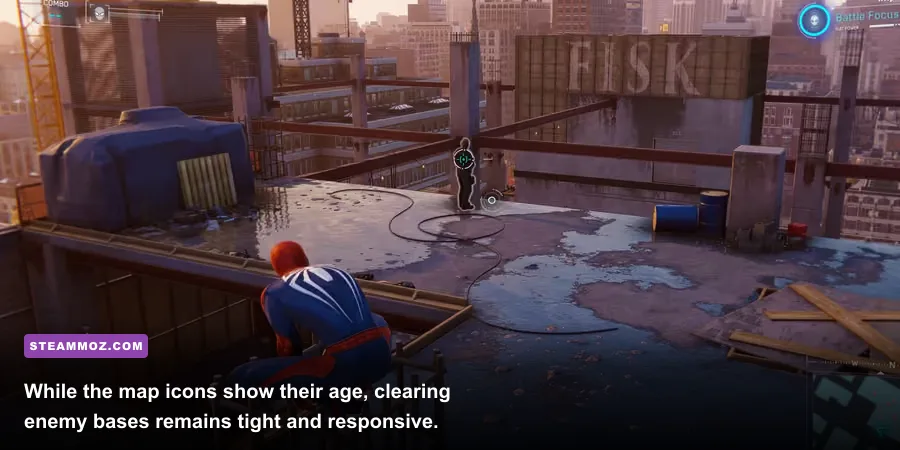
For all its mechanical mastery, Marvel's Spider-Man is not immune to criticism, and returning to it today reveals unmistakable signs of late-2010s design fatigue. The map is crowded with standard open-world markers: radio towers to unscramble, backpacks pinned to brick walls, tourist photographs to snap, and repetitive petty crimes that break out every three blocks. If you are someone who feels exhausted by busywork checklists, Manhattan's side activities can occasionally feel like a corporate chore list.
The pacing also grinds to a halt during the infamous stealth sequences where you control Mary Jane Watson and Miles Morales. Stripped of web-shooters, agility, and mobility, these segments force you into linear crouch-walking corridors, tossing lure items to distract guards with rudimentary AI sight cones. While Insomniac included these sequences to ground the human vulnerability of Manhattan's citizens during the Devil's Breath epidemic, mechanically they pale in comparison to Peter's kinetic escapades. Fortunately, PC players can bypass or streamline these sections entirely through custom mods.
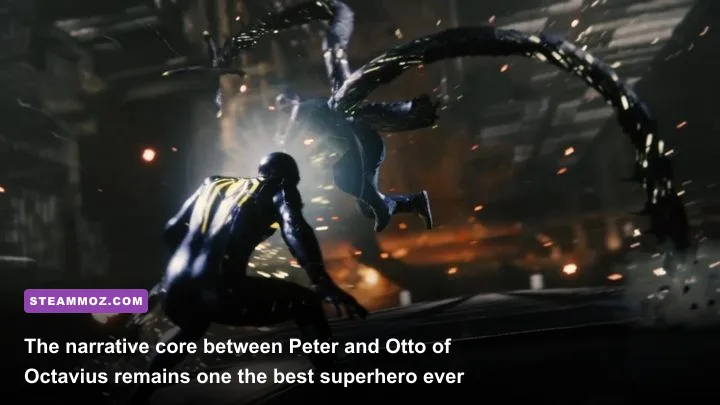
Where the game completely redeems its open-world clutter is in its central narrative. Spearheaded by lead writer Jon Paquette and brought to life by Yuri Lowenthal's career-defining performance as Peter Parker, the narrative stands toe-to-toe with the best cinematic adaptations of the character. The dynamic between Peter and William Salyers' Otto Octavius is a masterclass in slow-burn tragedy. You watch Otto slide from a desperate, underfunded scientist battling neurological decline into the vengeful Doctor Octopus. By the time the Sinister Six break out of The Raft and plunge Manhattan into biological martial law, the personal stakes hit hard, delivering an emotional climax that puts modern Hollywood superhero cinema to shame.
The Modding Scene Evolution: New Suits, Animations, and Visual Overhauls
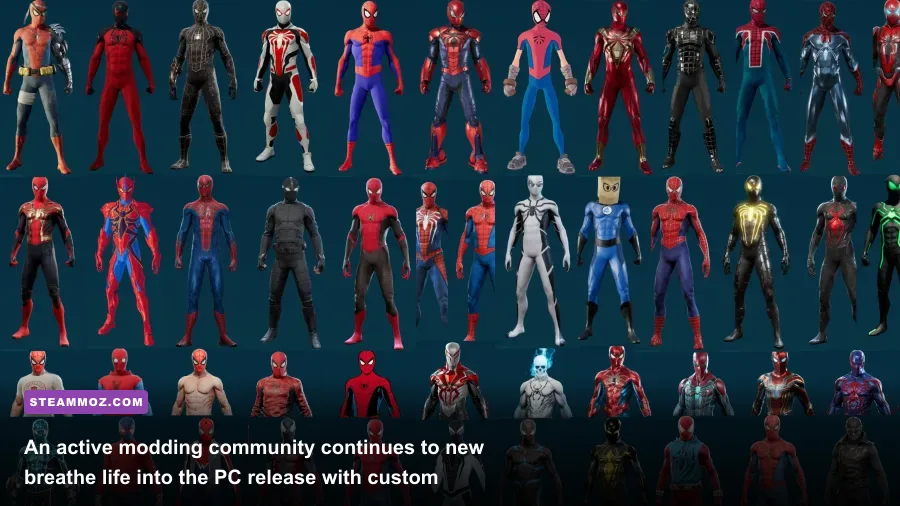
The longevity of any single-player PC title lives and dies by its modding community, and the scene hosted on Nexus Mods has transformed Marvel’s Spider-Man Remastered into an endless canvas. What began as simple texture swaps has matured into full-scale mechanical and aesthetic overhauls. Enthusiasts have injected custom traversal mechanics, imported hundreds of bespoke suit models, and overhauled swing physics to match classic titles like Spider-Man 2 (2004).
Want to swing through Manhattan using the stylized cel-shaded aesthetic of Spider-Man: Across the Spider-Verse with matching 12-FPS character animation quirks? There is a mod for that. Want the movie-accurate symbiotic webbing and tendril animations inspired by Sam Raimi’s cinematic trilogy? The community has you covered. Modders have also fixed legacy gameplay complaints, offering tools that let you disable random crimes once districts hit 100%, eliminate MJ stealth missions entirely, or increase the swinging velocity cap so Peter can soar past skyscrapers at breakneck speeds.
For purists looking to enhance visual fidelity without turning their rigs into blast furnaces, reshade presets inject modern color grading that fixes the base game's slightly warm, orange-tinted daylight filter. These community tweaks allow you to align the game's visuals with personal aesthetic preferences, in the same way players tune visual presets in our performance optimization guide for expansive open worlds.
The Final Verdict: Is It Worth Your Time and Hard Drive Space?
In a gaming climate often dominated by half-baked live-service launches, predatory microtransactions, and unoptimized PC ports, Marvel’s Spider-Man Remastered stands as a monument to how polished a single-player action game can be. It delivers a premium, complete experience straight out of the box. While its map design relies on familiar open-world tropes that show their age, the moment-to-moment gameplay loop remains fundamentally joyful.
For PC gamers, Nixxes has crafted a showcase title that validates high-end hardware investments. Watching glass-clad skyscrapers reflect the sunset while you sling between steel girders at 144Hz is an experience that console hardware simply cannot replicate with the same fidelity and input precision. With regular discounts on both the Steam Store and the Epic Games Store, this package includes the full "The City That Never Sleeps" DLC campaign, making it an extraordinary value proposition.
Whether you are diving in for the very first time on a handheld like the Steam Deck or revisiting Manhattan with high-end ray tracing and custom suit mods on an enthusiast desktop rig, Peter Parker's PC outing remains an absolute masterpiece. It isn't just worth playing—it remains the definitive modern superhero gaming experience on the PC platform.