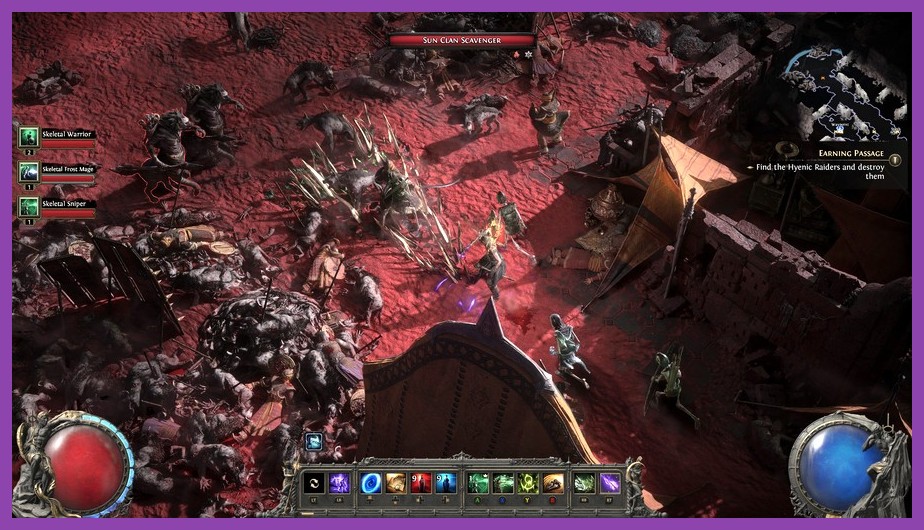
We have all been there. You are several acts deep into Wraeclast, feeling like an absolute god slinging lightning bolts or swinging a giant hammer, and suddenly you hit a massive brick wall. A campaign boss breathes on you, and your health bar completely evaporates. You open up your passive skill tree, take a long look at the web of hundreds of nodes you have selected, and realize you made a series of terrible mistakes ten levels ago. In the original Path of Exile, fixing a scuffed build early on was a painful nightmare that required hoardings Orbs of Regret or grinding through side quests just to fix a handful of points. Thankfully, Grinding Gear Games completely overhauled this mechanic for the sequel.
If you are wondering how to respec skill points in Path of Exile 2, you can breathe a huge sigh of relief. The system is far more forgiving, modern, and accessible, especially while leveling through the campaign. However, it still comes with mechanics, costs, and strategic quirks you need to understand before you go around stripping your passive tree bare. In this comprehensive guide, we will walk you through exactly how the respec system works, where to find the NPCs who offer skill refunds, how gold costs scale as you reach the endgame, and how to fix broken builds without rolling a brand-new character from scratch.
The New Respec System in Path of Exile 2 Explained
The biggest quality-of-life upgrade in Path of Exile 2 is the transition away from Orb of Regret micro-management toward a straightforward, gold-based system for skill refunds. In the original game, new players who botched their builds often felt forced to abandon their character because acquiring enough Orbs of Regret in early acts was virtually impossible. GGG recognized that punishing experimentation early in the game discouraged players from engaging with their complex build crafting.
In PoE 2, Gold is the universal currency for refunding your passive skill points. Every monster you slay, chest you pop open, and unwanted item you sell to vendors awards you with Gold. This means that as long as you are actively playing the game and picking up loot, you are constantly building up a bankroll that can be used to tweak your build on the fly.
Why the Shift to Gold Changes Everything
The gold-based respec system fundamentally alters how you approach character progression in the RPG landscape. During the early campaign acts, the cost to refund a single passive point is negligible—costing just a few dozen pieces of gold. This design encourages you to experiment freely with weapon combinations, elemental synergies, and passive nodes without feeling frozen by choice paralysis. If you want to try out a cold magic build in Act 1 and switch over to fire invocations in Act 2, you can do so almost effortlessly.
However, while early-game respecs are practically free, the cost scales dynamically based on your total character level and how far into the endgame atlas you have progressed. By the time you reach the mapping endgame, unallocating dozens of points will require a substantial investment of gold, keeping the economic weight of build-pivoting intact.
Step-by-Step: How to Respec Your Passive Skill Tree
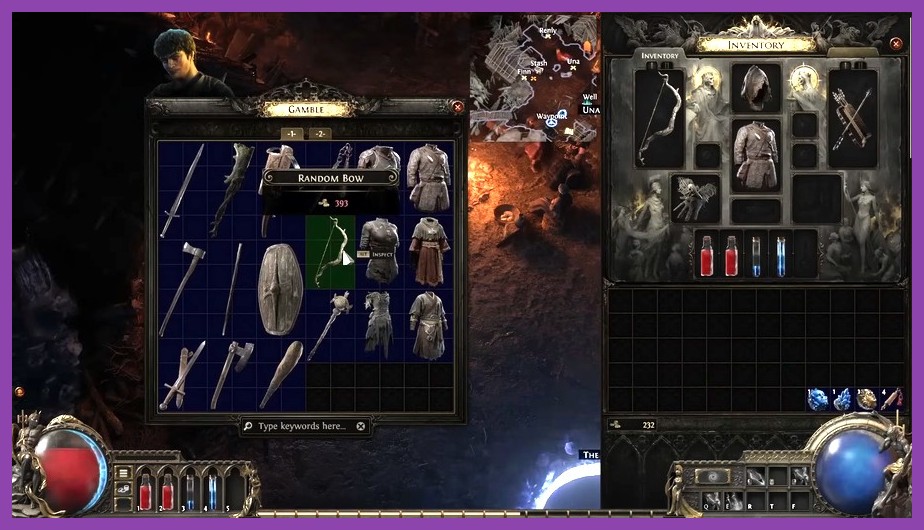
Refunding passive skill points in Path of Exile 2 is not something you can instantly do anywhere in the world with a single hotkey click; you must visit an authorized NPC in a town hub. If you are standing in the middle of a dungeon struggling against a monster pack, you will need to open a portal and head back to safety first.
1. Find the Respec NPC in Town
In almost every major town hub across the campaign acts, there is a designated NPC who handles skill tree resets. Early in the story, this service is provided by key story allies such as The Hooded One or specific town vendors marked with unique dialogue options. Look for an NPC that offers dialogue options related to 'Skill Tree' or 'Reset Passives'.
2. Open the Respec Menu
When you speak to the appropriate town vendor, select the option to view your passive tree. Instead of the standard view menu, this opens the skill refund mode. You will see your current gold balance at the bottom of the screen alongside the exact cost required per refunded point.
3. Select the Points You Want to Refund
To refund a point, simply click on an allocated node at the outer edges of your current tree path. Just like in standard ARPG mechanics, you cannot remove a 'bridge' node if other active nodes further down the chain depend on it to connect back to your starting class location. You must always trim your skill tree from the outer tips inward. If you need to make a massive shift in your pathing, you will have to unallocate nodes in reverse order, paying the individual gold fee for each step.
4. Confirm the Refund
Once you click a node, the gold is deducted from your inventory, and that point is converted back into an unspent passive skill point. You can now immediately allocate it into a different branch without closing the menu. If you are catching up on general gameplay mechanics, our 15 essential Path of Exile 2 beginner tips covers more fundamental survival tricks for early campaign navigation.
Understanding How Gold Respec Costs Scale
While the respec system is extremely generous during the early acts, it is designed with a steep scaling curve to prevent players from instantly changing their entire character class identity every five minutes during high-tier mapping. Understanding this curve will save you from accidental bankruptcy in the endgame.
Campaign Act Scaling (Levels 1 to 60)
During the campaign, the cost per point starts out at trivial amounts. In Act 1, refunding a passive node might cost as little as 20 to 50 Gold. Since average monster packs in Act 1 drop small piles of gold, fixing a misspent point takes less than two minutes of gameplay. As you advance through Acts 2, 3, and beyond, the cost per point gradually increases alongside the gold drops you encounter from higher-level enemies.
- Acts 1-2: Extremely cheap (~20–150 Gold per point). Feel free to experiment!
- Acts 3-4: Moderate cost (~200–800 Gold per point). Small path corrections are simple.
- Acts 5+: Noticeable investment (~1,000+ Gold per point). Full tree overhaul requires light saving.
Endgame Mapping Scaling (Level 65+)
Once you finish the main campaign and transition into endgame mapping, refunding points becomes a serious financial decision. At high character levels (Level 80+), refunding a single passive node can cost tens of thousands of gold pieces. If you decide you want to completely overhaul a level 90 character's entire 100-point passive tree, you could be looking at a total price tag of several hundred thousand to over a million Gold.
This is why managing your wealth is crucial. If you find yourself struggling to fund your skill changes later in the game, check out our dedicated guide on how to farm gold fast in Path of Exile 2 to keep your pockets full.
Respecing Dual-Specialization (Weapon Swap) Points

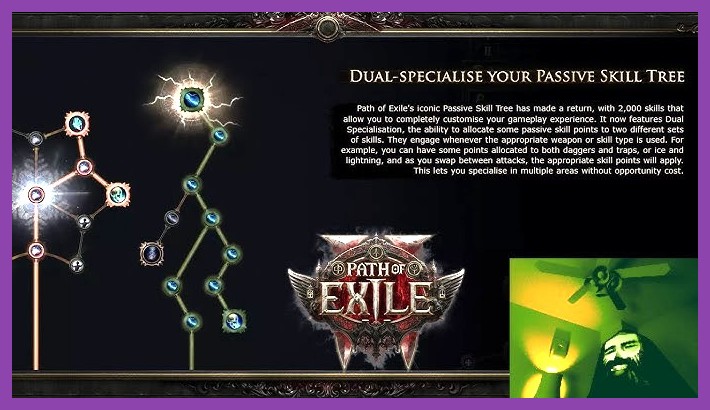
One of the most revolutionary mechanics introduced by Grinding Gear Games in Path of Exile 2 is the Dual-Specialization Passive Tree system. In PoE 2, certain passive skill points awarded from quests or specific triggers can be assigned specifically to distinct weapon sets. For example, you can assign 10 passive points that are only active when holding a Spear, and 10 passive points that automatically kick in when you swap to a Shield and Mace.
How Dual-Spec Respec Works
Refunding dual-spec points follows the exact same process as regular passive skill points, but with a few unique quirks:
- Independent Refunding: You must toggle to the specific weapon set tree in the vendor respec interface to refund nodes allocated to that weapon configuration.
- Gold Costs: Dual-spec points cost gold to respec just like standard points, based on your character's overall level.
- Stat Requirements: Be careful when refunding attribute nodes attached to a weapon swap set. If removing an attribute node causes your character to no longer meet the Strength, Dexterity, or Intelligence requirement for the swapped weapon, that weapon set will deactivate until requirements are met again.
Mastering this dynamic tree structure allows for incredible tactical flexibility during boss encounters. If you are struggling with tough combat encounters while adjusting your stats, review our guide on how to beat early bosses in Path of Exile 2 for vital combat mechanics.
How to Respec Ascendancy Points in PoE 2

Ascendancy classes represent the true specialization of your character in Path of Exile 2. Whether you are playing an Igniter Sorceress or a Titan Marauder, your Ascendancy tree provides game-changing passive powers that define your entire playstyle. But what happens if you pick the wrong Ascendancy node or decide you want to switch your entire sub-class altogether?
Refunding Individual Ascendancy Nodes
Refunding individual Ascendancy passive nodes can also be done via the town respec vendor using Gold. However, the cost per Ascendancy point is dramatically higher than a standard passive tree node—often costing anywhere from 5x to 10x the gold price of a normal passive point at the same character level. Because Ascendancy points are so impactful, GGG ensures that changing them requires a meaningful economic investment.
Changing Your Entire Ascendancy Sub-Class
If you want to completely switch your sub-class (for instance, changing from a Deadeye-style Ranger specialization to a more trap-focused Ascendancy), the process requires two steps:
- Fully Refund All Ascendancy Points: You must pay the gold fee to unallocate every single spent Ascendancy point on your sub-class tree until the sub-class tree is completely empty.
- Re-run the Trial/Labyrinth Mechanics: You must complete an Ascendancy altar run or endgame Trial. Upon reaching the final altar room with 0 Ascendancy points allocated, you will be given the option to select a brand-new Ascendancy sub-class entirely.
Common Build Mistakes and How to Fix Them
Most players seeking a respec do not actually need to wipe their entire tree clean; they usually just need to fix a few critical mistakes that are causing their build to fall flat. Here are the most common build pitfalls in Path of Exile 2 and how a simple, targeted respec can fix them without draining all your gold reserves.
1. Neglecting Maximum Health and Armor/Evasion
The single most common mistake new ARPG players make is putting 100% of their passive points into damage scaling nodes while completely ignoring defensive nodes. If you get one-shot constantly in Act 3 or Act 4, you do not need a brand-new build—you just need to trim 5 to 10 damage nodes and reallocate them into maximum life, energy shield, armor, or evasion percentage nodes nearby.
2. Missing Elemental Resistances
In Path of Exile 2, having low elemental resistances (Fire, Cold, Lightning) makes monster spells absolutely devastating. If a specific boss fight is killing you instantly, check your character sheet. Refunding a couple of offensive nodes near your starting path to pick up +15% All Elemental Resistances nodes can instantly solve your survivability bottlenecks.
3. Over-Investing in Specific Weapon Nodes Too Early
While leveling through the campaign, you will constantly find brand-new weapon drops that might be much stronger than your current gear. If you spend 15 passive points buffing 'Staff Skill Damage' in Act 2, and then drop an incredible Rare Wand in Act 3, your passive tree is suddenly doing nothing for you. Stick to generic spell damage, elemental damage, or physical damage nodes during early acts, and only specialize into specific weapon passive clusters once you hit the endgame platform. Exploring top titles in our list of the 15 best RPG games on Steam shows how deep build systems like PoE 2 truly stand out.
Skill Tree Planning Strategies to Save Your Gold
To avoid spending hundreds of thousands of gold on constant respecs in the endgame, adoption of good planning habits early on goes a long way. Here is how veterans manage their trees efficiently:
Work Toward Key "Keystones"
Keystones are the giant passive nodes on the skill tree that fundamentally alter how your character plays (such as converting all Energy Shield into Mana or removing your ability to score Critical Strikes in exchange for never missing attacks). Always plan your pathing around reaching these keystones efficiently without taking unnecessary detour nodes.
Use External Build Planners
Before spending massive amounts of gold shifting points around blindly, use third-party skill tree tools or official community planners to model your build beforehand. Path of Exile's passionate community regularly updates tools that let you simulate stat changes and gold costs before you spend a single coin in-game. You can also monitor developer updates on the official Path of Exile official website to stay ahead of balance patches that might grant free full respecs.
Take Advantage of Major Game Patches
Whenever Grinding Gear Games deploys major seasonal updates or balance overhauls that make sweeping structural changes to the passive skill tree, they typically grant every existing character a mandatory, free full passive tree respec upon logging in. If you have an old high-level character sitting around with a completely broken tree after a patch, check your skill tree interface—you might have a free full reset waiting for you without spending a single piece of gold!
Final Thoughts on PoE 2 Respecing
Path of Exile 2 strikes an ideal balance between encouraging player experimentation and preserving character identity. The decision to make early-game skill point respecs cost small amounts of Gold is a massive triumph for accessibility, letting newcomers learn the ropes without feeling terrified of making permanent mistakes. While endgame respecs require serious planning and gold farming, you are never truly trapped on a broken character.
So go ahead—try out that wild spell combo, experiment with dual-weapon setups, and push your limits in Wraeclast! If things go sideways, you can always visit town, hand over a pile of shiny gold, and fix your path forward. For more guides, technical tweaks, and gaming coverage, drop by our Guides section or browse through our latest PC Games catalog for what to play next!