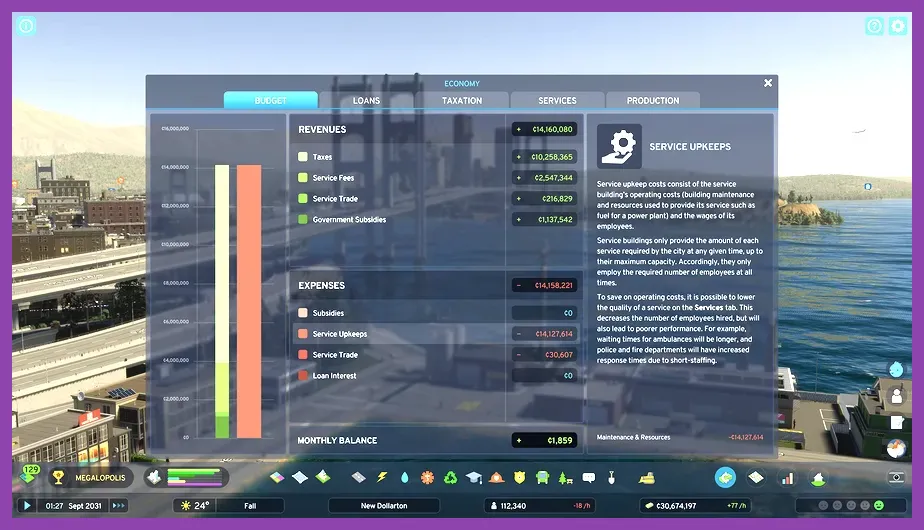
To farm money and build a massive financial surplus fast in Cities: Skylines 2, you need to exploit the game's dynamic taxation system, optimize your cargo export routes, and aggressively avoid early-game subsidy traps like overbuilt public transit. Instead of relying on slow organic growth, you must immediately set residential and commercial taxes to 12 percent, zone mixed-use medium density blocks, and establish rail and highway cargo terminals to export surplus industrial goods directly to external markets.
Mastering Early Game Taxation and Service Budgets
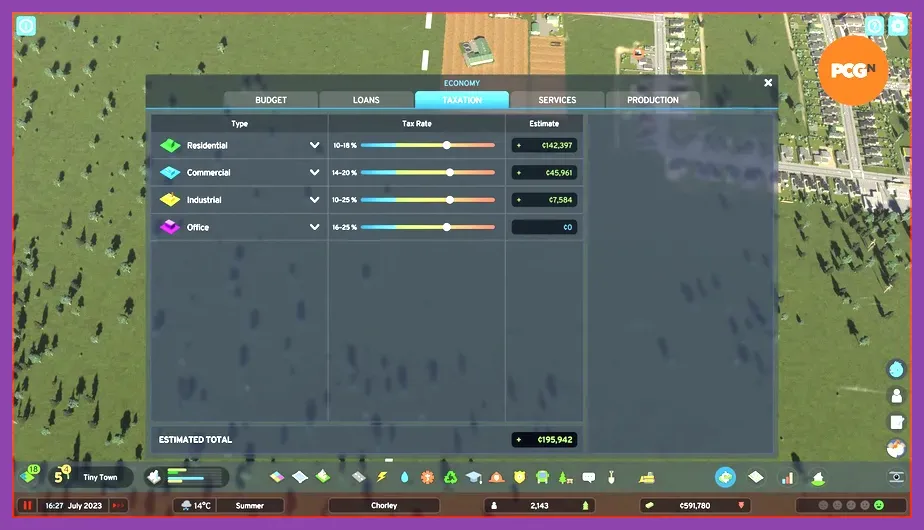
During the initial milestones, your primary cash leak is uncontrolled service upkeep. When you start your Cities: Skylines 2 Steam page metropolis, immediately open the Economy panel and drop all service budgets—such as water, electricity, and healthcare—down to 50 or 60 percent. Since your initial population is low, running these facilities at 100 percent capacity burns pure capital on unused utilities. Next, navigate to the Taxation tab. While traditional city builder advice suggests keeping taxes low to encourage growth, Colossal Order's economic engine allows you to push residential, commercial, and industrial tax rates up to 12 percent without triggering widespread abandonment, provided your citizens have basic access to water, electricity, and sewage.
Pay close attention to education tax brackets and specialized goods. As you build your foundational grid, check out related management strategies over at our Starfield resource guide for parallel mindset tips on resource accumulation. Avoid building expensive standalone schools early on. Instead, rely on the baseline education capacity and focus purely on dense residential zoning alongside commercial stripes. This creates a tight, highly efficient tax base that generates steady cash flow while keeping infrastructure costs minimal.
Unlocking High-Density Zoning and Mixed-Use Profit
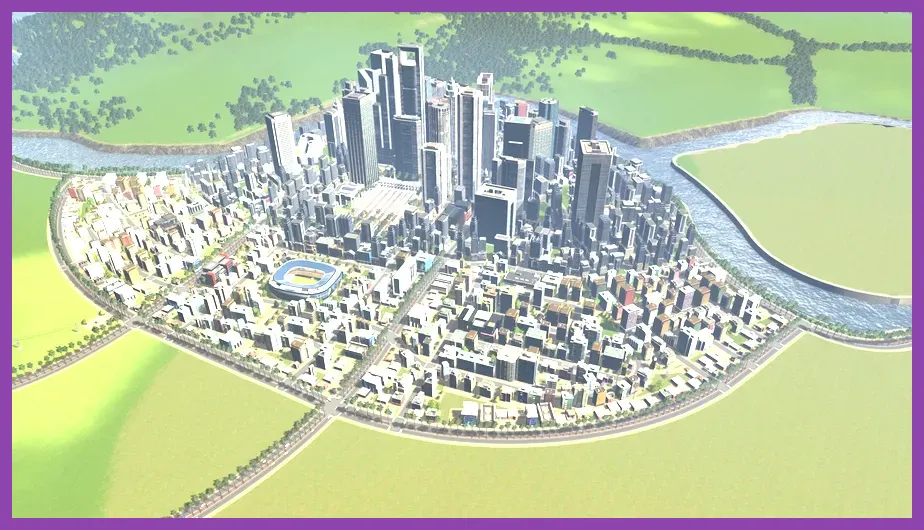
Low-density residential zones are notoriously tax-inefficient because they require massive amounts of pipe, road, and power line length per capita. To break this cycle and multiply your income, you must rush milestones until you unlock Medium-Density and Mixed-Residential zones. Mixed-use buildings are absolute goldmines because they stack commercial storefronts directly beneath residential apartments on the exact same footprint. This cuts your road maintenance costs in half while doubling the revenue generation per square tile.
When laying down these high-yield zones, ensure you maintain high land value by placing parks, elementary schools, and police stations nearby. High land value directly correlates with higher tier buildings, which in turn pay substantially higher property taxes. If you enjoy optimizing complex simulation loops, you might also appreciate checking out the deep mechanics detailed in our Subnautica 2 early game guide. Keep your zoning compact; never expand your road network outward until your existing neighborhoods are completely filled to capacity with level three or four buildings.
Exploiting External Trade Through Cargo Terminals
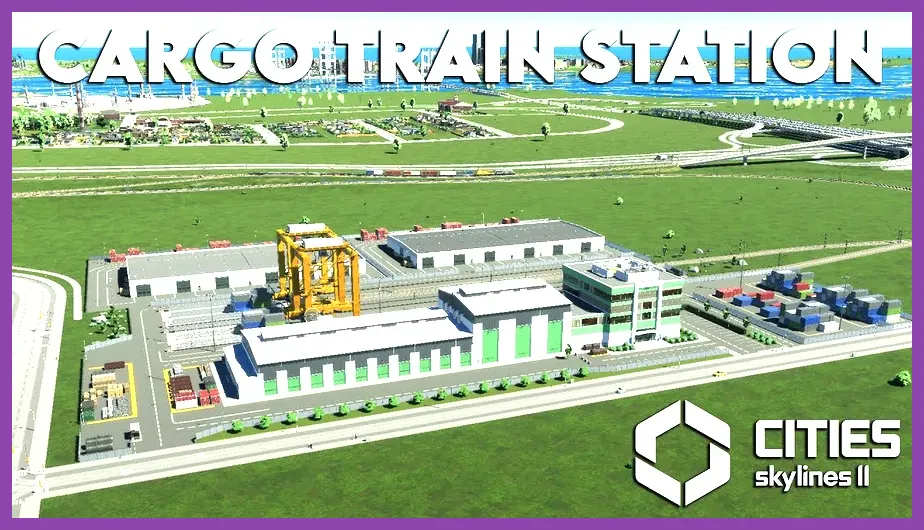
Internal commerce will only carry your city's economy so far. True wealth in Cities: Skylines 2 comes from dominating export markets. Specialized industries—such as grain farms, livestock, stone quarries, coal mines, and lumber mills—produce raw materials that can be processed into refined goods and exported outside the map boundaries. To maximize this, you need to build Cargo Train Terminals and Harbor connections directly linked to external highway and rail connections.
When placing specialized industries, look at the resource overlay in the map selection view. Set up your farms and extraction plants directly on top of rich resource deposits to guarantee maximum output efficiency. Once your factories produce more refined goods than your local commercial shops can consume, the excess automatically gets routed to your cargo terminals for export cash injections. For players who love min-maxing logistics chains, take a look at our tactical insights on the Space Marine 2 character unlocks to understand how efficiency and resource routing yield competitive advantages in modern gaming loops.
Transitioning to Office Industries and High-Tech Economy
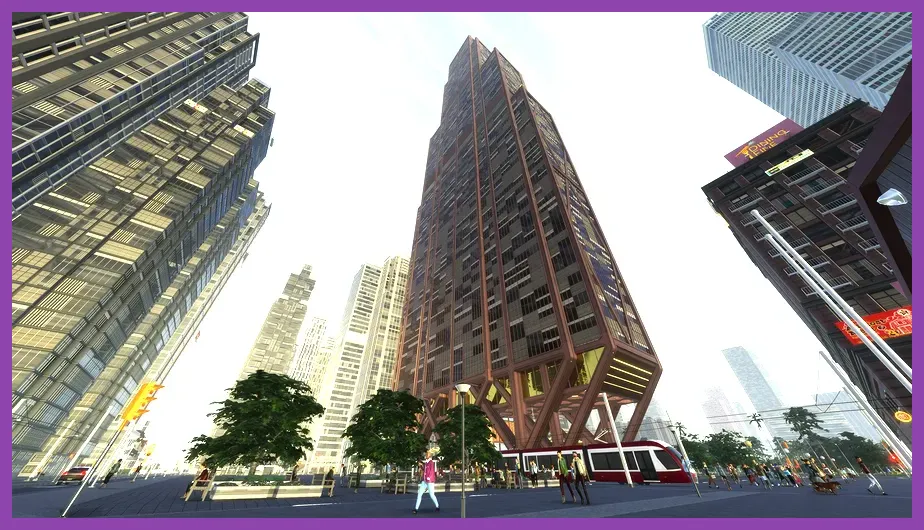
Raw resource extraction and heavy manufacturing eventually hit a ceiling due to pollution penalties and traffic congestion. To transition your city into a multi-million dollar powerhouse, you must invest heavily into the Education system to upgrade your population's knowledge level. Once a large percentage of your citizens achieve college and university degrees, zone vast swaths of Office areas.
Offices generate massive tax revenue with zero physical traffic congestion and zero ground pollution, making them the ultimate late-game gold farming asset. Unlike industrial zones that require physical truck deliveries, offices transmit software, financial services, and telecommunications digitally across external connections. Combine this high-tech pivot with tailored tolls on major highway bottlenecks to extract a small fee from every single commuter entering your municipal boundaries. For additional optimization tricks, explore our deep-dive analysis on the Solo Leveling Arise performance settings to ensure your PC handles these massive city simulations smoothly.
Avoiding Financial Traps and Maintaining Positive Cash Flow
Even with high taxes and optimized trade networks, a single poor infrastructure decision can spiral your city into bankruptcy within minutes. The most common trap players fall into is building oversized public transit systems, such as subway lines or passenger trains, too early in development. A single subway line can cost tens of thousands in monthly upkeep, easily wiping out the profits of a 20,000-citizen town. Stick to cheap bus lines until your city's population exceeds 50,000 and ridership demand justifies rail infrastructure.
Additionally, monitor your city's electricity and water imports. If you are importing electricity from outside connections, build local coal, gas, or green energy plants immediately, as external utility fees scale aggressively against your budget. Keep a close eye on the official Paradox Interactive forums for ongoing economic patches and balance updates. By strictly managing your service sliders, taxing at 12 percent, prioritizing mixed-use density, and scaling office sectors, you will secure limitless gold and maintain a thriving, bulletproof economy.