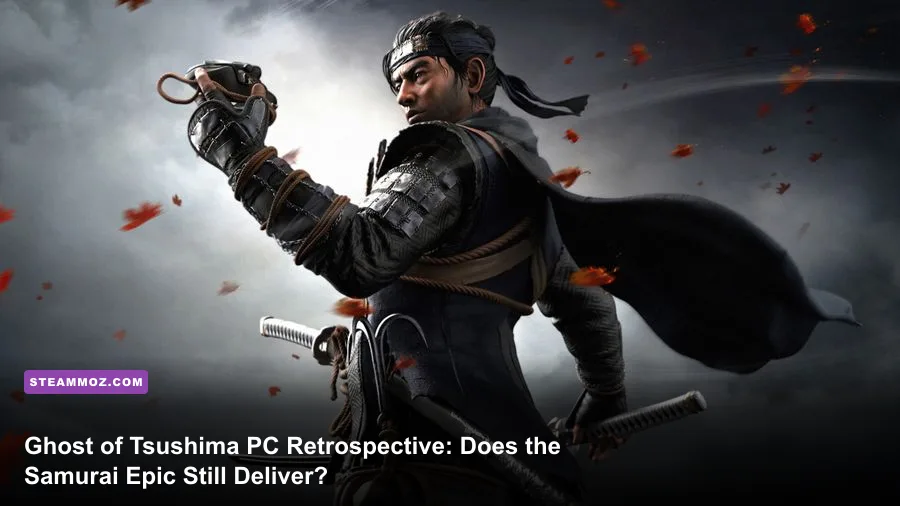
If you are wondering whether Ghost of Tsushima Director's Cut on Steam is still worth your hard-earned cash and storage space, the short answer is an unequivocal yes. Sucker Punch's historical epic, translated to the PC platform through the wizardry of Nixxes Software, stands as one of the finest translations of an open-world console exclusive ever released. Between pristine ultrawide support, frame generation that scales from modest rigs to high-end monsters, and a diegetic navigation system that still puts modern cluttered user interfaces to shame, Tsushima does not merely hold up—it effortlessly outclasses the majority of sandbox action games clogging your digital library.
Visual Fidelity and Nixxes Engineering Under the Hood
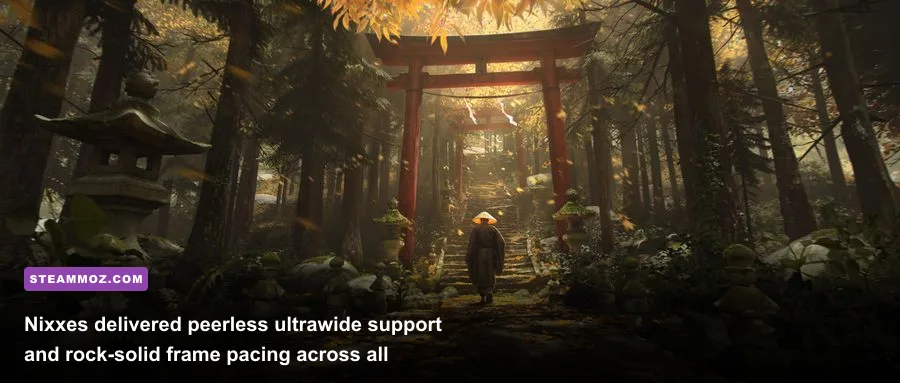
When PlayStation titles make the leap to PC, we often brace for erratic frame pacing, compiler stutter, or memory leaks. We have seen rocky ports across various genres, prompting players to scour guides like PC fixes that stop crashes and rescue your FPS or dive into crashing fixes to salvage stability. Sucker Punch and Nixxes, however, set a gold benchmark here. Built on a heavily modified proprietary engine, the PC build incorporates DirectStorage, dynamic particle lighting, and asynchronous compute routines that make Tsushima's gusting pampas grass and spiraling maple leaves look striking at native 4K.
The technical standout is how cleanly the engine handles multi-frame rendering. Utilizing DLSS 3.7, AMD FSR 3.1, and Intel XeSS, the game lets you decouple image reconstruction from frame generation. If you run an RTX 40-series GPU, you can pair DLAA with DLSS Frame Gen for razor-sharp edge smoothing with zero shimmering on fine foliage meshes. Meanwhile, players on budget or mid-tier hardware can utilize balanced FSR upscaling to hold 60 FPS without turning Tsushima's painterly horizons into muddy mush. Similar to how fine-tuning display settings nets higher FPS in smaller titles, dialing in the right visual knobs in Tsushima yields substantial headroom without sacrificing artistic intent.
| Graphic Preset / Setting | Recommended Value | Performance Cost (FPS) | Visual Impact & Engineering Note |
|---|---|---|---|
| Volumetric Fog | High (instead of Very High) | ~7-10% | Reduces ray-marching sample passes; almost visually identical in motion. |
| Shadow Quality | High | ~8-12% | Very High introduces contact hardening shadows that hammer GPU compute during duels. |
| Dynamic Resolution Scaling | Off (Pair with DLSS/FSR) | Variable | Hardware upscalers deliver cleaner temporal stability than internal DRS downsampling. |
| Particle Quality | High | ~4-6% | Crucial for keeping leaf physics, embers, and blood spray fluid during dense stance clashes. |
| Screen Space Reflections | Very High | ~3% | Negligible hit on modern VRAM; dramatically enhances wet mud, blood puddles, and rivers. |
Memory management is another triumph. Where many modern open-world releases swallow 12GB to 16GB of VRAM just to stream textures, Tsushima operates smoothly within an 8GB envelope at 1440p High settings. Nixxes implemented aggressive yet unobtrusive asset streaming, meaning you won't suffer from micro-stutter when galloping at full gallop through the Izuhara grasslands or transitioning into the snow-choked cliffs of Kamiagata.
The Stance Dance: Why Jin Sakai's Combat Hasn't Aged a Day
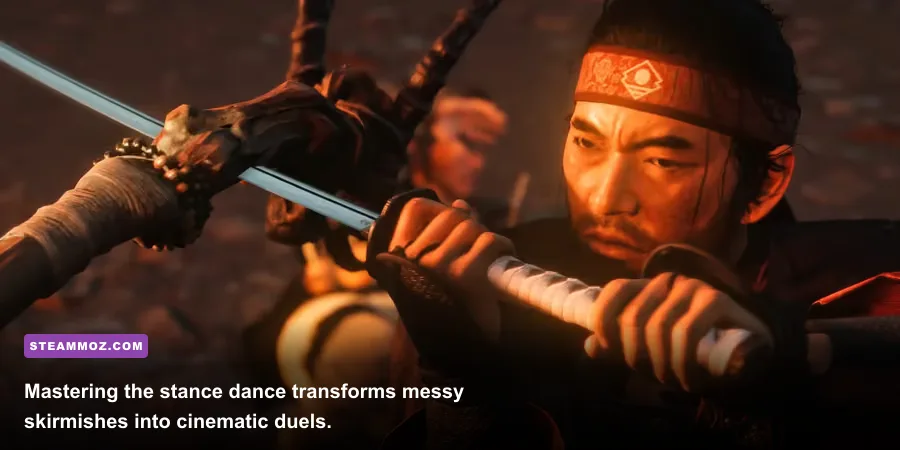
Modern third-person melee combat often falls into one of two camps: floaty hack-and-slash spam or punishing Souls-like stamina discipline. Ghost of Tsushima carves out its own distinct identity through its brilliant Stance Dance. You do not just hit light and heavy attack buttons; you dynamically counter weapon archetypes by swapping between Stone, Water, Wind, and Moon stances mid-combo.
Stone Stance pierces swordsmen with rapid heavy punctures, delivering a 150% stagger damage multiplier that cracks open defensive guards. Water Stance's Surging Strikes unleash a five-hit flowing barrage that obliterates enemy shield-bearers before they can bash your guard down. Wind Stance answers spearmen with the Strengthened Typhoon Kick—an auto-parrying boot that sends polearm wielders flying off cliffs. Finally, Moon Stance's sweeping kicks and triple whirlwinds juggle hulking brutes, breaking their uninterrupted hyper-armor attacks clean in half.
On PC, this combat loop sings when mapped to intuitive controls. While playing with a DualSense controller gives you incredible haptic feedback—letting you feel the tactile tension of Jin drawing his half-bow or the clash of steel through adaptive triggers—the mouse and keyboard implementation is remarkably responsive. Mouse-directed parry targeting feels sharp, allowing you to flick Jin's blade toward a Mongol flanker in an instant. If you play on Lethal difficulty, combat becomes a lightning-fast, high-stakes puzzle where Jin dies in one or two hits, but so do common bandits, demanding precise timing and cold execution.
The Guiding Wind and Diegetic Open-World Purity
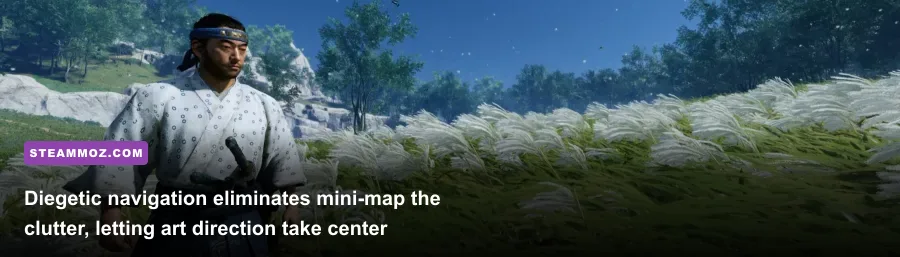
One of the biggest issues facing modern open worlds is interface fatigue. Map markers, compass bars, objective trackers, and glowing trail markers constantly pull your eyes away from the actual game world. Sucker Punch solved this problem by turning nature itself into your user interface through the Guiding Wind. When you mark an objective on the map, you do not follow a mini-map GPS line; you simply swipe to summon a breeze that bends trees, carries pollen, and steers your horse in the correct direction.
This single design choice alters how you interact with the environment. Instead of staring at the corner of your monitor, you watch the world around you. A flock of yellow birds chirps and guides you toward hidden vanity gear or hot springs that expand your maximum health bar. Foxes dart through vibrant shrines to boost your charm slots, and columns of black smoke on the distant horizon signal villages suffering under Mongol occupation. Unlike the relentless checklist clutter seen in games where you spend hours studying guides like open-world settings optimizations, Tsushima's world invites deliberate, unhurried immersion.
The pacing of Tsushima's three acts also mirrors Jin's psychological descent. In Act 1 (Izuhara), you operate strictly as a disciplined samurai clinging to Lord Shimura's rigid code of honor. By Act 2 (Toyotama) and Act 3 (Kamiagata), survival demands that you embrace the Ghost: striking from shadows with kunai, employing poison darts that turn enemy lungs inside out, and detonating black powder bombs. The narrative dissonance that plagues many open-world titles is absent here because Jin's moral compromises are baked directly into your mechanical progression.
Build Crafting and Endgame: The Iki Island Expansion Factor
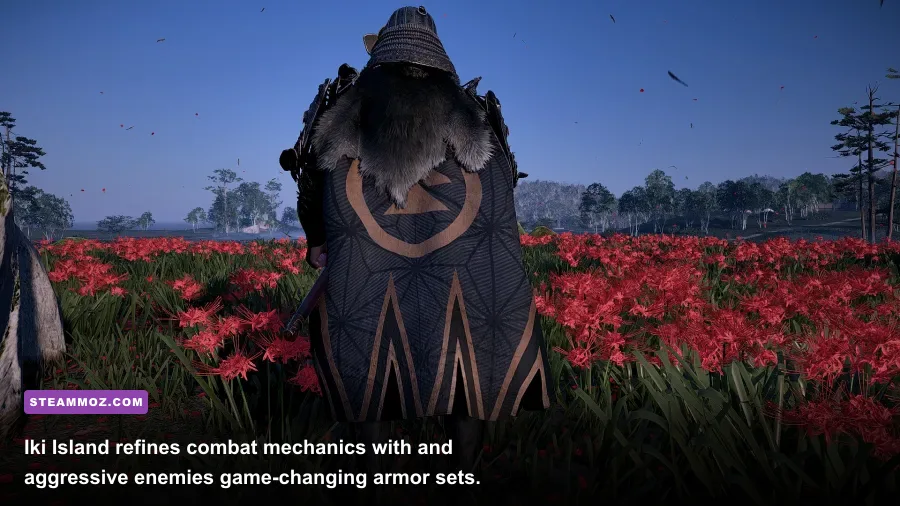
The PC edition includes the sprawling Iki Island expansion right out of the box, and skipping it would be a massive mistake. Iki Island is not just an extra map chunk with more fetch quests; it is a masterclass in mechanical difficulty escalation. The enemies here adapt: shamans chant in the background, granting nearby Mongol raiders hyper-armor, erratic attack cadence, and resistance to standard stagger combos. Raiding forces switch weapons mid-fight, demanding that you swap stances mid-combo to prevent your guard from breaking.
Iki Island also introduces transformative armor sets and charms that elevate build crafting far beyond basic stat increases. Much like dialing in combat specs in deep progression titles—whether you are working out beginner progression builds or learning how to level fast and farm resources efficiently—Tsushima lets you fine-tune Jin Sakai into specialized combat archetypes.
| Build Archetype | Core Armor Set | Key Charms Setup | Combat Playstyle & Synergies |
|---|---|---|---|
| The Parry Duelist | Sarugami Armor | Charm of Versatile Skills, Charm of Inari's Might, Charm of Silence | Disables standard parries; transforms Perfect Parries into a blistering 3-hit counter-attack that blinds adjacent foes. |
| The Ghost Terrifier | Ghost Armor | Charm of Ikazuchi-no-Kami, Charm of Fire Doctrine, Charm of Fortune II | Reduces Ghost Stance kill requirements to 5; provides up to a 50% chance to terrify enemies on kill, causing entire camps to flee. |
| The Stagger Smasher | Gosaku's Armor | Charm of Bludgeoning, Charm of Staggering Prowess, Charm of Dual Destruction | Massively amplifies Stagger damage; breaking an enemy's guard restores 20% health and triggers instant lethal critical strikes. |
| The Kensei Bombardier | Kensei Armor | Charm of Hidden Blades, Charm of Advantage, Charm of Unequal Sight | Ghost Weapons deal +40% base damage; striking foes with Kunai or Bombs debuffs enemy damage output by 50% while boosting your incoming melee damage. |
The combination of the Sarugami Armor and the Charm of Versatile Skills—which doubles the effect of minor charms if you only equip one of each category—creates an intoxicating, rhythm-game flow state on PC. Perfect dodging rewards you with a blinding slash that carves through armor, turning duels with ronin straw hats into razor-sharp ballets of blood and steel.
PC Port Longevity: Steam Deck, Modding, and Legends Co-op
A major factor in assessing an older PC release is how well it runs on modern handhelds and what the community ecosystem looks like. On the Steam Deck and similar portable handhelds (ROG Ally, Legion Go), Ghost of Tsushima runs surprisingly well. On Steam Deck OLED, targeting a 40Hz/40 FPS cap using Medium settings with FSR balanced dynamic scaling yields around 2.5 to 3 hours of battery life with exceptionally clean frame pacing.
The modding scene on Nexus Mods has matured nicely as well. While Sucker Punch did not release official modding tools, the community has produced essential quality-of-life additions:
- Custom Reshades: Removes the slight cinematic yellow tint in certain biomes to deliver true Akira Kurosawa black-and-white contrast or hyper-realistic foliage saturation.
- HUD Customization: Enables true zero-HUD gameplay, stripping away combat button prompts, stance wheels, and health pips for maximum cinematic immersion.
- FOV & Camera Overhauls: Pulls the third-person camera back slightly during skirmishes, giving players who find the tight console camera claustrophobic a wider tactical view.
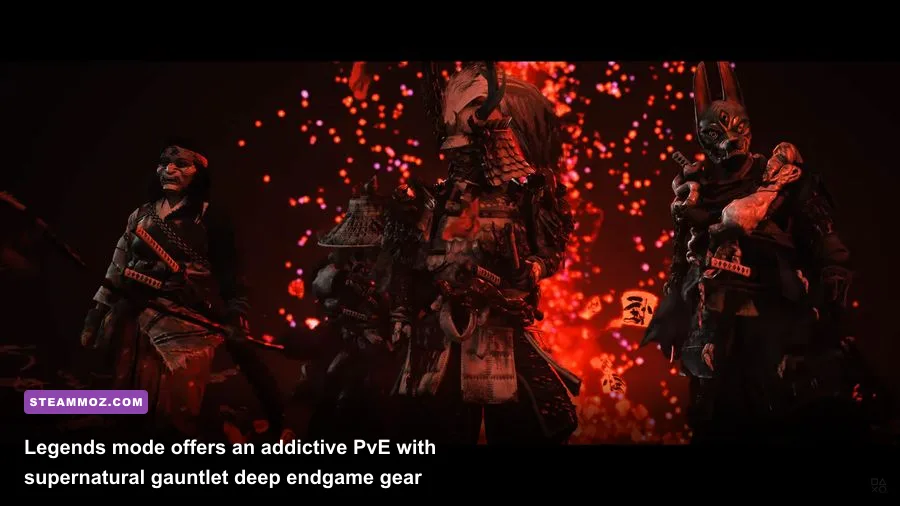
Let's not overlook Legends, the standalone cooperative multiplayer mode included with the Director's Cut via PlayStation PC Publishing. Legends shifts Tsushima from grounded historical fiction into supernatural Japanese folklore. Teaming up with three other players across Samurai, Hunter, Assassin, and Ronin classes to take down corrupted Oni, tengu sorcerers, and multi-stage raid bosses adds dozens of hours of replayability. The PC matchmaking pool is active, and cross-play with console players ensures quick queues for survival missions and nightmare story challenges.
The Verdict: Sucker Punch's Blade Remains Razor Sharp
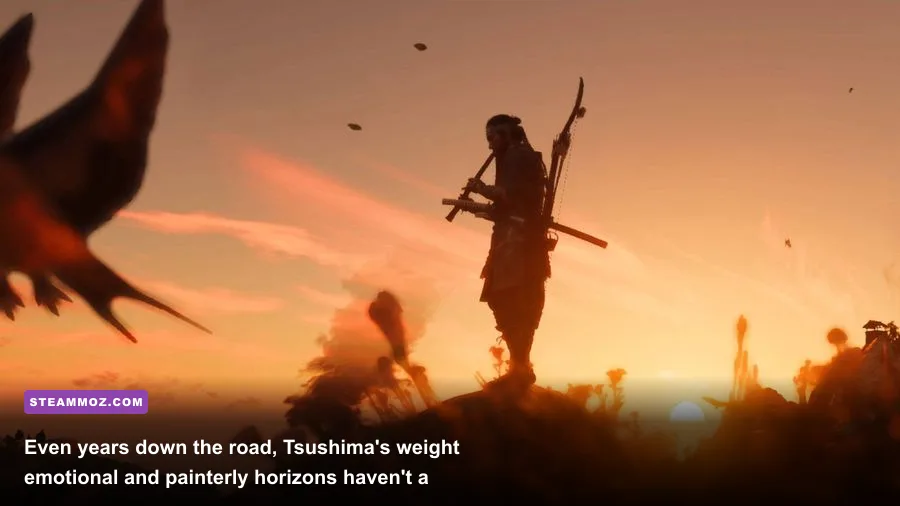
It is rare for an open-world title to age this gracefully. So many releases from the previous console generation feel bloated, sluggish, or technologically compromised when revisited years later. Ghost of Tsushima Director's Cut on PC avoids those traps entirely. Sucker Punch understood that open worlds should inspire curiosity rather than exhaustion, and Nixxes Software backed that artistic vision with ironclad PC engineering.
Whether you want to test your reflexes on Lethal difficulty, get lost chasing the Guiding Wind across golden autumn forests, or team up with friends in the punishing Legends raids, Tsushima remains an absolute triumph. If you have not yet unsheathed Sakai steel on your PC rig, do not hesitate: this is one historical campaign that deserves every bit of your time.