
DARK – Cult of the Dead becomes dramatically easier once you stop treating every encounter like a damage race. Your first priority should be stamina control, safe positioning, and a reliable single-target weapon; then invest in survivability before chasing critical-hit bonuses. These 10 tips will help you understand the opening hours, build a dependable character, preserve healing supplies, and reach the first major boss without throwing away a promising run.
If you're still deciding whether the game belongs in your rotation, Steamoz's Dragonkin: The Blood Scales Edition review is worth a look for another dark action-RPG comparison. The same rule applies here: flashy loot is nice, but a build that survives mistakes is what actually carries you forward.
1. Learn the opening loop before chasing loot
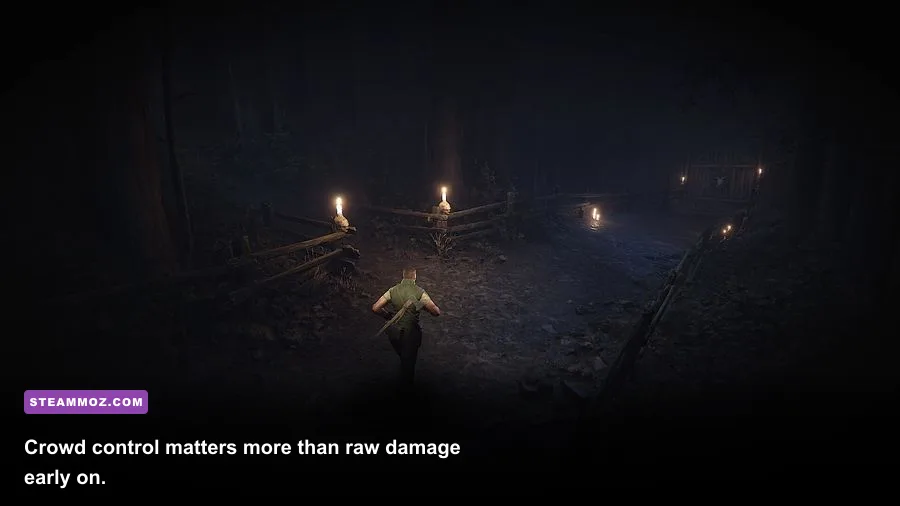
The first several areas teach a repeatable loop: explore, pull enemies into manageable groups, collect currency, return to the upgrade interface, and push into a more dangerous section. Don't sprint through the first room just because the path is open. DARK frequently places a second enemy pack behind a doorway, corner, or interactable object, and arriving with half stamina is how simple fights become emergency retreats.
Use the opening encounters to test three things: the range of your light attack, the recovery time after a heavy attack, and the distance covered by your dodge. Those details matter more than the weapon's headline damage. A weapon that hits for 22 damage but leaves you exposed for 0.8 seconds can be worse than one dealing 17 damage with a short recovery animation.
Keep one escape route visible. Fight near open ground rather than against a wall, and avoid activating multiple doors or shrines while enemies are still alive. The game rewards deliberate pulls, not speed-running every hallway.
What to practice in the first 10 minutes
- Attack twice, pause, and watch the enemy response instead of completing every combo.
- Dodge through a swing rather than backward whenever the arena allows it.
- Keep at least 50 percent stamina before opening a chest in an uncleared room.
- Mark healing pickups mentally; they are safer when saved for the return route.
🎮 DARK - Cult of the Dead
Looking to experience this game? Grab your digital key directly on our store for $1.79.
View on Steammoz Store →2. Build around stamina before damage

New players usually buy the largest damage upgrade available. That feels good for about five minutes, then collapses when a heavy attack, dodge, and defensive skill all compete for the same stamina bar. Put your first upgrades into maximum health, stamina recovery, or damage reduction if those options appear in your progression screen. A 10 percent improvement in stamina recovery often produces more real damage than a small weapon-strength increase because it lets you attack, evade, and reposition without waiting in danger.
A strong beginner setup uses a fast primary weapon, a ranged pull or projectile, and one panic button. Keep the fast weapon for ordinary cultists and reserve the heavier option for stagger windows. If your skill menu offers a choice between a 12 percent critical chance increase and a defensive cooldown reduction, take the cooldown reduction first. Critical chance is inconsistent at low levels; a shorter defensive cooldown helps in every room.
| Upgrade priority | Recommended early target | Why it matters | When to delay it |
|---|---|---|---|
| Maximum health | Two early upgrades | Lets you survive one missed dodge | Only delay for a required weapon unlock |
| Stamina recovery | At least 10 percent | Improves attacks, dodges, and skill uptime | Don't ignore it for pure damage |
| Damage reduction | One reliable defensive node | Reduces chip damage from crowded fights | Skip only if your build never takes contact |
| Critical chance | After survivability | Strong once base damage is established | Weak as a first investment |
For another example of how small progression choices compound over time, see Steamoz's fast leveling and gold farming guide for Ciel Fledge. The lesson transfers cleanly: early efficiency is about reducing wasted attempts, not maximizing a screenshot-friendly number.
3. Use enemy telegraphs instead of reaction panic
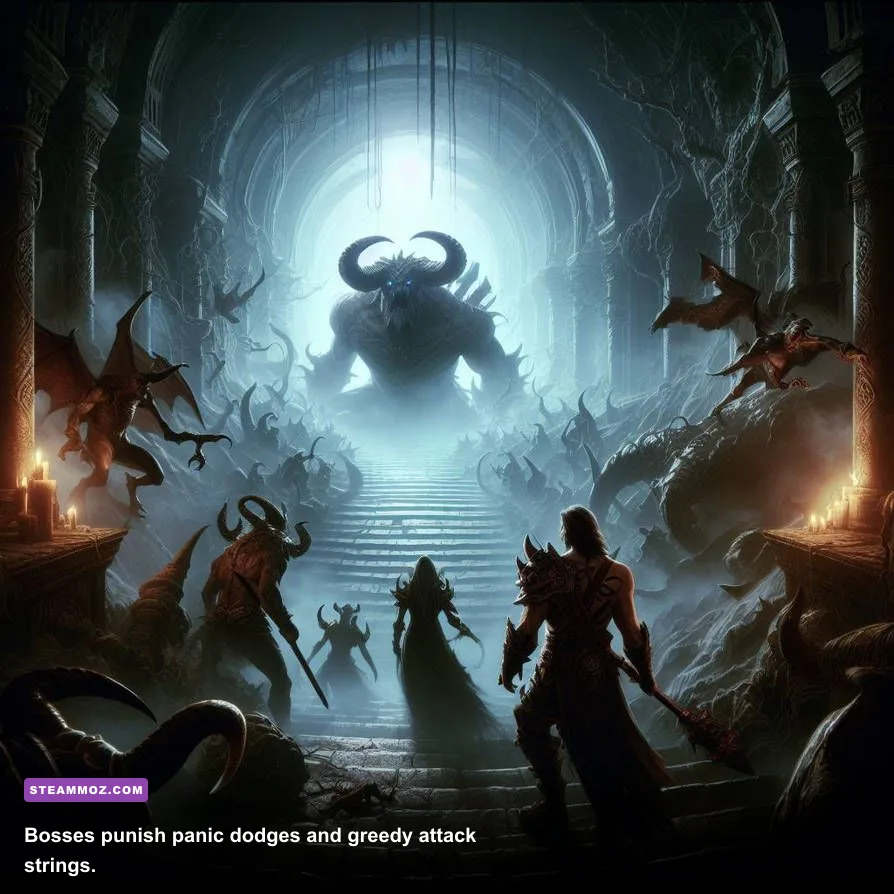
Every dangerous enemy has a readable moment before its strongest attack. Cultists that raise a weapon overhead are asking for a side dodge; lunging enemies usually commit to a straight line; shielded opponents often expose themselves only after a blocked combo. Watch the animation, not the health bar. If you stare at damage numbers, you'll miss the wind-up that tells you when to move.
Don't mash dodge repeatedly. Most action games attach a recovery cost or a short vulnerable period to consecutive evasions, and DARK is much easier when you use one deliberate dodge followed by repositioning. Dodge the first hit, circle behind the attacker, and wait for the recovery animation. Two safe attacks are better than a full combo that gets interrupted by the enemy's follow-up.
Against groups, prioritize ranged attackers and enemies that apply crowd-control effects. A weak projectile can be more dangerous than a melee brute because it forces you to dodge while another enemy closes the gap. Pull one target away with a thrown weapon or ranged skill, then finish it before returning to the pack.
A simple combat rotation
- Open with a ranged hit or short approach to isolate one target.
- Use two light attacks, then stop before stamina drops below half.
- Dodge the enemy's committed swing and attack during recovery.
- Trigger your defensive skill only when two threats overlap, not on the first hit.
- Back away after the kill and refill stamina before selecting the next target.
4. Treat healing and currency as strategic resources
Healing items are not a reward for taking damage; they're insurance for the section you haven't seen yet. If you're missing only a small portion of health and the room is already clear, keep the item. If the next doorway leads to an elite or a scripted ambush, healing before entering is the correct use. There is no prize for finishing a chapter with a full inventory and an unfinished run.
Spend currency at checkpoints instead of carrying it through several unexplored rooms. A death that costs your current haul can erase the value of three or four careful encounters. Prioritize permanent upgrades and weapon improvements that remain useful after a failed attempt. Temporary boosts are worth buying only when they directly solve your current weakness, such as low stamina or poor ranged damage.
Search side rooms after combat, not during it. Interacting with a chest while a hostile is nearby locks your attention into a long animation, and the resulting hit is rarely worth the extra seconds. The same warning applies to lore objects and shrine interactions.
| Resource | Safe rule | Best early use | Common mistake |
|---|---|---|---|
| Healing charges | Keep one for every major checkpoint | Recover before elites or bosses | Using all charges after minor hits |
| Upgrade currency | Spend before a risky push | Health, stamina, defensive nodes | Saving everything for a perfect weapon |
| Temporary buffs | Buy only to fix a clear weakness | Boss preparation or elite rooms | Buying buffs automatically every visit |
| Ammo or charges | Reserve for ranged threats | Interrupting casters and pulls | Wasting shots on disposable melee foes |
If resource loops are your favorite part of games, Steamoz's Children of Morta secret-location guide offers a useful parallel: explore thoroughly, but only when the immediate combat space is under control.
5. Prepare for bosses, performance, and repeat attempts
Before a boss door, remove every unnecessary variable. Repair or upgrade your main weapon, refill healing, equip the defensive skill you understand best, and spend currency that could otherwise disappear on death. Don't bring an experimental build into the first serious boss. Use the setup that has already carried you through ordinary rooms.
Boss fights are usually won by identifying the safe damage window. Expect a three-part rhythm: observe the opening pattern, evade the committed attack, then punish briefly. Avoid attacking during a long animation unless the boss is visibly staggered. If the boss summons adds, clear the ranged or control-focused enemy first; leaving one minor brute alive is safer than allowing three projectiles to overlap.
| Boss situation | Danger | Counter strategy | Best tool |
|---|---|---|---|
| Large overhead swing | High damage and knockback | Side dodge, then punish recovery | Fast weapon |
| Summoned ranged enemies | Overlapping projectiles | Break line of sight and remove them first | Ranged attack |
| Floor or area effect | Movement restriction | Leave the marked zone immediately | Movement skill |
| Enraged final phase | Shorter attack gaps | Use one-hit punish windows | Defensive cooldown |
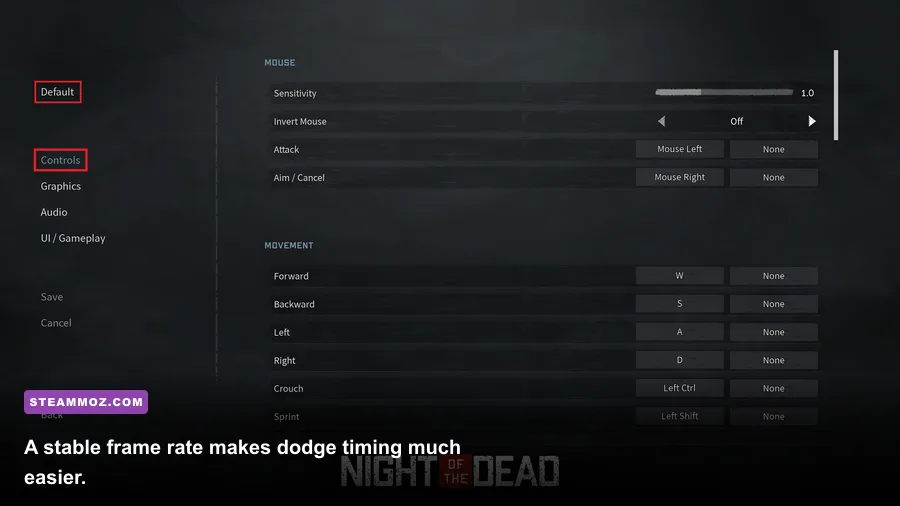
A stable frame rate is part of your combat build. Start with a 60 FPS target, disable motion blur, reduce shadows before textures, and lower effects if spell impacts obscure enemy tells. If your PC struggles, Steamoz's graphics settings guide and PC performance fixes explain the same practical tuning order.
For official information, check the game's Steam listing, the Steam Community search, and any developer news linked from the store page. Patch changes can alter weapon scaling, enemy timing, and performance, so verify numbers after major updates.
The winning mindset is simple: make every attempt teach you something concrete. If you died while exhausted, fix stamina management. If projectiles trapped you, improve target priority. If the boss phase felt unreadable, spend the next run observing instead of forcing damage. DARK – Cult of the Dead rewards disciplined aggression, and these 10 habits turn the opening hours from a wall into a steady climb.