Children of Morta: Paws & Claws does not hide its rewards behind fixed coordinates. The DLC places rescue events, pet rooms, and bonus loot inside procedurally assembled dungeon layouts, so the reliable method is to full-clear every branch, inspect suspicious walls, and check the sanctuary after each successful rescue. There are no universal room numbers or one secret map seed that reveals every pet. This guide maps every event type, explains where each can spawn, and shows how to turn the hidden rewards into useful combat bonuses.
Paws & Claws is a small expansion, but it changes how you should route a run. A normal speed-clear can easily skip an animal encounter because the event is tucked behind an optional corridor, while a careful explorer gets a permanent sanctuary upgrade and another source of dungeon support. The system works alongside the base game's relics, charms, Divine Relics, and family progression; it doesn't replace them.
How Paws & Claws Secret Rooms Actually Spawn
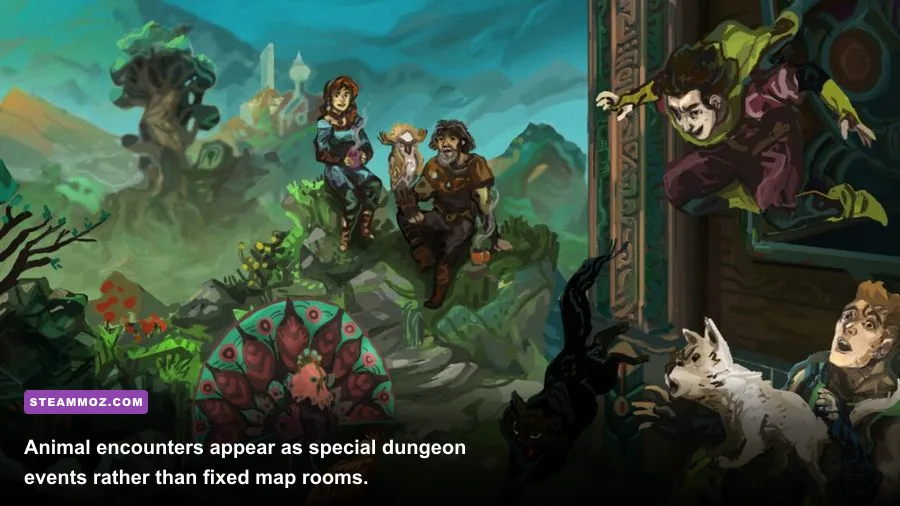
The most important correction to many online maps is that Paws & Claws has no fixed secret-location grid. Its special content is selected when a realm generates. That means an animal can appear in a different branch, room order, or floor on your next run. The entrance is usually a small event doorway or a distinctive side-room layout, not a named landmark visible on the world map.
Search every branch before activating the realm's exit. In practical terms, move along the outside edge of each combat room, open every visible chest, and walk into dead ends instead of assuming they are empty. Some event rooms sit beyond a short combat detour; others are visible from the main path but require you to loop around through a second doorway.
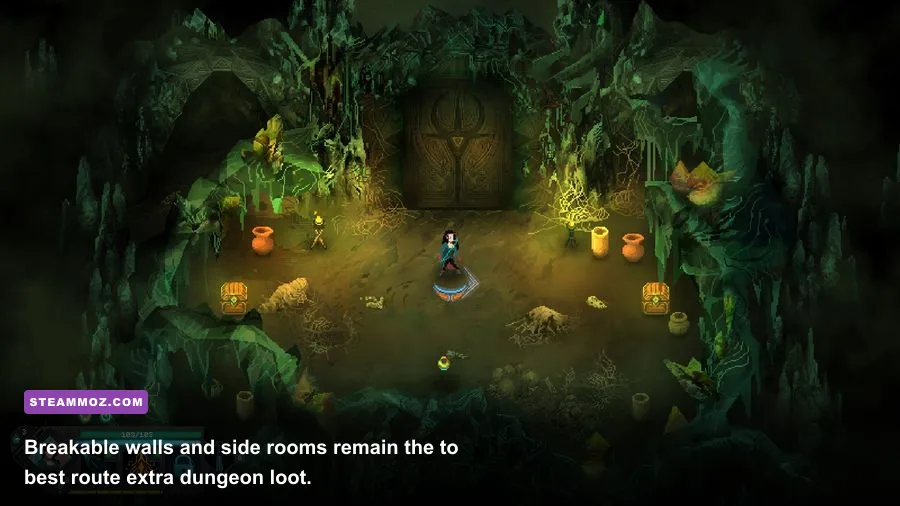
Breakable scenery deserves special attention. Children of Morta often uses destructible objects to conceal gold, health pickups, and alternate passages. Test walls and clutter with a basic attack, not a valuable cooldown. Linda's ranged shots, Lucy's fire projectiles, and Mark's wide melee swings are particularly efficient for checking suspicious corners without losing much time.
| Secret content | Where it appears | What reveals it | Reward |
|---|---|---|---|
| Animal rescue event | Optional dungeon branch in a generated realm | Explore every side corridor and event doorway | Rescued pet added to the sanctuary |
| Pet sanctuary interaction | Bergson home after returning from a run | Inspect the new animal area | Pet selection and passive support |
| Hidden chest or cache | Dead ends, side rooms, and destructible spaces | Attack scenery and clear nearby enemies | Gold, consumables, or run resources |
| Standard challenge room | Optional combat room in the current realm | Enter the off-route doorway | Gold, experience, and a chance at useful loot |
The practical rule is simple: if the minimap shows unexplored black space, you are not finished. A room can be “cleared” of enemies while an entire side passage remains untouched. That is why the best farming route is slower than a boss rush, but far more consistent.
🎮 Children of Morta - Paws & Claws
Looking to experience this game? Grab your digital key directly on our store for $0.79.
View on Steammoz Store →Every Animal Rescue Location and Its Hidden Reward
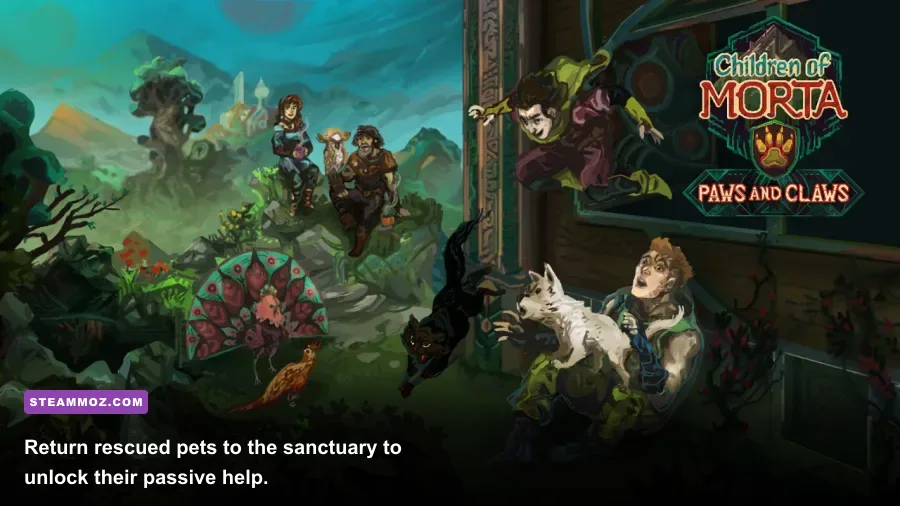
Animal rescues are the DLC's headline secret. They are not tied to one named realm such as Barahut or the Halls of Colossus. Instead, the game can place a rescue encounter in the dungeon content generated for your run. Search across all available realms rather than repeatedly restarting one area. Once the room appears, defeat or clear the surrounding threat, interact with the animal, and finish the run if you want the rescue to count safely.
The hidden reward is not a conventional chest. The rescued animal is transported back to the Bergson home, where it becomes part of the Paws & Claws sanctuary. Return to the house and walk through the sanctuary area; the new resident should be visible there. If you quit before completing the run or fail to trigger the interaction, do not assume the animal was permanently collected. The safest approach is to complete the current realm and return to the hub normally.
There is no legitimate “all pets at one exact coordinate” shortcut. The encounter pool and room placement are designed to encourage repeated exploration. Some runs will produce no rescue at all. That is normal and is not proof that the DLC is broken. Your odds improve simply by clearing more optional rooms per run.
For a clean hunting route, choose a character who can clear safely rather than the character with the fastest theoretical boss damage. Kevin can shred isolated targets with his stealth-focused kit, while Mark handles crowded side rooms well with his sweeping attacks. Linda and Lucy are safer choices when you want to inspect corners without being surrounded. John is slower, but his defensive tools make full clears much less punishing for new players.
| Hunting objective | Best approach | Main risk | Reward value |
|---|---|---|---|
| Find an animal rescue | Clear every optional branch before the exit | Skipping a blacked-out corridor | New sanctuary resident and pet support |
| Keep the rescue safe | Complete the realm and return to the Bergson house | Quitting or dying before the run ends | Collection progress is preserved more reliably |
| Improve encounter efficiency | Use a ranged or crowd-control family member | Taking unnecessary damage while scouting | More rooms searched per attempt |
| Farm ordinary hidden loot | Break scenery in dead ends after combat | Spending cooldowns on low-value targets | Gold, experience, and consumables |
Pet names and visual types can vary by the available DLC content and platform build, so rely on the sanctuary's collection display rather than an old screenshot list. The meaningful milestone is the number of rescued residents and the bonus attached to the active pet, not a supposed fixed spawn name.
How to Unlock and Use the Sanctuary Rewards
After the first successful rescue, visit the Bergson household and inspect the animal sanctuary. This is where the DLC's hidden rewards become useful. The pets are more than decoration: selecting an available companion grants a passive effect during dungeon runs. The exact support effect is communicated by the in-game sanctuary interface, so read the description before leaving the house.
Pet food is the resource that makes the system worth planning around. Feeding a pet activates or improves its assistance for the next run, depending on the version and current progression state. Do not burn food automatically before a low-stakes attempt. Save it for a realm where you are pushing a difficult floor, farming a specific resource, or attempting a boss with a build that needs extra sustain.
The best support is situational. A defensive or recovery-oriented pet is more valuable when you are learning a boss pattern, while an offensive effect can accelerate early-room clearing and make a full-search route less tedious. This is especially noticeable with fragile characters such as Lucy, whose damage is excellent but whose mistakes are expensive when enemies collapse on her.
Pets do not erase the need for family upgrades. Spend Morv and gold on the Bergson household tree as usual, and treat the sanctuary bonus as a multiplier on a functioning build. If your damage is low, a pet will not fix poor relic choices. If your defenses are already stable, however, the added support can push a comfortable run into efficient farming territory.
Keep an eye on the official Steam listing for DLC ownership and update information. Paws & Claws is integrated into the game rather than presented as a separate campaign, which is why new players can miss its sanctuary trigger.
Hidden Chests, Breakable Walls, and Bonus Rooms
Not every secret in the DLC is an animal. The base game's procedural dungeon rules still supply hidden caches, optional combat rooms, and event encounters. Paws & Claws rewards players who search these spaces because pet hunting naturally pushes you into the same off-route areas where ordinary bonus loot appears.
Use a three-pass search pattern. First, clear enemies so you are not interrupted. Second, follow every visible doorway and inspect dead ends. Third, return through the room and attack suspicious environmental objects. This is faster than randomly swinging during combat and keeps your health available for the next encounter.
Do not confuse a locked challenge room with an animal rescue. A challenge room typically asks you to survive or defeat a group before its reward becomes available. An animal event has a clear interaction target and may not provide a chest at all. If you are collecting pets, prioritize interaction rooms; if you are farming currency, challenge rooms and destructible caches are usually the better time investment.
Character choice changes how painless this route feels. Mark's crowd control is excellent in tight rooms, Apan's mobility helps him disengage after checking a corner, and Joey's heavy attacks can destroy clustered scenery quickly. For ranged characters, keep enough stamina or dodge capacity to escape rather than spending every resource on breaking objects. A secret cache is never worth a death screen.
If you enjoy methodical dungeon routing, the same discipline applies to other Steamoz guides such as these Dragon's Dogma: Dark Arisen tips and our Fated Souls weapon breakdown. The games differ, but both punish players who sprint past optional rooms.
A Reliable Full-Clear Route for Every Run
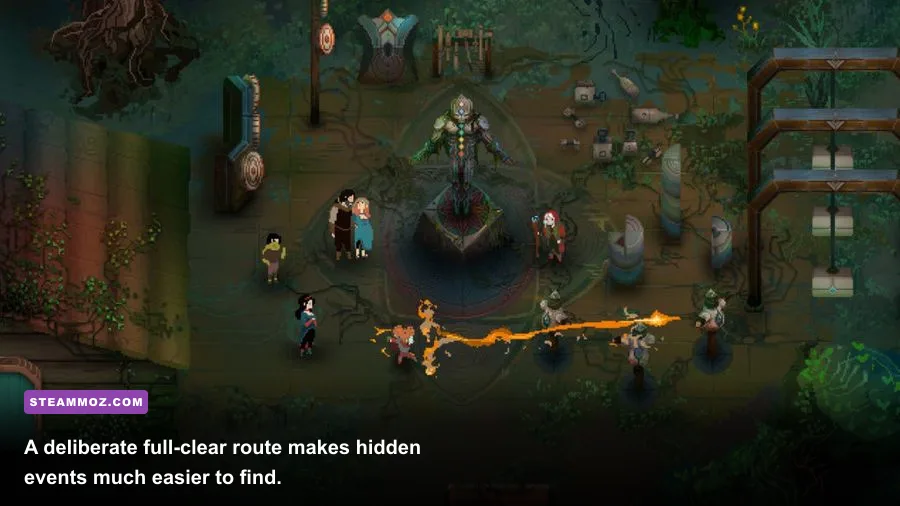
Use this route when your priority is finding every Paws & Claws event rather than reaching the boss quickly. Start by selecting a durable or ranged Bergson, then enter the realm with one goal: reveal the whole floor before taking the exit. Treat the minimap as a checklist, not a suggestion.
Step 1: Clear the entry room
Defeat the first group before exploring. Early enemies can interrupt interactions and drain health while you are looking for doorways. Once the room is safe, check both sides of the entrance and any upper or lower path the camera partially hides.
Step 2: Choose the widest unexplored branch
When the map splits, take the branch with more unexplored space first. This reduces backtracking and makes it easier to remember which route still needs checking. Do not activate the realm exit until every visible branch has been explored.
Step 3: Test event rooms before opening ordinary rewards
If you see an unusual doorway, isolated enclosure, or non-combat interaction, investigate it immediately. Animal rescues are the priority because their reward is collection progress, whereas gold and standard chests can be earned on later attempts.
Step 4: Break scenery after the room is safe
Use basic attacks and low-cost abilities to check suspicious walls, piles, and containers. Save your strongest cooldown for elite enemies. The DLC does not make every destructible object rewarding, so do not turn exploration into a resource drain.
Step 5: Return to the house and inspect the sanctuary
After the run, walk into the animal area instead of immediately launching another dungeon. Confirm that the rescued resident is present, then select the support effect that matches your next objective. If the sanctuary does not update, verify that the rescue interaction was completed and that you returned normally from the run.
| Run stage | Action | Why it matters | Recommended tool |
|---|---|---|---|
| Entry | Clear enemies, then reveal nearby branches | Prevents missed side rooms and interrupted interactions | Basic attacks and low-cost skills |
| Mid-floor | Prioritize unusual doorways and blacked-out map space | Most rescue events are off the main route | Minimap and careful positioning |
| Cleanup | Check dead ends and break suspicious scenery | Finds caches and ordinary bonus rewards | Fast basic attack or ranged poke |
| Extraction | Finish the realm instead of quitting early | Safely registers the rescue and returns to the hub | Defensive relics and healing resources |
| Hub | Inspect the sanctuary and choose a pet bonus | Converts collection progress into run power | Sanctuary interaction menu |
For performance and build planning, our Cthuloot graphics settings guide covers the same kind of low-cost optimization that helps during long dungeon sessions. If Children of Morta stutters, close overlays first and use the game's native fullscreen or borderless option consistently; input timing matters more than visual effects when dodging elite attacks.
The final takeaway is less glamorous but more useful than a coordinate list: Paws & Claws is a completionist exploration system, not a static treasure map. Full-clear generated floors, inspect every event doorway, complete the run, and check the sanctuary. Repeat that loop across realms and the animal collection—and every hidden reward attached to it—will eventually fill in without relying on unreliable seed-specific maps. For official development news, compare your version against Dead Mage's official site, the 505 Games website, and the game's official Steam discussions before assuming a missing event is a bug.