
The short answer is that Biped 2 has no weapon system, weapon damage stats, or combat equipment to rank. Its real best-equipment ranking is a movement-and-coordination ranking: reliable controller input, a stable frame rate, a headset, and a partner who can communicate clearly sit in S-Tier, while cosmetic accessories belong in a separate style tier. If you came looking for a sword, blaster, or damage build, don't waste time farming one. Biped 2 is a cooperative puzzle platformer centered on two-legged robot movement, switches, timing, balance, and environmental problem-solving.
That distinction matters because search results and player discussions can make the phrase Biped 2 weapon tier list sound like this is an action game. It isn't. The official Biped 2 Steam page presents the game around cooperative exploration and platforming, not weapon loadouts. There are no weapon slots, attack attributes, elemental effects, armor values, or skill trees that create a conventional meta.
So this ranking focuses on what actually improves a run: input control, display performance, communication tools, and any cosmetic equipment the game makes available. It also separates genuine gameplay advantages from visual customization, because confusing the two is the fastest way to buy into a fake build guide.

Biped 2 has no weapons to put in S-Tier

Biped 2's core characters are small robots, commonly identified as Aku and Sila, and their moveset is built around independent leg control. You steer each foot, shift your body across surfaces, and work with another player to cross hazards. That design creates tension without needing enemies or conventional attacks. A missed step can send you sliding into water just as effectively as a boss could defeat you in an action game.
Because the game does not use a damage model, a weapon tier list cannot honestly assign numbers such as attack power, critical chance, range, cooldown, or stagger strength. Any article claiming that a particular Biped 2 weapon deals 120 damage or that one equipment set improves defense is inventing systems that are not part of the game's documented structure.
| Supposed weapon category | Actual Biped 2 system | Tier verdict | What to prioritize instead |
|---|---|---|---|
| Swords, guns, or blasters | No standard combat weapon slots | Not applicable | Foot placement and camera control |
| Armor and defensive gear | No conventional armor-stat progression | Not applicable | Stable movement and hazard recognition |
| Skill-enhancing equipment | No verified damage or skill loadout system | Not applicable | Practice, communication, and route planning |
| Cosmetic accessories | Visual customization rather than combat power | Style-only | Choose whatever helps you identify your robot |
This isn't a missing feature that makes the game weaker. The absence of combat lets the levels focus on rhythm and cooperation. You aren't pausing to compare loot after every obstacle. You are watching your partner's feet, counting down a moving platform, and deciding who activates a switch first.
🎮 Biped 2
Looking to experience this game? Grab your digital key directly on our store for $8.24.
View on Steammoz Store →The real Biped 2 equipment tier list
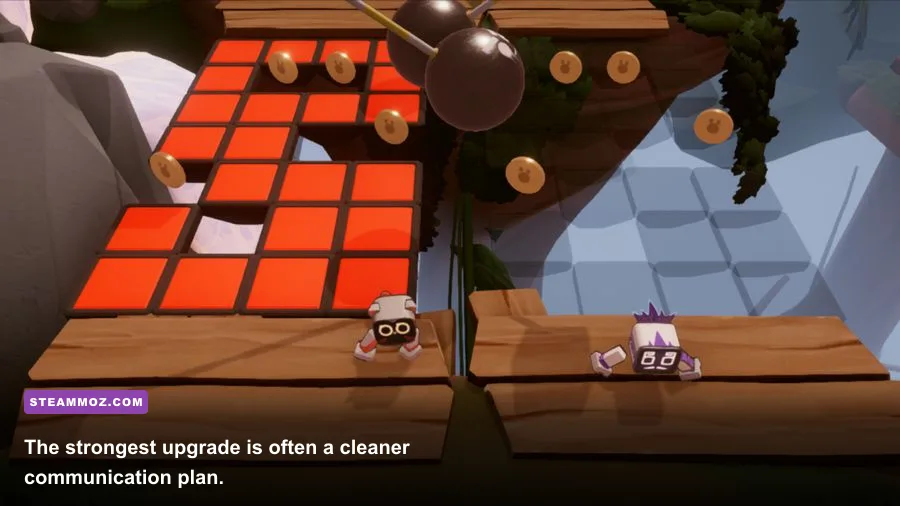
Here is the useful version of the ranking. These aren't fictional weapons; they're the equipment and setup choices that have the biggest practical effect on a successful cooperative session. The rankings assume the goal is to clear stages consistently, collect optional items, and avoid the frustrating input mistakes that make precision platformers feel unfair.
| Tier | Equipment or setup | Why it ranks here | Best situation |
|---|---|---|---|
| S-Tier | Two responsive controllers | Independent movement depends on accurate analog input | Every stage, especially narrow platforms |
| S-Tier | Stable 60 FPS or higher | Consistent timing makes moving hazards easier to read | Precision jumps and synchronized switches |
| S-Tier | Headset or clear voice chat | Fast callouts prevent desynchronized actions | Blind turns, timed doors, and split routes |
| A-Tier | Large display with readable contrast | Improves hazard visibility and partner tracking | Bright outdoor areas and busy backgrounds |
| A-Tier | Comfortable local co-op seating | Keeps both players close enough to coordinate inputs | Same-screen sessions |
| B-Tier | Cosmetic outfit or accessory | Useful for identity, but provides no confirmed power bonus | Long sessions and four-player groups |
| C-Tier | Keyboard-only control | Less natural for gradual analog movement | Emergency backup, not a preferred setup |
S-Tier controllers
A responsive controller is the closest thing Biped 2 has to a weapon upgrade. The game asks for tiny directional changes, and digital keyboard taps can turn a controlled step into an overcorrection. Use two matched controllers when possible, check that both analog sticks center correctly, and avoid wireless devices with noticeable input delay.
Don't assume the most expensive pad automatically wins. The important qualities are reliable stick calibration, consistent trigger or button response, and a layout both players understand. If one player is constantly fighting stick drift, no amount of level knowledge will save the run.
A-Tier display and audio gear
A clear screen is more valuable than a flashy cosmetic. You need to distinguish a safe surface from a decorative background and track your partner's position during split-path puzzles. A headset moves communication from frantic shouting to useful information: “wait,” “switch ready,” and “left platform moving” are dramatically better than vague panic.
For more PC performance advice, Steamoz's smooth 60 FPS settings guide explains the same practical principle: consistency beats unnecessary visual excess when timing matters.
Best settings for a reliable Biped 2 run
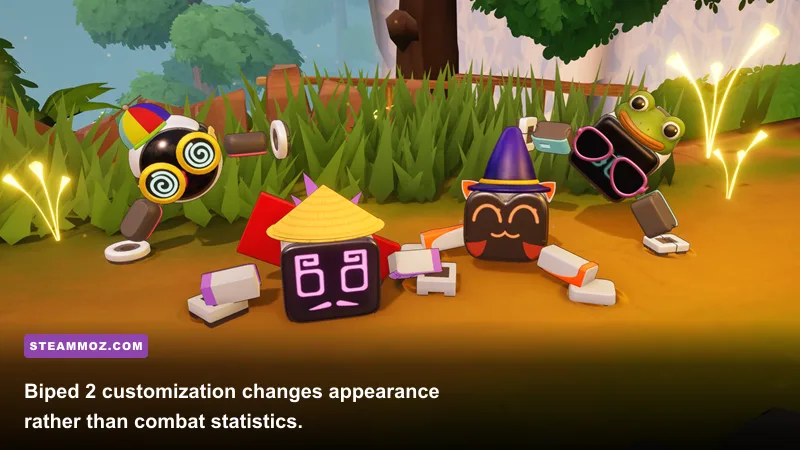
There is no magic graphics preset that turns a failed jump into a success, but an inconsistent frame rate can make timing feel slippery. Start with the game's recommended preset, then reduce expensive effects before lowering resolution. Keep the image readable first. A sharp, stable picture makes platforms and moving objects easier to judge.
| Setting area | Recommended value | Expected impact | Visual reason |
|---|---|---|---|
| Frame-rate target | Stable 60 FPS | Low gameplay impact | Gives movement timing a consistent rhythm |
| Resolution | Native monitor resolution | Moderate GPU impact | Keeps platform edges and robot feet clear |
| V-Sync | On if tearing appears | May add slight latency | Removes distracting horizontal image breaks |
| Shadows | Medium | Medium GPU impact | Preserves depth cues without wasting performance |
| Effects and post-processing | Medium or High | Varies by hardware | Reduce only if busy scenes cause stutter |
| Motion blur | Off for precision play | Small performance gain | Makes quick camera movement easier to read |
| Window mode | Fullscreen or borderless | Usually minor | Choose the mode with the fewest interruptions |
Frame rate is especially important during moving-platform sequences. You are not reacting to a single animation; you are matching your feet to a surface that is already changing position. A stutter can make the visual rhythm harder to follow even if the actual input is correct. If performance dips, lower shadows and effects first, close overlays, and make sure the game is using the intended GPU.
For a broader PC troubleshooting reference, compare that approach with Steamoz's performance settings breakdown. The games are very different, but the rule carries over: remove instability before chasing maximum image quality.
How movement replaces combat in Biped 2
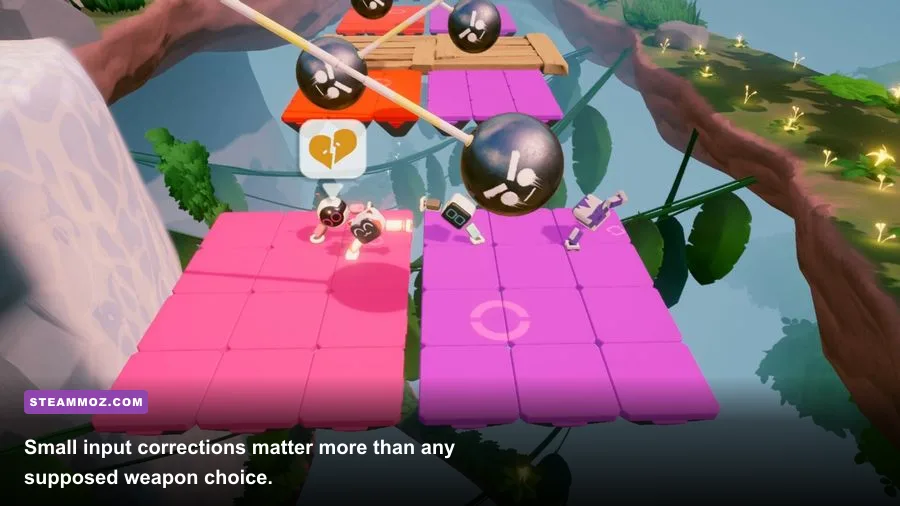
The most important “build” is your movement technique. Each robot's legs are controlled independently, so beginners often make the same mistake: they try to steer the entire character as if it were a normal platforming avatar. Instead, think of every step as a small weight transfer. Plant one foot, shift your body, then move the second foot. Large, rushed inputs are the equivalent of swinging a weapon wildly and hoping for a hit.
Use a three-call communication loop
Good teams use short, repeatable calls. First, identify the action: “switch.” Second, confirm readiness: “ready.” Third, execute together: “go.” This sounds basic, but it prevents the classic failure where one player moves before the other is positioned. For moving platforms, add a timing cue such as “next cycle” rather than saying “now” while the camera is shifting.
Assign roles when a puzzle splits your attention. The player closest to a switch should handle activation, while the other watches the route and calls out platform movement. Swap roles after a failed attempt if one person is becoming overloaded. Biped 2 rewards calm repetition, not heroic improvisation.
| Challenge | Common mistake | Counter strategy | Useful equipment |
|---|---|---|---|
| Narrow walkway | Both players rush at once | Move one robot at a time and confirm footing | Responsive controllers |
| Timed switch | Activating before the partner is ready | Use the three-call loop | Headset or clear voice chat |
| Moving platform | Overcorrecting after landing | Release input briefly and re-center | Analog sticks without drift |
| Split route | Players lose track of each other | Assign a route leader and call landmarks | Readable display |
| Optional collectible | Attempting it during a first clear | Finish the safe route, then replay | Stable frame rate |
That last point is crucial. Don't chase every collectible during your first blind run. Learn the route, understand the timing, and then return for optional objectives. Trying to improvise a perfect collectible grab while your partner is waiting on a pressure plate creates frustration for no real reward.
Cosmetics ranked by usefulness, not fake stats
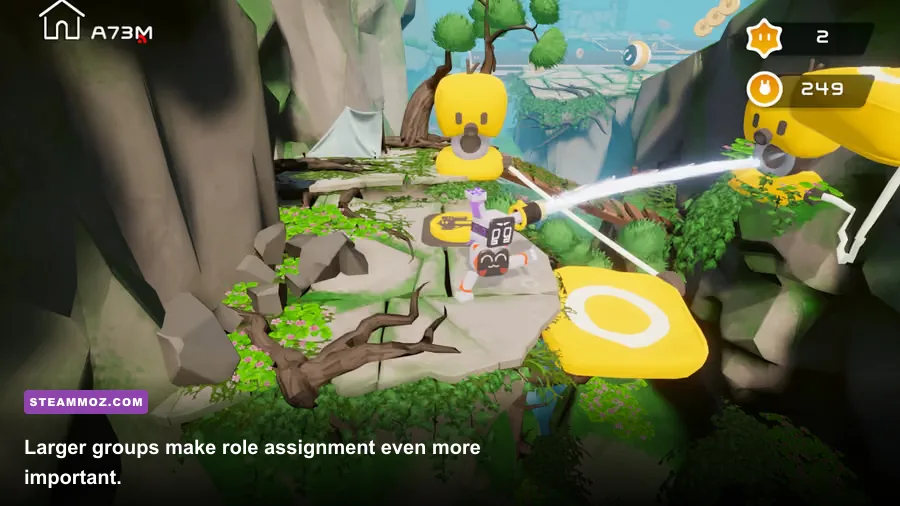
Biped 2's customization options should be treated as identity tools, not equipment with hidden power. If the game offers outfits, hats, or other accessories, their value is practical and social: they help players tell robots apart, make screenshots more personal, and give repeat runs a little extra flavor. Unless an item description explicitly states a gameplay effect, assume it is cosmetic.
That means a bright accessory can be A-Tier in a crowded four-player session if it helps everyone identify the correct robot, while the same item is only B-Tier for a two-player team that already knows who is who. The ranking below is about usability, not damage or defense.
| Cosmetic priority | Ranking | Practical value | Best use |
|---|---|---|---|
| High-contrast visual identity | A-Tier | Makes partner tracking easier | Four-player sessions or busy scenery |
| Distinctive head accessory | A-Tier | Quickly separates players on screen | Local co-op with overlapping routes |
| Matching team theme | B-Tier | Improves group presentation, not performance | Friends playing a full campaign |
| Subtle cosmetic detail | B-Tier | Looks good in screenshots but may be hard to see | Solo browsing and photo moments |
| Any item advertised as a stat boost without proof | C-Tier | Potentially misleading | Verify its description before relying on it |
Never let an outfit choice override visibility. If a darker accessory blends into the environment, pick a brighter alternative. This is a cooperative game, and the best-looking costume is the one your partner can identify instantly when both robots are moving through the same obstacle.
Progression advice for new and returning players
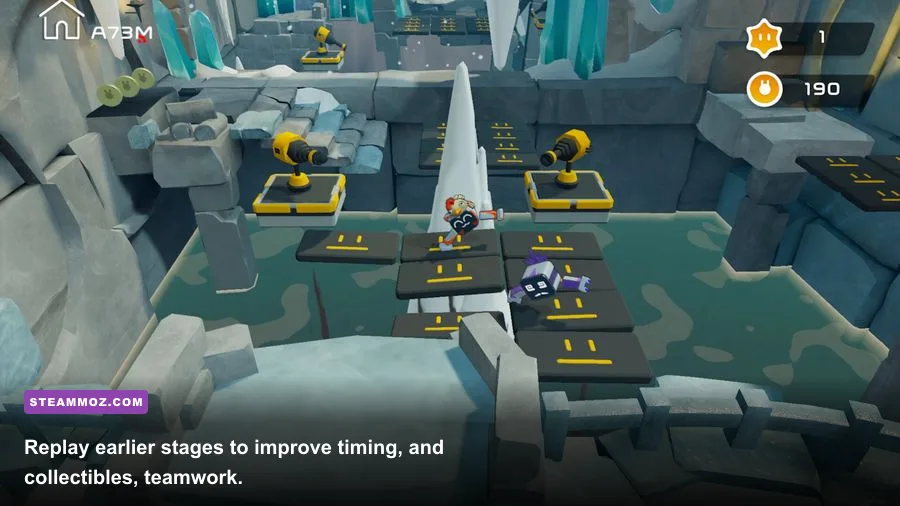
Biped 2 is best approached as a skill-progression game rather than a loot-progression game. You improve by recognizing patterns, learning how much input a movement needs, and building a shared vocabulary with your partner. There is no superior weapon route waiting at the end of a difficult stage, so don't replay levels expecting a random drop to solve a mechanical problem.
First session
Spend the opening minutes learning how far each analog input moves a foot. Test short taps, held directions, and quick corrections on safe ground. Both players should also confirm who is controlling which robot and how you will call out danger. This tiny setup prevents a surprising number of resets.
First clear
Prioritize forward progress. Take the safest route, observe how switches behave, and let one player lead when the camera becomes confusing. If you fail three times at the same obstacle, stop repeating the exact attempt. Change the order, slow the approach, or switch who handles the timing call.
Replay pass
Return for collectibles and cleaner execution only after the route feels familiar. Replay sessions are where cosmetic personalization and alternate partner roles become worthwhile. Keep a mental note of which obstacles caused trouble, because the same input lesson often applies to later stages.
| Player goal | Priority | Recommended approach | Do not do this |
|---|---|---|---|
| Complete a new stage | Route knowledge | Use the safest path and communicate every transition | Chase optional rewards immediately |
| Reduce deaths | Input control | Use shorter taps and pause after landing | Hold a direction through every obstacle |
| Collect optional items | Timing practice | Replay after learning the main route | Blame missing gear for a missed jump |
| Play with four people | Visual organization | Use distinct cosmetics and assign roles | Let everyone call different commands |
If you enjoy games where preparation and decision-making matter more than raw damage numbers, Steamoz's Legend of Keepers starting-build guide is a useful contrast. Biped 2 has no equivalent class setup, but the same principle applies: make your plan before the pressure starts.
What the best Biped 2 setup looks like
For most players, the strongest Biped 2 setup is simple. Use two low-latency controllers, target a stable 60 FPS, play on a screen where both robots remain easy to see, and keep voice communication concise. Pick contrasting cosmetics if the game gives you that option, but don't mistake appearance for an upgrade. Your partner matters more than any item.
That is also why the phrase “best weapon” misses the game's appeal. Biped 2's challenge comes from shared execution. One player can know the route perfectly and still fail if the other robot reaches a switch half a second late. The victory belongs to the team that synchronizes movement, not the player who finds a mythical top-tier weapon.
For official information, check the Biped 2 store listing and the developer's NEXT Studios website. Features and customization details can change through updates, so treat any future item description as authoritative only when it appears in the game or an official announcement.
Final ranking: controllers, stable performance, and clear communication are S-Tier; display clarity and comfortable co-op are A-Tier; cosmetics are useful for identity but remain style-only; traditional weapons and combat builds are not part of Biped 2. Once you stop searching for damage stats, the game's actual strategy becomes much clearer—and a lot more fun.