Waking up scratched, freezing, and utterly clueless on a sun-drenched beach with a strange diamond embedded in your wrist is the classic starter experience in Studio Wildcard's brutal open-world survival game. If you've played any of the top solo survival games on the market, you know that early-game survival usually boils down to punching trees and gathering bushes. But in ARK: Survival Evolved, the real magic—and your ultimate ticket to staying alive—begins the moment you tame your very first prehistoric beast.
Trying to conquer the Island entirely on foot is a recipe for endless death loops at the jaws of wild Raptors and Therizinosaurs. Dinosaurs aren't just cool pets in ARK; they are your heavy machinery, your combat escorts, your flying transports, and your automated farmhands. However, with over a hundred unique species roaming the wild, figure out which creatures to target first can be overwhelming for new survivors. If you are looking for straightforward progression tips without burning through dozens of spare beds, this comprehensive guide covers the ARK Survival Evolved best dinosaurs for beginners that will transform you from a helpless 'Beach Bob' into a thriving island lord.
1. Early Beach Lifesavers: The First Dinos You Should Knock Out
When you start out, your crafting repertoire is limited, your health pool is laughable, and you lack proper armor. The key to surviving your first few nights is claiming creatures that are easy to tame, require low-level saddles, and offer immediate practical utility. Before attempting to tame these starter creatures, make sure you've mastered the basics of crafting a Slingshot, Wooden Club, and several Bolas.
The Parasaur: Your Early Warning Radar and Pack Mule
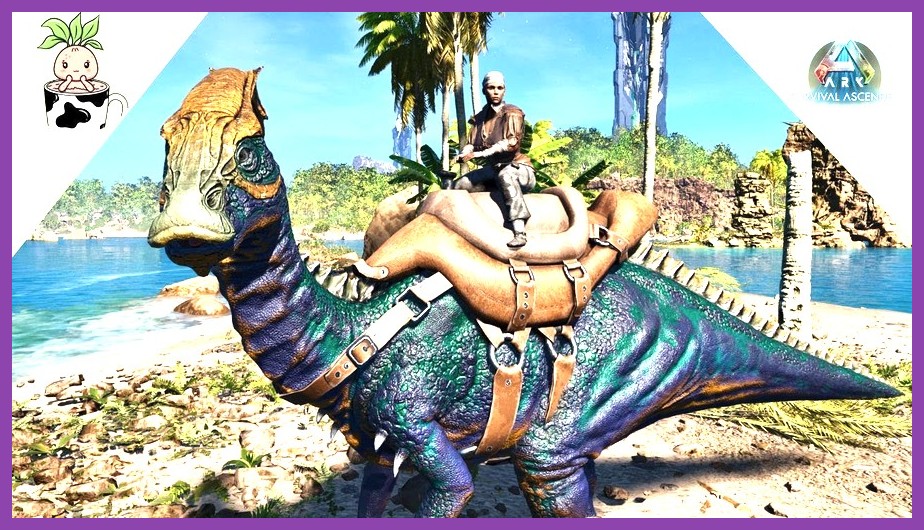
If there is an official mascot for beginner survivors, it’s the humble Parasaur. Found in abundance along safe coastal spawn zones, Parasaurs are docile herbivores that will flee rather than fight back when attacked. Throwing a single Bola around their legs immobilizes them long enough for you to easily knock them unconscious with a Wooden Club or Slingshot loaded with stones.
Why is the Parasaur indispensable for beginners? First, its saddle unlocks extremely early at Level 9, requiring minimal hide and fiber to craft. Second, it boasts impressive carry weight compared to a low-level player, allowing you to haul heavy stacks of wood, stone, and thatch back to your base. Best of all, the Parasaur possesses a unique turret detection ping capability. When placed in 'Turret Mode' or ridden across treacherous jungle paths, its crest emits a radar sweep that highlights nearby hostile wild creatures and player threats on your HUD. Having this radar passive running while building your first shelter will save you from countess ambush attacks by sneaky Raptors.
The Moschops: The Saddle-Free Harvesting Beast
Don't let its cowardly demeanor fool you—the Moschops is secretly one of the most overpowered beginner creatures in the entire game. Moschops roam beaches and light forests, constantly looking for food. The beauty of the Moschops is that it is a passive tame; you don't need weapons, tranquilizer arrows, or clubs. You simply place the item it craves in your last hotbar slot and press the interact key when prompted.
Sometimes a Moschops will demand rare foods like Giant Bee Honey or Prime Meat, but frequently they just want simple berries or Tintoberries. If you find one with an easy food request, tame it immediately. The Moschops requires no saddle to ride, meaning you can mount it at Level 1. Furthermore, its bite attack yields incredible amounts of Fiber, Thatch, Berries, and Raw Meat. You can even invest special level-up bonus points directly into specific harvest yields, making it a stellar resource accumulator while you work through the early stages of our game guides.
The Triceratops (Trike): Your First True Defense Tank
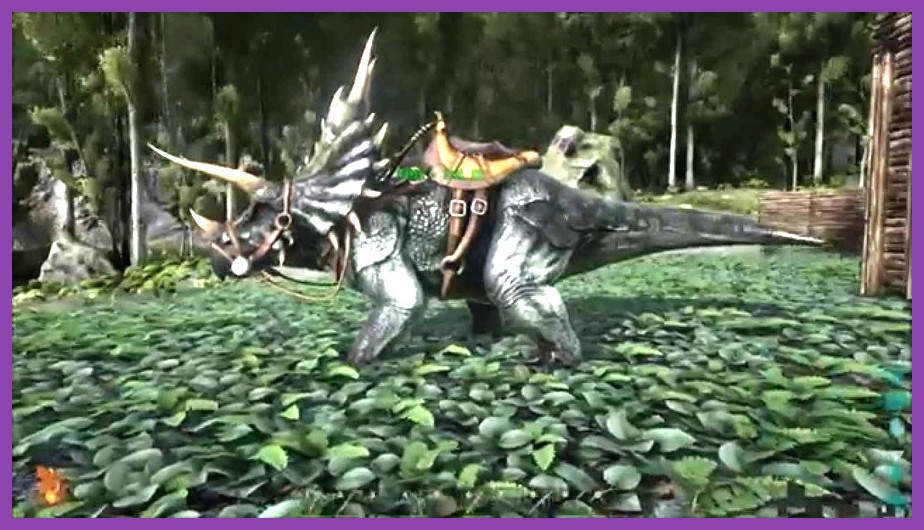
Once you reach Level 16 and unlock the Trike Saddle, it’s time to tame a Triceratops. Trikes are aggressive when provoked, but they are relatively slow. You can easily lure a Trike into getting its horns stuck in thick trees or shoot it with Tranquilizer Arrows from atop a tall wooden cliff structure.
The Trike features a powerful forward charge and an enormous frontal damage reduction shield thanks to its armored skull. Its primary attack unleashes a wide-sweeping knockback attack that can keep medium-sized predators like Raptors and Carnotaurus completely at bay without taking damage. On top of its defensive capabilities, riding a Trike through berry bushes harvests hundreds of Narcoberries and Mejoberries in seconds—fueling your narcotics factory for future high-tier tames.
2. Resource Harvesting Kings: Eliminating the Grind
Once your initial thatch or wood hut is established, progression in ARK hits a wall known as resource scarcity. Refining metal, building stone fortresses, and crafting firearms requires thousands of raw materials that are far too heavy to farm manually with pickaxes and hatchets. That’s where specialized resource gatherers come into play. Check our PC games section for performance optimization, but in-game, these three creatures optimize your playtime dramatically.
The Doedicurus: The Stone Mining Machine
Stone is the core ingredient for durable base structures, sparkpowder, and cement. Harvesting stone with a metal pickaxe is slow and drains your character’s stamina rapidly. Enter the Doedicurus, an armored, armadillo-like herbivore found roaming inland hills and mountain bases.
The Doedicurus features a passive 75% weight reduction on Stone carried in its inventory. When you swing its heavy spiked tail at boulders, it yields massive amounts of stone per hit. As an added safety bonus, if a wild predator drops a Doedicurus's health below 30%, it automatically rolls up into an impenetrable rocky ball, drastically reducing incoming damage until you can clear the area or pull the threat away.
The Ankylosaurus: The Metal and Flint Specialist
If you want advanced armor, metal walls, fabricators, and firearms, you need raw metal nodes. The Ankylosaurus (Anky) is an absolute non-negotiable tame for mid-game survival. Found in mountainous biomes, desert badlands, and northern snow borders, the Anky uses its club tail to shatter rich metal rocks with ease.
Similar to the Doedicurus, the Ankylosaurus gains a massive 85% weight reduction on raw Metal stored in its inventory. It also harvests vast quantities of Flint from normal rocks, Chitin from bug corpses, and Oil from black oil rocks along northern shorelines. Pairing an Ankylosaurus with a heavy lift creature is the ultimate resource-gathering combo in official ARK lore.
The Castoroides (Giant Beaver): The Mobile Lumber Mill
Wood is essential for fueling forges, cooking pots, and constructing intermediate structures. While a hatchet works okay, nothing compares to the Castoroides. These giant prehistoric beavers spawn near inland rivers and small lakes, often constructing beaver dams filled with rare materials like Cementing Paste and Silica Pearls.
Taming a Castoroides gives you a creature with a 50% weight reduction on Wood, Stone, Thatch, and Fiber. Even better, the Castoroides saddle acts as a portable Smithy! This allows you to craft metal tools, crossbows, and armor on the fly while out on gathering expeditions deep in the jungle.
3. Reaching the Skies: Flying Mounts for Ultimate Mobility
Walking across the Island's terrain exposes you to dangerous terrain hazards, surprise swamp attacks by Kaprosuchus, and confusing navigation. The moment your feet leave the ground on your first flyer, ARK becomes a completely different game. Aerial traversal unlocks rapid map exploration, safe scouting, and easy resource spotting.
The Pteranodon: Your First Ticket to Flight
Unlocking at Level 38, the Pteranodon saddle is every player's gateway to the skies. Pteranodons rest frequently along beaches and grassy plains. Because they fly away instantly if startled, landing a Bola on a resting Pteranodon is crucial before knocking it out with tranquilizer darts or arrows.
| Creature | Saddle Level | Primary Role | Key Strength |
|---|---|---|---|
| Parasaur | Level 9 | Early Scout & Carry | Enemy detection ping & early weight capacity |
| Trike | Level 16 | Berry Farmer & Tank | Frontal damage reduction & knockback attack |
| Pteranodon | Level 38 | Fast Aerial Scout | High air speed & quick reconnaissance |
| Argentavis | Level 62 | Flyer & Freight Hauler | Extreme carry weight & resource weight reductions |
While the Pteranodon has limited health and low stamina, its raw air movement speed allows you to cross massive distances quickly. Use it to locate iron deposits, map out safe base expansion spots, or drop into dangerous locations to grab supply drops before zipping away to safety.
The Argentavis: The King of Aerial Transport
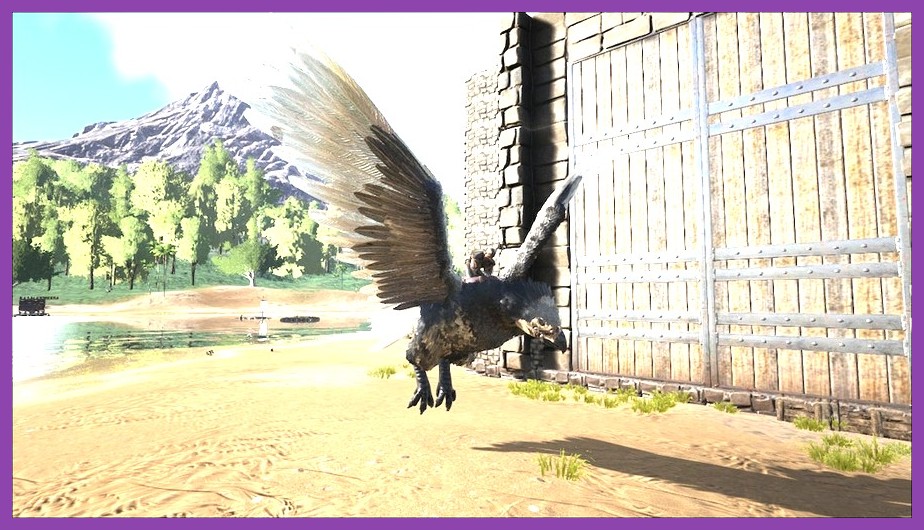
If you ask veteran players to rank the single most valuable utility creature in the game, the Argentavis (Argie) almost always tops the list. Unlocked at Level 62, this giant predatory raptor-bird inhabits cold mountain peaks and dangerous northern forests.
The Argentavis is essentially a flying fortress. It possesses exceptional stamina, high health, and massive weight capacity. Furthermore, the Argentavis halves the weight of Stone, Metal, Obsidian, and Crystal in its inventory. It can also pick up smaller wild dinos (like Ankys or Doedicurus) in its talons, allowing you to airlift your mining creatures directly to mountain peaks and back to base without ever walking through dangerous jungles. If you enjoy sprawling open worlds with deep progression systems, learning how to master flyer mechanics in ARK is as rewarding as diving into easy-to-learn MMORPGs for beginners.
4. Starter Predators: Combat and Escort Creatures
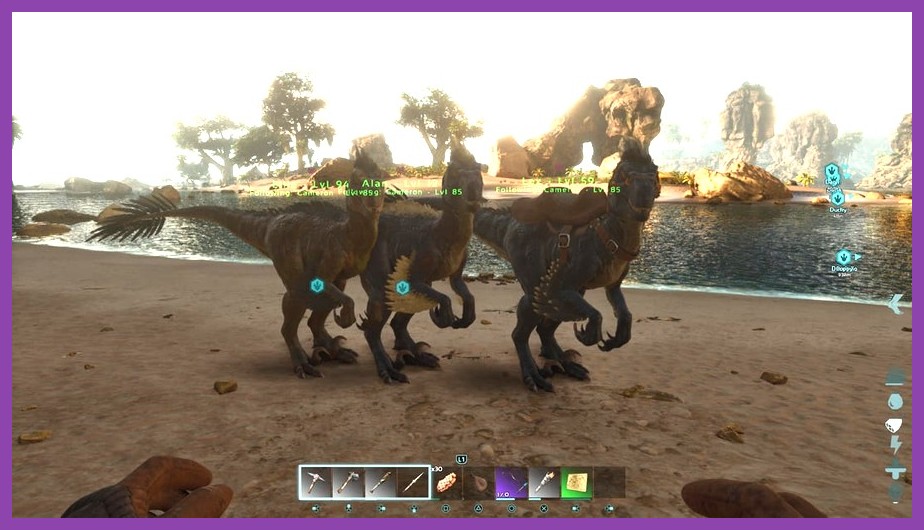
Herbivores keep your base built and fed, but carnivores keep you alive when the Island’s apex predators come knocking on your door. Building a small pack of medium-sized combat tames allows you to explore caves, gather raw meat and hide, and kill threatening wild dinos with confidence.
The Raptor: Fast, Violent, and Deadly in Packs
Raptors are often the nightmare of new players, springing out from tall grass to pin you to the ground. But once tamed, that nightmare works for you! Raptors are fast, easy to knock out with bolas and crossbows, and consume basic raw meat during the taming process.
When you gather three or more tamed Raptors together, the highest-level raptor receives a 'Pack Leader' buff. Pressing the alternate fire key triggers a pack roar that temporarily increases damage output and damage resistance for your entire raptor squad. A pack of 4 to 5 well-leveled Raptors can easily shred alpha Raptors, Carnotaurus, and swamp predators without breaking a sweat.
The Baryonyx: The Amphibious Master of Land and Water
Navigating rivers and oceans in ARK is terrifying due to Megalodons, Piranhas, and Cnidaria (jellyfish). The Baryonyx bridges the gap between land travel and aquatic exploration seamlessly. Found along winding river systems and swamps, the Baryonyx requires fish meat to tame, but its versatility is unmatched.
On land, the Baryonyx is a fast, agile runner with a decent bite attack. In water, it transforms into an absolute powerhouse. It does not possess an oxygen stat, meaning it can submerge indefinitely without drowning. Furthermore, its aquatic tail-spin attack stuns all nearby aquatic creatures (including dangerous sharks) for several seconds, leaving them completely helpless while you finish them off.
5. Essential Beginner Taming Traps and Tactics

Taming creatures in ARK isn't just about shooting them while running backward; wild dinos are fast, and running out of stamina mid-chase usually means death. Utilizing simple, low-cost taming traps ensures high success rates without wasting expensive narcotics or crossbow durability.
For a detailed breakdown of game mechanics, you can always check out official developer resources on Survive The ARK. However, for everyday beginner use, the simple 2x2 Wooden Trap is your absolute best friend:
- The 2x2 Doorframe Trap: Craft 4 wooden foundation pieces, 8 to 12 wooden doorframes, and 2 wooden ramps. Place the foundations in a 2x2 square, stack doorframes two walls high around three sides, and attach ramps leading up the open side.
- How to use it: Aggro a wild creature like a Carnotaurus, Direwolf, or Raptor on foot or mount. Run up the ramps into the trap and jump out through the narrow doorframes. The wild creature will fall inside and become trapped, unable to climb out or squeeze through the doorframes.
- Knockout Phase: Stand outside safely and shoot Tranquilizer Arrows into the trapped creature until it drops unconscious.
- Torpor Management: Keep a stack of Narcotics and Bio Toxin in your inventory. Remote-use Narcotics inside the creature's inventory to keep its Torpor bar filled while it starves down for feeding.
If you enjoy tactical gameplay loop optimizations, check out our guide on hardware optimization and gaming tips to ensure your framerate remains smooth during high-stress taming encounters.
6. Master Your Early Game and Dominate The Island
Taming your first roster of creatures in ARK: Survival Evolved marks the official transition from helpless victim to dominant survivor. By prioritizing functional utility tames—the Parasaur for scouting, the Moschops for fiber, the Trike for berries, the Anky and Doedicurus for heavy raw building supplies, and the Argentavis for global air mobility—you eliminate tedious manual labor and set up a solid base infrastructure.
Remember to always bring spare Bolas, keep a stack of Narcotics in your hotbar, and never underestimate the power of building a simple wooden trap frame. With this creature lineup backing you up, you'll be well on your way toward conquering artifact caves, building massive metal fortresses, and eventually taking on the Island's legendary bosses. Grab your crossbow, pack plenty of narcotics, and get out there—the dinosaurs aren't going to tame themselves!