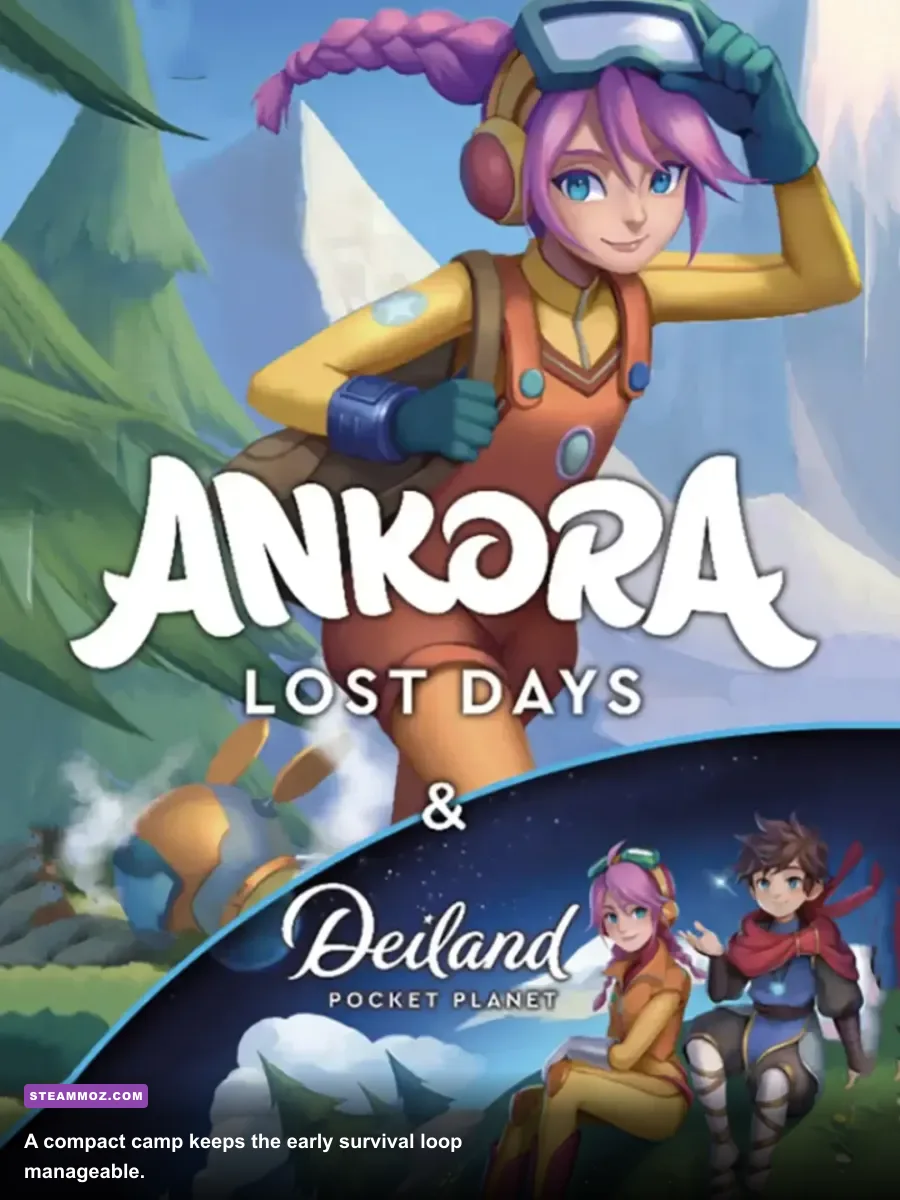
The best beginner build in Ankora: Lost Days is a balanced survival setup for Mûn: prioritize the pickaxe, axe, shovel, and hammer first, carry dependable cooked food, and spend early materials on stamina, storage, and camp utility rather than trying to maximize damage. This approach makes the opening far less punishing because Ankora rewards preparation more than reckless combat. You want enough gathering power to open new routes, enough food to keep exploring, and just enough combat ability to handle creatures blocking useful resources.
This isn't a traditional class-based RPG with a permanent warrior, mage, or ranger choice. Mûn's “build” is really the order in which you improve tools, recipes, equipment, and survival habits. That flexibility is excellent, but it can also make the opening feel unfocused. The guide below gives you a practical first-playthrough route that avoids wasted crafting, keeps your inventory under control, and gets every essential system working together.
Before starting, check the game's current information on the official Steam page. For more survival-game fundamentals, Steamoz's Laxius Force III survival tips also covers the same kind of resource discipline that helps here.
The Best Starting Build at a Glance
Think of this as a “field engineer” build. It is not built around killing enemies quickly; it is built around making every expedition profitable. Mûn should leave camp with a clear target, enough food for the journey, and the tools needed to turn unexpected discoveries into progress.
| Build Element | Early Priority | Why It Matters | Beginner Mistake Avoided |
|---|---|---|---|
| Pickaxe | Very high | Opens mineral deposits and progression materials | Returning later because a route is blocked |
| Axe | Very high | Provides wood and clears useful natural obstacles | Burning valuable crafted materials too early |
| Shovel | High | Supports digging, terrain interaction, and resource gathering | Ignoring soil and buried-material opportunities |
| Hammer | High | Supports construction, repairs, and practical camp progress | Crafting decorative items before necessities |
| Cooked food | Very high | Extends exploration and protects your stamina economy | Eating raw ingredients whenever the hunger bar dips |
| Combat gear | Medium | Lets you survive mandatory encounters | Overinvesting in damage before utility |
| Storage and camp | High | Reduces travel time and inventory pressure | Dropping useful materials or making repeated trips |
The order matters. Tools unlock the world; food lets you stay in it; camp upgrades reduce the cost of doing both. Damage comes after those three layers. A stronger weapon is useful, but it won't help much if Mûn arrives at a resource site exhausted, hungry, and forced to abandon half the materials in the dirt.
Recommended first priorities
- Secure the basic gathering tools, especially the pickaxe and axe.
- Collect enough wood, stone, and plant materials to establish a useful camp routine.
- Unlock cooking and carry prepared food rather than relying on emergency gathering.
- Improve storage before filling your inventory with low-value materials.
- Craft combat equipment once hostile encounters begin to interrupt resource runs.
That sequence is deliberately boring on paper and fantastic in play. Every later system becomes easier when your foundation is stable.

🎮 Ankora: Lost Days
Looking to experience this game? Grab your digital key directly on our store for $1.49.
View on Steammoz Store →Tool Progression Is Your Real Skill Tree
Tools are the most important part of the Ankora: Lost Days starting build because they determine what the terrain can give you. The pickaxe, axe, shovel, and hammer aren't interchangeable conveniences. Each one represents a different category of progression, and carrying the correct tool can turn a dead-end trip into a major upgrade.
Use the pickaxe whenever you see exposed stone or mineral deposits. Stone is not just another building ingredient; it supports a large portion of early crafting and construction. The axe should be treated as an expedition essential because wood disappears quickly once you start building, cooking, and maintaining camp infrastructure. The shovel is easy to undervalue, particularly if you're focused on visible ore and trees, but digging-related interactions frequently reward players who slow down and inspect the ground.
The hammer belongs in your working toolkit even if you don't plan to build an elaborate base. Its value is practical: construction and camp development are what convert a temporary crash site into a reliable operating point. You don't need a giant settlement. You need a place where Mûn can prepare, store, cook, and leave again without rebuilding the same basics.
| Tool | Primary Job | Carry It When | Upgrade Signal |
|---|---|---|---|
| Pickaxe | Mining stone and mineral deposits | Exploring any unfamiliar region | You find deposits that take too long to harvest or yield too little |
| Axe | Cutting trees and collecting wood | Building, cooking, or extending an expedition | Wood gathering is slowing every other activity |
| Shovel | Digging and interacting with soil | Searching around unusual ground features | New terrain or recipes require better digging efficiency |
| Hammer | Construction and camp utility | Returning to improve your base | Storage, cooking, or shelter becomes the bottleneck |
Don't craft duplicate tools just because a recipe is available. Ask what the next expedition needs. If you're gathering wood for a camp upgrade, take the axe and food. If you're investigating a rocky area, take the pickaxe and leave low-value plants behind. This simple loadout discipline is more important than chasing every collectible during the first few hours.
Durability and travel time work together. A tool that breaks at the far edge of a region effectively costs you the entire trip. Carry a repair solution or return before the tool is nearly exhausted, especially when you are following a quest objective. The best run is not the one that gathers the most; it's the one that returns with materials you can actually use.
Food, Stamina, and the Camp Economy
Food is the hidden damage multiplier in a beginner build. It keeps Mûn active long enough to gather, climb through dangerous areas, and escape bad encounters. Raw ingredients are useful in an emergency, but cooked meals should become your default as soon as the game gives you access to cooking. The difference is less about luxury and more about expedition length: prepared food lets you commit to a route instead of constantly turning around.
Use a three-part inventory rule: one stack for immediate hunger recovery, one stack for the planned journey, and a small emergency reserve. Don't fill every slot with food. Ankora's resources are varied, and you need room to bring back the materials that justify the trip. If your inventory is constantly full, upgrade or expand storage before increasing your range.
Build your camp around function. Place storage near crafting and cooking stations, keep the area easy to recognize, and avoid scattering utility objects across the landscape. The seconds saved walking between stations add up over dozens of expeditions. A compact camp also makes it easier to check supplies before leaving.
| Supply Category | Target Before Leaving | How to Use It | What to Do When Low |
|---|---|---|---|
| Cooked food | Enough for the planned route plus one reserve stack | Eat before a long gathering loop, not only at critical hunger | Shorten the route and gather food ingredients first |
| Wood | Several spare bundles after tool crafting | Fuel construction, recipes, and basic camp growth | Run a dedicated wood trip with the axe |
| Stone and minerals | Keep a reserve rather than spending everything | Craft tools, structures, and progression items | Use the pickaxe on the nearest safe deposit |
| Plant materials | Keep unusual ingredients separate | Cooking, farming, and recipe discovery | Don't sell or discard unknown items immediately |
| Storage space | At least a few open slots | Bring home valuable finds without dropping basics | Return early or improve storage |
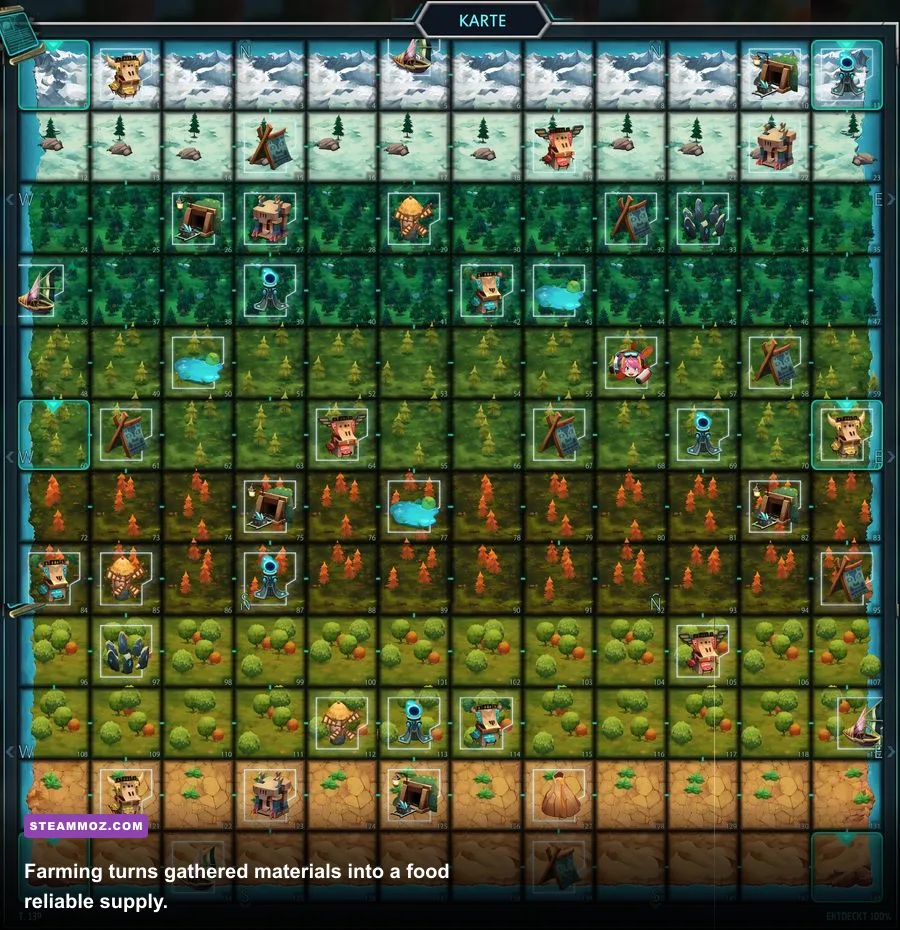
Farming is worth adding once your camp routine is stable, not before. Planting can become a dependable food engine, but it also asks for time and materials that may be more valuable during the initial push for tools. Start with a small plot, learn which ingredients support the recipes you actually use, and expand when food—not exploration—is your current bottleneck.
Players coming from harsher survival games often overbuild immediately. Ankora is more enjoyable when you establish a lean base and upgrade it in response to real problems. If you keep running out of meals, improve food production. If you keep abandoning ore, improve storage. Let the expedition reveal the next upgrade.
Combat Setup and the Safe Fighting Rotation
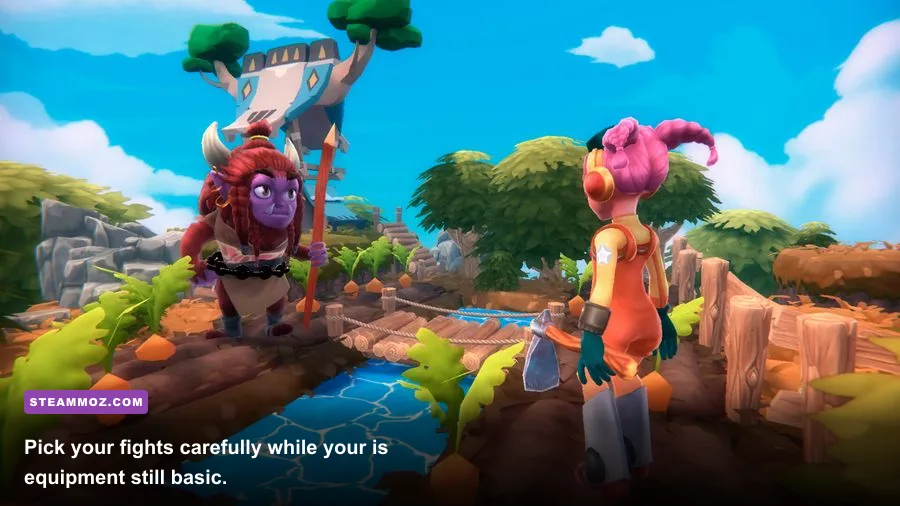
Combat should support exploration, not replace it. Mûn's early fighting setup is strongest when you use positioning, stamina control, and short engagements. Don't sprint into every creature you see. Many enemies are obstacles around a resource, quest route, or narrow passage, so the goal is often to create an opening and move on rather than clear an entire area.
Before engaging, check three things: your current health, your food reserve, and the condition of your weapon or combat tool. If any of those are poor, mark the location and return after a supply run. A creature guarding a deposit is not worth losing a full inventory of materials.
The beginner rotation is simple:
- Approach with your weapon ready and leave enough room behind Mûn for a retreat.
- Watch the enemy's wind-up rather than reacting to its body movement after the attack starts.
- Strike once or twice during the recovery window, then disengage.
- Use terrain to prevent being surrounded, especially near trees, rocks, and tight paths.
- Eat and recover before the next encounter instead of chaining fights while weakened.
That rhythm may feel slow, but it prevents the most common early failure: spending stamina on attacks, getting clipped during an enemy wind-up, and then discovering there isn't enough stamina left to escape. If a fight lasts longer than expected, reset the distance. Survival games punish emotional commitment more than cautious repositioning.
| Encounter Situation | Primary Danger | Best Response | Reward Worth Risking |
|---|---|---|---|
| Single creature near open ground | Overcommitting to a long attack string | Attack during recovery, then retreat | Usually yes if it blocks a needed route |
| Multiple enemies | Being surrounded or stun-locked | Separate them with terrain and movement | Only if the area contains a quest objective |
| Enemy near a mineral deposit | Taking damage while focused on gathering | Clear space first, then mine | Yes when the mineral is needed for progression |
| Low-health expedition fight | Losing food and gathered materials | Run, heal, and return with a better loadout | Rarely worth it |
Combat upgrades become more valuable after your basic utility is online. This is where many players make the wrong choice: they see a weapon recipe and spend scarce materials immediately, then lack the pickaxe or storage needed for the next objective. Keep one functional combat option, but don't turn every early resource into damage.
For a useful comparison, our Hollywood Animal weapon tier list explains the same principle in a different game: equipment strength matters, but only when it matches the situations you actually face.
Exploration Route, Inventory Rules, and Progression
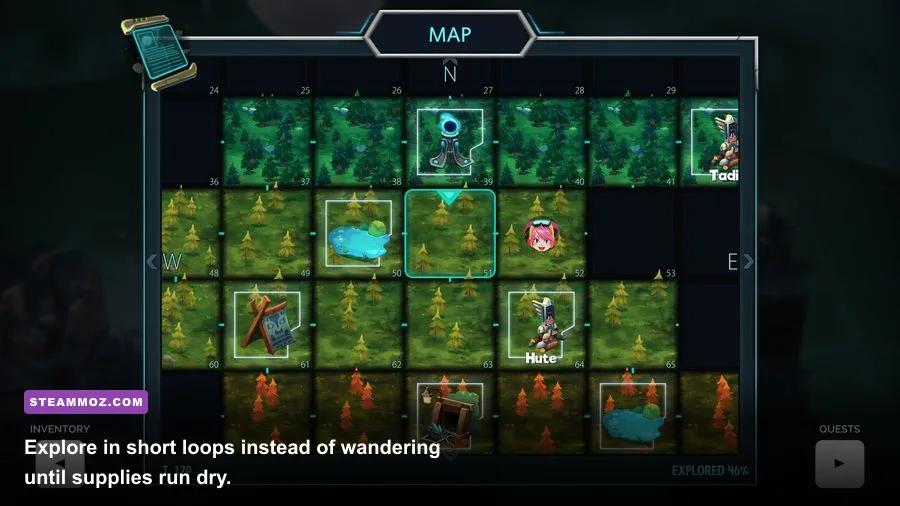
Ankora is designed around exploration, and the world is divided into many connected areas that gradually reveal new materials, creatures, and objectives. The safest way to progress is through short, repeatable loops: leave camp with one purpose, gather only what supports it, and return before your supplies become critical.
Use the map to plan routes instead of walking randomly. A good loop might combine wood on the outer edge, stone on the return path, and a quest objective near the middle. A bad loop crosses the same ground three times while Mûn's food and tool durability disappear. Mark locations mentally—or with the game's available map tools—when you find rare resources, blocked paths, or dangerous encounters.
Keep a “do not spend” reserve for unusual materials. Ankora's crafting system frequently makes common resources feel abundant until one progression recipe demands them in a larger amount. Avoid turning every plant, mineral, or monster drop into an immediate item. If you don't know what something does, store it rather than selling or discarding it.
| Progression Stage | Main Goal | Best Materials to Save | Build Check |
|---|---|---|---|
| Crash-site opening | Establish tools, food, and a functional camp | Wood, stone, basic plants | Can you leave and return without emergency gathering? |
| First extended trips | Open routes and collect recipe materials | Unusual plants, minerals, creature drops | Do you have open inventory slots and reserve food? |
| Camp expansion | Improve storage, cooking, and production | Construction materials and fuel resources | Is the camp reducing travel instead of creating chores? |
| Dangerous regions | Upgrade survival and combat options | Rare upgrade components | Can you retreat without losing the expedition? |
Don't confuse map completion with progress. Clearing every visible resource node can actually slow the story if it leaves you too tired or poorly supplied for the next objective. Your first priority is unlocking the next layer of capability. Return later for cleanup when Mûn has better tools, more storage, and a stronger food pipeline.
If you enjoy games where careful preparation beats brute force, Steamoz's How to Survive 2 leveling and farming guide has useful lessons about turning repeated routes into efficient progression. The same mindset works beautifully here.
Common Beginner Mistakes to Avoid
The most damaging mistake is crafting whatever becomes available without asking whether it solves your current problem. Recipes are tempting, especially when the game presents a new station or item, but early materials should have a job. If the next objective requires mining, prioritize the pickaxe and food. If you are constantly leaving materials behind, prioritize storage. If combat is stopping progress, then upgrade your weapon.
Don't carry your entire camp
Bring the tools required for the route, not every tool you own. Carrying too many items creates inventory pressure and makes valuable finds harder to identify. A focused expedition is easier to manage and usually more profitable.
Don't fight for pride
Enemies are not a test of courage. They are an expense. If the reward is a common drop and your food supply is low, walk away. Come back when the encounter can be solved quickly and safely.
Don't spend rare ingredients on experiments
Recipe discovery is fun, but unknown materials should go into storage first. Build a reserve before testing new combinations. That one habit prevents hours of extra gathering.
Don't build too far from your working area
A beautiful base at the edge of the map can become a logistical nightmare. Keep your main camp compact and accessible. Expand only when the current layout genuinely slows crafting, cooking, or storage management.
Finally, save before committing to a long expedition when possible. Ankora's colorful presentation can make the world feel gentle, but survival mistakes still compound quickly. A broken tool, poor food planning, and one unnecessary fight can turn a promising run into a long walk home.
The strongest Ankora: Lost Days beginner build is ultimately a rhythm: gather with the right tool, cook before you need to, improve the camp when it becomes a bottleneck, and fight only when combat protects a worthwhile objective. Mûn doesn't need a highly specialized class to thrive. She needs a reliable preparation loop.
Once that loop is established, experiment freely. Push farther into unfamiliar regions, grow the farm, test new recipes, and invest more heavily in combat when the world demands it. For technical issues on PC, our guide to PC crash and low-FPS fixes offers broadly useful troubleshooting steps. You can also follow Knightica's beginner build guide for another example of how a flexible opening plan can outperform an over-specialized one.
For developer news and updates, keep an eye on Chibig's official website and the game's Steam community hub. Start with utility, protect your supplies, and Ankora's first difficult days become a lot more inviting.