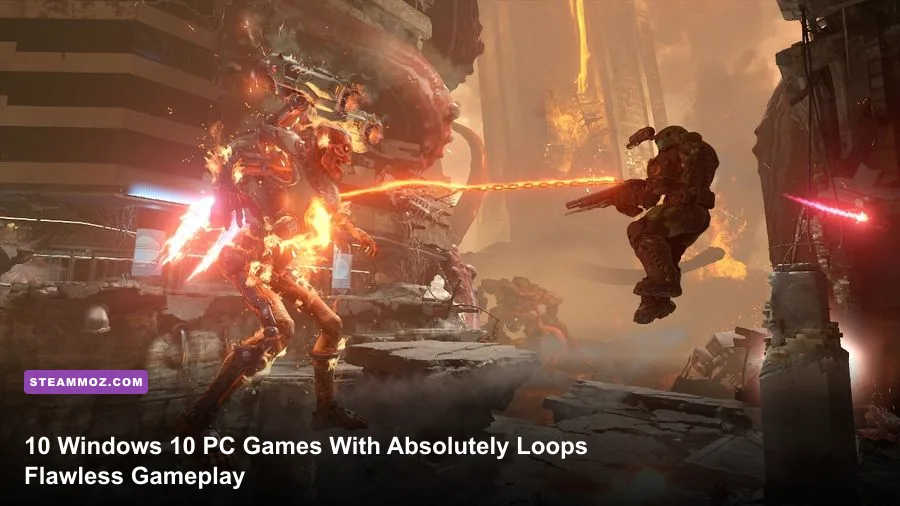
If you play PC games purely for the visceral thrill of razor-sharp mechanics, responsive input latencies, and mechanical loops that demand complete mastery, Windows 10 remains the leanest, most reliable operating system to run them. The absolute best PC games cut out cinematic filler and throw you into relentless combat rhythms where every millisecond of reaction time counts. Games like DOOM Eternal, Sekiro: Shadows Die Twice, and Hades stand at the absolute summit of modern game design because their underlying math, animation priority, and mechanical feedback loops work in flawless harmony with low-latency mouse and keyboard inputs.
Mechanical Tier List: The 10 Best Gameplay Loops Ranked
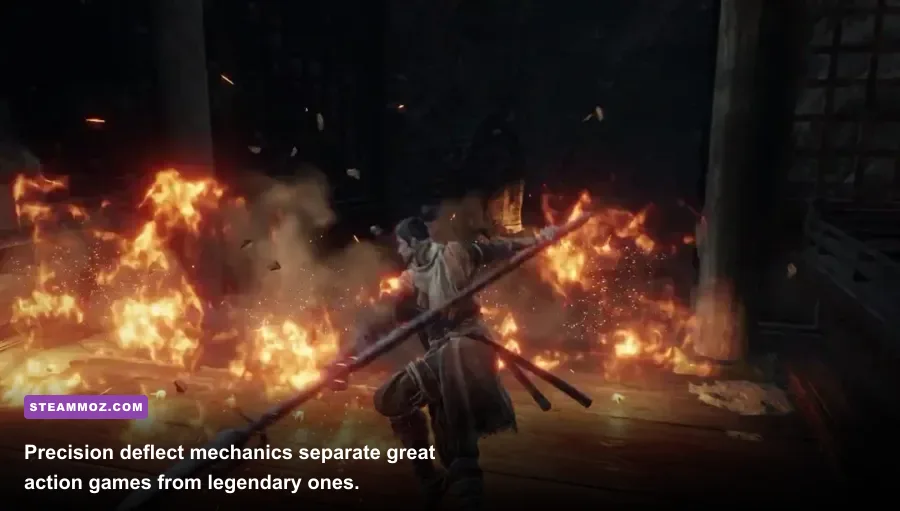
Gameplay excellence is not an accident of good graphics or big budgets. It comes down to frame-data clarity, mechanical responsiveness, risk-reward decision matrices, and how satisfying an action feels when your inputs translate to on-screen destruction. Whether you are chaining quick-swaps in an arena shooter or tracking an attack windup to execute a microsecond parry, the titles below represent the pinnacle of modern interactive engineering on Windows 10.
Much like evaluating Far Cry 3: Blood Dragon weapon tiers for pure kinetic output, ranking entire mechanical loops requires measuring how deep a game's systems remain after dozens of hours of high-stress play. Here is how the top ten gameplay titans stack against one another across mechanical depth, execution barrier, and operating system frame pacing.
| Game Title | Gameplay Tier | Core Mechanical Loop | Skill Ceiling | Optimal Win 10 API / Display Mode |
|---|---|---|---|---|
| DOOM Eternal | S-Tier (God Tier) | Resource triage via aggressive execution rotations | Extreme (Micro-swapping & movement tech) | Vulkan / Exclusive Fullscreen |
| Sekiro: Shadows Die Twice | S-Tier (God Tier) | Rhythmic deflect chains & posture bar attrition | Extreme (Single-frame reaction windows) | DirectX 11 / Borderless + SpecialK |
| Armored Core VI | S-Tier (God Tier) | 3D omnidirectional energy & ACS stagger management | High (Assembly optimization & flight kiting) | DirectX 12 / Exclusive Fullscreen |
| Hades | S-Tier (God Tier) | Dash-strike animation cancels & boon synergy routing | High (Heat pacing & i-frame exploitation) | Vulkan / Borderless Windowed |
| Monster Hunter: World | A-Tier (Elite) | Commitment-heavy movesets & monster telegraph reading | Very High (Hitzone focus & guard-pointing) | DirectX 12 / Fullscreen (FSR Enabled) |
| Ultrakill | A-Tier (Elite) | Hitscan coin-juggling & blood-fueled health recovery | Ceilingless (Movement tech & weapon combos) | DirectX 11 / Exclusive Fullscreen |
| Dead Cells | A-Tier (Elite) | 2D dodge-roll i-frames & affix roll optimization | Very High (5BC Malaise management) | DirectX 11 / Exclusive Fullscreen |
| Resident Evil 4 Remake | A-Tier (Elite) | Knife durability parrying & crowd-stagger routing | High (Spatial awareness & resource triage) | DirectX 12 / Exclusive Fullscreen |
| Risk of Rain 2 | B-Tier (Superb) | Proc-coefficient stacking & 3D threat prioritization | Moderate (Routing speed & item knowledge) | DirectX 11 / Fullscreen |
| Slay the Spire | B-Tier (Superb) | Energy efficiency curves & probabilistic deck thinning | Extreme (Strategic decision trees) | DirectX 11 / Borderless Windowed |
The S-Tier Action Pantheons: DOOM Eternal, Sekiro, and Armored Core VI
At the apex of PC action gaming sits DOOM Eternal on Steam. id Software abandoned standard cover-shooter tropes to engineer what creative director Hugo Martin rightfully dubbed "combat chess." You do not hide to regenerate shields; you harvest resources mid-sprint. Need health? Glory Kill a staggered Imp. Running low on armor? Torch a Hell Knight with the Flame Belch and spray it with the Super Shotgun. Out of heavy ammunition? Bisect a Mancubus with the Chainsaw. To play at nightmare tier, you must master the animation-canceling quick-swap loop: fire the Precision Bolt mod on the Heavy Cannon, tap your hotkey to the Ballista to eliminate weapon recoil frames, and drop a Tyrant in four seconds flat. It demands 144Hz+ monitors and instantaneous mouse tracking, running flawlessly across Windows 10 via the Vulkan API.
Shifting from heavy firepower to cold steel, Sekiro official FromSoftware documentation proves how a single design philosophy can revolutionize third-person action. Sekiro strips away the bloated stat sheets of traditional RPGs and locks you into a rhythmic sword dance governed by the Posture bar. Instead of panic-rolling away from incoming swings, you stand your ground, timing the L1 deflect to shave milliseconds off enemy recovery frames while accelerating their posture collapse.
Every boss encounter is an uncompromising test of visual literacy. When Genichiro Ashina winds up his seven-hit Floating Passage combo, you must deflect every strike to preserve your own posture while destroying his. Unblockable thrust attacks require a forward-dodge Mikiri Counter that stomps the blade into the dirt, while sweeping perilous attacks demand an immediate jump kick off the enemy's forehead. Much like testing frame-perfect fighting game specifications, Sekiro runs best when Windows 10 is configured to eliminate all background desktop composition overhead, giving your deflect inputs sub-10ms response times.
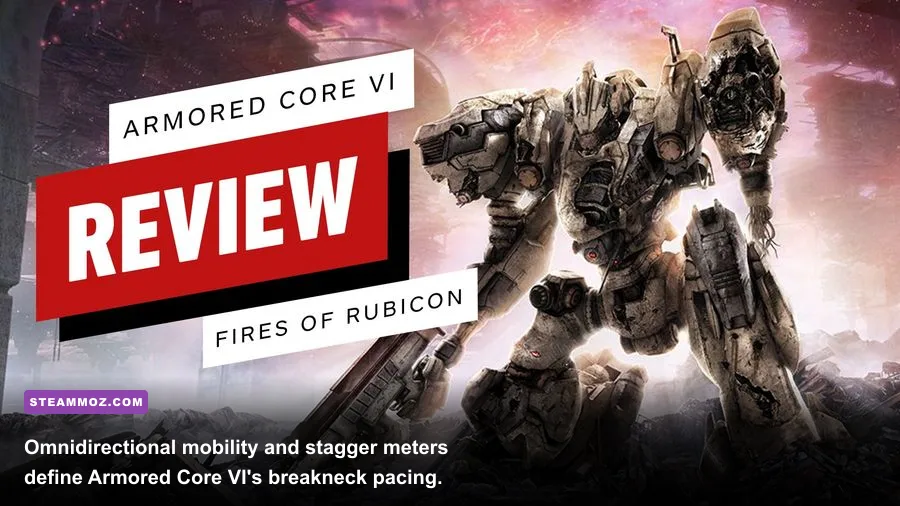
Rounding out this mechanical triumvirate is FromSoftware's Armored Core VI: Fires of Rubicon. The game redefines 3D aerial combat by anchoring its loop to the Attitude Control System (ACS). Sustained kinetic or explosive impacts overload an enemy craft's ACS gauge, triggering a critical stagger state where direct-hit damage multipliers shoot through the roof. Constructing your build is half the battle: combining dual SG-027 Zimmerman shotguns with high-impact back-mounted Songbirds allows you to aggressively assault PCA warships and rival ACs. Managing your generator's energy replenishment delay while quick-boosting laterally to slip under incoming laser fire creates a combat rhythm that rewards spatial intelligence and mechanical aggression.
Roguelite Perfection: Hades, Dead Cells, and Risk of Rain 2
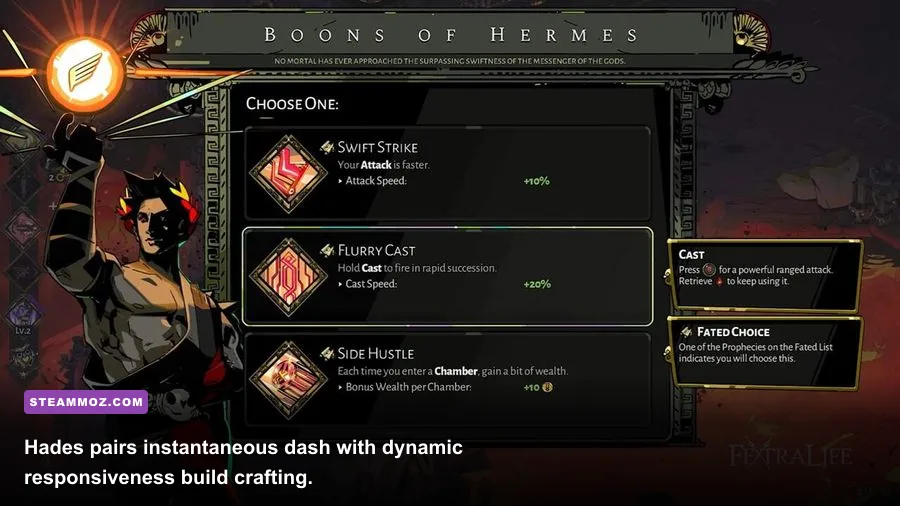
No genre tests pure gameplay addiction quite like the action-roguelite. Every run lives or dies by its kinetic controls and how dynamic its build crafting feels when things get chaotic. Supergiant Games Hades archive showcases how to marry narrative depth with instant mechanical gratification. Playing as Zagreus, your survival relies heavily on the Dash-Strike mechanic. By canceling the windup of standard weapon strikes with an immediate dash, you gain invulnerability frames (i-frames) while hitting enemies from behind for backstab multipliers.
The genius lies in the God Boon synergies. Pairing the Stygian Blade's rapid swings with Athena's Divine Dash turns evasive retreats into projectile-reflecting offensive walls. Meanwhile, stacking Ares' Curse of Agony (inflicting delayed Doom damage) with Aphrodite's Heartbreak Strike (applying Weak) triggers the Privileged Status mirror talent, instantly boosting all damage output by 40%. The fluid combat feedback loop feels crisp and uncompromised on Windows 10, maintaining triple-digit framerates even when the screen erupts in Tartarus lava and Elysium spears.
Where Hades leans on isometric grace, Motion Twin's Dead Cells relies on lightning-fast 2D brutality. Dead Cells forces you to engage with animation commitments and roll-cancel recovery windows. At the maximum difficulty (5 Boss Stem Cells), the game introduces the Malaise mechanic—a ticking infection clock that aggressively spawns elite enemies if you hesitate for even a few seconds. To survive, you must dual-bind complementary weapons (like the Spartan Sandals paired with an oily Broadsword) to trigger environmental wall-splats while utilizing the Parrying Shield to deflect incoming arrows right back into enemy ranks.
If you prefer full 3D spatial awareness, Hopoo Games' Risk of Rain 2 offers one of the most rewarding procedural combat loops ever programmed. Its mechanics revolve entirely around the item "proc coefficient." Every survivor's primary attack carries an internal mathematical multiplier that dictates how reliably on-hit items (like the AtG Missile Mk. 1 or Ukulele) trigger chain reactions. The faster you clear stages and optimize teleporter events, the slower the ambient difficulty scales. By stage 8, an optimal Huntress or Commando build fires a single shot that detonates an entire screen of magma worms in a kaleidoscopic cascade of volumetric fire and lightning, pushing modern PC multi-threading to its absolute limits.
Tactical Depth and High-Stakes Combat: Monster Hunter, Resident Evil 4, and Ultrakill
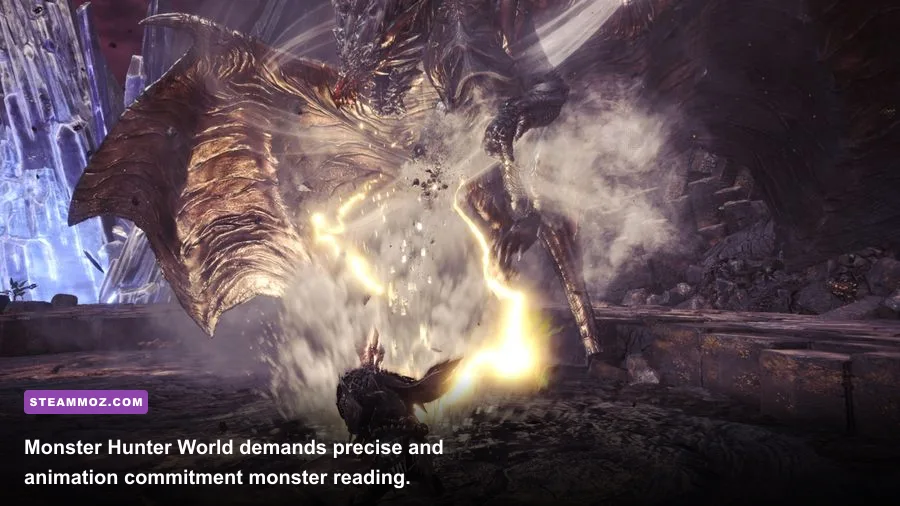
For players who prefer weight, timing, and calculated animation commitments over twitchy evasion, Capcom Monster Hunter: World portal represents the pinnacle of action-RPG design. Unlike hack-and-slash games where you can cancel out of any strike, Monster Hunter forces you to commit to every single swing. If you pick up the colossal Great Sword, landing a True Charged Slash requires reading the monster's flinch animations, predicting where its head will land three seconds in advance, and calculating your shoulder-tackle hyper-armor windows to absorb incoming roars.
The complexity scales exponentially with technical weapons like the Charge Blade. You must balance sword-and-shield slashes to build phial energy, store that energy into the shield via an elemental roundslash, charge the sword for innate mind's eye deflection prevention, and finally unleash a devastating Super Amped Elemental Discharge (SAED). Utilizing the Clutch Claw to tenderize thick monster hides and flinch-shotting enraged Elder Dragons into canyon walls gives the combat an unmatched sense of scale and tactical density. If you run into frametime stutters during massive particle effects in the Guiding Lands, checking out guides on troubleshooting PC crashes and stabilizing frametimes will help keep your Windows 10 install rock-solid.
Capcom duplicated this mechanical triumph in Resident Evil 4 Remake. By transforming Leon S. Kennedy's knife into a real-time deflect tool with its own durability gauge, the developer elevated survival horror combat into a high-octane spatial management sim. When a Ganado hurls an axe across a dimly lit barn, you do not simply dodge; you parry the axe mid-flight, pop a 9mm round into their knee to force a stagger state, and close the distance to deliver a crowd-clearing roundhouse kick that grants total invulnerability throughout its animation. The game rewards meticulous resource management, making every spent shotgun shell feel like a calculated tactical gamble.
On the opposite end of the pacing spectrum is Arsi "Hakita" Patala's Ultrakill, an arena shooter so fast it makes vintage Quake feel sluggish. Ultrakill's defining mechanic is simple: blood is fuel, and you only regenerate health by showering in fresh demon blood at point-blank range. Throw in the Marksman Revolver—which lets you toss four coins into the sky and shoot them to ricochet hitscan beams into weak points—and you have a game with a near-infinite skill ceiling. You can even punch your own shotgun pellets using the Feedbacker mechanical arm to accelerate them into explosive, high-damage slugs. Exploring varied combat loadouts, much like balancing Everspace combat weapon loadouts, is crucial for surviving Ultrakill's merciless cyber-grind arenas.
Pure Strategic Mastery: Slay the Spire's Incomparable Turn-Based Loop

Incredible gameplay does not require 240 frames-per-second twitch shooting. MegaCrit's Slay the Spire proves that a turn-based card battler can deliver a mechanical loop just as tense, kinetic, and white-knuckle as any action title on the market. In Slay the Spire, you climb an ascending spire where every single decision—from path selection and campfire resting to card drafting and relic synergy—directly dictates whether you survive the floor 50 boss.
The beauty of its design lies in complete combat transparency. Enemies display their precise attack intents above their heads, showing you exactly how much incoming damage you face. Combat becomes an intricate math puzzle: do you spend your 3 Energy playing two Defends to mitigate 10 incoming damage, or do you exhaust your Bash card to inflict Vulnerable, betting that your next draw phase yields enough raw damage to wipe out the threat? Playing the Ironclad with a Corruption and Dark Embrace engine transforms every Skill card into a free, deck-cycling offensive engine, rewarding players who understand probability and card exhaustion mechanics.
Much like plotting routes through Everspace 2 secret exploration routes, conquering Ascension 20 in Slay the Spire requires deep map literacy. You must know when to target elite encounters to hunt down game-breaking relics like the Dead Branch or Kunai, and when to path toward merchant shops to trim unneeded strikes from your deck. It is an intellectual gameplay loop with zero downtime, perfectly optimized to launch instantly and run effortlessly on any Windows 10 setup.
How to Tune Windows 10 for Latency-Free PC Gameplay

Even the finest gameplay mechanics collapse if your operating system introduces micro-stutters, erratic frame pacing, or input buffering delays. While Windows 11 has pushed aggressive background telemetry, Windows 10 remains an outstanding environment for pure gaming performance when properly calibrated. Fine-tuning your OS display configurations ensures your mouse clicks register without artificial input lag, providing the crisp responsiveness that high-level play demands.
Beyond standard driver updates, several specific Windows 10 system toggles have a profound impact on high-refresh gameplay. To replicate the performance gains found when optimizing PC display settings for maximum FPS or configuring tight tactical performance configurations, use the optimization matrix below to dial in your rig for maximum mechanical fidelity.
| Windows 10 / Driver Setting | Recommended Profile | Input Latency & FPS Impact | Mechanical In-Game Advantage |
|---|---|---|---|
| Hardware-Accelerated GPU Scheduling (HAGS) | Enabled (Reboot Required) | Reduces CPU rendering overhead; +3-7% minimum 1% lows | Eliminates micro-stutter during rapid camera pans in DOOM and Sekiro. |
| Windows Game Mode | Enabled | Prioritizes CPU thread allocation to active game process | Prevents background Windows updates from dropping frames during boss fights. |
| Disable Fullscreen Optimizations | Checked (Applied on Game .EXE Properties) | Bypasses Desktop Window Manager (DWM) composition buffers | Delivers true exclusive fullscreen input latency for instant mouse response. |
| Mouse Pointer Precision (Enhance Pointer Precision) | Disabled (Unticked) | Eliminates artificial software acceleration curves | Ensures strict 1:1 hardware muscle memory tracking for hitscan targeting. |
| NVIDIA Reflex / AMD Anti-Lag | On + Boost (Driver or In-Game) | Dynamically caps render queue to sync CPU and GPU execution | Cuts system latency by up to 30ms during heavy GPU-bound combat sequences. |
By stripping away unnecessary OS interference, locking in these core latency profiles, and diving into games that prioritize deep, responsive mechanics over empty spectacle, your Windows 10 machine transforms into an absolute powerhouse of pure gaming enjoyment. Pick any title from this list, warm up your reflexes, and experience what true mechanical mastery feels like.