If you want the top 10 must-play multiplayer games PC players can enjoy right now, start with Counter-Strike 2, Helldivers 2, Deep Rock Galactic, and Baldur's Gate 3. They cover competitive precision, chaotic co-op, class-based teamwork, and story-driven role-playing, while seven other excellent games fill in the gaps for racing, survival, shooters, and social adventures.
This list ranks games by more than player counts. The important questions are whether teamwork genuinely changes the outcome, whether the gameplay stays interesting after 50 hours, and whether the PC version gives you enough control over performance and matchmaking. Some are brutally competitive; others are at their best when your squad is laughing after a catastrophic mistake.
The 10 multiplayer games worth your time
1. Counter-Strike 2 remains the purest test of aim, economy, movement, and information. Valve's Premier mode uses a map-rating system, while the familiar five-versus-five structure still makes every rifle purchase matter. The AK-47's one-shot headshot potential against an unarmored opponent, the M4A1-S's suppressor, and the AWP's instant-kill body shot create sharply different risk profiles. The modern subtick system doesn't remove the need to counter-strafe: releasing a movement key and tapping the opposite direction before firing is still how you make a rifle accurate quickly. If you want a deeper technical breakdown of PC performance, Steamoz's PC crash and FPS fixes are also useful for troubleshooting older systems.
2. Valorant is the better choice if you like Counter-Strike's round economy but want abilities to reshape the battlefield. A five-player team must balance credits, ultimates, entry utility, and post-plant lineups. Jett's Tailwind can turn an Operator angle into a safe escape, while Sova's Recon Bolt rewards players who understand common hiding positions. Don't treat abilities as flashy extras; a well-timed smoke or Killjoy Lockdown can force an entire enemy team away from a site without a single duel.
3. Rocket League is football played with rocket-powered cars, but that description hides its mechanical depth. A standard match is five minutes, and the strongest players constantly manage boost, momentum, backboard angles, and rotation spacing. The crucial beginner habit is leaving the ball when a teammate has a better line instead of chasing it into the same corner. Learn half-flips, fast aerials, and basic wall reads gradually. The game has an unusually clean skill curve: every missed shot tells you exactly what to practice next.
4. Rainbow Six Siege rewards preparation more than raw reflexes. Attackers breach, drone, and clear rooms; defenders reinforce walls, place gadgets, and deny plant locations. A reinforced wall has 2,000 health, and hard breachers such as Thermite, Hibana, and Ace are therefore central to many site plans. Sound matters enormously: rappelling, barbed wire, drones, and breaching charges all create information. Siege can feel unforgiving in the first 20 hours, but learning a few site setups on Clubhouse, Oregon, and Bank makes the game dramatically more readable.
5. Helldivers 2 is the most entertaining co-op shooter here because friendly fire is always enabled and every stratagem has a cost in time, positioning, or danger. A squad of four might combine the Orbital Precision Strike, Eagle Airstrike, Guard Dog Rover, and an Autocannon, but careless placement can flatten the squad just as quickly as it kills a Charger. The Railgun is powerful when used safely, while the EAT-17 lets two players quickly prepare anti-armor shots. Difficulty 7 and above adds the Super Samples chase, giving experienced teams a reason to master objectives rather than sprint to extraction.

🎮 Matter
Looking to experience this game? Grab your digital key directly on our store for $4.99.
View on Steammoz Store →Competitive games with the deepest skill ceiling
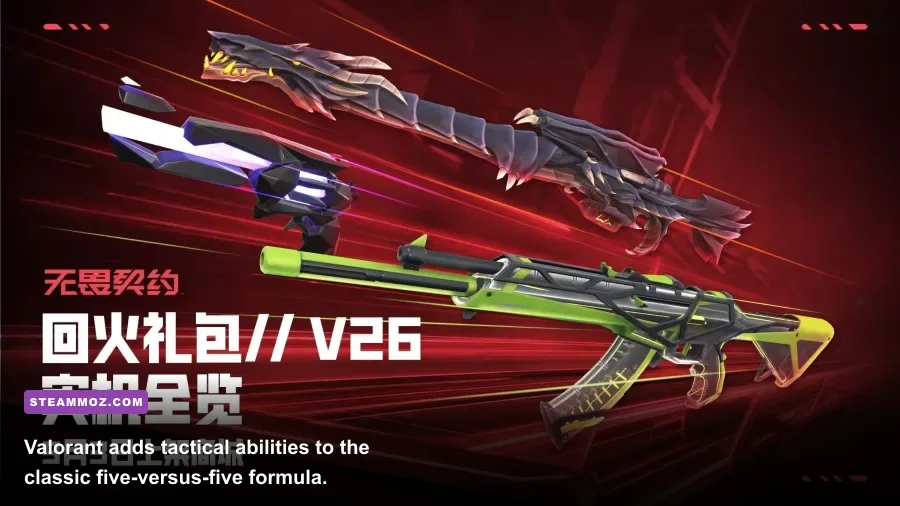
Competitive multiplayer works when improvement is measurable. Counter-Strike 2 tracks map ratings and round performance; Valorant gives you rank progression and agent-specific mastery; Rocket League makes mechanical errors visible in every replay. These games also punish weak fundamentals in different ways, so choosing the right one matters.
| Game | Core skill | Typical team size | Best for |
|---|---|---|---|
| Counter-Strike 2 | Crosshair placement, economy, utility | 5 versus 5 | Players who want pure tactical shooting |
| Valorant | Gunplay, ability timing, information | 5 versus 5 | Players who enjoy defined roles |
| Rocket League | Rotation, aerial control, boost management | 1 versus 1 to 3 versus 3 | Players who prefer mechanical mastery |
| Rainbow Six Siege | Map knowledge, sound, destruction | 5 versus 5 | Patient tactical teams |
For Counter-Strike, spend time in a workshop aim map, then practice recoil with the AK-47 and M4A4 before jumping into Premier. In Valorant, don't unlock every agent and play them randomly; learn one controller, one initiator, and one duelist so you understand how a round is built. Rocket League players should prioritize recoveries and rotation before fancy air dribbles. Siege players should drone ahead of their teammates and stop treating every death as an aim problem.
These games are also sensitive to latency and frame pacing. A high average FPS doesn't help much if frametime spikes during a duel. Use a wired connection where possible, cap frames slightly below your monitor's refresh rate, and disable unnecessary overlays. If your PC struggles with older releases, Steamoz's guide to checking PC specifications offers a useful baseline for diagnosing hardware limits.
The best co-op games for a regular squad

6. Deep Rock Galactic is the co-op game to pick when you want every teammate to have a real job. The four classes are distinct: Scouts illuminate caves and reach high minerals, Engineers create platforms and turret coverage, Gunners provide shields and sustained fire, and Drillers reshape terrain with Reinforced Power Drills. On Hazard 5, a Scout who ignores lighting can wipe a team before anyone sees the approaching swarm, while an Engineer who saves platforms can make an otherwise impossible objective manageable.
The class synergy is most obvious during mining missions and Salvage Operations. A Driller can carve a shortcut to the Drop Pod, an Engineer can bridge gaps, and a Gunner's Zipline can carry heavy minerals across vertical caverns. Keep your grenades complementary rather than identical. Cryo Grenades, Sticky Grenades, Proximity Mines, and the Gunner's Shield each solve different emergencies. Check the strategy and resource farming advice on Steamoz if you enjoy games where preparation compounds over time.
7. Lethal Company is smaller in scope but sharper in social design. Teams of up to four explore abandoned moons, collect scrap, and try to meet the Company's quota before the deadline. The walkie-talkie, terminal operator, flashlight battery, and limited inventory create constant communication problems. A Hoarding Bug is manageable; a Bracken becomes terrifying when one player sees it and the others don't. The best runs aren't clean runs. They're the ones where somebody carries a dead teammate's shovel through the ship while another person desperately watches the radar.
8. Warframe is the strongest free-to-play option for players who enjoy fast movement and long-term optimization. A standard squad has up to four players, and missions can shift from bullet-jumping through tilesets to defending objectives against escalating enemy levels. Warframes such as Rhino, Wisp, Volt, and Nekros support very different team needs. Mod capacity is the real progression system: upgrading Serration, Vitality, Elemental Damage mods, and critical chance often matters more than simply crafting a newer weapon.
Multiplayer RPGs and adventures that create stories
9. Baldur's Gate 3 supports parties of up to four players, and its multiplayer works because every character can disrupt the plan. Combat follows the Dungeons & Dragons fifth-edition action economy: a character generally has an action, bonus action, movement, and reaction. That means a Rogue can Hide and deliver Sneak Attack, a Wizard can cast Web to control a choke point, and a Cleric can use Spirit Guardians while the rest of the party exploits the difficult terrain.
The strongest co-op groups assign responsibilities without over-planning. Let one player handle dialogue, another manage stealth, and another watch the battlefield for environmental interactions. Fire, grease, poison, explosive barrels, and electrified water can all matter more than raw damage. The game also encourages separate decisions: splitting the party in Act 1 can reveal hidden quests, but it can just as easily trigger a fight while the other players are shopping. Save frequently, especially before entering the Goblin Camp, Grymforge, or the Gauntlet of Shar.
10. Sea of Thieves is less about unlocking stronger equipment and more about becoming competent at a dangerous sandbox. A crew of four can run a Galleon, but everyone must communicate: one player steers, another manages sails, one repairs and bails water, and the last handles cannons or boarding. Cannonballs damage hull sections, while fire and lower-deck flooding turn small mistakes into sinking ships. The lack of permanent gear advantages keeps encounters tense, because a new crew can outplay a veteran through better positioning.
Its best moments happen between objectives. You might be carrying treasure from a Vault when a Reaper's Mark appears, forcing a choice between selling safely and risking a naval chase. Watch the horizon, keep your anchor raised near islands, and never assume an apparently empty outpost is safe. That unpredictable human layer makes Sea of Thieves one of the rare multiplayer games that reliably produces stories worth retelling.
Which multiplayer PC game should you play first?
Choose based on the kind of failure you enjoy. If losing a round makes you want to review a replay, pick Counter-Strike 2 or Valorant. If you want immediate chaos with friends, Helldivers 2 and Lethal Company are better. Deep Rock Galactic suits squads that like clear roles and repeatable missions, while Baldur's Gate 3 is ideal for a patient group willing to share the spotlight.
| Priority | Best pick | Why it fits | Main warning |
|---|---|---|---|
| Competitive shooting | Counter-Strike 2 | Precise gunplay and economy | Early losses can feel harsh |
| Ability-based tactics | Valorant | Clear agents and round plans | Requires map and utility study |
| Chaotic co-op | Helldivers 2 | Stratagems create memorable disasters | Friendly fire is always active |
| Class teamwork | Deep Rock Galactic | Every class solves different problems | Higher Hazards demand coordination |
| Story and role-play | Baldur's Gate 3 | Multiplayer choices change the adventure | Sessions need a consistent group |
| Emergent sandbox | Sea of Thieves | Player encounters create the content | Progression is mostly cosmetic |
Before buying, check the official pages for Counter-Strike 2, Helldivers 2, Deep Rock Galactic, and Baldur's Gate 3 for current platform and account requirements. Cross-play, voice chat, and matchmaking rules can change, so confirm those details before organizing a full squad.
Performance settings that keep multiplayer responsive
Competitive players should target stable frame pacing rather than a screenshot-friendly maximum. Start with exclusive fullscreen if a game supports it, use the lowest latency mode available, and lower shadows before textures. Textures usually depend on VRAM, while shadows, volumetrics, ambient occlusion, and reflections often cost more GPU time during busy fights. In co-op shooters, a stable 60 FPS is a sensible floor; 120 FPS or higher is worth pursuing for competitive aim if your monitor and hardware can sustain it.
| Setting | Recommended value | FPS impact | Visual trade-off |
|---|---|---|---|
| Textures | High if VRAM allows | Low to medium | Sharper surfaces and character detail |
| Shadows | Medium | Medium to high | Less depth and softer shadow edges |
| Volumetrics | Low or medium | High in smoke and fog | Less atmospheric lighting |
| Motion blur | Off | Small | Clearer camera movement |
| Ambient occlusion | Medium | Medium | Reduced contact shading |
| Upscaling | Quality mode | Medium gain | Slightly softer fine detail |
Keep drivers updated, but don't change five settings at once. Record your average FPS and one-percent lows in the same training map or mission, then adjust the largest offender. For game-specific troubleshooting, Steamoz's guides to crashes and low FPS and higher-FPS settings provide practical steps that apply to many PC games.
The best multiplayer game is ultimately the one that makes your group queue for one more match. These ten succeed because their systems create meaningful decisions: buying an AK-47, choosing a stratagem, placing a platform, burning an action, or turning toward a suspicious sail on the horizon. Pick the failure you can laugh about, bring friends who communicate, and the gameplay will do the rest.