
You do not need to drop $70 to experience mechanical perfection on PC. While premium blockbusters often prioritize cinematic bloat and rigid animation locks over responsive inputs, the best free-to-play titles survive entirely on the raw strength of their gameplay loops. If a free PC game feels sluggish or shallow, players uninstall it in five minutes. The titles that stand the test of time offer razor-sharp hitboxes, uncapped skill ceilings, nuanced physics engines, and progression systems so deep they make full-priced releases look like hollow tech demos. Whether you crave frame-perfect movement techs, intricate arithmetic buildcraft, or ruthless tactical gunplay, these ten PC titles deliver peerless mechanics without asking for a dime upfront.
The S-Tier Action RPGs: Limitless Builds and Fluid Movement
Action RPGs live and die by how their combat feels at hour two hundred, and no premium title matches the sheer momentum of Warframe or the dizzying complexity of Path of Exile. Developed independently by Digital Extremes, Warframe completely reinvents third-person mobility. Its movement engine revolves around the bullet jump—a crouch-jump input that cancels momentum into directional airborne thrust, daisy-chained into aim-glides, wall-latches, and roll-cancels. Once your fingers internalize the rhythm, you traverse kilometer-long tilesets at 80 kilometers per hour while decapitating Grineer lancers with slide-attacks. Gunplay feels punchy, with weapons like the Kuva Bramma delivering devastating area-of-effect cluster explosions and the Corinth pumping out deafening air-burst rounds. Modding your Warframe and weapons uses a capacity system driven by polarities and Forma, letting you fine-tune critical multipliers, multishot percentages, and elemental combos that chemically melt armor or bypass shields entirely.
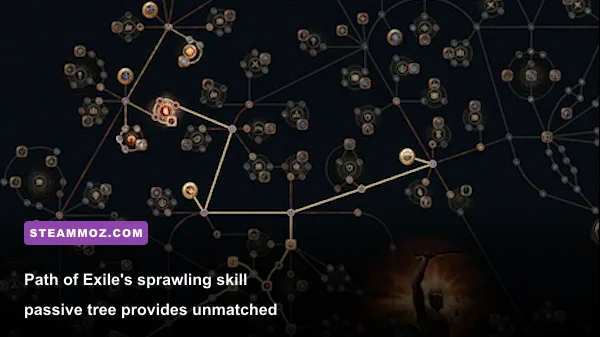
On the isometric side, Grinding Gear Games' Path of Exile operates on an algorithmic scale that humiliates Diablo IV. Everything begins with the passive skill tree—a monstrous web containing 1,325 nodes granting baseline attributes, jewel sockets, and game-altering keystones like Chaos Inoculation, which drops your maximum Life to exactly 1 while granting complete immunity to Chaos damage. Active skills do not come from a class skill bar; they exist as Skill Gems socketed directly into your armor and weapons. By linking an active gem like Righteous Fire with Support Gems like Concentrated Effect, Burning Damage, and Elemental Focus, you radically reshape how the ability functions. Calculating your effective DPS requires balancing internal ailment thresholds, resistance penetration, and cast rate brackets. If you love deep number-crunching and studying fast progression and resource farming guides, nothing compares to executing a fully juiced Tier 16 Map layout while popping screen-clearing Herald of Ice explosions.
High-Stakes Tactical Shooters: Sub-Tick Netcode and Kinetic Destruction
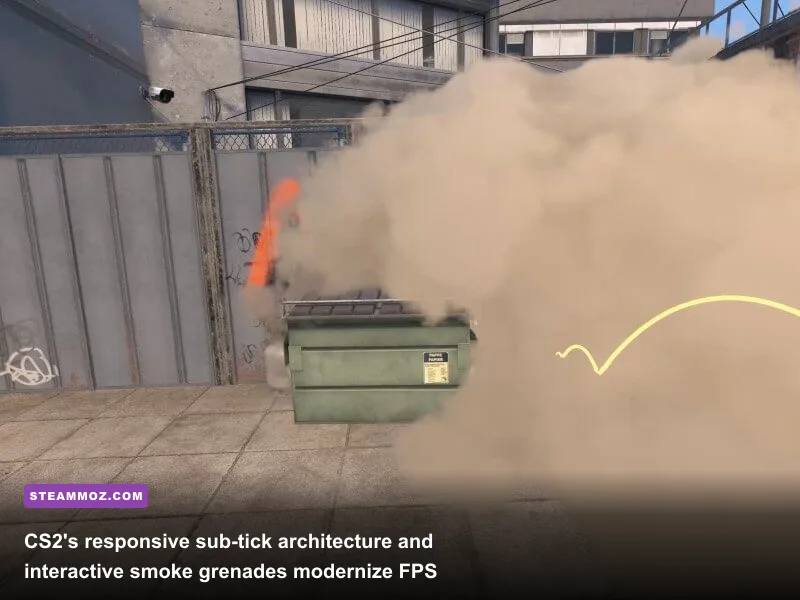
When millisecond reaction times dictate victory, gun handling must feel flawless. Counter-Strike 2 stands as the undisputed benchmark for tactical shooters, replacing legacy tickrates with a responsive sub-tick system. In CS2, the engine calculates the exact millisecond you click your mouse button between server ticks, ensuring your crosshair placement translates to immediate hit registration. Weapon recoil in CS2 follows strict, learnable spray patterns rather than lazy random bullet bloom. Mastering the AK-47 requires pulling down on the mouse for the first six rounds, sweeping slightly right, and then pulling hard left to keep all thirty rounds inside a head-sized target box. The dynamic volumetric smoke grenades introduce transformative utility play; smokes now react to ambient lighting, expand naturally through doorways, and can be temporarily blown open using an HE grenade to reveal enemies lurking inside the cloud.
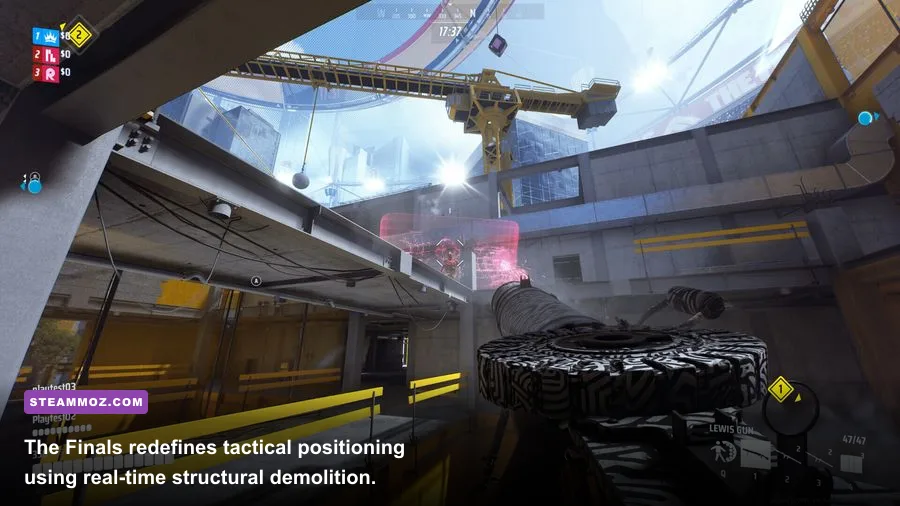
If CS2 is a game of surgical angles, Embark Studios' The Finals is a masterclass in kinetic chaos. Running on Unreal Engine 5 with server-side physics, every single wall, ceiling, and stairwell in The Finals can be demolished. If an enemy team sets up an impenetrable defensive bunker with heavy mesh shields and automated turrets on the third floor of a Monaco cathedral, you do not funnel through the doorway. You slap two C4 charges onto the floor below them, trigger the detonation, and bring the entire objective room crashing through the ceiling into your crosshairs. Gunplay feels meaty and unforgiving, balanced across three distinct weight classes (Light, Medium, Heavy) that each dictate your movement speed, health pool (ranging from 150 HP for Lights to 350 HP for Heavies), and weapon recoil profiles. It elevates environmental destruction from a visual gimmick into your primary strategic weapon.
Movement-First Competitive Arenas: High-APM Speed and Spatial Mastery
Shooting feels ten times better when your momentum is completely unrestricted. Respawn Entertainment's Apex Legends takes the crown for first-person movement depth. Built on a heavily modified Source engine, the game turns spatial geometry into a playground for high-APM execution. Advanced players exploit physics quirks to execute wall bounces, superglides (a frame-perfect jump-crouch input at the peak of a mantle), and tap-strafing by binding forward movement to the scroll wheel to execute sharp 90-degree directional changes without sacrificing forward velocity. Gunfights in Apex feel prolonged and tactical due to high Time-to-Kill (TTK), demanding consistent tracking and recoil smoothing. Weapons like the R-99 submachine gun burn through light ammunition at 1,080 rounds per minute, requiring razor-sharp mouse control to land every bullet on a strafing Wraith.
Shift over to the racing scene, and Ubisoft Nadeo's Trackmania strips away collision, nitrous meters, and artificial power-ups to deliver the purest physics-based driving simulator ever created. You control a single open-wheel vehicle with identical acceleration and top speed for every competitor on the server. The entire game is a battle against surface friction, air resistance, and millisecond time differentials. Driving on asphalt requires tight racing lines and counter-steering to prevent tire slide, while dirt tracks reward Scandinavian flicks to preserve drift momentum. Ice surfaces demand specialized gear-shifting knowledge; you initiate an ice slide by braking while steering at speeds exceeding 400 km/h, keeping your wheels turned into the curve to lock the car's drift angle. Every single track is an intricate puzzle of inputs where shaving 0.003 seconds off a gold medal ghost requires perfection. If you encounter frame pacing hiccups during high-speed drifts, optimizing your rig using optimizing graphics settings for frame stability can instantly eliminate input lag.
Unmatched Tactical Depth: Deep Systems Over Shallow Microtransactions
Some of the greatest free-to-play games earn their reputation by rejecting hand-holding in favor of raw tactical autonomy. Valve's Dota 2 represents the pinnacle of competitive strategy. Unlike rival MOBAs that treat characters like fast-action brawlers with instant animations, Dota 2 models physical realism directly into hero movement. Turn rates dictate how fast your hero can rotate before casting an ability or firing an attack. Casting an ultimate like Earthshaker's Echo Slam has zero cast point, while Leshrac's Split Earth has a brutal 0.35-second delay that enemies can dodge if you fail to read their pathing. Mechanics like creep-stacking, lane-pulling, rune-control, buyback cooldown management, and high-ground vision penalties create a mental game of chess where mechanical execution and spatial awareness collide on every single wave.
| Game Title | Core Gameplay Pillar | Signature Mechanic | Skill Ceiling Rating | Engine Tech Highlight |
|---|---|---|---|---|
| Warframe | High-Mobility PvE Looter | Bullet Jump & Slide-Rolling Chains | High (APM & Mod Theory) | Proprietary Evolution Engine |
| Path of Exile | Isometric Action RPG | Gem Sockets & 1,300+ Passive Node Web | Extreme (Deep Arithmetic) | Custom In-House ARPG Engine |
| Counter-Strike 2 | Tactical Search & Destroy FPS | Sub-Tick Hitreg & Spray Recoil Patterns | Extreme (Precision Crosshair Aim) | Source 2 Engine |
| The Finals | Destruction Extraction Shooter | Full Server-Side Structural Demolition | High (Spatial Awareness) | Unreal Engine 5 Server Physics |
| Apex Legends | Battle Royale Movement FPS | Supergliding, Tap-Strafing, Recoil Smoothing | Extreme (Fluid Kinematics) | Modified Source Engine |
| Trackmania | Time-Attack Physics Racer | Surface Drift Angles & Gear Timing | Extreme (Millisecond Precision) | Nadeo Custom Physics Engine |
| Dota 2 | Strategic Lane MOBA | Hero Turn Rates & Creep Equilibrium Pulls | Absolute Peak (Macro/Micro Depth) | Source 2 Engine |
| War Thunder | Combined Arms Military Sim | Volumetric Armor Penetration & Spalling | High (Ballistics & Structural Weakpoints) | Dagor Engine 6.5 |
| Team Fortress 2 | Class-Based Arena Shooter | Rocket Jumping & Momentum Vectors | Extreme (Physics Exploitation) | Source Engine |
| Genshin Impact | Elemental Open-World Action | Internal Cooldowns & Elemental Gauges | Medium-High (Rotation Canceling) | Custom Unity Engine |
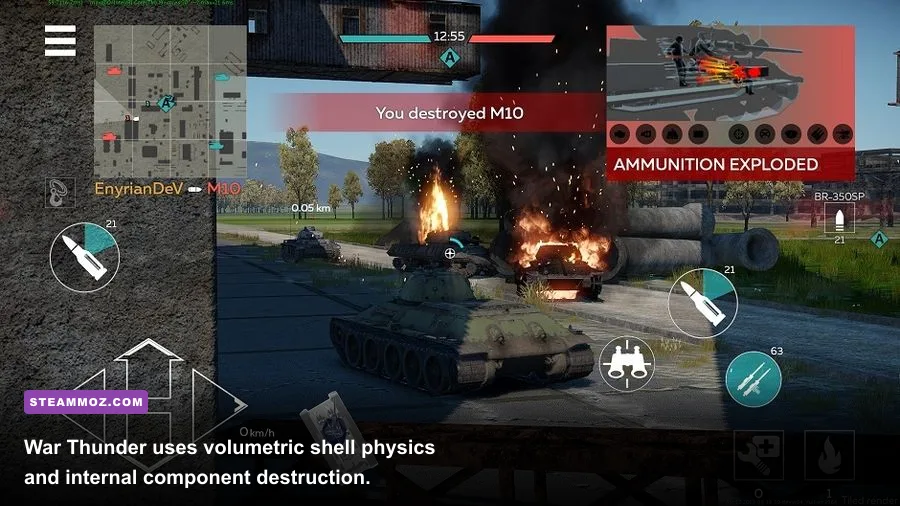
Meanwhile, Gaijin Entertainment's War Thunder dumps arcade health bars in the trash, replacing them with a grueling structural damage model. Operating across tanks, fighter jets, and naval vessels, combat relies on realistic ballistics, kinetic energy dissipation, and volumetric armor calculations. When you fire an APFSDS (Armor-Piercing Fin-Stabilized Discarding Sabot) dart from an M1A2 Abrams at an enemy T-80BVM, the game calculates the shell's velocity, strike angle, reactive armor detonation, and secondary spalling—the jagged metal fragments sheared off the inside of the tank's hull. If your shot snips an enemy tank's horizontal gun drive or knocks out their gunner, they cannot fire back. Flight mechanics are equally uncompromising: pull too many Gs in an F-16C during a supersonic turn and your pilot blacks out, causing your controls to lock until blood returns to their brain. If high-resolution simulation textures trigger performance bottlenecks, consulting PC specs and performance bottlenecks helps keep your framerates locked during dense battlefield smoke.
Mechanical Nuance and Combat Theory: Class Synergy Meets Elemental Flow
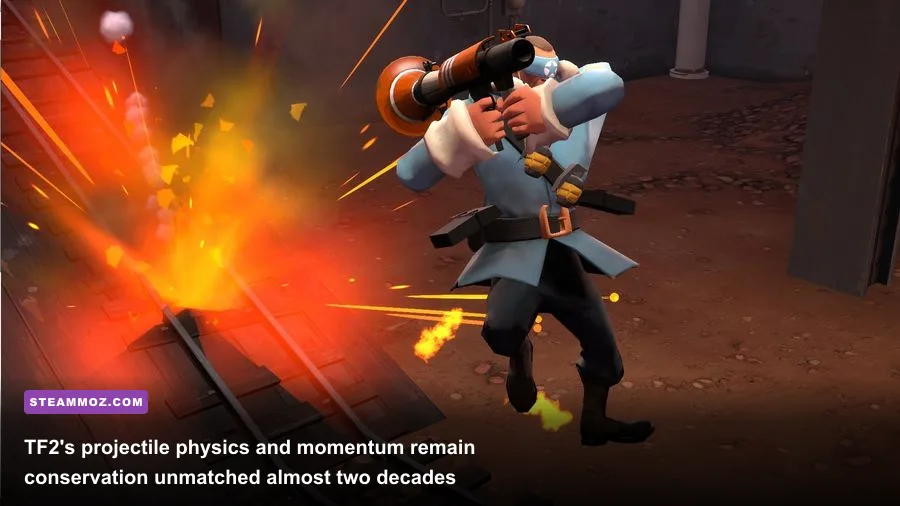
Few games capture timeless combat physics quite like Valve's Team Fortress 2. Even after nearly two decades, its movement engine remains gold standard game design. Playing Soldier is not about pointing at an enemy's feet; it is about executing explosive rocket jumps by firing behind your momentum vector while crouching and mid-air strafing with keyboard inputs—never touching the 'W' key—to accelerate through the skybox at blinding speeds. Demomen use stickybombs to launch themselves across massive maps like Badwater Basin, landing directly on enemy Snipers with a critical melee swing. The weapon design is iconic, balanced around hitscan falloff curves, damage spread toggles, and airburst projectile arcs. For weapon enthusiasts who appreciate deep mechanical balance, studying ranking weapons from S to C tier provides great perspective on how weapon roles define competitive gameplay.
If you prefer solo theorycrafting wrapped in an open world, HoYoverse's Genshin Impact hides a remarkably sophisticated combat engine behind its anime facade. Combat revolves around the Elemental Gauge Theory (EGT). Every attack applies a specific strength of elemental aura (measured in units: 1U, 2U, or 4U) onto a target, governed by an Internal Cooldown (ICD) that typically restricts reactions to every 3 hits or 2.5 seconds. By executing fast character swaps, you trigger transformative and amplifying reactions. Vaporize and Melt amplify raw damage numbers by 1.5x or 2.0x depending on the reaction trigger order, while Quicken, Aggravate, and Spread add flat base damage that scales directly with character level and Elemental Mastery. Canceling normal attack animations using dash-cancels or jump-cancels on characters like Hu Tao allows you to fit eleven charged attacks into a single nine-second skill window. For players who love extracting maximum value out of systems, checking out weapon choices worth your credits demonstrates how stat thresholds dictate combat power across top-tier games.
Hardware Optimization and Latency Tuning for Free-to-Play Masterpieces
To extract every drop of mechanical responsiveness out of these fast-paced games, your PC needs to be tuned for maximum frame pacing and minimal input latency. Competitive gameplay falls apart if high display latency delays your counter-strafes or frame stutter ruins your recoil control. Running these titles with improper graphical presets adds unnecessary system latency that puts you at an immediate disadvantage against players on high-refresh setups.
| Setting / Configuration | Optimal Competitive Value | Performance Impact | Gameplay & Latency Benefit |
|---|---|---|---|
| Display Mode | Exclusive Fullscreen | Zero FPS Loss | Bypasses Desktop Windows Manager (DWM) for lowest input lag. |
| NVIDIA Reflex / AMD Anti-Lag | On + Boost | Negligible (1-2% GPU load) | Dynamically clears GPU render queues to minimize system click-to-photon latency. |
| Shadow Quality / Ambient Occlusion | Low / Disabled | 15% to 25% FPS Boost | Eliminates visual clutter and drastically stabilizes 1% low frame rates. |
| Particle & Physics Effects | Medium | 5% to 8% FPS Cost | Maintains critical gameplay clarity (bullet tracers, smoke edges, shell trajectories). |
| Frame Rate Cap | Display Hz minus 3 (with G-Sync/FreeSync) | Zero FPS Loss | Prevents V-Sync latency spikes while guaranteeing tear-free frame delivery. |
When diving into massive updates or heavy physics titles like The Finals or War Thunder, unexpected engine hitches can ruin high-stakes matches. Keeping your drivers updated and troubleshooting crashing and frame drops ensures your hardware keeps up with the lightning-fast pacing of these competitive titles. You do not need an empty wallet to experience the absolute pinnacle of PC game design. Install any of these titles, jump into practice mode, and enjoy some of the tightest, most responsive combat mechanics the industry has ever engineered.