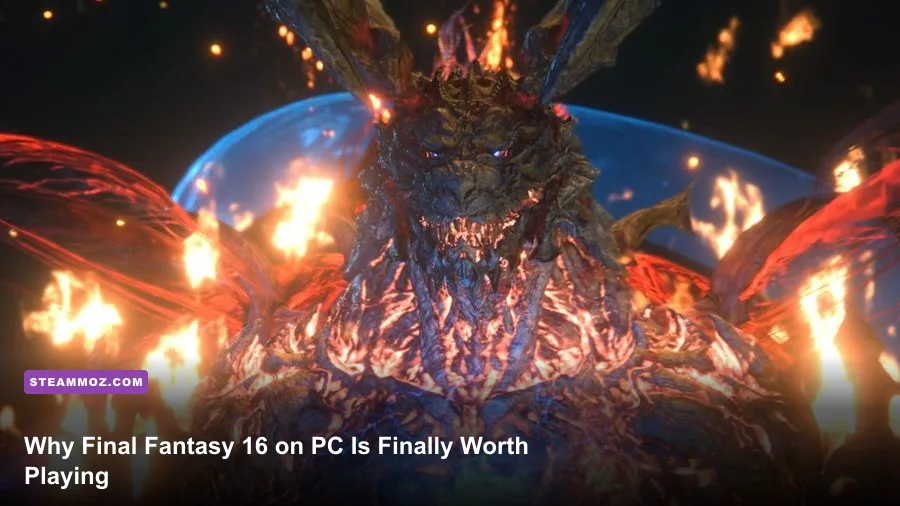
Yes, Final Fantasy 16 on PC is unequivocally worth playing today, provided you treat it as a blistering character-action spectacle rather than a traditional stat-heavy Japanese role-playing game. When Clive Rosfield first landed on Steam and the Epic Games Store, the port arrived burdened by uneven frame pacing, locked 30 FPS cutscenes, and severe VRAM allocation stutter on mid-range graphics cards. A steady cycle of official engine patches, combined with essential community fixes and the integration of both expansion DLCs, has radically transformed the experience. Valisthea is finally running the way it always deserved to on enthusiast hardware.
Performance and Port Health: From Stutter Fest to Silky Smooth
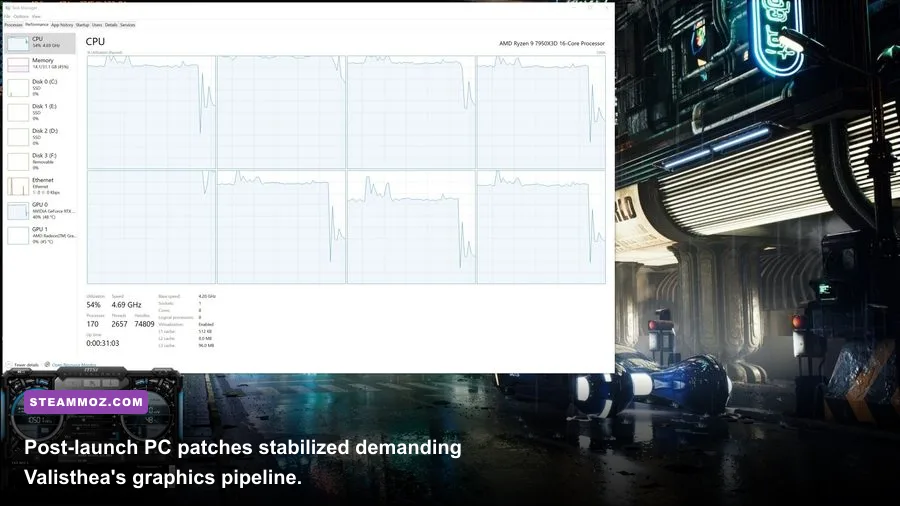
At launch, Square Enix struggled with aggressive hardware scaling. The PC version routinely bottlenecked multi-threaded CPUs, choked on shader compilation during large particle explosions, and jarringly locked dramatic cutscenes to 30 FPS even when the combat engine purred at over 100 FPS. If you tried running the game on anything less than an enthusiast rig, you ran into micro-stutters that ruined Clive's tight parry timings. It felt like wrestling with bad optimization similar to early technical hiccups outlined in our Everspace 2 crashing and FPS fix breakdown.
That frustrating chapter is effectively closed. Updates to the game's implementation of DLSS 3.7 and FSR 3.1, coupled with community mods like Lyall's indispensable FFXVI Fix from PCGamingWiki, completely unlock cutscene framerates, fix ultrawide 21:9 and 32:9 HUD stretching, and stabilize the render pipeline. Modern mid-range GPUs like the RTX 4070 or RX 7800 XT comfortably push past 80 FPS at 1440p using DLSS Quality with Frame Generation engaged. To prevent sudden frame pacing hitching during heavy Eikon fights, dial in your configuration to balance system memory allocation just as you would when using our Far Cry 6 optimization settings guide.
| Graphics Setting | Target Recommendation | Framerate Impact | Visual & Tactical Note |
|---|---|---|---|
| Dynamic Resolution Scaling (DRS) | Disabled | High (Causes hitching) | Turn off; causes aggressive internal resolution spikes during cinematic clashes. |
| Upscaling Method | DLSS / FSR (Quality Mode) | +28% to +35% FPS | Essential for stabilizing heavy volumetric smoke and particle density in Eikon duels. |
| Frame Generation | On (if Base FPS > 50) | +45% to +60% FPS | Smooths fast dodging animations; ensure baseline FPS remains high to dodge latency. |
| Shadow Quality | Medium / High | Moderate (~8% FPS) | Ultra shadows tank VRAM without noticeable edge clarity in dark hideaways. |
| Clutter Density | Medium | Low (~4% FPS) | Smooths out traversal through lush fields in the Grand Duchy of Rosaria. |
Much like dialing in hardware benchmarks on current PC releases—a process we frequently analyze in our Fatal Fury City of the Wolves PC spec analysis—tuning Final Fantasy 16 correctly ensures you spend your time reacting to enemy telegraphs instead of dropping frames during screen-filling boss transitions.
Combat Systems: Devil May Cry DNA in a High-Fantasy Shell
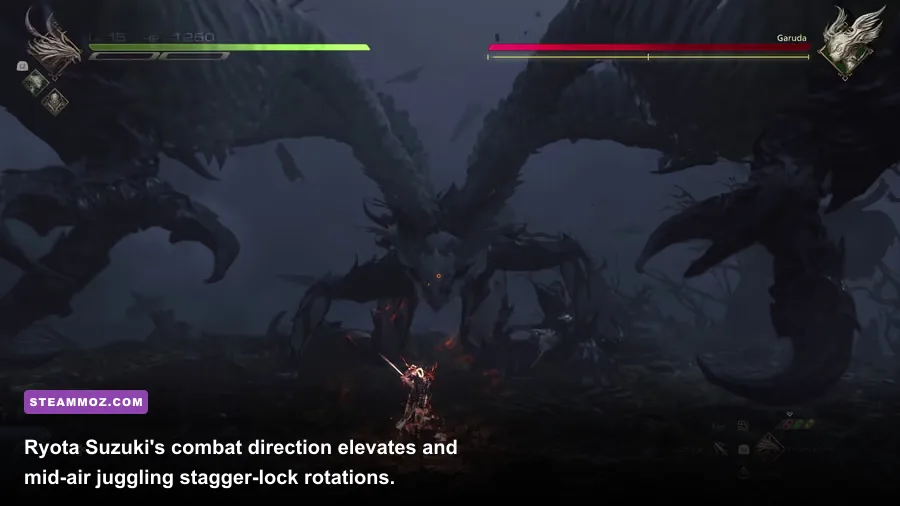
Under the combat direction of Ryota Suzuki (veteran designer on Devil May Cry 5 and Dragon's Dogma), Final Fantasy 16 abandons turn-based menus and tactical party orders in favor of pure, adrenaline-fueled action. If you enter the game expecting deep elemental weaknesses where Fire spells melt Ice wolves, you will be disappointed. Fireballs and Thunder bolts deal identical damage to generic foes. Instead, the tactical depth lives entirely in your mastery of cooldown sequencing, animation cancels, and stagger-gauge destruction.
Combat revolves around breaking an enemy's Will Gauge. Depleting that yellow bar to 50% forces a brief stagger window where Garuda's Deadly Embrace yanks elite enemies to the ground for free punishment. Knocking it down to zero triggers a full Stagger state, activating a damage multiplier that scales all the way to 150%. Clive's toolkit is built around maximizing this brief burst window. Stringing together an aerial launch with Wicked Wheel, freezing the stagger decay using Shiva's Diamond Dust, and unleashing a Level 5 Zantetsuken with Odin creates a mechanical rush that rivals the best character-action games on Steam.
| Eikonic Ability | Tier Rating | Stagger / Burst Value | Tactical Synergies & Combo Usage |
|---|---|---|---|
| Diamond Dust (Shiva) | S-Tier | Massive Will damage / 1.35x Multiplier | Instant area freeze; instantly erases roughly 30% of a boss's Will gauge. |
| Dancing Steel (Odin) | S-Tier | Low damage / Fills Zantetsuken Gauge | Pair with the accessory Pull of the Darkness to immediately hit Level 5 slash gauge. |
| Gigaflare (Bahamut) | A-Tier | Extreme raw damage / High hit count | Channel during 150% stagger damage multiplier windows to melt boss health bars. |
| Raging Fists (Titan) | A-Tier | High counter burst / Will shredder | Time it directly into enemy strikes to trigger a relentless flurry counterattack. |
| Wicked Wheel (Garuda) | B-Tier | Moderate Will damage / Air launcher | Excellent for aerial juggling mob packs and repositioning out of ground AoE attacks. |
Farming Ability Points (AP) to master and cross-assign these skills across any active Eikon becomes Clive's true endgame power curve. If you appreciate the grind required to master high-end ability loadouts, similar to the progression methods we break down in our Kakarot leveling and farming guide, Clive's build flexibility delivers deep mechanical satisfaction on higher difficulties.
Pacing and Quest Structure: The Highs are Colossal, the Lows are Tedious
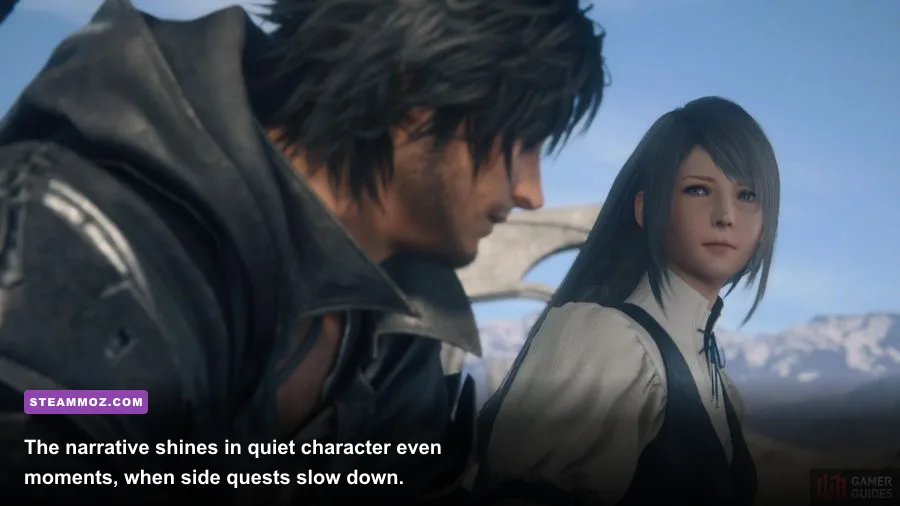
It is impossible to discuss Final Fantasy 16 without acknowledging its severe pacing schizophrenia. The high points are legendary. Clashes between Dominants—such as the orbital duel against Bahamut or the multi-phase descent against Titan Lost—boast visual spectacle and orchestral arrangements by Masayoshi Soken that match anything in digital entertainment. The narrative, centered on Clive's tragic brotherhood and the exploitation of Bearers, hits with emotional weight through the detailed lore entries maintained on the official Square Enix portal.
Between these earth-shattering peaks, however, the narrative screeches to a halt with MMO-style fetch quests. Clive is often forced to collect dirt samples, run mundane errands for carpenters in the Hideaway, or deliver garlic soup to NPCs before the next story sequence unlocks. If you are struggling with low framerates in these crowded, asset-heavy settlements, tweaking background shadow casting can resolve drops similar to our troubleshooting advice for Elex PC performance stability. The silver lining is that the late-game side quests completely pivot, paying off rich emotional arcs for Dion Lesage, Gav, and Mid. Push through the mid-game doldrums; the payoff in the final third is well worth the friction.
DLC Additions: Do Echoes of the Fallen and The Rising Tide Save the Endgame?
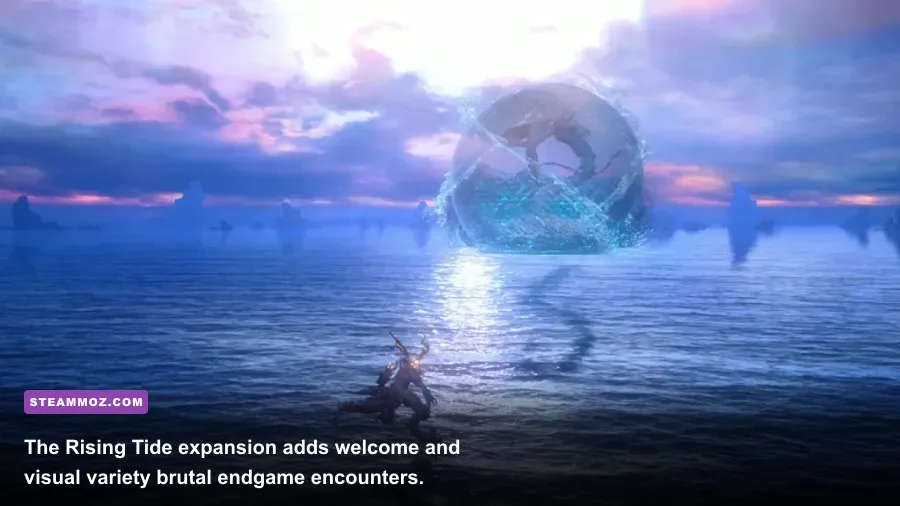
On PC, Final Fantasy 16 is best experienced through the Complete Edition, as both DLC expansions address the vanilla release's biggest design weaknesses: lack of combat challenge and restrictive exploration. Echoes of the Fallen is a compact, high-intensity dungeon crawl through a Fallen spire, concluding with a brutal brawl against Omega Weapon that forces you to respect parry windows and dodge mechanics in a way the base campaign rarely demanded.
The Rising Tide delivers what fans wanted from day one: the lush, bright, and vibrant region of Mysidia. Stepping away from the grim twilight of Valisthea's late-game skybox, Mysidia introduces Leviathan the Lost, granting Clive rapid-fire water-based ranged weapons and completely transforming his combo options. Furthermore, it adds the Kairos Gate—a 20-stage combat gauntlet that strips away Clive's over-leveled crutches and evaluates your execution through pure scoring metrics. For anyone who mastered Clive's moveset, Kairos Gate turns Final Fantasy 16 into a pure, replayable action arcade masterpiece.
The Final Verdict: Is Clive's Journey Worth Your Time?
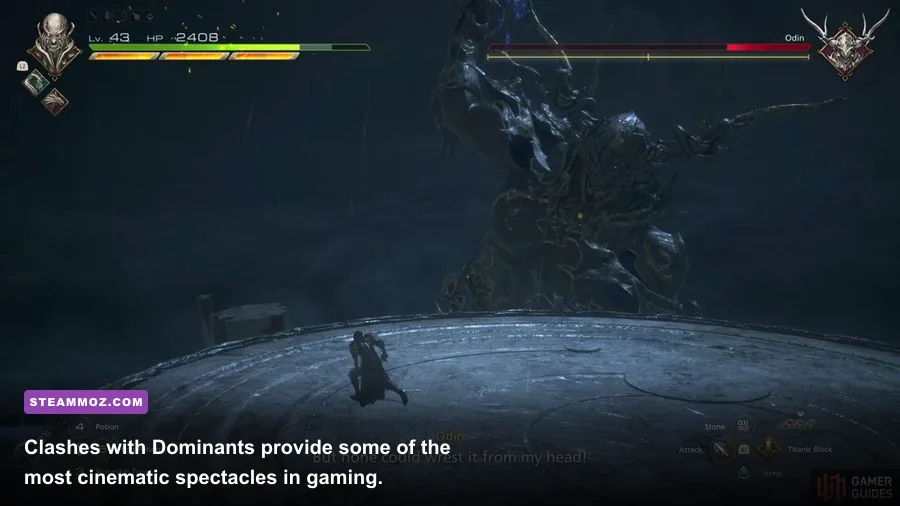
Looking at Final Fantasy 16 on PC with clear eyes, it remains a daring, polarizing departure for gaming's most storied RPG franchise. It strips away elemental affinity matching, party micromanagement, and complex armor builds. In their place, it constructs an adult dark-fantasy drama fueled by phenomenal vocal performances (particularly Ben Starr's Clive Rosfield) and an exhilarating, fast-paced combat system directed by an action-game virtuoso.
With performance stabilized, cutscenes uncapped, and the comprehensive DLC suite rounding out the endgame with true mechanical depth, Final Fantasy 16 on PC stands tall. If you want a deep numbers-crunching dungeon explorer, look elsewhere. But if you want to wield the wrath of gods in screen-melting duels with flawless mouse, keyboard, or DualSense control, Clive's journey is one of the most thrilling rides you can buy on Steam today.