Warzone on PC is still worth playing if you demand the fastest, mechanically fluid gunplay in the battle royale genre and have a squad to run with, but it's no longer the universally recommendable juggernaut it once was. Between an aggressive engagement-optimized matchmaking system, a punishing installation footprint that bullies smaller SSDs, and a relentless meta treadmill, Activision's flagship free-to-play shooter requires serious commitment just to stay competitive. If you're a casual solo player looking for relaxed drop-in action, you'll likely hit a wall of frustration; if you're a high-refresh-rate enthusiast chasing tight mechanical outplays, nothing else quite scratches the same itch.
The Modern State of Movement and Gunplay Mechanics
Warzone's combat loop has evolved through multiple engine overhauls, landing on a kinetic rhythm that rewards lightning-fast inputs and sharp spatial awareness. The implementation of refined movement suites—integrating fluid slide-canceling, omnidirectional sprinting, and snappy tactical stances—has elevated the mechanical ceiling significantly. Moving between cover isn't just about sprint management; it demands deliberate chaining of dive-to-prone maneuvers, mantle cancelations, and slide-hopping to break enemy camera tracking in close-quarters skirmishes.
Gunplay continues to be the game's crown jewel. Weapons feel remarkably punchy, underpinned by realistic acoustic modeling and distinct recoil profiles. The average time-to-kill (TTK) across standard Battle Royale hovers around 600 to 720 milliseconds in close quarters, widening out to roughly 900 to 1100 milliseconds at mid-to-long ranges depending on armor plates. This window gives skilled players just enough runway to react, reposition, and turn gunfights around using map geometry. However, tracking targets through intense muzzle flash, smoke, and visual kick remains a persistent challenge for mouse-and-keyboard purists. Rotational aim assist on controllers continues to exert massive dominance in close-range 50/50 brawls inside tight stairwells and buildings.
Whether you're running a stripped-down SMG built for strafe speed or a heavy battle rifle tuned for bullet velocity, weapon handling feels surgical. When compared to the deliberate, methodical weapon handling of tactical shooters—or the arcade-heavy pacing found in older legacy titles where weapon tiers dictated straight damage output—Warzone strikes an aggressive middle ground where raw positioning and trigger discipline make or break every single encounter.
🎮 CRISIS CORE –FINAL FANTASY VII– REUNION: Deluxe Edition
Looking to experience this game? Grab your digital key directly on our store for $69.99.
View on Steammoz Store →Performance, Engine Bloat, and the Call of Duty HQ Nightmare
From an engineering standpoint, running Warzone on PC is an exercise in resource management. The Call of Duty HQ launcher wrapper remains universally divisive. Launching the game frequently triggers secondary restarts for updates, shader pre-caching routines, and profile synchronization checks before you even reach the main menu. On disk, an installation containing Warzone alongside shared base assets can easily swallow 130GB to 180GB of storage space, especially if you enable high-resolution asset streaming to cache detailed textures on the fly.
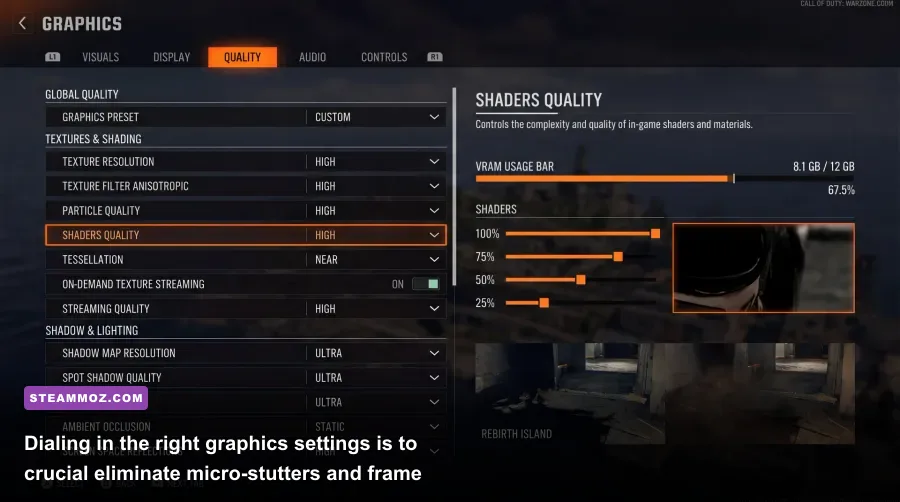
Once you actually load into dense urban maps like Urzikstan or high-density zones on Rebirth Island, the engine places tremendous demand on both your CPU and system memory. Frame pacing can become erratic during initial deployment drops from the plane, manifesting as brief micro-stutters while assets stream into VRAM. To help steady your frametimes and optimize system throughput, the following baseline configuration balances visual clarity with competitive framerates:
| Graphics Setting | Competitive Recommendation | Performance Impact | Visual Impact & Tactical Context |
|---|---|---|---|
| Render Resolution | 100% Native (or DLSS/FSR Quality) | High | Critical for spotting distant snipers clearly; avoid sub-native scaling. |
| Texture Resolution | Normal / Low | Moderate (VRAM bound) | Keeps frame times flat without saturating lower-tier graphics memory. |
| Particle Quality Level | Very Low | High during firefights | Removes major frame drops caused by clustered thermite and cluster strikes. |
| Screen Space Reflections | Off | Moderate | Eliminates unnecessary screen clutter and surface shimmer on wet asphalt. |
| Spot Shadow Quality | Low | Moderate | Maintains essential player shadows indoors while saving crucial render time. |
| NVIDIA Reflex Low Latency | On + Boost | Low | Significantly reduces system latency when your GPU runs near full utilization. |
Just like dialing down heavy lighting passes to maximize frame rates in open-world shooters, configuring Warzone correctly is non-negotiable. If your rig suffers from thermal throttling or memory saturation, you'll encounter crash codes like Error 0xC0000005. Similar to troubleshooting steps applied when resolving memory leaks and stabilizing framerates, capping your lobby FPS and setting an appropriate VRAM allocation scale (typically 70% to 80%) drastically curbs DirectX unrecoverable crashes.
The Anti-Cheat Saga: RICOCHET vs. Competitive Integrity

Competitive integrity remains the defining pivot point of Warzone's longevity on PC. Activision's proprietary kernel-level anti-cheat, RICOCHET, operates alongside server-side heuristics and machine learning algorithms designed to detect anomalous behavior in real time. Features like damage shielding, weapon removal, and phantom decoys systematically disable bad actors mid-match. Yet, because the game operates under a free-to-play economic model, banned offenders frequently cycle back into low-level lobbies through fresh accounts and spoofed hardware IDs.
The severity of cheating varies dramatically depending on your playlist. In standard unranked Resurgence, encounters with blatant wallhacks or automated aimbots are relatively sporadic. However, in higher-tier Ranked Play lobbies (Diamond through Top 250), the presence of soft-aim scripts, DMA hardware interception, and radar exploits becomes considerably more noticeable. You can review Activision's enforcement policies directly via the Activision Support Knowledgebase, but community sentiment remains vigilant.
Compounding this friction is the infamous "shadowban loop." Legitimate, highly skilled mouse-and-keyboard players who rack up double-digit kills often find themselves mass-reported by frustrated opponents. This triggers an automated account review, dumping innocent accounts into quarantined matchmaking queues for days at a time. It creates a weird paradox where playing too well can temporarily ruin your matchmaking experience.
Balancing the Meta: The Treadmill of Buffs and Nerfs
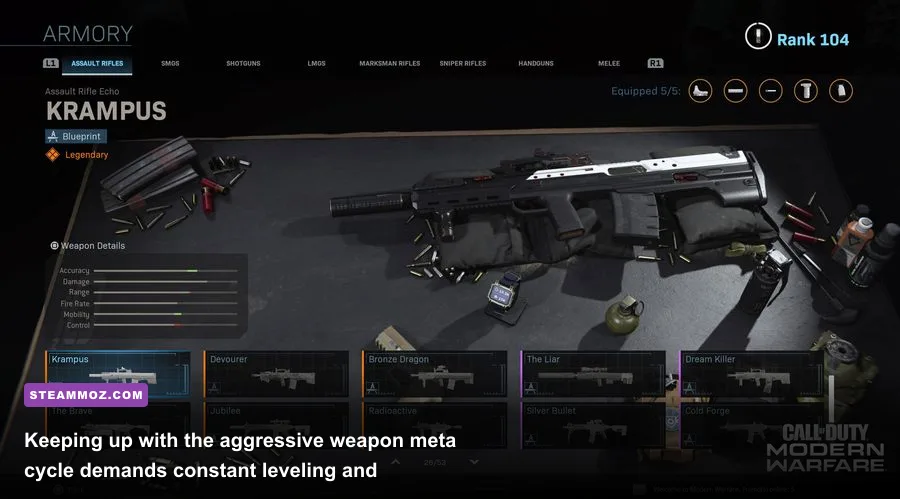
Warzone does not allow you to master a single loadout and sit comfortably for six months. The seasonal roadmap guarantees cyclical rebalancing designed to shift weapon usage across assault rifles, submachine guns, and sniper platforms. New battle pass weapons routinely arrive with overtuned base stats—boasting exceptional bullet velocity, negligible damage falloff, or tight hip-fire spreads—before inevitably receiving targeted damage nerfs in mid-season reload patches.
| Playstyle Archetype | Optimal Class Setup | Ideal Engagement Range | Execution Skill Ceiling |
|---|---|---|---|
| Hyper-Aggressive Entry | High-Mobility SMG + Dual Wield / Shotgun | 0 – 15 meters | Very High (demands continuous slide-canceling and camera snaps) |
| Mid-Range Flex Anchor | Low-Recoil Assault Rifle + High-Capacity Mag | 20 – 60 meters | Moderate (focuses on recoil control and team-firing angles) |
| Long-Range Recon | Heavy Sniper (One-Shot Headshot build with High Grain) | 70+ meters | High (requires exact bullet lead and velocity compensation) |
| Support & Area Denial | Belt-Fed LMG with Bipod + Smoke Launcher | 35 – 80 meters | Low to Moderate (anchors rotations and suppresses choke points) |
The Gunsmith system is deeply granular, offering dozens of muzzle devices, barrels, underbarrel grips, and rear handles. While this allows pinpoint customization, it also forces players into an ongoing leveling grind. Skipping attachments often leaves you at an objective statistical disadvantage against squads rocking optimized recoil stabilization and bullet velocity builds. For players seeking detailed patch notes, the Call of Duty Official Portal provides granular statistical updates during major seasonal drops.
If you enjoy tinkering with attachment synergy and adapting to fresh metas every four to six weeks, this system keeps the game lively. But if you hate feeling obligated to level up a newly added assault rifle in multiplayer just to compete on Urzikstan, the grind can feel like an unpaid job.
The Resurgence Phenomenon vs. Traditional Battle Royale
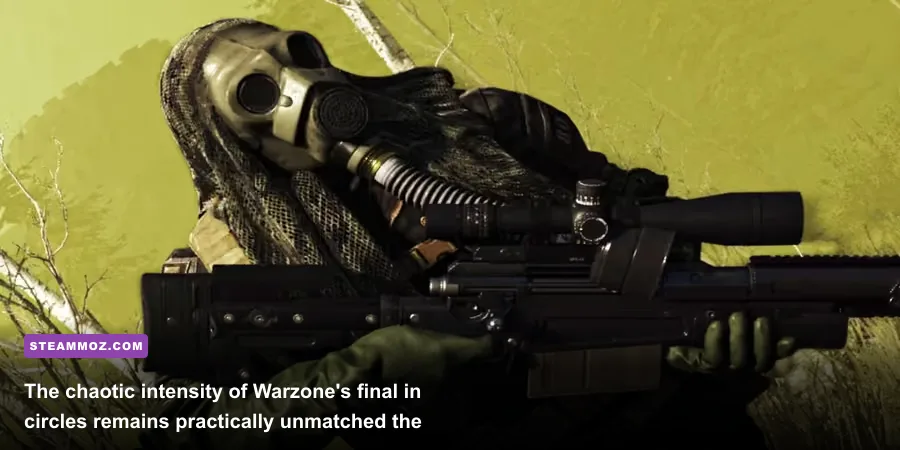
The cultural center of gravity in Warzone has decisively shifted from massive 150-player battle royale marathons toward fast-paced Resurgence modes on compact maps like Rebirth Island, Fortune's Keep, and Area 99. The Resurgence ruleset—where eliminated players respawn automatically as long as at least one teammate stays alive until the countdown timer expires—fundamentally fixes the battle royale genre's biggest flaw: boredom. You spend far less time spectating from the gulag and vastly more time engaging in back-to-back gunfights.
Traditional big-map Battle Royale on Urzikstan offers sprawling tactical rotations, contract completions, and high-stakes endgames. Yet, it frequently suffers from mid-game pacing slumps where squads camp power positions or hoard cash at Buy Stations without making bold moves. Resurgence eliminates that lull entirely. Match lengths stay locked at a brisk 12 to 15 minutes, making it remarkably easy to queue for "just one more game." For PC gamers playing through either the Call of Duty on Steam release or the native Battle.net Client, the Resurgence playlist provides the most consistent, action-dense experience available.
If your system runs into stuttering during chaotic multi-team gas rotations, checking background app interference is just as vital as resolving performance hits when dealing with severe PC game frame pacing bugs. Clear out background resource hogs, ensure hardware-accelerated GPU scheduling is enabled in Windows, and keep your shader pipeline clean to maintain flat 1% low frame times when four squads drop mortars in the same circle.
The Final Verdict: Who Should Still Drop In?
Warzone on PC remains the absolute gold standard for pure, adrenaline-pumping arcade gunplay inside a battle royale format. Nothing else on the market delivers the exact same cocktail of fluid movement, deafening auditory chaos, and clutch team wipes. If you have a solid squad of friends who communicate well, a high-refresh gaming monitor, and modern PC hardware capable of maintaining triple-digit framerates, it still offers hundreds of hours of intense entertainment that rivals any paid multiplayer game.
Conversely, if you're a strictly solo gamer with limited hard drive space, an aging graphics card, or a low tolerance for aggressive skill-based matchmaking, Warzone will feel exhausting. It is an unapologetically demanding live-service environment that expects continuous practice, regular loadout maintenance, and steady patience with its technical bloat. Approach it with eyes open, calibrate your settings properly, and drop in with a squad—that's where Warzone still genuinely shines.