
The single best skills to unlock first in The Witcher 3: Wild Hunt are Delusion from the General tree for its massive dialogue utility and XP boosts, Active Shield (Quen) for reliable self-healing and damage mitigation, and Muscle Memory for a foundational boost to your fast attack damage. Prioritizing these specific abilities during your time in White Orchard and early Velen will prevent you from wasting precious Ability Points on weak nodes, ensuring that Geralt remains a lethal force on Death March difficulty. For more insights on how character power scales, check out this comprehensive The Witcher 3 character tier list, or explore general progression mechanics over at the official Witcher Wiki.
Understanding the Ability Point Economy
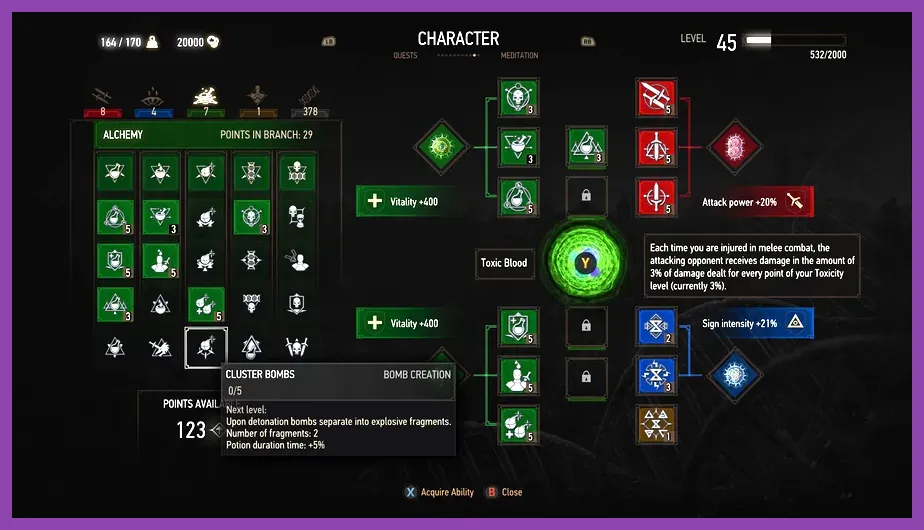
Early game leveling in The Witcher 3 can feel agonizingly slow if you do not know where to look for experience. Completing main quests grants substantial chunks of XP, but finding Places of Power scattered across White Orchard, Velen, and Skellige provides free, permanent Ability Points. There are six Places of Power in White Orchard alone, granting you six extra points before you even step foot in Vizima.
When you open your Character menu, you will notice four distinct categories: Combat, Signs, Alchemy, and General. However, simply unlocking a skill is not enough; you must manually slot it into one of your twelve active mutation slots and place a Mutagen of the corresponding color next to it to amplify its effects. During the first ten to fifteen levels, your main objective is to maximize passive damage, survivability, and utility rather than spreading your points thin across multiple specialized trees. If you enjoy optimizing your characters for maximum efficiency, you might also appreciate this guide on hunting down top-tier loot and gear.
Essential General Skills for Early Game Utility
Many players overlook the General skill tree because its perks do not feature flashy combat animations, but skipping them in the early game is a massive mistake. The absolute priority here is Delusion (Tier 1, costing 2 Ability Points to fully upgrade to level 3).
- Delusion (Level 3): Upgrades your Axii sign. It allows you to use Axii during conversations to force NPCs to back down, bypass tense situations, and crucially, awards you between 20 to 40 XP per successful dialogue check. Over the course of the game, this adds up to thousands of free experience points. Furthermore, in combat, a fully upgraded Delusion stuns enemies instantly, giving you breathing room.
- Survival Instinct: Grants +500 Vitality when equipped. While this loses its value in the late game when your gear provides massive health pools, an extra 500 health points in White Orchard and Velen is a massive safety net on higher difficulties.
Once you transition into the mid-game, you can swap these general skills out for combat-specific mutations, but during those brutal opening hours, Delusion is mandatory. For players exploring other massive open-world titles, take a look at these recommendations for stunning open-world games that run smoothly on modest hardware.
Combat Tree: Fast Attacks and Stamina Regeneration
Geralt relies heavily on his steel and silver swords, making the Combat skill tree your primary source of offensive output. While heavy attacks (Strong Attacks) deal incredible burst damage, fast attacks (Fast Attacks) are vastly superior for early-game survival due to their mobility, short recovery frames, and ability to stagger weaker human and monster foes.
Here is the ideal early-game Combat allocation path:
- Muscle Memory (Level 3): Increases fast attack damage by 25%. This is cheap, highly efficient, and scales with every sword upgrade you pick up.
- Strength Training (Level 3): If you prefer heavy strikes, this increases strong attack damage by 25%. However, stick to one weapon style early on to maximize your limited slots.
- Precise Blows (Level 3): Boosts critical hit chance by 10% and critical hit damage by 75%. This drastically accelerates your damage output against standard bandits and drowners.
- Resolve (Level 3): Reduces the amount of Adrenaline Points lost when you take damage. Adrenaline is crucial for dealing extra damage and casting signs when your stamina is depleted.
Investing in these four skills transforms Geralt from a fragile Witcher into a whirlwind of steel. If you are a fan of complex tactical setups and party synergies, you can also check out this breakdown of advanced tactical synergies in modern fighting games for a change of pace.
Signs Tree: Mastering Quen and Igni

Signs are magical utilities that can completely alter the flow of combat. While all five signs have niche uses, the two you need to unlock and max out immediately are Quen and Igni.
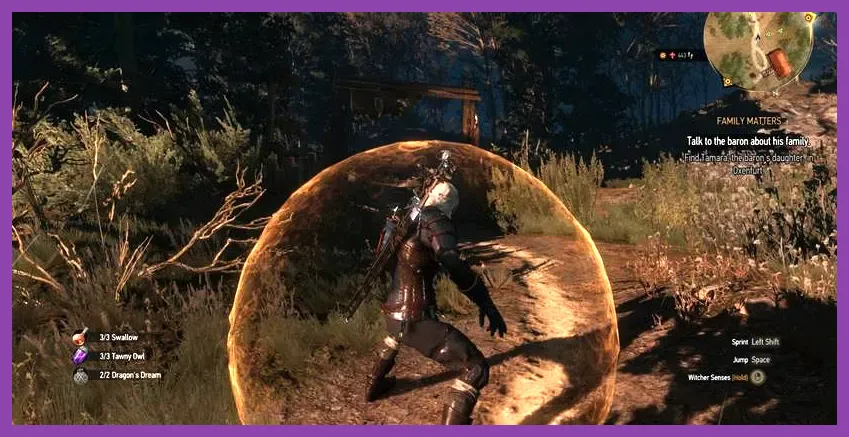
Quen is your ultimate defense. On Death March difficulty, enemies can kill Geralt in two or three hits. Quen absorbs an entire attack completely, shielding you from harm. You must rush to unlock Active Shield (the alternate mode for Quen). Unlike the standard static bubble, holding down the cast button creates a glowing shield around Geralt. While active, any damage that hits the shield directly heals Geralt's health bar. This single-handedly eliminates the need to constantly chug Swallow potions or consume food during grueling boss fights.
Meanwhile, Igni is your premier crowd-control and damage-over-time tool. Investing in Firestream (Igni's alternate mode) unleashes a continuous flamethrower stream that melts enemy armor ratings and reliably inflicts the burning status effect on large groups of nekkers, wolves, and human soldiers. For more deep dives into character progression frameworks, consult the official CD Projekt Red developer portal.
Alchemy Tree: The Power of Oils and Potions

Many players ignore Alchemy during their first playthrough because they view it as too complicated or tedious. This is a massive mistake. Alchemy is objectively the most overpowered skill tree in The Witcher 3, especially once you hit the mid-to-late game.
While you do not need to invest heavily in alchemy during your first five levels, you should grab Heightened Tolerance and Acquired Tolerance as soon as you transition into Velen:
- Acquired Tolerance: Increases your maximum Toxicity threshold by +1 for every formula you know (alchemy recipes, oils, and decoctions). Once you collect a large library of recipes, this allows you to drink three or four powerful potions simultaneously without suffering from lethal toxicity poisoning.
- Heightened Tolerance: Prevents toxicity from inflicting damage to Geralt's health until your toxicity surpasses 90% of your maximum threshold.
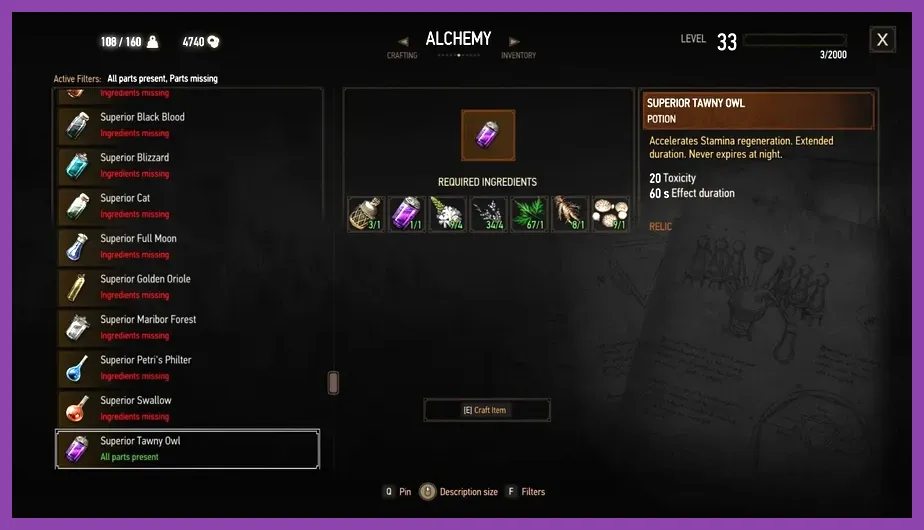
Pairing these two skills with superior oils like Hanged Man's Venom or Beast Oil provides a permanent 50% damage multiplier against specific enemy types. For players who love managing inventories and optimizing crafting systems, you might enjoy exploring this deep-dive resource on advanced crafting materials.
Putting It All Together: Your Early Game Build Blueprint
To summarize the optimal leveling roadmap for your first 10 levels in The Witcher 3, follow this exact sequence:
- Clear all 6 Places of Power in White Orchard to grab immediate Ability Points.
- Max out Delusion (Level 3) in the General tree for dialogue XP and instant stun utility.
- Max out Muscle Memory (Level 3) in the Combat tree to secure baseline fast attack damage.
- Put 3 points into Active Shield (Quen) in the Signs tree to ensure infinite healing and foolproof defense.
- Begin collecting alchemy formulas across Velen and allocate points into Acquired Tolerance to prepare for mid-game potion stacking.
By following this rigorous, data-driven approach, you will breeze through the early encounters with the Royal Griffin, the Botchling, and the Wild Hunt hounds, setting yourself up for an unstoppable playthrough on any difficulty setting. Check out our archive for more guides, such as tips for customizing your mobile gameplay experience or finding essential early-game survival tools in other major survival RPGs.