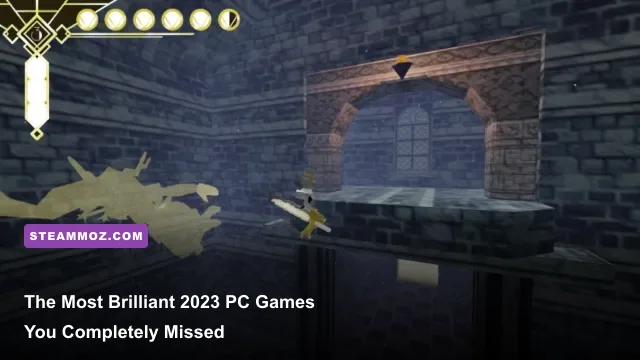
If you spent 2023 glued exclusively to Baldur’s Gate 3, Alan Wake 2, and Resident Evil 4, you aren't alone—it was one of the densest, most relentless release calendars in gaming history. But that AAA stampede trampled dozens of genuine masterworks. While the gaming press chased marketing juggernauts, smaller studios were quietly reinventing 3D platforming momentum, delivering the spiritual successor to FromSoftware’s esoteric pre-Souls catalog, and programming entire living cities with procedurally generated crime scenes. If you are hungry for fresh mechanics and unforgettable atmospheres that bypassed mainstream hype, these are the absolute best hidden gem PC games from 2023 that demand your immediate attention.
Pseudoregalia: The N64-Era Movement Masterpiece
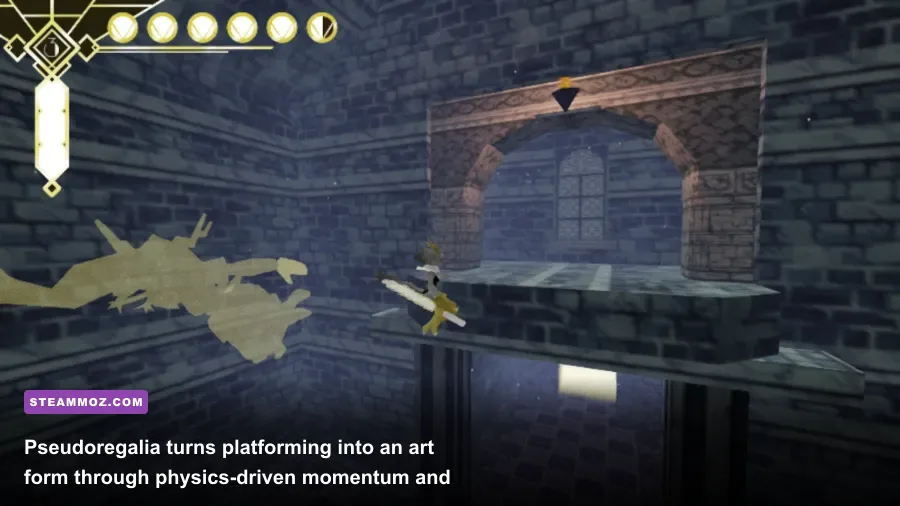
Released out of a game jam by solo developer rCritters, Pseudoregalia delivers the single greatest 3D platforming movement kit since Super Mario 64. You play as Sybil, an anthropomorphic goat-knight trapped in the surreal, decaying realm of Castle Sansa. Visually, it wears its fifth-generation console influences with pride: chunky 240p-style low-poly models, CRT-friendly color palettes, and sparse UI. But do not mistake this for cheap nostalgia bait. Beneath its retro skin lies an impossibly fluid, momentum-based physics engine that completely redefines environmental traversal.
Unlike standard platformers where jump arcs are static and restrictive, Sybil's kit thrives on speed preservation and kinetic sequencing. You unlock abilities like the Solar Wind (a slide that converts ground velocity into horizontal leaps), the Sunsetter (a downward ground bounce that cancels fall stun and propels you skyward), and the Ascendant Light high-jump. Chaining these skills turns Castle Sansa into an open-ended playground. You can slide-kick down a spiral staircase, launch into a wall-run, backflip off a brick pillar, cancel into an air-dash, and grab an out-of-reach parapet minutes before you possess the "intended" progression upgrades.
The combat remains secondary—a simple dream-sword sweep used mostly to reset your aerial dashes or smash sigils—but the level routing is world-class. Hunting down collectibles in Castle Sansa rewards raw spatial problem-solving rather than mindless map-marker ticking, much like scouring the cosmos in our Everspace 2 secret locations and hidden rewards guide. For less than the price of a takeout sandwich, Pseudoregalia delivers five hours of pure, unadulterated mechanical bliss that runs locked at blistering frame rates on virtually any rig.
Lunacid: A Dreamlike Dark Fantasy Dungeon Crawler
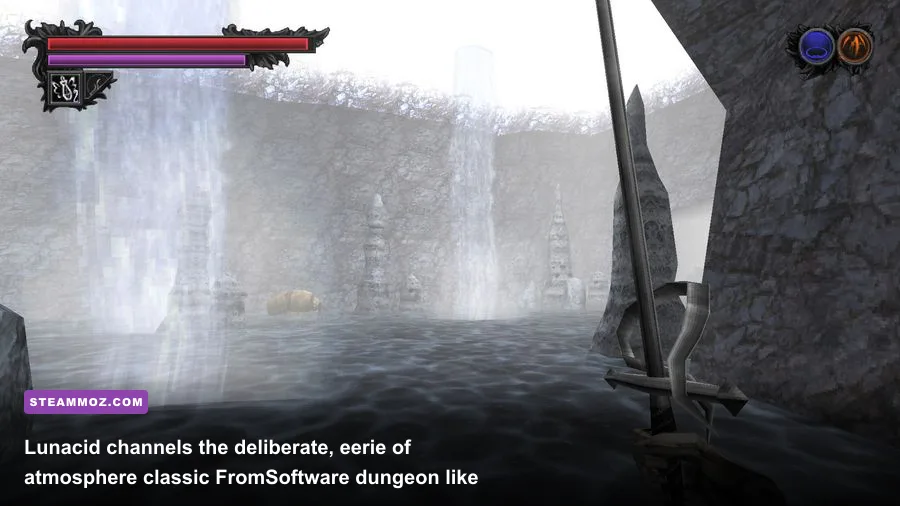
Long before Elden Ring or even Demon’s Souls, FromSoftware made their name with King’s Field and Shadow Tower: cryptic, slow-paced, first-person dungeon crawls drenched in quiet dread. Indie developer Kira single-handedly resurrected that lost design philosophy with Lunacid, which quietly left Early Access in late 2023 as one of the most hypnotic RPGs of the decade.
Cast into the subterranean Great Well beneath a toxic, accursed moon, you start by choosing a class—ranging from standard Thieves and Clerics to cursed Skeletons and fractured Vampires—before descending into an interconnected underworld. What makes Lunacid exceptional is its commitment to deliberate, tactical combat and atmospheric immersion. Every swing of your weapon—whether it's the swift Silver Rapier or the devastating, stamina-draining Jotunn Slayer—requires deliberate spacing, hitbox tracking, and timing. There are no frantic dodge-rolls here; survival hinges on positioning, elemental affinities, and managing your mana reserves.
The progression loop is deeply satisfying. Stat point allocation across Strength, Dexterity, Intelligence, Wisdom, Endurance, Resistance, and Speed directly shapes your build archetype. High-Intelligence mages can rain death with multi-projectile spells like Flame Column and Rock Strike, while agility-focused melee builds leap over enemy sweeps to slice unarmored backs. Just like tweaking complex rendering pipelines in our Filament Marmalade Edition settings guide, mastering Lunacid demands understanding its hidden damage calculations and elemental weaknesses. Backed by a haunting ambient synth soundtrack, it captures an eerie, melancholic beauty that modern big-budget titles simply refuse to pursue.
Sanabi: High-Velocity Grappling Hook Cyberpunk Thrills

If you thought Katana Zero was the pinnacle of 2D kinetic action, Sanabi will blow your expectations wide open. Developed by Korean indie team Wonder Potion, this lightning-fast side-scrolling platformer straps a mechanical chain-hook to a vengeful retired soldier's arm and throws him into the neon-soaked megacity of MAGO, whose entire population vanished in an instant.
The control mechanics are stripped of fluff and polished to perfection. You use the mouse to aim your prosthetic hook and left-click to embed it into ceilings, walls, or incoming drones. Reeling in grants massive forward momentum, allowing you to vault over death fields, slingshot around ninety-degree corners, and perform devastating aerial slam attacks on robotic security forces. The physics system feels punchy and elastic: every hook latch transfers your character's kinetic energy into pendulum swings, letting skilled players clear entire screen-filling industrial hazards without touching the floor once.
What elevates Sanabi from a great speedrunning platformer to an unforgettable masterpiece is its narrative depth. Accompanied by a brilliantly written child-hacker companion named Mari, your protagonist’s hunt for the mysterious entity known as "SANABI" unravels into an emotionally staggering critique of corporate dominance, family loss, and trauma. Between heart-pounding boss battles against screen-dwarfing mechanical monstrosities and breakneck escape sequences, Sanabi delivers a narrative payoff that will leave you staring at the end credits in stunned silence.
The Pale Beyond: Grueling Antarctic Survival Management
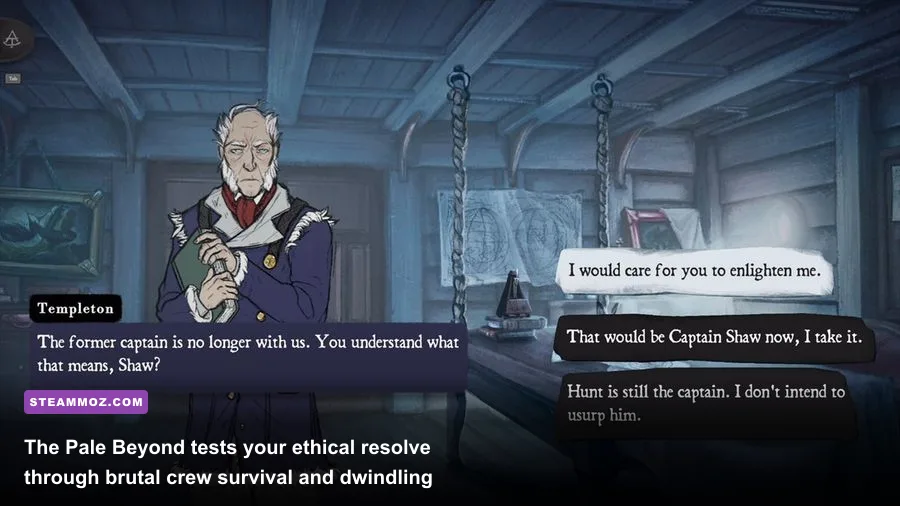
Survival games often rely on monotonous crafting trees and base-building chores, but Bellular Studios' The Pale Beyond takes a far more psychological approach. Stranding you in an unforgiving, icebound wasteland inspired by the real-life 1914 Endurance expedition, this game merges tense resource management with branching visual-novel drama where every decision carves scars into your crew.
When the captain of the naval exploration vessel The Temperance vanishes into the polar pack ice, you are abruptly voted into command. Your mandate is nightmarish: keep your crew of 24 sailors, scientists, scouts, and sled dogs alive while the ship slowly freezes to death under sub-zero pressure. Progression unfolds in a week-by-week turn structure. Every turn requires rationing scarce coal reserves to run the furnace, dispatching hunting parties across shifting ice sheets, treating frostbite in the infirmary, and mediating vicious crew disputes.
The tension never lets up. Do you burn through your dwindling wood supplies to reinforce the hull against an impending blizzard, or do you save it to mend broken dog sleds that bring back vital penguin meat? Let crew morale crater, and you face violent mutiny; let coal run dry, and men freeze in their bunks. Much like balancing colony efficiency and resource lines in our Empires of the Undergrowth leveling and farming guide, survival here hinges on calculating trade-offs and accepting that you cannot save everyone. It is a bleak, exquisitely written examination of leadership under extreme crisis.
Shadows of Doubt: The Ultimate Procedural Detective Sim
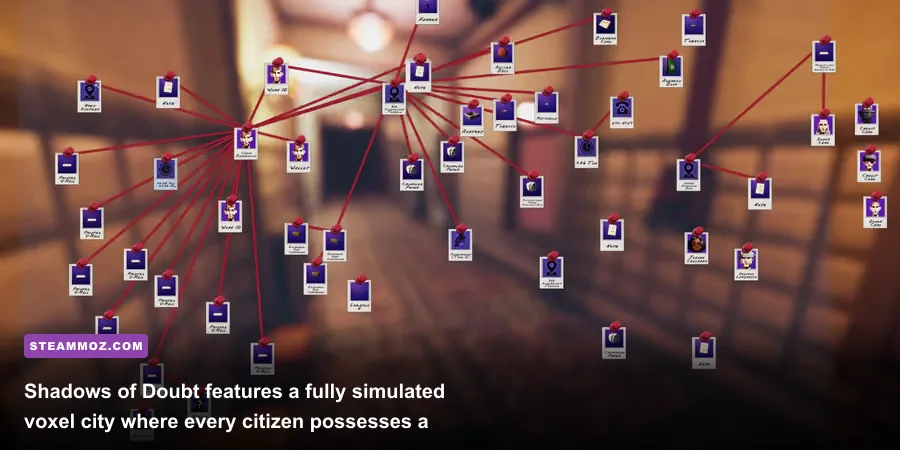
Immersive sims are notoriously expensive and difficult to build, which makes Shadows of Doubt by ColePowered Games one of the most ambitious engineering feats of 2023. Set inside a gritty, voxel-rendered 1980s sci-fi noir city, this game does not give you scripted detective quests—it simulates an entire living population and tells you to solve murders using real investigative legwork.
Every resident in your procedural city has an actual apartment address, an employment schedule, a specific shoe size, a blood type, personal bank accounts, phone records, and social circles. When a serial killer strikes, there is no glowing yellow waypoint leading to the culprit. You must physically jog to the crime scene, bribe or lockpick your way past the police tape, dust doorknobs and murder weapons for latent fingerprints, read the victim’s emails, and pull CCTV security footage from basement power terminals.
Your ultimate workspace is the interactive corkboard: an in-game investigation map where you pin surveillance photos, receipt stubs, address book pages, and murder weapons, connecting the dots with literal red string. While the game’s ambitious scope can introduce occasional pathfinding quirks—a familiar reality for fans of sprawling euro-jank RPGs covered in our Elex PC fixes and stability guide—the sheer freedom of breaking into a suspect's fourth-story apartment through the ventilation shafts to match their shoe treads to a bloody muddy print left at a crime scene is unmatched anywhere else in modern PC gaming.
2023 Sleeper Hit Performance, Specs, and Value Comparison
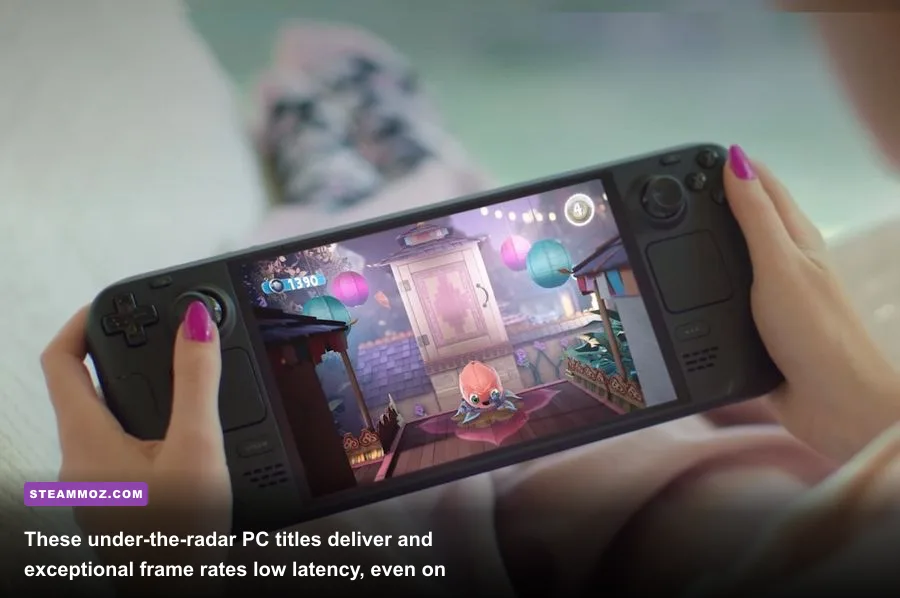
One of the biggest advantages of 2023's hidden indie lineup is how light they are on system resources. While AAA blockbusters demanded 16GB of VRAM and suffered from stutter-heavy shader compilation, these indie gems fly on budget hardware, older gaming laptops, and the Steam Deck. Whether you are running a modern RTX 40-series card or squeezing life out of a GTX 1060, here is how these titles stack up across performance, play time, and mechanical style.
| Game Title | Genre & Traversal Style | Avg. Clear Time | Steam Deck Target | Standout Gameplay Mechanic |
|---|---|---|---|---|
| Pseudoregalia | 3D Metroidvania Platformer | 4 – 6 Hours | Native 60 FPS (Ultra) | Momentum-preserving slide-hops and wall-kicks |
| Lunacid | First-Person Dungeon Crawler RPG | 15 – 20 Hours | Native 60 FPS (Ultra) | Deliberate weapon spacing and occult spell builds |
| Sanabi | 2D Precision Action-Platformer | 8 – 11 Hours | Native 60 FPS (Ultra) | Kinetic wire-grapple swings and directional reels |
| The Pale Beyond | Polar Survival / Narrative Sim | 10 – 14 Hours | Native 60 FPS (Max) | Weekly heat, food, and human morale balance |
| Shadows of Doubt | Procedural Immersive Sim / Noir | 20 – 40+ Hours | Tuned 40 FPS (Medium) | Full-city citizen scheduling and fingerprint tracking |
To ensure flawless frame pacing on lower-spec hardware or portable handhelds, use the recommended graphic profiles outlined below. While most of these games use clean, low-draw-call pipelines, titles like Shadows of Doubt lean heavily on dynamic voxel lighting and CPU-based citizen pathfinding routines that require specific visual tweaks.
| Game | Engine Architecture | Most Demanding Setting | Recommended Profile | Performance Impact |
|---|---|---|---|---|
| Pseudoregalia | Unreal Engine 5 (Retro Stylized) | Post-Processing / Bloom | Max Settings / Uncapped FPS | Negligible (<3% FPS shift) |
| Lunacid | Unity (Custom Retro Shaders) | Volumetric Fog Resolution | Max / Default Retro Filter | Extremely Light (<5% shift) |
| Sanabi | Unity (High-Res 2D Sprites) | Screen Shake & Particle Density | V-Sync Enabled / Native 1080p+ | Virtually zero frame drops |
| The Pale Beyond | Unity (Illustrated 2D/3D Hybrid) | Dynamic Blizzard Particles | Default High Preset | Negligible (<2% shift) |
| Shadows of Doubt | Unity (Voxel Lighting & Pathing) | Volumetric Light / City Size | Medium Voxel Lights / Medium City | Saves 15–25 FPS on budget CPUs |
If you encounter unexpected frame drops or micro-stutters during heavy computational loads in procedural titles, keeping your frame delivery rock-solid mirrors the tips outlined in our Everspace 2 frame rate and crash prevention guide. Locking your refresh rate to match your display baseline will eliminate jitter entirely.
Why These Games Belong in Your Backlog Right Now
The mainstream video game industry is trapped in a risk-averse loop of nine-figure budgets, cinematic bloat, and endless remakes. The five games highlighted here represent the opposite end of the spectrum: fearless design, laser-focused mechanics, and creative risks that big-budget publishers wouldn't dare touch. Whether you are executing frame-perfect wall bounces across the forgotten corridors of Castle Sansa, surviving freezing sub-zero nights trapped in polar ice pack, or piecing together blood splatters in a raindrenched voxel apartment, these 2023 sleepers offer some of the most rewarding hours of gameplay you'll find on PC today.
Stop waiting for the next over-hyped AAA launch to fix its launch-day bugs. Pick one of these unheralded indie gems, load it up on your desktop or handheld rig, and experience game design that values your time, respects your intelligence, and reawakens the thrill of pure PC gaming.