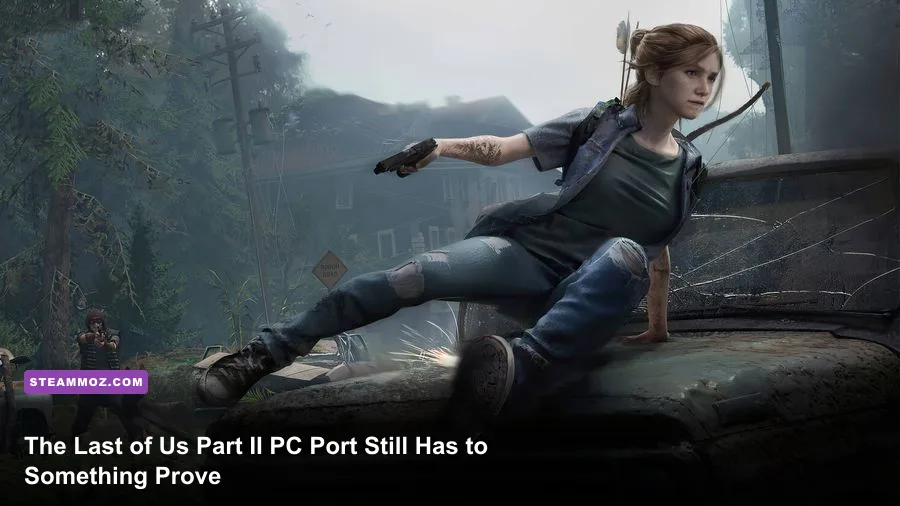
Is The Last of Us 2 PC still worth playing in 2026? The honest answer is complicated: there is still no officially released PC version of The Last of Us Part II to buy or play, so you should not trust any supposed Steam key, torrent, or “full PC port” listing. The game itself absolutely remains worth experiencing, but in 2026 that means playing the official PlayStation release or waiting for Naughty Dog and Sony to announce a legitimate port.
That distinction matters because the first game eventually arrived on PC as The Last of Us Part I, while Part II Remastered remains tied to PlayStation platforms. Sony has brought major exclusives such as God of War Ragnarök, Horizon Forbidden West, and Marvel’s Spider-Man 2 to PC, which makes a port feel inevitable to many players. Inevitability, however, is not confirmation. Check the official Naughty Dog site and PlayStation’s Part II page before spending money on anything claiming to be an official PC release.
The PC Version Question Comes Before Everything Else
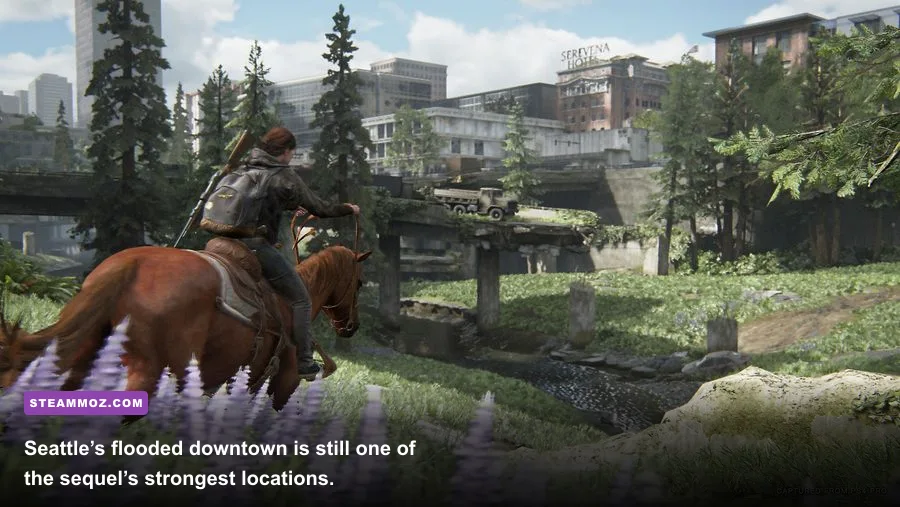
As of this retrospective, The Last of Us Part II has not received an official Windows release. The available editions are the original PS4 game and The Last of Us Part II Remastered for PS5. A genuine Steam listing would carry Sony Interactive Entertainment as publisher, Naughty Dog as developer, proper achievement support, verified system requirements, and a link from official PlayStation channels. A random download page has none of those protections.
The cleanest way to track a real release is the official Steam storefront, but searching Steam for similar names is not enough. Scammers regularly use screenshots, fan-made concepts, emulator footage, or repackaged material from The Last of Us Part I. Never install an executable advertised as “The Last of Us 2 PC crack,” especially if it disables antivirus software or asks for administrator access.
| Version | Platform | What You Actually Get | 2026 Recommendation |
|---|---|---|---|
| The Last of Us Part II | PS4 | Full original campaign, locked console presentation | Worth playing if you already own a PS4 |
| The Last of Us Part II Remastered | PS5 | Campaign, No Return, Lost Levels, Guitar Free Play, visual upgrades | Best official version today |
| Official Windows port | PC | No released version currently confirmed | Wait for Sony or Naughty Dog news |
| Unofficial download | PC | Unverified files, malware risk, no support | Do not install |
That absence changes the value conversation. If you are asking whether to buy a theoretical PC release at launch, the sensible answer is “wait for performance testing.” The Last of Us Part I launched with serious shader-compilation stutter, long traversal hitching, memory pressure, and uneven CPU scaling on PC. Naughty Dog and Iron Galaxy improved it through patches, but that history means Part II should not receive an automatic day-one purchase from PC players who care about smooth performance.

🎮 The Last of Us Part I
Looking to experience this game? Grab your digital key directly on our store for $59.99.
View on Steammoz Store →Why Part II Still Works Despite Its Brutal Story
On the merits of the game itself, Part II remains a remarkable, uncomfortable sequel. It begins with Joel and Ellie in Jackson, Wyoming, then tears apart the emotional safety established by the first game. Ellie’s pursuit of Abby across Seattle is not designed to make you feel powerful or morally clean. It keeps switching perspective until revenge becomes exhausting, intimate, and deliberately difficult to celebrate.
That structure still divides players in 2026. Abby’s introduction arrives at the exact moment many players want to stay with Ellie, and the extended Seattle Day 1–3 chapters can feel like the game is asking for patience you did not agree to give. Yet the dual perspective is more than a twist. Playing Abby lets you see the Washington Liberation Front, Seraphites, Lev, Yara, and the consequences of Ellie’s rampage from another street corner. The game’s argument is not that every character is equally innocent. It is that violence becomes harder to simplify once you know the person carrying the weapon.
The strongest writing lives in the quieter spaces. Ellie and Dina moving through the synagogue, Joel and Ellie’s museum birthday trip, Abby and Lev crossing the sky bridges, and the final guitar scene all use small gestures instead of exposition. The acting from Ashley Johnson, Troy Baker, Laura Bailey, and Ian Alexander remains exceptional. Dina’s pregnancy, Jesse’s sudden death, Owen’s fractured loyalties, and Abby’s relationship with Lev give the campaign texture beyond its revenge plot.
Where the pacing loses its grip
The campaign is long for a tightly controlled cinematic action game. A first playthrough commonly takes around 24 to 30 hours, depending on exploration and difficulty. The repetition is intentional—scavenge, solve a light environmental puzzle, fight, recover—but the late-game Santa Barbara section arrives after the emotional climax has already happened. The farm is thematically important, yet some players will feel that Ellie’s return to violence delays the ending rather than deepening it.
| Story Element | What It Does Well | Common Weakness | Verdict in 2026 |
|---|---|---|---|
| Ellie’s Seattle arc | Powerful stealth, escalation, strong character detail | Revenge loop can become emotionally draining | Still compelling |
| Abby’s campaign | Expands the world and reframes earlier events | Arrives after a major cliffhanger | Essential, but divisive |
| Jackson and the farm | Humanizes Ellie, Dina, Joel, and Tommy | Slows momentum between major conflicts | Important connective tissue |
| Santa Barbara | Excellent visual contrast and brutal finale | Feels like an extended epilogue | Memorable ending |
If you want a clean power fantasy, this is the wrong game. If you can accept a story that intentionally withholds comfort, Part II is still one of the most ambitious narrative games of its generation. Read fewer plot reactions before playing it. The emotional impact depends heavily on discovering the structure yourself.
The Combat Is Still the Real Reason to Want A PC Port
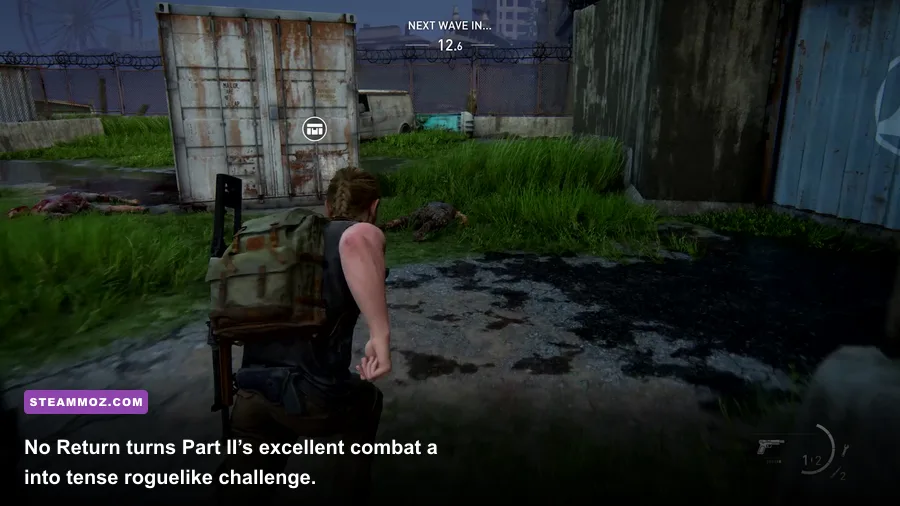
Part II’s combat has aged better than its controversy. Every encounter is built around options rather than a single correct solution. Ellie can crawl beneath vehicles, move through tall grass, throw bottles to redirect patrols, set Trip Mines, use a silenced pistol, or create space with a shotgun. The AI is not flawless, but human enemies call each other by name, search last-known positions, flank through openings, and react to dead bodies in ways that make stealth feel social rather than purely mechanical.
Ellie’s core toolkit is especially strong. The semi-auto rifle rewards headshots and gains a stability upgrade at a workbench. The bow offers quiet kills and can be improved for faster draw speed. The hunting pistol becomes more useful after its stability and damage upgrades, while the pump shotgun is the panic button when stealth collapses. The silenced pistol is limited by crafted suppressors, so wasting shots on armored targets can leave you helpless later.
Abby’s loadout changes the rhythm. Her military pistol, semi-auto rifle, double-barreled shotgun, and crossbow support a more direct style, while the flamethrower is particularly useful against infected groups. The crossbow’s bolts are quiet and powerful, but ammunition is scarce. Abby’s pipe bombs and Ellie’s explosive arrows also let you shape encounters before enemies even know where you are.
Skills that meaningfully change your options
Ellie’s skill trees encourage different habits. Survival increases health and improves healing speed, making it ideal for players learning encounters. Stealth reduces prone movement noise and improves listening mode, while Explosives boosts explosive arrow radius and Trip Mine effectiveness. The Crafting tree speeds up item creation and unlocks smoke bombs, and Precision improves weapon stability and aiming control.
Abby’s Covert Ops tree improves prone movement and unlocks shivs, Close Quarters makes melee aggression safer, and Field Tactics strengthens listening mode and weapon handling. The Guerrilla tree is excellent for players who let stealth fail and immediately start solving the problem with explosives. There is no universal best path, but Survival and Stealth are the safest first-playthrough choices for Ellie, while Close Quarters gives Abby’s already-strong melee game more room to breathe.
| Playstyle | Best Skill Path | Key Weapons | Why It Works |
|---|---|---|---|
| Silent scavenger | Stealth, Crafting | Bow, silenced pistol, Trip Mines | Preserves resources and controls patrol routes |
| Explosive controller | Explosives, Survival | Explosive arrows, pipe bombs, shotgun | Breaks clustered enemies and infected rushes |
| Precision shooter | Precision, Firearms | Hunting pistol, rifle, revolver | Rewards headshots and careful ammunition use |
| Aggressive survivor | Close Quarters, Guerrilla | Shotgun, melee weapons, flamethrower | Turns failed stealth into controlled chaos |
The infected remain terrifying because each type demands a different response. Runners swarm and can be staggered by quick shots. Clickers are lethal at close range but vulnerable to stealth kills if you have a shiv. Stalkers hide, flank, and force you to stop relying on Listen Mode. Shamblers punish close-range aggression with their acidic burst, while Bloaters can absorb punishment and close distance quickly. The Rat King in Ground Zero is the standout set piece: Abby must keep moving through the hospital, use fire and heavy weapons, and survive the separated Stalker that emerges from the boss.
On PC, mouse aiming could make the bow and revolver dramatically more precise, but it could also expose how encounter balance assumes analog movement. A strong port would need granular aim sensitivity, separate reticle controls, full key rebinding, ultrawide support, shader compilation options, and a stable frame-time profile—not merely an unlocked frame-rate slider.
Remastered Content Makes the Second Playthrough Better
The Last of Us Part II Remastered is more than a resolution bump. Its headline addition is No Return, a roguelike survival mode built from campaign arenas. You choose characters, routes, modifiers, and upgrades, then survive a sequence of encounters before facing a boss. Ellie, Abby, Dina, Jesse, Tommy, Lev, Yara, and other characters have distinct starting tools, so replaying the same location can feel completely different.
No Return is where the combat system becomes most replayable. A run may begin with stealth supplies and end with you improvising around a Seraphite ambush, a Bloater fight, or a forced combat modifier. You earn currency between encounters and decide whether to buy weapon upgrades, supplements, or crafting materials. The mode is less satisfying if you only want a story campaign, but it is excellent for testing whether you truly understand movement, enemy spacing, and resource conservation.
The Remastered edition also adds Guitar Free Play, developer commentary, visual improvements, and the Lost Levels. The Lost Levels are not full chapters; they are unfinished or exploratory sections with commentary that reveals how Naughty Dog built the game. They are valuable for enthusiasts, but they should not be treated as a major reason to replay the entire campaign.
| Remastered Feature | Value for New Players | Value for Returning Players | Worth Waiting For on PC? |
|---|---|---|---|
| No Return | High after finishing the story | Excellent combat replayability | Yes |
| Lost Levels | Interesting but optional | Strong development insight | Nice bonus |
| Guitar Free Play | Relaxing side activity | Good creative extra | Not essential |
| Visual upgrades | Cleaner presentation | Subtle but welcome | Expected on PC |
A PC release would ideally include all Remastered features from day one. The bare PS4 campaign would still be worthwhile, but No Return is the feature that gives the package legs after the credits. If Sony launches a standard edition and a separate upgrade path, compare the contents carefully instead of assuming the most expensive listing includes everything.
What A Good PC Port Must Get Right

There is no legitimate PC system-requirements table for Part II because no official PC version has been released. Any website posting exact minimum specifications today is guessing. Still, the first game’s PC launch gives us a useful warning: large environments, dense vegetation, detailed character models, and streaming-heavy traversal can punish both VRAM and CPU frame times.
Do not confuse a high average frame rate with a smooth port. The Last of Us Part I could report respectable numbers while stuttering during shader compilation or entering a new area. Part II has even more complex spaces, including the Seattle open hub, flooded downtown, Hillcrest, the Seraphite island, and the Santa Barbara resort. A successful PC version needs shader pre-compilation, an obvious VRAM budget indicator, traversal-stutter fixes, and reliable upscaling rather than forcing every player to troubleshoot engine behavior.
| PC Port Feature | Minimum Acceptable Implementation | Ideal Option | Why It Matters |
|---|---|---|---|
| Upscaling | DLSS, FSR, or XeSS with sharpening control | Multiple modes with frame-generation toggle | Balances image quality and performance |
| Shader compilation | Pre-launch compilation with progress display | Persistent cache and minimal traversal hitching | Reduces stutter during exploration |
| Display support | 21:9 ultrawide and borderless window | 32:9, HDR calibration, full FOV options | Makes modern monitors feel properly supported |
| Controls | Full keyboard remapping and mouse aiming | Separate sensitivity, dead-zone, and gyro controls | Gives PC players genuine input flexibility |
| Accessibility | Existing audio, contrast, aim, and traversal options | All PS5 accessibility features plus PC presets | Preserves one of the game’s biggest strengths |
When the port eventually arrives, start with a sensible 60-fps target instead of immediately chasing 144 fps. Disable motion blur if you dislike cinematic camera trails, keep texture quality within your GPU’s VRAM limit, and use a capped frame rate if frametime spikes appear. If your PC struggles with another demanding port, Steamoz’s guides on crash fixes and FPS recovery and performance settings offer useful troubleshooting habits, even though they cover different games.
Should You Wait, Replay, or Skip Part II?
If you own a PS5, The Last of Us Part II Remastered is still worth playing in 2026—provided you are comfortable with a deliberately punishing story. It delivers outstanding animation, superb sound design, stealth that remains best-in-class, and some of the most reactive close-quarters combat Naughty Dog has made. Play it on Grounded if you want every bullet and bottle to matter, or choose Moderate on a first run if you want the narrative to lead rather than the survival systems.
If you only play on PC, wait. Do not pay for a fake port, do not treat rumors as a release announcement, and do not assume that a future Sony launch will be technically perfect. Put the game on your wishlist when an official page appears, then wait for reviews that test traversal, shader stutter, ultrawide support, VRAM behavior, and No Return performance. That is especially important after the uneven launch history of The Last of Us Part I on Windows.
Returning players have the best reason to revisit it through No Return. Try a character you ignored during the campaign, experiment with modifiers, and use the mode to sharpen stealth before attempting a Grounded replay. For exploration-focused players, the Seattle hub areas still reward patience with supplements, weapon parts, trading cards, coins, safes, and environmental stories. Search the bank vault, the courthouse, the TV station, and the flooded downtown buildings rather than sprinting between objective markers.
My final verdict is straightforward: The Last of Us 2 remains worth playing, but “The Last of Us 2 PC” is not currently a real product. The game earns its reputation through extraordinary craft, not because every story choice lands cleanly. Its length and emotional manipulation will test your patience, yet the combination of stealth, animation, enemy behavior, and No Return gives it more staying power than many cinematic adventures. In 2026, the honest PC recommendation is to wait for an official port—and be ready to judge its performance, features, and price on their own merits.
For more PC performance coverage, see Steamoz’s low-FPS troubleshooting guide and graphics settings advice. Until Sony confirms a real Windows release, those are the only upgrades you need: patience, skepticism, and absolutely no suspicious installer claiming to be Ellie’s next chapter.