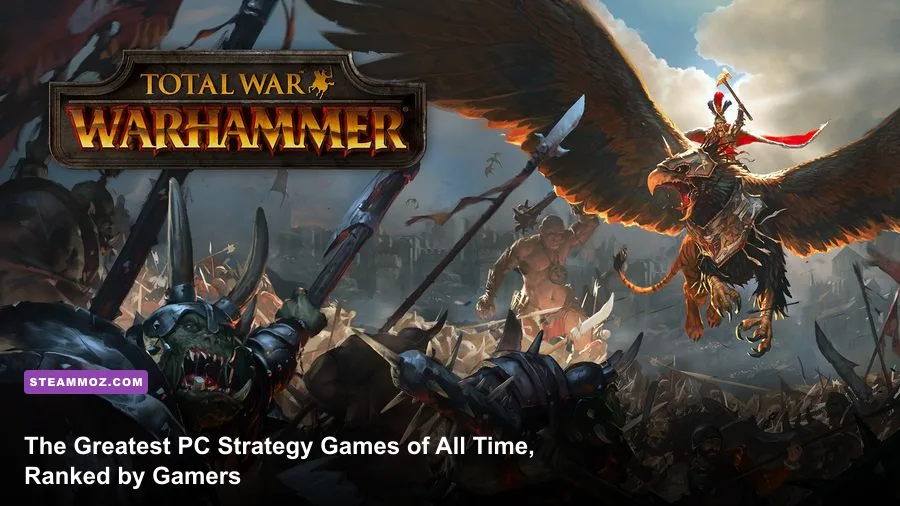
When PC gamers argue over the greatest strategy titles ever forged, the debate doesn't center on flashy graphics—it boils down to mechanical balance, tactical tension, and that elusive feeling of outsmarting your opponent. Over four decades, the PC platform has served as the undisputed home of the strategy genre. From the lightning-fast, 300-APM twitch inputs of competitive RTS battlefields to the deliberate, sleepless "just one more turn" addiction of turn-based 4X simulations, the computer mouse and keyboard remain the supreme tactical interface.
Player consensus over hundreds of thousands of Steam reviews, competitive tournament circuits, and active modding scenes makes one thing crystal clear: greatness requires timeless systems. A truly legendary strategy game doesn't just entertain you for a weekend; it demands mastery, rewards experimentation, and pushes your decision-making to the absolute limit. We analyzed decades of community sentiment, critical acclaim, and enduring player counts to rank the all-time titans of PC strategy.
The Definitive PC Strategy Tier List: Ranked by Tactical Mastery

Separating the good from the transcendent in strategy gaming means looking past initial hype. An elite strategy game must navigate steep learning curves, offer rock-solid tactical counters, and prevent the dreaded late-game slog where victory feels like tedious clerical work. Whether you prefer fine-grained squad tactics, macro-economic infrastructure planning, or dynastic espionage, the best games deliver meaningful decisions in every single phase of play.
Before diving into the full mechanical autopsies of our top picks, here is how the greatest PC strategy titles stack up across mechanical intensity, strategic depth, and community reverence:
| Game | Sub-Genre | Micro / APM Demand | Strategic Depth | Community Verdict |
|---|---|---|---|---|
| StarCraft II | Competitive RTS | Extreme (150–300+ APM) | S-Tier | The undisputed pinnacle of real-time competitive balance. |
| Civilization VI: Gathering Storm | 4X Turn-Based | Zero (Turn-based) | S-Tier | The masterclass of unstacking cities and map-yield planning. |
| Total War: Warhammer III | Grand Strategy / Real-Time | High (During battles) | S-Tier | Colossal scale combined with asymmetric fantasy unit tactics. |
| Crusader Kings III | Grand Strategy / RPG | Low (Pausable real-time) | S-Tier | Unmatched character-driven dynastic drama and political chaos. |
| Age of Empires II: DE | Classic Base-Building RTS | High (80–180 APM) | A-Tier | The immortal benchmark for historical RTS and economy scaling. |
| XCOM 2: War of the Chosen | Turn-Based Squad Tactics | Low (Pure calculation) | A-Tier | Heart-pounding risk management and tactical squad synergy. |
| Stellaris | Sci-Fi 4X / Grand Strategy | Medium (Pausable real-time) | A-Tier | Unrivaled galactic scale, custom empire creation, and emergent lore. |
Games in the S-Tier don't just execute their specific sub-genre well—they redefine it. They create feedback loops where a single miscalculation in resource allocation or troop positioning can shatter hours of meticulous planning, yet losing feels like a masterclass that pushes you to jump immediately into another campaign.
🎮 1bitHeart
Looking to experience this game? Grab your digital key directly on our store for $2.99.
View on Steammoz Store →1. StarCraft II: Wings of Liberty & Beyond – The Peak of Mechanical Real-Time Combat
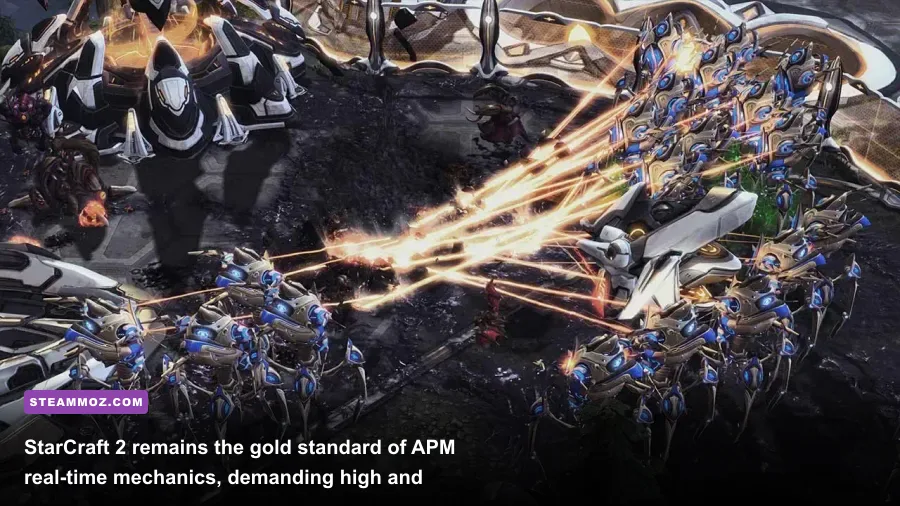
No real-time strategy game has ever matched the razor-sharp mechanical balance of Blizzard's StarCraft II. Even more than a decade after its release, it remains the absolute measuring stick for competitive PC gaming. Its three playable factions—Terran, Zerg, and Protoss—don't simply offer different unit skins; they represent three fundamentally opposed philosophies of warfare, resource management, and tempo control.
Playing Terran forces you into tactical positioning, defensive siege lines, and micro-heavy bio splits to avoid splash damage. Zerg demands explosive economic macro, rapid creep-spread to provide vision and movement bonuses, and the ability to instantly transition your entire production infrastructure to counter an opponent's army composition. Protoss hinges on expensive, high-tech powerhouses, shielding systems, and warp-gate proxy tech that can bypass enemy frontlines entirely.
What keeps StarCraft II perched atop the RTS mountain is its lack of RNG. If you lose an engagement, it's never because of a bad dice roll. You lost because your opponent scouted your Tech Lab earlier, executed a tighter build order, or hit an 8-minute supply timing window while your workers were idling. Managing 200/200 supply armies while simultaneously queuing SCVs, dropping MULEs, and executing stutter-step kiting demands a degree of brain-muscle connection that no modern strategy title has dared to replicate.
2. Sid Meier’s Civilization VI: Gathering Storm – The Turn-Based 4X Masterclass
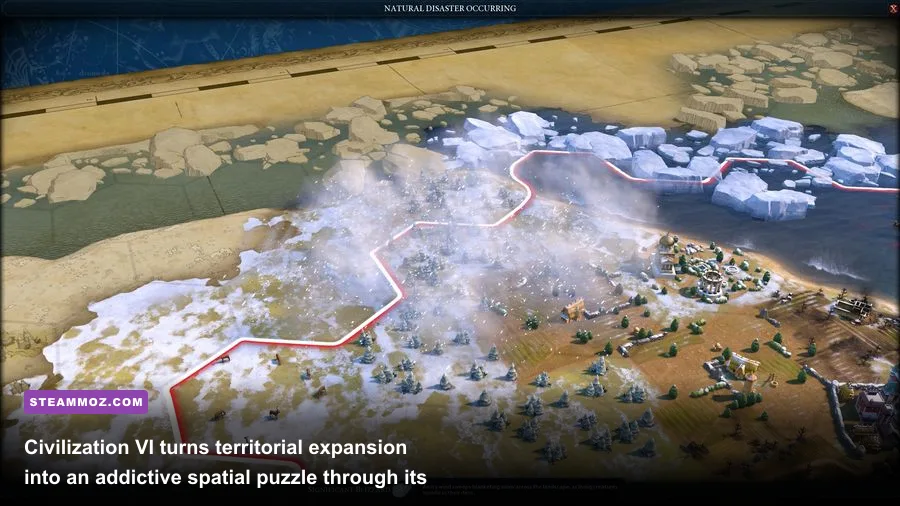
If StarCraft II rewards frantic reflexes, Sid Meier's Civilization VI rewards the quiet genius of the long game. While hardcore purists still champion Civ IV's diplomatic AI or Civ V's streamlined combat, Civilization VI earned the community crown by solving the series' oldest issue: the passive city screen. By "unstacking" cities into specialized hex-based districts, developer Firaxis turned every settlement into a spatial optimization puzzle.
Planning a civilization in Civ VI requires you to read the terrain like a seasoned surveyor. You don't just drop down a Campus; you scout mountain ranges and geothermal fissures for critical adjacency bonuses. You evaluate river paths to maximize Industrial Zone output alongside Aqueducts and Dams. Factor in the environmental hazards, rising sea levels, and electricity demands introduced in the Gathering Storm expansion, and your late-game turns transform from routine troop moving into a desperate race against ecological collapse and rival space programs.
The policy card system injects massive flexibility, allowing players to pivot their empire's ideological bonuses on the fly without locking themselves into dead-end progression trees. For gamers wrestling with frame drops or stuttering late-game CPU calculations across massive maps, tweaking multi-threaded processing and background tasks can be as crucial as using settings for max FPS in hardware-intensive simulations.
3. Total War: Warhammer III – Massive Tactical Scale Meets Fantasy Micro
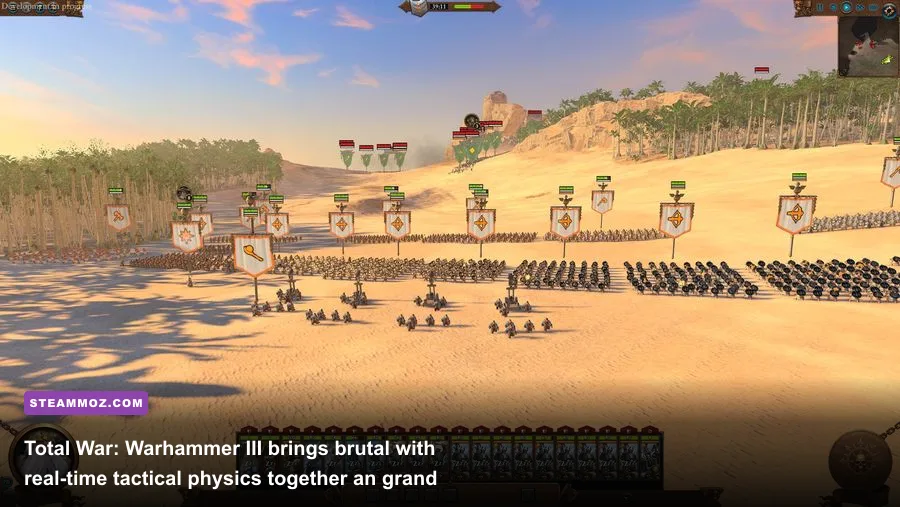
Historical Total War entries gave us brilliant line infantry engagements, but Total War: Warhammer III realized the full, thunderous potential of Creative Assembly's tactical engine. The crowning jewel here is the Immortal Empires campaign, an astonishing grand strategy map stitching together over 80 legendary lords, dozens of distinct races, and hundreds of custom settlements into an unmatched fantasy sandbox.
The real brilliance lies on the battlefield. Traditional tactical rules—hammer-and-anvil cavalry charges, defensive spear bracing, and high-ground flanking—interact with massive single-entity monsters, flying artillery, and battlefield-altering magic lores. Sending an elite unit of Bloodletters into a line of Empire handgunners feels brutally weighty thanks to unit mass calculations that govern shock charges and physical collisions.
Managing the strategic campaign map requires constant adaptation. Khorne factions thrive purely on perpetual aggression and razing settlements, whereas Skaven factions hide undercities beneath your borders while plotting nuclear-level warpstone detonations. When your screen fills with 4,000 individually rendered units trading spells and artillery volleys, engine stability is put to the ultimate test; resolving bottleneck hiccups is much like troubleshooting when you need to rescue your FPS from sudden crashes during heavy graphics rendering.
4. Crusader Kings III: The Feudal Simulator Where Characters Trump Borders
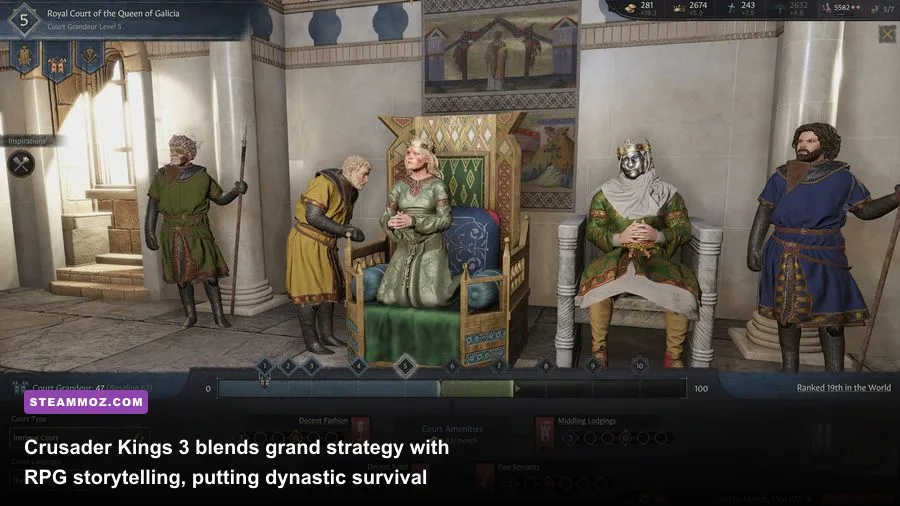
Most strategy titles train you to look at the world through borders, colored maps, and resource pools. Paradox Interactive’s Crusader Kings III flips the script completely: you do not play as a nation; you play as an individual dynasty head trying to keep a noble bloodline alive amid political murder, blackmail, and succession crises.
In CK3, your greatest enemy isn't the rival king across the border—it is your ambitious second son who inherited claims on your heartland, or your spymaster who secretly hates your guts. The Stress mechanic stands as one of the finest additions to modern strategy design. Force a compassionate character to execute prisoners or betray their allies, and their stress level will spike, triggering nervous breakdowns, alcoholism, or early death. The game forces you to roleplay your ruler's psychological flaws rather than playing as an omniscient, emotionless board gamer.
Whether you're carefully fabricating claims, marrying off daughters to secure defensive alliances with the Holy Roman Empire, or establishing a bizarre cannibalistic religious cult in the hills of Ireland, CK3 produces emergent narratives that scripted RPGs can only dream of matching. It proves that character relationships and political treachery can generate far more strategic depth than simple troop production queues.
5. Age of Empires II: Definitive Edition – The Undying Base-Building King
Originally released in 1999, Age of Empires II should theoretically be a historical relic. Instead, thanks to the stunning work in the Definitive Edition, it enjoys a massive, thriving esports and casual community on PC. AoE2 captures the purest fantasy of the classic RTS formula: start with a modest Town Center and three humble villagers, harvest sheep and timber, advance through technological ages, and unleash a catastrophic siege army against your rival's fortress.
The strategic genius of AoE2 lives in its stone-cold economic fundamentals. You cannot simply build an army; you must maintain a balanced economy where villager distribution dictates your tactical possibilities. Allocating 6 villagers to sheep, 4 to wood, and timing your gold mining dictates whether you hit a devastating Castle Age knight rush or get pinned inside your walls by an opponent's Feudal Age archer harass.
Its hard-counter combat system remains masterfully transparent:
- Spearmen/Pikemen: Shred heavy cavalry, but crumble instantly against archers.
- Skirmishers: Inexpensive "trash units" designed specifically to soak up arrow fire and eliminate crossbowmen.
- Knights/Cavalry: Devastating mobile shock troops that run down archers and siege engines, but bleed against clustered spears.
- Siege Onagers & Trebuchets: Essential tools to crack stone fortifications, capable of wiping out entire clusters of infantry in a single stray hit.
The mechanics here laid the groundwork for hundreds of modern titles. If you enjoy the granular micro-management of individual worker units carving out resource survival paths, you can trace that direct lineage to modern indie titles like Empires of the Undergrowth, which takes traditional base-building RTS fundamentals and applies them to intricate biological colonies.
When running heavily populated 8-player matches with 500-unit population caps, pathfinding calculations can tax older hardware rigs. Keeping your operating system lean and applying system-level optimizations—much like applying trusted PC performance fixes—ensures that micro-heavy engagements never drop crucial user inputs during critical battle moments.
Choosing Your Next Strategic Addiction
PC strategy gaming is broader and more vibrant than it has ever been. Your choice of where to invest your time depends on what part of your brain you want to test:
If you crave pure mechanical execution, APM mastery, and competitive ladder adrenaline, download StarCraft II immediately. If you want a deeply relaxing yet intellectually rigorous spatial puzzle that keeps you awake until 3:00 AM chasing science milestones, launch Civilization VI. If you want cinematic carnage, massive fantasy monsters, and colossal combined-arms battles, Total War: Warhammer III is an unmatched spectacle. And if your dream strategy game involves plotting royal assassinations, arranging diplomatic marriages, and steering an eccentric noble dynasty through turbulent medieval history, nothing will ever hook you like Crusader Kings III.
Clear your calendar, update your mouse drivers, and prepare to lose hundreds of hours to the finest strategic battlegrounds ever built for the personal computer.