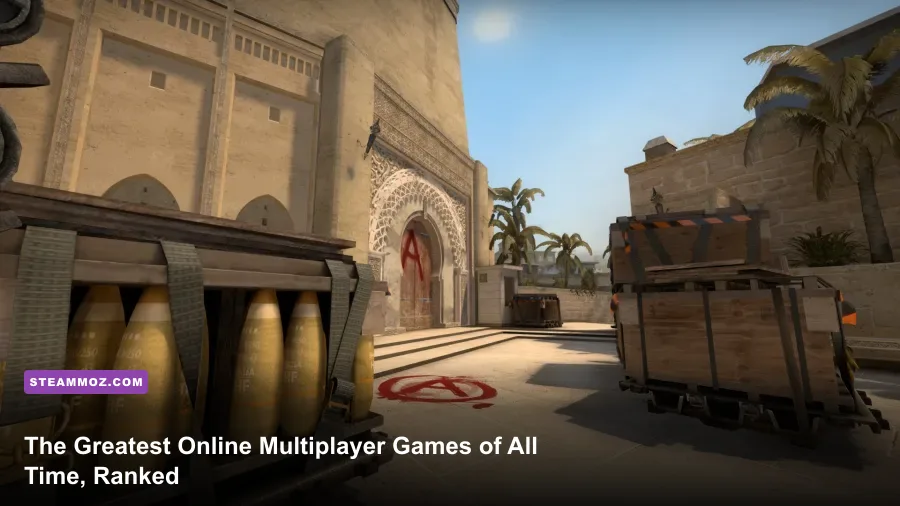
When hundreds of millions of players vote with their logged hours, three names inevitably top the podium: Counter-Strike, World of Warcraft, and Dota 2. The greatest online games don't survive on marketing budgets or seasonal battle passes; they endure because their mechanical core is virtually flawless. Whether it's the millimeter precision of a crosshair snap, the coordinated orchestration of a 20-player mythic raid boss, or the brutal resource economy of a high-ground defense, these titles conquered the internet by respecting skill expression above all else.
S-Tier Pantheon: The Undisputed Titans of Online Gaming
At the absolute summit sits Counter-Strike. Spanning more than two decades from beta mod roots to CS:GO and now Counter-Strike 2, Valve's tactical shooter has never compromised its design thesis: two teams, one objective, zero aim assist. The AK-47’s 30-round magazine remains an icon of balance, dealing a lethal 140 damage on unarmored headshots and an instantly fatal 100-plus against full Kevlar and helmet. Understanding the spray pattern's sharp upward climb and late horizontal wobble separates casuals from Global Elites. Throw in an economy system where loss bonuses scale from $1,400 to $3,400 to force calculated eco rounds, and you get pure competitive chess at 128-tick fidelity.
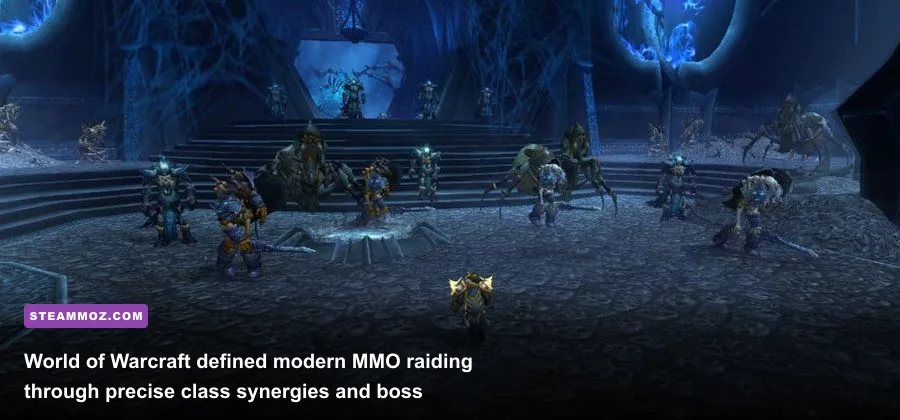
Sharing that rarefied air is World of Warcraft. While countless MMOs attempted to dethrone Blizzard's juggernaut, none replicated the fluid responsiveness of its tab-target combat engine or the sheer cultural resonance of its raiding scene. Confronting encounters like Mythic Archimonde or the Lich King required 25 individuals to master distinct rotational openers, crowd-control rotations, and global cooldowns (GCDs) trimmed down to fractions of a second. If you've ever balanced gear upgrades or tweaked weapon priorities, like evaluating weapons worth your credits in resource-heavy titles, you know the obsession with stat weights originated right inside Azeroth's spreadsheet-driven raid culture.
🎮 1bitHeart
Looking to experience this game? Grab your digital key directly on our store for $2.99.
View on Steammoz Store →The Master Tier List: All-Time Greatest Online Games Ranked

Ranking multiplayer history requires measuring mechanical depth, community longevity, competitive legacy, and how well the game's loop holds up when you're 2,000 hours deep into the grind. Here is how the all-time greats stack up in the community consensus:
| Game | Tier Rating | Genre | Core Winning Factor | Skill Ceiling Metric |
|---|---|---|---|---|
| Counter-Strike (1.6 / CS:GO / CS2) | S+ Tier | Tactical FPS | Unrivaled hit-scan gunplay & economy | First-bullet accuracy & utility lineups |
| World of Warcraft | S+ Tier | MMORPG | Benchmark raid design & Holy Trinity sync | GCD management & encounter choreography |
| Dota 2 | S Tier | MOBA | Complex interactions, active items & denies | Map awareness, turn rates & creep aggro |
| StarCraft: Brood War | S Tier | RTS | Absolute mechanical and strategic ceiling | 350+ APM macro & frame-level micro |
| Team Fortress 2 | A+ Tier | Class-Based FPS | Source engine momentum & character identity | Rocket jumping & projectile prediction |
| Apex Legends | A Tier | Battle Royale | Fluid kinetic movement & aggressive gunplay | Tap-strafing, wall-bouncing & tracking |
| Rainbow Six Siege | A Tier | Tactical Hero Shooter | Destruction physics & asymmetric utility | Vertical sightlines & crosshair placement |
| Rocket League | A Tier | Physics Sports | Zero RNG, pure deterministic physics | Aerial car control & directional air-rolls |
Just like organizing a competitive gear loadout—similar to how players evaluate weapons ranked from S to C tier—every game on this list delivers an unmatched gameplay loop that eliminates random variance in favor of pure skill.
Mechanical Perfection: MOBAs and High-Stakes Strategy
You can't discuss multiplayer supremacy without stepping into the brutal arena of Dota 2. While other MOBAs streamlined mechanics to broaden their appeal, IceFrog doubled down on uncompromising depth. In Dota 2, you don't just last-hit enemy creeps; you manipulate creep aggro by clicking enemy heroes within a 500-unit acquisition radius to pull the wave closer to your tower. You deny your own creeps below 50% health to starve opponents of gold and halve their experience gain.
Active items in Dota 2 don't merely bump stats—they completely upend combat dynamics. Activating a Black King Bar grants spell immunity that decays from 9 down to 6 seconds with repeated use, dictating the tempo of entire 60-minute matches. A single Blink Dagger initiation paired with Enigma’s 4-second channeling Black Hole can reverse a 20,000-gold deficit in an instant. The inclusion of turn rates, elevation miss chances (25% penalty firing uphill), and courier logistics creates an intellectual proving ground where mechanical reflexes alone won't save you from poor macro decisions.
Alongside it, StarCraft: Brood War remains the father of high-speed digital competition. Running on an engine locked to 24 frames per second on the Fastest game speed, it forced players to battle both their human opponent and the interface itself. Pathfinding limits that capped unit selection at 12 meant controlling a 200-supply Zerg army demanded blisteringly fast fingers—often exceeding 350 Actions Per Minute (APM). That degree of friction made mechanical execution a visual spectacle that modern games rarely dare to replicate.
Sandbox Physics and the Golden Age of Movement Shooters
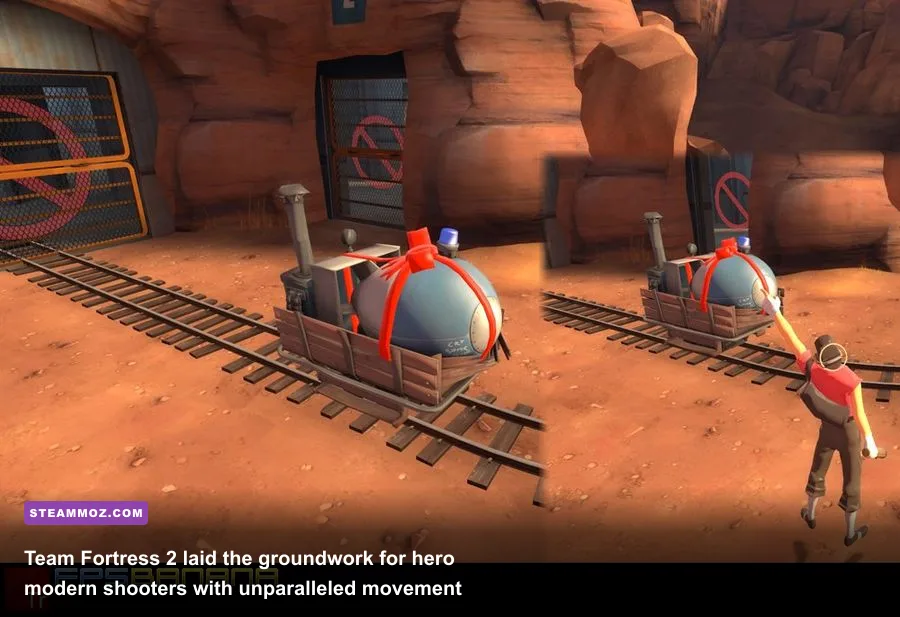
Long before modern hero shooters flooded the market, Team Fortress 2 cracked the formula for class-based perfection on Valve’s Source engine. What made TF2 timeless wasn't just its timeless 1960s Norman Rockwell visual aesthetic; it was the physics. Soldier mains learned to abuse the explosion radius of the stock Rocket Launcher, crouching and jumping simultaneously while firing behind their feet to fling themselves across maps like Badwater Basin and Upward at breakneck speeds.
The nine classes formed an airtight ecosystem: Scout’s double jumps countered projectile-heavy Demomen, while a well-positioned Engineer’s Level 3 Sentry Gun shut down flanking routes until an allied Spy executed a flawless Sapper-and-revolver ambush. It bridged casual community server antics with hardcore competitive 6v6 formats without losing an ounce of charm.
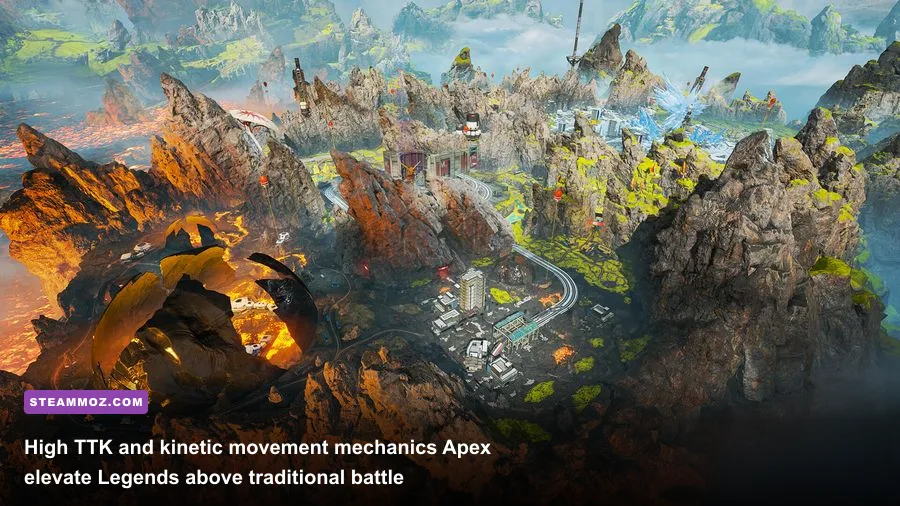
Fast-forward to today, and that torch of kinetic freedom burns brightest in Apex Legends. Respawn took the modified Titanfall engine and delivered the smoothest first-person mobility suite in existence. Advanced movement techniques like tap-strafing, supergliding off mantles, and slide-jumping down slopes transformed positioning into an offensive weapon. With a time-to-kill (TTK) that requires landing 10 to 14 rounds of an R-99 or Flatline against purple body shields (200 total effective health), gunfights reward consistent target tracking over twitchy lucky shots.
Tactical Evolution: Destructible Environments and Micro-Angles
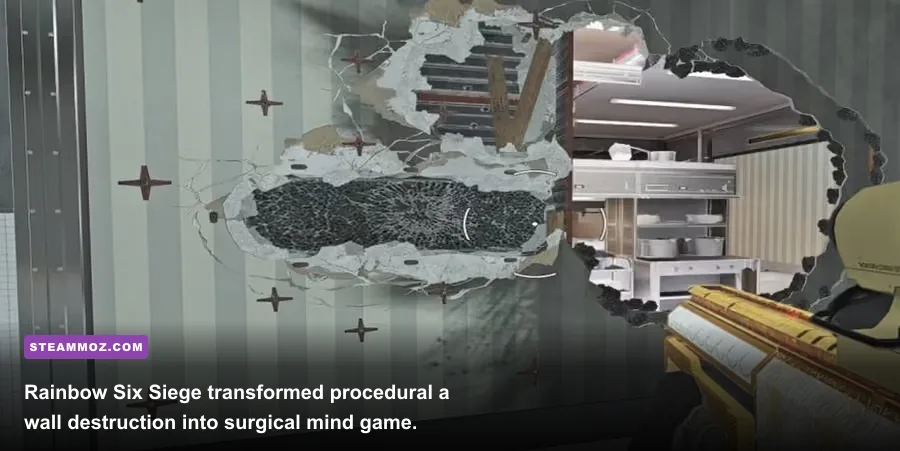
While arena shooters celebrate velocity, modern tactical shooters celebrate intellect. Rainbow Six Siege turned the multiplayer arena inside out with its AnvilNext engine, introducing procedural destruction that meant no wall was ever completely safe. Defending the basement of Clubhouse isn't just about holding an angle; it's about using shotgun blasts to punch head-holes into soft drywall, deploying Mira’s Black Mirrors to create one-way visual intel, and using battery-electrified reinforcements to deny thermite breaches.
Because every weapon features an instantaneous one-hit-kill headshot multiplier regardless of caliber or distance, tension stays perpetually high. Drone management during the prep phase acts as a separate game of recon, where losing your camera early can cost your squad the round before the first bullet is fired. To keep up with such visual fidelity and split-second reactivity, competitive players frequently tune their hardware, adjusting setups like we see in our guide to dialing in settings for maximum FPS.
Online Netcode, Tick Rates, and Server Infrastructure
Even the most brilliant gameplay loop falls flat on its face if the netcode is unstable. Dedicated gamers obsess over server tick rates because they dictate how frequently the game state updates per second. When you're competing at a high level, having your inputs registered on time makes all the difference between a clean headshot and ghost bullets passing harmlessly through a target model.
| Online Title | Server Tick Rate | Netcode Architecture | Player Latency Impact |
|---|---|---|---|
| Counter-Strike 2 | Sub-Tick / 64 Base | Client-Timestamp Architecture | Inputs register on exact frame pressed |
| Valorant | 128-Tick Native | Riot Direct Server Infrastructure | Minimal peeker's advantage, extreme sync |
| Apex Legends | 20-Tick Standard | Predictive Server-Client Sync | Occasional "shot around corner" issues |
| Fighting Games (Rollback) | 60 FPS Discrete | Deterministic Rollback (GGPO) | Virtually zero felt input latency across regions |
In competitive circles, rollback netcode has revolutionized how players experience latency, particularly within fighting and arena games. If you've read our deep dive into modern fighter hardware like the Fatal Fury City of the Wolves PC specs, you know that consistent 60-frames-per-second lockstep with low-latency netcode is non-negotiable. Similarly, fine-tuning your game client to avoid frame drops—just like tweaking parameters in our FPS boost optimization breakdown—is vital when fractions of a millisecond decide victory or defeat.
Ultimately, the best online games ever built don't just hold our attention—they become shared digital spaces where community rivalries form, legendary esports plays are forged, and muscle memory becomes second nature. Whether you're holding a site on Dust II or calling out targets in a high-stakes raid, these masterworks represent the very pinnacle of interactive entertainment.