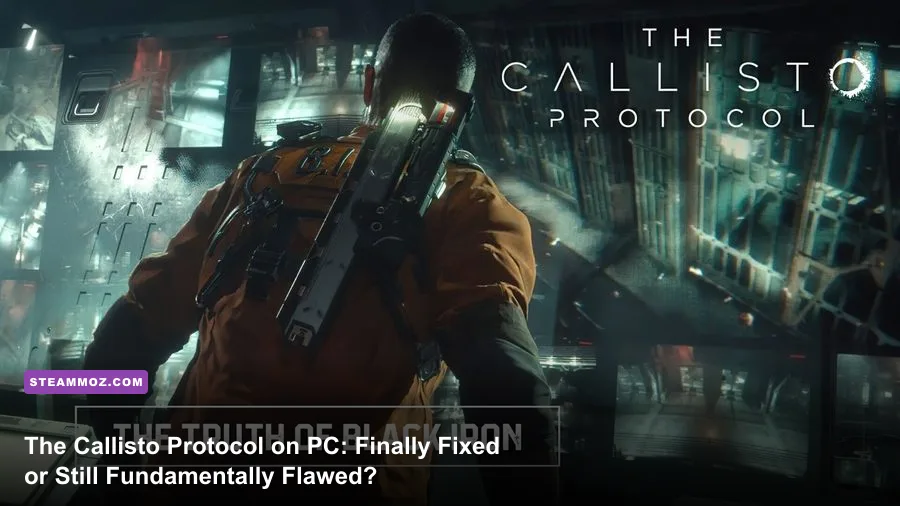
If you passed on The Callisto Protocol on Steam after its disastrous 2022 PC launch, the short answer is yes: it is absolutely worth playing today, provided you buy it on a deep discount and leave your Dead Space expectations at the door. The game underwent a quiet, massive technical transformation over years of patching. The soul-crushing shader compilation stutters that broke the launch build have been eliminated, combat animations were accelerated to eliminate clunky sluggishness, and modern upscaling tech like FSR 2.2 and DLSS makes this one of the most drop-dead gorgeous sci-fi showcases on modern PC rigs. It will never be the sprawling psychological masterpiece fans wanted from Glen Schofield, but as an 11-hour, bone-crunching, linear sci-fi slasher, it punches surprisingly hard.
The PC Performance Redemption: Did Patches Finally Kill the Stutter?
At launch, The Callisto Protocol was the poster child for Unreal Engine 4's worst technical nightmare: catastrophic, unbuffered pipeline state object (PSO) shader compilation hitching. Turning a corner or hitting an enemy for the first time triggered brutal 200-millisecond frame spikes. Developer Striking Distance Studios worked overtime across patches 1.08 through 1.12 to pre-compile shaders on the main menu, overhaul runtime caching, and optimize GPU threading under DirectX 12.
Today, frame pacing on PC is remarkably flat. If you have wrestled with unoptimized titles before—much like the troubleshooting steps we covered for Elex PC fixes that stop crashes and rescue your FPS—you know how transformative a clean frame-time graph can be for combat-heavy games. Ray tracing remains demanding, but running the game with hybrid RT settings now yields consistent 75-100 FPS performance on mid-range hardware like the RTX 3070 or Radeon RX 6700 XT at 1440p.
| Graphics Setting | Target Value | Estimated FPS Cost | Visual Impact & Tuning Rationale |
|---|---|---|---|
| DirectX API | DirectX 12 | Baseline (0%) | Mandatory. Eliminates old runtime pipeline stutters and unlocks proper multithreading. |
| Shadow Quality | High | ~7% | Cleans up soft contact shadows inside Black Iron Prison's metallic corridors. |
| Volumetric Fog | Medium | ~12% | Reduces heavy pixel-shader fill rates while preserving eerie steam and smoke plumes. |
| Ray Traced Shadows | OFF | ~22% | Screen-space shadows look remarkably crisp; disabling RT shadows gives massive headroom. |
| Ray Traced Reflections | High | ~25% | Keep enabled if you own an RTX 4070 or better; glossy blood, water, and chrome look unreal. |
| Upscaling (FSR 2.2 / DLSS) | Quality | +28% to +35% Boost | Maintains native-like 1440p/4K detail while stabilizing Jacob Lee's cinematic lighting pass. |
Much like dialing in performance targets in our Far Cry 6 GOTY upgrade pass settings guide, dropping your volumetric fog and screen-space reflections by one tier stabilizes minimum 1% lows dramatically, preventing the combat dips that made launch-day dodging nearly impossible.

🎮 Protocol
Looking to experience this game? Grab your digital key directly on our store for $19.99.
View on Steammoz Store →Visceral Brawling: Why the Polarizing Melee System Actually Works
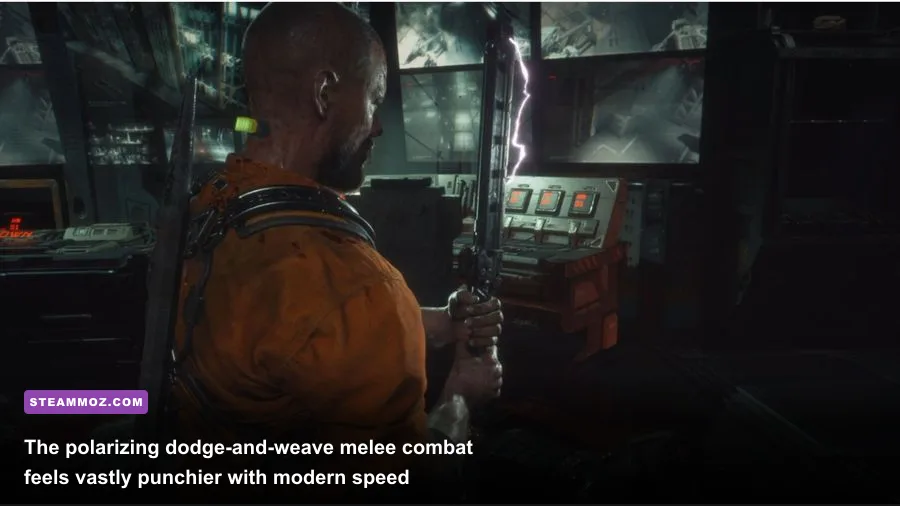
Combat was the battleground of opinions when The Callisto Protocol dropped. Striking Distance designed Jacob Lee's survival around intimate, up-close brawling using the Stun Baton, supported by the GRP (Gravity Restraint Projector) and sidearms. Reviewers initially slammed the dodging mechanics because they expected Dark Souls roll timings or Resident Evil spatial zoning. Instead, dodging operates like a rhythm boxing mini-game: hold Left or Right on your movement stick before an attack lands, alternate directions for subsequent strikes, and counterattack when the enemy recoils.
In early versions, the system collapsed when multiple Biophages swarmed you from off-camera. Post-launch patches introduced two vital combat overhauls: enemy attack aggression was retuned so backline foes don't blindside you while you are locked in an execution animation, and weapon-switching speed was boosted by nearly 40%. Pulling out the Skunk Gun mid-combo to blast a Biophage's legs off no longer feels like maneuvering a tank through molasses.
The GRP glove remains the unsung hero of the game. Flinging mutated convicts into wall-mounted industrial meat grinders, turbine fans, and exposed rebar never gets old. It turns crowded environmental encounters into lethal kinetic sandboxes where positioning matters more than pure ammo hoarding.
Black Iron Arsenal: Upgrades That Shred vs Gear Traps
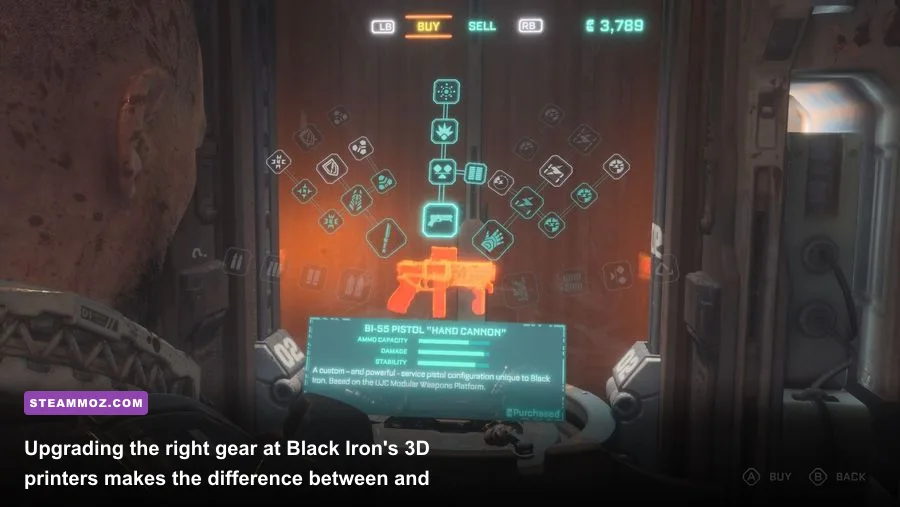
Callisto Credits are scarce throughout your escape through the subterranean depths of Jupiter's dead moon. Spending cash blindly at the 3D-printing Reforge stations will leave you underpowered by Chapter 6. Much like managing gear progression in our breakdown of Everspace weapons worth your credits, you need to funnel resources into high-yield, crowd-controlling tools rather than vanity sidearms.
| Weapon Name | Acquisition Chapter | Optimal Upgrade Path | Combat Viability Tier |
|---|---|---|---|
| Stun Baton | Chapter 2 (Outbreak) | Damage Lvl 3 → Velocity Swing | S-Tier: Your lifeblood. Maximize damage early to save ammo during regular mobs. |
| Riot Shotgun | Chapter 5 (Lost) | Mag Capacity → Explosive Rounds | S-Tier: Completely dismantles late-game brutes and clears swarms in tight chokepoints. |
| BI-55 Hand Cannon | Chapter 2 (Reforge Print) | Stability → Magnum Rounds | A-Tier: Accurate limb dismemberment tool; perfect for snapping mutation tentacles. |
| Skunk Gun | Chapter 3 (Hidden Schematic) | Capacity Upgrade | A-Tier: Pocket-sized shotgun. Destructive burst damage, but reload times are sluggish. |
| Assault Rifle | Chapter 7 (Colony) | Base Recoil Reduction Only | B-Tier: Arrives far too late; consumes precious ammo supplies at an unsustainable rate. |
| Tactical Pistol | Chapter 6 (Below) | Do Not Upgrade | D-Tier: Weak stagger values and rapid ammo depletion make this a total resource trap. |
Understanding weapon synergy is critical. Similar to the tier classifications in our Far Cry 3 Blood Dragon weapon ranking, dumping credits into the Tactical Pistol ruins your economy. Stick to your Stun Baton, pump credits into the Riot Shotgun's explosive rounds, and upgrade the GRP's energy capacity and recharge velocity first.
Pacing Flaws and the Infamous Two-Head Fatigue
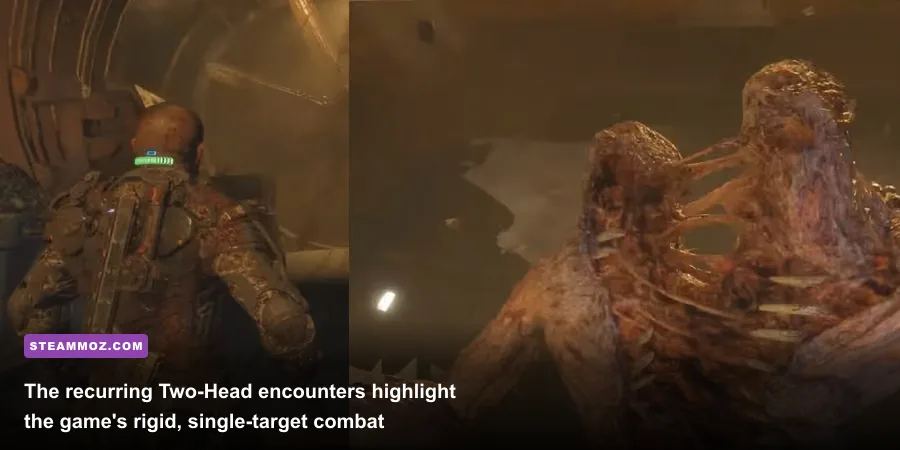
While the graphics and technical foundation are rescued, structural game design cannot be completely patched away. The Callisto Protocol stumbles hardest during its second half with aggressive encounter repetition. Enter the notorious "Two-Head" mini-boss.
This mutant brute possesses a guaranteed one-hit-kill execution, an enormous health pool, and an identical attack loop: dodge strike, fire four shotgun shells into its chest until it drops to its knees, run over and melee off one head, then repeat the exact routine for the second head. Striking Distance forces you to fight this exact same mini-boss four separate times across Chapters 6, 7, and 8. It halts narrative pacing and turns survival dread into algorithmic chore work.
Additionally, the mutation mechanic—where wounded Biophages sprout pulsating tentacles that mutate them into hyper-aggressive juggernauts if not sniped quickly—forces an awkward pause into the flow of melee brawls. If your aim-assist snaps to the wrong target, you're suddenly stuck brawling a mutated bullet sponge in a three-foot-wide hallway. When performance bugs aren't distracting you, these repetitive gameplay loops become more obvious, much like analyzing pacing hurdles in Filament Marmalade Edition technical walkthroughs.
The Final Transmission DLC and the Definitive Verdict
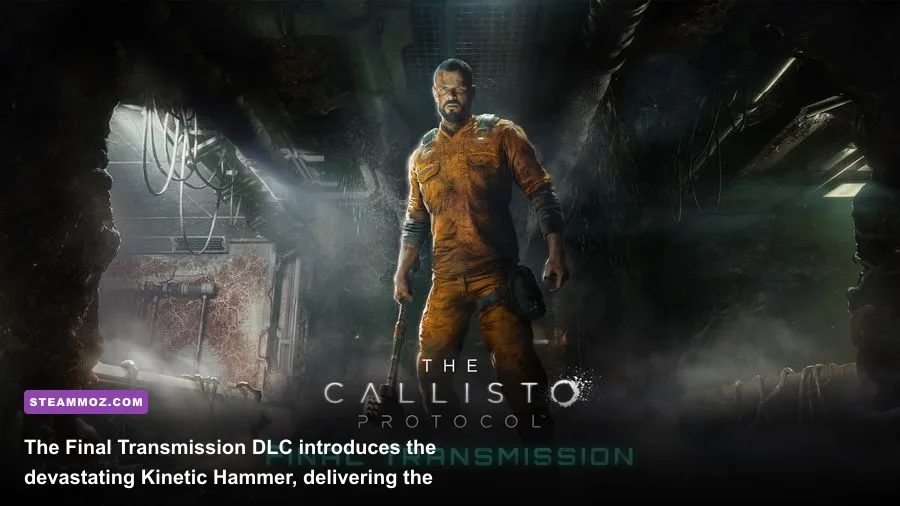
The story expansion, Final Transmission, acts as the true narrative ending to Jacob Lee's journey, taking place directly after the base game's cliffhanger. More importantly, it delivers the single best melee weapon in the entire package: the Kinetic Hammer. Built with devastating area-of-effect shockwaves and heavy downward smashes, the Hammer solves the crowd-control frustration that plagued the original baton encounters. Dealing with the DLC's new Biobot enemies forces you to balance electric overcharges with precision GRP tosses, making the final hours feel distinct and mechanically realized.
So, is The Callisto Protocol worth it today? At its original $70 price tag, absolutely not. But when grabbed on a seasonal Steam sale for $15 to $20—or included in a PC bundle—it is an entertaining, razor-sharp weekend playthrough. Built on incredible creature audio design, peerless motion capture from Josh Duhamel and Sam Witwer, and astonishing environmental art built within Unreal Engine, it is a bloody, gorgeous ride. Play it on an OLED monitor with the lights off, put your headphones on, crank the Stun Baton upgrades, and enjoy it for the gory, linear B-movie heavyweight fight that it was always meant to be.