
When PC gamers aggregate hundreds of thousands of hours across Steam reviews, community forums, and dedicated modding hubs, a distinct truth emerges: the best PC games of all time aren't just pretty graphical showcases, but towering monuments of player agency, mechanical depth, and systems-driven chaos. If you want the immediate community verdict, Baldur's Gate 3, Half-Life 2, and The Witcher 3: Wild Hunt consistently lock down the podium as the undisputed holy trinity of computer gaming. These aren't games you merely consume; they are digital playpens that reward mechanical curiosity, withstand decades of technological shifts, and offer complexity that consoles historically could never dare to replicate.
The Defining Criteria of Immortal PC Gaming Legends
Console rankings lean heavily on cinematic set pieces, but PC gamers grade on an entirely different rubric. Longevity on the personal computer demands uncompromised input precision, modding accessibility, and deep mechanical systems that adapt to how players want to engage. A masterpiece here doesn't treat you like a passive observer riding on rails; it hands you the wheel, unlocks the physics engine, and dares you to break its fundamental design barriers.
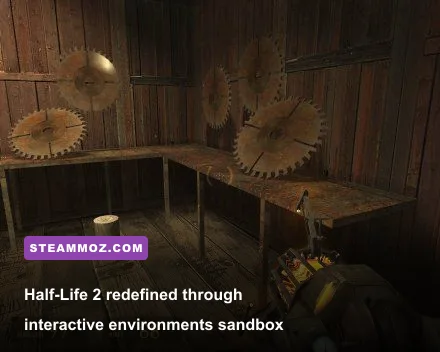
Think about how the Source engine transformed basic level design into an interactive playground. When Valve gave us the Zero Point Energy Field Manipulator in 2004, they weren't just showing off Havok physics routines; they altered combat pacing forever. That same thirst for mechanical liberty is why titles with robust modding scenes outlive their release windows by decades. Much like tweaking system balance through classic physics-driven shooters like Far Cry 2, the PC platform thrives on titles that trust players to tinker under the hood, adjust field-of-view sliders, customize keybinds, and tailor frame pacing down to the millisecond.
Player consensus also demands that an all-time great features narrative reactivity. If dialogue trees are static illusions where every branch routes into the exact same hallway, PC enthusiasts will tear it apart in the user reviews. We want real consequence, mathematical depth behind our choices, and gameplay loops that make mechanical mastery feel genuinely earned rather than handed out on a participation trophy platter.
🎮 1bitHeart
Looking to experience this game? Grab your digital key directly on our store for $2.99.
View on Steammoz Store →The Definitive Master Tier List: Top PC Games Ranked by Community Consensus
To identify the undisputed kings, we aggregated historical Steam review sentiment, persistent player counts, long-term modding support, and critical player retrospectives. Here is the definitive standing of the greatest PC experiences ever engineered.
| Rank / Title | Tier | Core Genre | Signature Mechanic | Community Review Score |
|---|---|---|---|---|
| #1. Baldur's Gate 3 | S+ | CRPG / Turn-Based | Immersive Environmental Reactivity & D&D 5e Dice Logic | 96% Overwhelmingly Positive |
| #2. Half-Life 2 | S+ | First-Person Shooter | Havok Physics Puzzles & Zero Point Manipulation | 97% Overwhelmingly Positive |
| #3. The Witcher 3: Wild Hunt | S+ | Action RPG | Branching Narrative Pacing & Decoction Alchemy Systems | 96% Overwhelmingly Positive |
| #4. Disco Elysium: The Final Cut | S | Narrative RPG | 24-Skill Psychological Thought Cabinet System | 93% Very Positive |
| #5. Portal 2 | S | Spatial Puzzle | Momentum Preservation & Dynamic Gel Physics | 98% Overwhelmingly Positive |
| #6. Deus Ex (2000) | S | Immersive Sim | Multi-Vector Infiltration & Cybernetic Augmentations | 94% Very Positive |
| #7. Elden Ring | A+ | Action RPG / Soulslike | Asynchronous Open-World Routing & Poise Break Tuning | 93% Very Positive |
| #8. DOOM Eternal | A+ | Arena FPS | Meathook Aerial Velocity & Aggressive Resource Weaving | 91% Very Positive |
| #9. Slay the Spire | A | Roguelike Deckbuilder | Synergistic Card Mechanics & Relic Relational Math | 97% Overwhelmingly Positive |
| #10. Sid Meier's Civilization IV | A | 4X Strategy | Stack Combat Economics & Turn-by-Turn Tile Strategy | 92% Very Positive |
Every title in this grid earned its place by dominating its respective sub-genre. Whether you crave the razor-sharp reflex demands of arena shooters or the calculated spreadsheet optimization seen when trying to level fast and farm resources efficiently in sweeping role-playing adventures, these entries represent apex execution in design, sound engineering, and responsive controls.
The S-Tier Titans: Inside the Triumphs of the Top Three

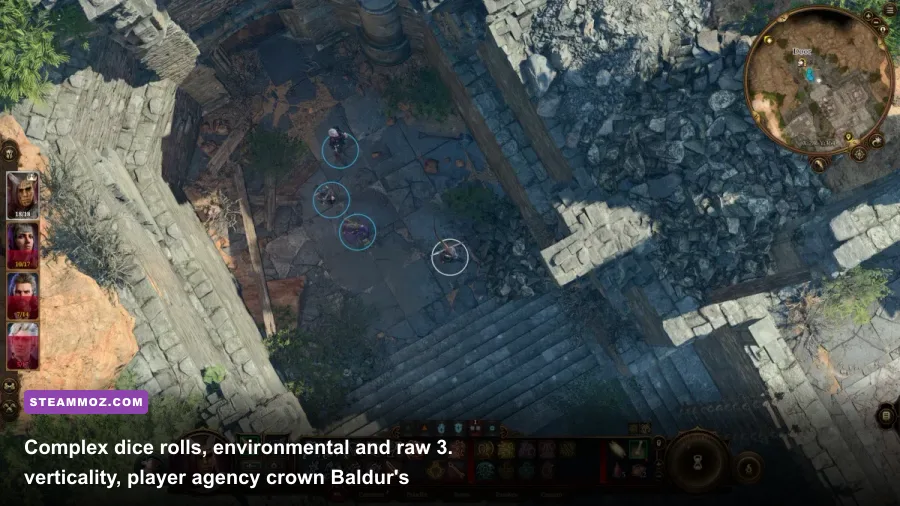
Occupying the top spot on our player-ranked master list is Baldur's Gate 3. Larian Studios didn't just digitize Dungeons & Dragons Fifth Edition; they built a towering sandbox where physics, verticality, and character status effects collide unpredictably. Run into a locked steel door? You don't need a rogue with high Sleight of Hand. You can stack three wooden crates, wildshape into an Owlbear, and execute a Crushing Flight drop from twenty meters above to obliterate the door along with two hostile cultists standing behind it.
Take Honour Mode, the ultimate test for tactical veterans. Bosses don't just gain bloated health pools; they receive devastating Legendary Actions. Grym in the Adamantine Forge gains temporary shields and moves with terrifying speed unless you carefully bait him directly under the central forge hammer using minor illusion spells and positioning tricks. Building your party demands an intimate understanding of ability score breakpoints, spell slot economy, and item synergies—such as pairing the Tavern Brawler feat with an elixir-chugging Monk to add double your Strength modifier to attack and damage rolls. It is an astonishingly dense, endlessly replayable triumph that respects your intelligence at every corner.
Right on its heels is Valve's timeless masterpiece, Half-Life 2. While modern games rely on endless cinematic cutscenes that yank control away from your mouse, Valve kept Gordon Freeman's boots glued to the floor. The game teaches mechanics through pure environment design. In Ravenholm, Father Grigori doesn't bark twenty tutorial prompts into your ear; the game casually leans a circular saw blade into a decaying wooden beam right next to a charging zombie. You equip the Gravity Gun, slice the monster cleanly in half, and instantly internalize the physics mechanics. That seamless synergy between player agency and atmospheric storytelling is why Half-Life 2 remains untouchable twenty years after its debut, outstripping contemporary military shooters that lock players into predictable corridors.
Rounding out the holy trinity is CD Projekt Red's monumental The Witcher 3: Wild Hunt. Beyond its legendary quest design—exemplified by the tragic, morally grey tapestry of the Bloody Baron storyline—the game shines when tackled on Death March difficulty. Here, you aren't an invincible superhero slashing through mobs. You're an analytical hunter who must prep for every beast. You harvest Arenaria and White Gull to brew Superior oils, coat your silver sword to exploit necrophage vulnerabilities, and weave Quen shields around combat rolls. If you take the time to customize your alchemy skill tree with the Acquired Tolerance and Euphoria mutations, Geralt transforms into an alchemical engine of destruction, stacking decoctions like Ekimmara and Water Hag to skyrocket sword damage. It set a standard for open-world narrative integration that studios are still desperately chasing.
The Mechanical Marvels: Deep Systems and Timeless Design
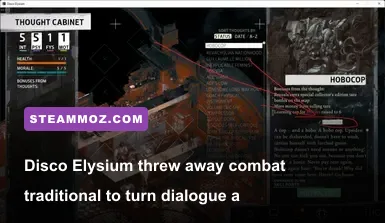
Step down into the narrative and systemic depths, and you hit games that could only ever exist on the PC platform. Disco Elysium: The Final Cut brazenly threw out physical combat altogether. In its place, developer ZA/UM engineered the Thought Cabinet—a psychological motherboard where your own mental faculties squabble for dominance. Your 24 skills aren't passive numbers on a character sheet; they are actual voices in your head. High Inland Empire turns an old discarded necktie into a prophetic confidant, while excessive points in Half-Light turn you into an unstable, hyper-paranoid wreck who threatens tavern patrons unprovoked.
Failing skill checks in Disco Elysium isn't a game-over screen that forces a quickload; it is frequently the most hilarious and enlightening route through Revachol. You can internalize unique thoughts like "The Bow Collector" or "Volumetric Wet Engineering" over in-game hours, unlocking bizarre dialogue options and altering how NPCs react to your disgraced detective. That literary ambition combined with tabletop RPG freedom secured its spot as an untouchable narrative masterpiece.
Meanwhile, Portal 2 refined puzzle gameplay into a comedic, brain-melting art form. The physics engine tracks momentum through space seamlessly: speed into a blue portal on the floor translates instantly into horizontal velocity out of an orange portal on the wall. Valve expanded on the original's tight design by introducing Propulsion, Repulsion, and Conversion Gels, layering spatial logic with pinpoint comedic timing courtesy of Stephen Merchant's Wheatley and Ellen McLain's chilling GLaDOS. Much like hunting down valuable weapons and loadouts in tactical space adventures, figuring out Portal 2's complex chambers leaves you feeling like an absolute genius.
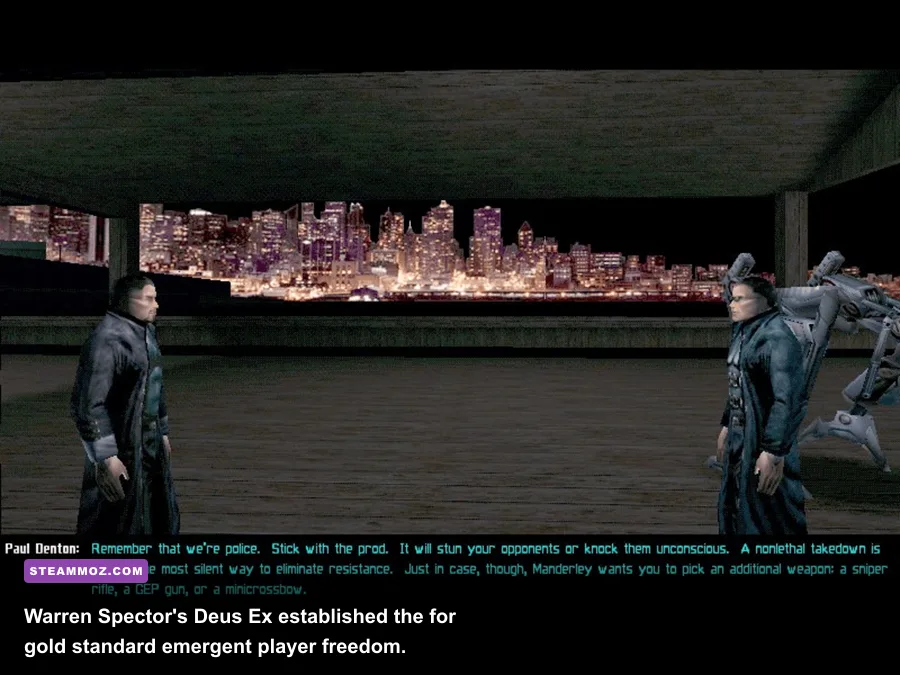
And who can overlook the grandfather of immersive sims, the original 2000 release of Deus Ex? Warren Spector's team gave players a sandbox on Liberty Island and said: "Get inside." You could pick the lock on the back door using multi-tools, hack a security terminal to turn automated turrets against the NSF guards, scale crates to find a sniper's vantage point, or grab a GEP gun and blast the front doors into smoking splinters. It was a level of structural non-linearity that modern developers still struggle to replicate, laying the groundwork for everything from Dishonored to Prey.
Optimization and Performance: How Hardware Maximizes the Legends
PC gaming greatness isn't locked exclusively to high-end hardware; it's about scalability and responsiveness. Whether you're configuring graphical profiles for maximum frame rates or applying fixes to older releases to ensure silky smooth frame pacing, the PC offers tools no console can replicate. When running these historical champions, dialing in the right balance between input latency, rendering APIs, and framerate stability is essential for experiencing them as their creators intended.
| Title | Optimal API / Display Mode | Essential Graphics Tweak | FPS / Latency Impact | Community Mod Requirement |
|---|---|---|---|---|
| Baldur's Gate 3 | DirectX 11 / Vulkan (GPU dependent) | Cap Framerate at Monitor Refresh Rate; Medium Shadows | Stops Act 3 CPU Bottleneck Stutter | Native Camera Tweaks & Script Extender |
| Half-Life 2 | DirectX 9Ex / Native Borderless | Disable Motion Blur; Max Multisampling AA (8x MSAA) | Near-Zero Input Lag; Locks at 240+ FPS | HL2: Update (Lighting Fixes) |
| The Witcher 3 | DirectX 11 (Non-RT) or DX12 (RTGI) | Foliage Visibility Range: High (instead of Ultra+) | Saves 18-22% GPU Headroom on Mid-Tier Cards | Brothers in Arms Bug Fix Collection |
| Deus Ex (2000) | Direct3D 10 / Modern OpenGL Driver | Override 60Hz Limit; Set Correct 16:9 Aspect Ratio | Eliminates Geometry Glitches and Engine Speed-Ups | Deus Ex Community Patch (Transcendence) |
| DOOM Eternal | Vulkan Native | Texture Pool: Ultra; Depth of Field: Off | Shaves 4-6ms off Render Queue; Sustains 144Hz+ | None (Flawless Engine Delivery) |
Notice how older gems like Deus Ex benefit immensely from custom modern renderer wrappers, transforming ancient Direct3D engines into fluid, high-refresh-rate spectacles. Even notoriously demanding open-world titles run dramatically better when you know which knobs to twist. Dealing with engine quirks is standard operating procedure for PC builders—just look at our troubleshooting guide for halting random crashes and salvaging frames in Elex. The reward for that light maintenance is an uncompromising experience that console ecosystems simply cannot deliver.
Why the PC Platform Preserves Greatness Forever
Console generations are brutal. When a new plastic box hits retail shelves, backward compatibility is often an afterthought, leaving entire software libraries trapped on abandoned hardware. On PC, games don't die—they evolve. When community members encounter technical hitches or broken interfaces in older codebases, they build custom engines, write wrapper DLLs, and compile high-resolution asset replacements to keep them humming.
Take a look at what the community did for The Elder Scrolls III: Morrowind through OpenMW, rebuilding the entire engine from scratch in open-source C++ to deliver native widescreen, robust multithreading, and rock-solid stability on modern operating systems. Or witness how retro shooter enthusiasts keep classic id Software titles alive through GZDoom and community weapon packs, rivaling the firepower and fun found across over-the-top weapon rosters in Blood Dragon. When you invest in an incredible PC game, you are investing in a living piece of software backed by global communities of modders and preservationists.
Ultimately, the best PC games of all time aren't determined by marketing budgets or slick reveal trailers. They are crowned by millions of players clicking "Play" night after night, dissecting mechanics, conquering hardest-difficulty settings, and passing recommendations down through generations of gamers. Fire up Baldur's Gate 3 to witness modern tactical perfection, load into Half-Life 2 to see the bedrock of interactive storytelling, or install The Witcher 3 to get lost in a sprawling, morally tangled continent. These aren't just great video games—they are the definitive high-water marks of interactive entertainment.