
When millions of community reviews across Steam, Metacritic, and independent forums are tallied, three undisputed legends consistently claim the summit of PC gaming history: Half-Life 2, Baldur's Gate 3, and The Witcher 3: Wild Hunt. The PC platform has always thrived on complexity, granular player agency, blistering framerates, and the democratic power of user modding. While console ports come and go, the titles that capture the soul of mouse-and-keyboard gaming do something console hardware simply cannot replicate: they deliver uncompromising sandbox systems, absurdly deep role-playing rulesets, and tactical kinetic combat that rewards mechanical precision.
The Pantheon of PC Gaming: How Player Votes Crowned the Greatest

Ranking the greatest PC games of all time is not a matter of subjective nostalgia; it is an interrogation of game design philosophy. Gamers on PC are notoriously critical. A flashy cinematic trailer won't save a broken engine, bad mouse smoothing, or dumbed-down skill trees. When players vote with hundreds of hours of playtime and overwhelming review percentages, they reward games that respect their intelligence and grant unmatched mechanical freedom.
The criteria separating standard critically acclaimed hits from immortal PC milestones come down to three pillars: systemic agency, lasting mechanical depth, and post-launch platform evolution. Systemic agency means the game engine allows emergent problem-solving—if you drop a heavy box from a rafters ledge, gravity and mass should calculate the kill. Mechanical depth guarantees that your build choices at hour ten ripple into combat encounters at hour eighty. Finally, platform evolution encompasses everything from open modding tools and uncapped framerates to custom keybind interfaces that elevate the PC experience far beyond any baseline console build.
Whether you are fine-tuning older software pipelines—similar to adjusting engine parameters in our Elex PC crash and FPS guide—or pushing high-refresh monitor panels to their absolute thermal limits, these legendary titles showcase what happens when developers design specifically for the open architecture of personal computers.
🎮 1bitHeart
Looking to experience this game? Grab your digital key directly on our store for $2.99.
View on Steammoz Store →S+ Tier: The Untouchable PC Masterpieces
The games in this tier are not merely great video games; they are tectonic cultural events that fundamentally altered the design landscape of the entire industry. They represent the absolute zenith of their respective genres.
1. Half-Life 2 (Valve)
Released in 2004, Valve's masterwork remains the definitive testament to environmental storytelling, pacing, and physics-driven puzzle combat. Built on the revolutionary Source Engine, Half-Life 2 on Steam introduced players to the Zero-Point Energy Field Manipulator—the Gravity Gun—transforming everyday clutter like circular saw blades, radiator heaters, and explosive barrels into deadly tactical tools. The trek through the horror-drenched alleys of Ravenholm, the tense buggy ride down Highway 17, and the climactic urban assault against the Combine Overwatch soldiers inside the Citadel showcase an unmatched masterclass in pacing that never relies on a single intrusive cutscene.
2. Baldur's Gate 3 (Larian Studios)
Larian Studios pulled off the impossible with Baldur's Gate 3: translating the notoriously intricate 5th Edition Dungeons & Dragons ruleset into a sprawling, hyper-reactive tactical CRPG that sold millions of copies to mainstream and hardcore audiences alike. Its excellence lies in sheer systemic consequence. Stacking grease bottles with fire surface transformations, tossing goblins off cliffs using high-Strength barbarian builds, or manipulating dialogue rolls using Divination Wizard Portent dice gives you absolute autonomy. Whether you play a redemption-seeking Dark Urge or a chaotic rogue, every NPC interaction carries genuine narrative weight across all three sprawling acts.
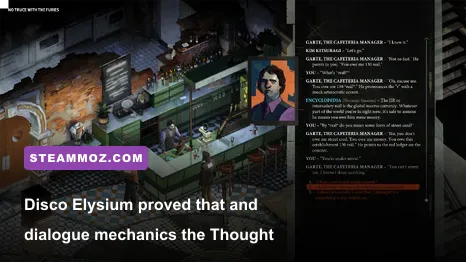
3. Disco Elysium – The Final Cut (ZA/UM)
No game in PC history features better prose, world-building, or psychological depth than ZA/UM's isometric detective triumph. By stripping away physical combat systems entirely, Disco Elysium turns your own psyche into a battlefield. The 24 individual skills—split across Intellect, Psyche, Physique, and Motorics—actively talk to you, debate one another, and steer your investigative path through the melancholic, strike-ridden seaside district of Martinaise. The game's Thought Cabinet acts as an RPG equipment screen for your detective's existential philosophy, making passive internal checks like Inland Empire and Shivers just as dangerous and rewarding as a sniper rifle in an action game.
S Tier: The Defining Titans of Immersion and Design

These titles deliver near-flawless world design, masterly gameplay loops, and world-class writing that have earned permanent status on every veteran PC gamer's SSD.
4. The Witcher 3: Wild Hunt (CD Projekt Red)
With its sweeping score, rain-lashed Velen swamps, and the sun-soaked vineyards of Toussaint, The Witcher 3: Wild Hunt stands as the modern benchmark for open-world narrative construction. Geralt of Rivia’s search for Ciri succeeds because even the smallest Witcher Contract feels handcrafted. Questlines like the Bloody Baron and the tragic fate of Iris von Everec in Hearts of Stone showcase moral ambiguity that avoids cheap binary good-versus-evil tropes. On PC, configuring combat builds around toxicity thresholds, decoctions (such as the game-breaking Water Hag and Ekimmara combos), and Whirl-centric swordsmanship offers a level of tactical control that outclasses typical hack-and-slash RPGs.
5. Portal 2 (Valve)
Taking a brilliant, short physics-puzzle demo and transforming it into a full-scale comedic and mechanical triumph is no small feat. Portal 2 broadens the spatial portal mechanics of the original by introducing physics gels: orange Propulsion Gel for frictionless acceleration, blue Repulsion Gel for vertical leap momentum, and white Conversion Gel to paint non-portalable surfaces. Paired with razor-sharp dialogue delivered by GLaDOS (Ellen McLain), Wheatley (Stephen Merchant), and Cave Johnson (J.K. Simmons), the game provides an airtight 8-hour single-player campaign and an equally brilliant cooperative puzzle mode built entirely around dual-perspective spatial coordination.
6. Fallout: New Vegas (Obsidian Entertainment)
While Bethesda built the framework, Obsidian Entertainment delivered the definitive 3D post-apocalyptic RPG. Fallout: New Vegas replaces straightforward karma systems with a nuanced, multi-layered faction reputation network. Navigating the political crossfire between the bureaucratic New California Republic, Caesar's tyrannical Legion, and the enigmatic capitalist autocrat Mr. House gives players genuine ideological stakes at the Battle of Hoover Dam. Its Damage Threshold (DT) armor calculation, survival crafting mechanics, and incredible DLC cycle (especially Dead Money and Old World Blues) make it the undisputed high-water mark of modern Fallout.
A+ Tier: Mechanical Perfection and Pure Kinetic Adrenaline
While the upper tiers lean heavily into expansive narrative choice, these titles capture peak mechanical satisfaction, fluid mouse-aim demands, and unmatched combat gameplay loops.
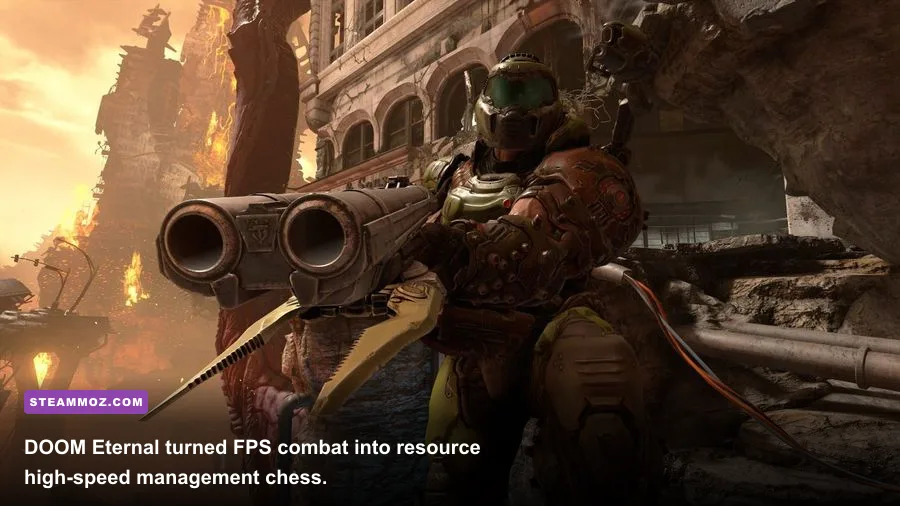
7. DOOM Eternal (id Software)
Id Software shattered modern first-person shooter conventions by stripping away cover-based shooting and replacing it with an aggressive, adrenaline-fueled resource loop. In DOOM Eternal, you don't conserve ammo; you farm it. The combat puzzle is relentless: Flame Belch spawns armor shards, the Chainsaw replenishes depleted ammunition reserves, Glory Kills generate health pools, and the Super Shotgun's Meathook transforms the arena into a high-speed playground of kinetic aerial momentum. It forces the player to quick-swap weapons constantly—canceling reload animations between the Precision Bolt rifle and the Ballista to delete Marauders in sub-three-second burst windows.
Mastering this combat loop delivers the same exhilarating adrenaline rush found in high-tier retro weapon sandboxes, an arcade thrill we explored in detail when reviewing the Far Cry 3: Blood Dragon weapons tier list.
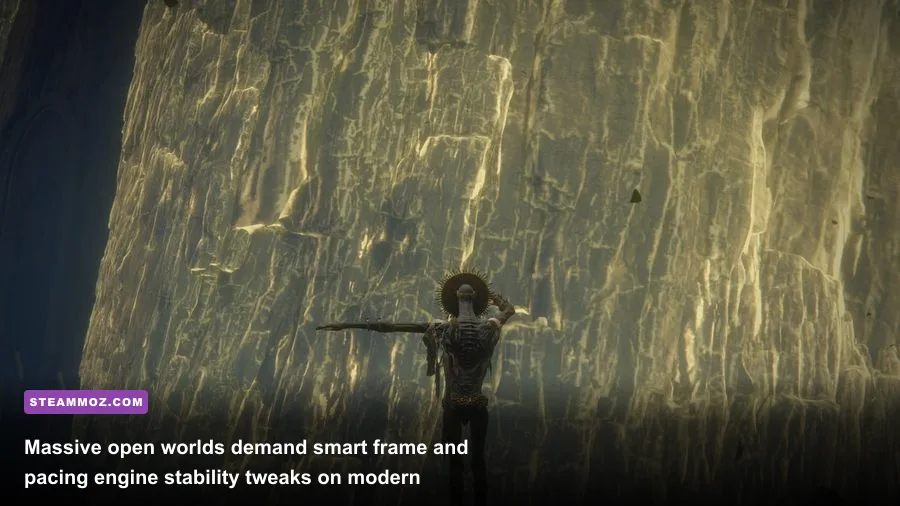
8. Elden Ring (FromSoftware)
FromSoftware's transition from linear, interconnected corridors to an immense open world could have diluted the combat tightness of their legendary Souls catalog. Instead, Elden Ring perfected it on PC. The Lands Between rewards raw curiosity without cluttering the screen with sterile map icons. The PC modding community immediately embraced the title, introducing seamless cooperative campaigns and widescreen field-of-view overhauls that turned the brutal boss fights against Malenia and Radagon into communal masterclasses in posture-breaking, jump-attack staggering, and weapon art specialization.
9. Mass Effect 2 (BioWare)
BioWare’s high-water mark took the galaxy-spanning narrative stakes of Commander Shepard and condensed them into an intense, character-driven recruitment campaign culminating in the legendary Suicide Mission. Every dialogue choice, companion loyalty mission, and Normandy ship upgrade directly determines who lives and who dies during the final breach of the Collector Base. Combining biotic powers like Warp and Singularity for explosive biotic detonations established a kinetic combat rhythm that BioWare has spent over a decade trying to replicate.
10. Deus Ex (Ion Storm)
Warren Spector and Ion Storm's 2000 masterpiece remains the grand architect of the immersive sim genre. Dropping Agent JC Denton onto Liberty Island with a basic pistol, lockpicks, and multi-tools established an unmatched standard for open-ended level design. Want to bypass a laser grid? Hack the security terminal, crawl through an air duct, deactivate it with an EMP grenade, or simply stack bio-hazard crates to climb over the blast door. Modern games still struggle to match the systemic freedom and branching dialogue consequences that Deus Ex achieved at the dawn of the millennium.
Community Data Breakdown: The All-Time Rankings at a Glance

To understand why these titles stand apart, look at how the community rates their core strengths across mechanical balance, narrative impact, and ongoing replay value. Here is the definitive breakdown of how the PC player base ranks these legends:
| Rank & Title | Tier Rating | Genre | Signature Gameplay Mechanic | Community Player Consensus |
|---|---|---|---|---|
| #1 Half-Life 2 | S+ Tier | Physics Narrative FPS | Gravity Gun (Havok Physics Manipulation) | Flawless pacing; redefined environmental game design |
| #2 Baldur's Gate 3 | S+ Tier | Tactical CRPG | Systemic D&D 5e Environmental Reactions | Unprecedented roleplaying freedom and cinematic scope |
| #3 Disco Elysium | S+ Tier | Isometric Narrative RPG | Thought Cabinet & Psychological Skill Checks | The greatest writing and literary prose in gaming history |
| #4 The Witcher 3 | S Tier | Open-World Action RPG | Alchemy Decoctions & Branching Quest Logic | Gold standard for mature, morally gray storytelling |
| #5 Portal 2 | S Tier | Spatial Physics Puzzle | Momentum Gels & Dual-Portal Mechanics | Impeccable comedic writing paired with ingenious puzzles |
| #6 Fallout: New Vegas | S Tier | Branching Action RPG | Faction Reputations & Damage Thresholds | The undisputed crown jewel of deep, modern wasteland RPGs |
| #7 DOOM Eternal | A+ Tier | Fast-Paced Arena FPS | Resource-Farming "Combat Chess" & Meathook | Hyper-demanding skill ceiling with zero dead time |
| #8 Elden Ring | A+ Tier | Action RPG / Soulslike | Stance-Breaking, Weapon Scaling & Exploration | Breathtaking world design that respects player curiosity |
| #9 Mass Effect 2 | A+ Tier | Sci-Fi Cover Shooter RPG | Biotic Detonations & High-Stakes Loyalty Math | The gold standard for party loyalty and climactic finales |
| #10 Deus Ex (2000) | A+ Tier | Immersive Sim | Multi-Path Level Design & Nano-Augmentations | Pioneered true player agency and emergent sandbox systems |
Notice how every single game in this ranking prioritizes player agency over passive spectator cutscenes. Much like setting up customized graphic presets to maintain smooth frame delivery—similar to the optimizations we break down in our guide on Far Cry 6 settings for max FPS—these games give players full control over their experience, allowing individual playstyles to dramatically reshape how challenges unfold.
System Demands vs. Timeless Visuals: Optimizing the Classics on Modern Rigs
One of the greatest virtues of PC gaming is backward compatibility, but running a 2000s classic on modern multi-core CPUs, ultra-fast NVMe storage, and high-DPI displays requires technical know-how. Older engines often tie their physics loops directly to framerate calculations, leading to broken scripts if you run them uncapped at 240Hz.
To run these titles at their absolute best today, you must bypass outdated DirectX 8/9 calls and eliminate physics desyncs. Tools like DXVK translate older DirectX API instructions into modern Vulkan pipelines, completely wiping out the micro-stuttering that plagues older game engines on Windows 11. Exploring vast open worlds and hunting down obscured objectives—an adventure style also celebrated in our Everspace 2 secret locations guide—proves far more rewarding when your frametimes are rock-solid.
| Game Title | Original Engine | Modern Technical Bottleneck | Recommended Community Fix / Mod | Optimal Framerate Cap |
|---|---|---|---|---|
| Deus Ex (2000) | Unreal Engine 1 | Dark rendering, broken UI scaling at 4K | Deus Ex Transcended or Kentie's Launcher | 120 FPS Max |
| Half-Life 2 | Source Engine | Physics item jitter at high framerates | Native Steam 20th Anniversary Update | Uncapped (Native) |
| Fallout: New Vegas | Gamebryo | Memory leak crashes, 64Hz stutter bug | NVHR (Heap Replacer) & New Vegas Tick Fix (NVTF) | Cap at monitor refresh rate |
| The Witcher 3 | REDengine 3 | DirectX 12 CPU single-thread bottlenecks | DX11 Mode for pure FPS, or DLSS/FSR Frame Gen | Variable / G-Sync |
| Portal 2 | Source Engine | Minor FOV lock issues on ultrawide monitors | Console command: fov_desired 90-110 |
Uncapped |
| Elden Ring | FromSoftware Proprietary | Hardcoded 60 FPS cap, lack of 21:9 support | Flawless Widescreen (Offline mode) | 60 FPS (Online) / Uncapped (Modded) |
Understanding these hardware interactions is part of the PC gaming ritual. The dynamic destruction, wind physics, and systemic AI routines that defined the benchmark era of shooters—detailed extensively in our breakdown of Far Cry 2 PC specs—paved the way for modern masterpieces like Elden Ring and Baldur's Gate 3. When you run these titles with high-resolution texture packs, tailored FOV sliders, and ultra-low frame latencies, you experience gaming at its absolute technological and creative pinnacle.
Whether you're exploring the psychological depths of Revachol in Disco Elysium, calculating jump vectors with the Gravity Gun in City 17, or engineering a turn-based team wipe in the Underdark, these community-crowned triumphs prove that the PC remains the premier platform for unforgettable gaming experiences.