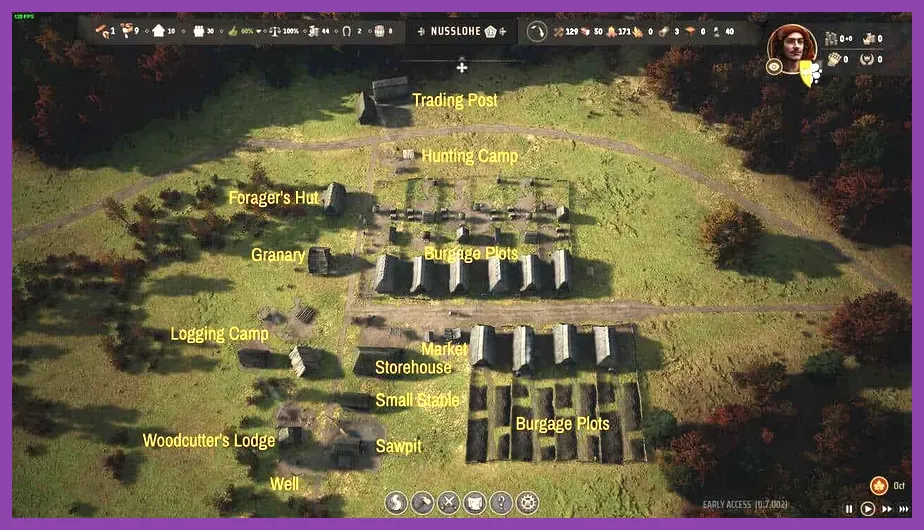
To succeed in Manor Lords, you must prioritize your initial timber supply, build expansive burgage plots with backyard extensions for passive food production, and establish efficient supply chains before winter arrives. Avoid rushing military expansion early on; instead, focus on stabilizing your regional wealth, managing soil fertility for crops, and securing a reliable water source to ensure your medieval settlement thrives through harsh seasonal shifts.
Prioritize Timber and Early Logistics Infrastructure
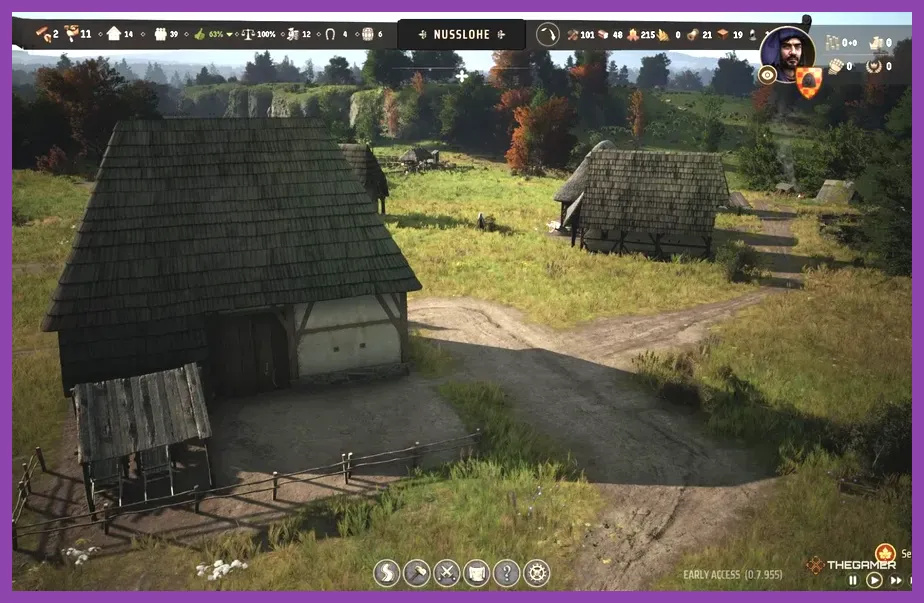
Your absolute first priority upon spawning into a new region in Manor Lords is establishing a solid foundation for material gathering. Do not immediately build houses everywhere. Instead, start by placing a Logging Camp close to dense forest clusters, followed immediately by a Woodcutter's Lodge to convert that timber into firewood. Citizens freeze quickly during winter, and lacking firewood causes immediate approval drops, halting migration to your town.
Next, construct a Trading Post and a Storehouse. The Storehouse acts as the central hub where your ox and workers transport goods, preventing items from rotting or sitting idle on the ground. Make sure to purchase an extra Ox from the Livestock Trading Post as soon as you have spare regional wealth. Oxen are the backbone of construction and heavy log hauling; without a second ox, your building queue will bottleneck severely. For more insights on efficient crafting and material gathering systems, check out this guide on V Rising crafting management, which shares similar foundational logistical priorities.
Once your basic material loop is running, place your Granary to store food items like berries and meat gathered from your Forager Hut and Hunting Camp. Balancing these early industries keeps your villagers fed, warm, and ready for expansion.
Master Burgage Plots and Backyard Extensions
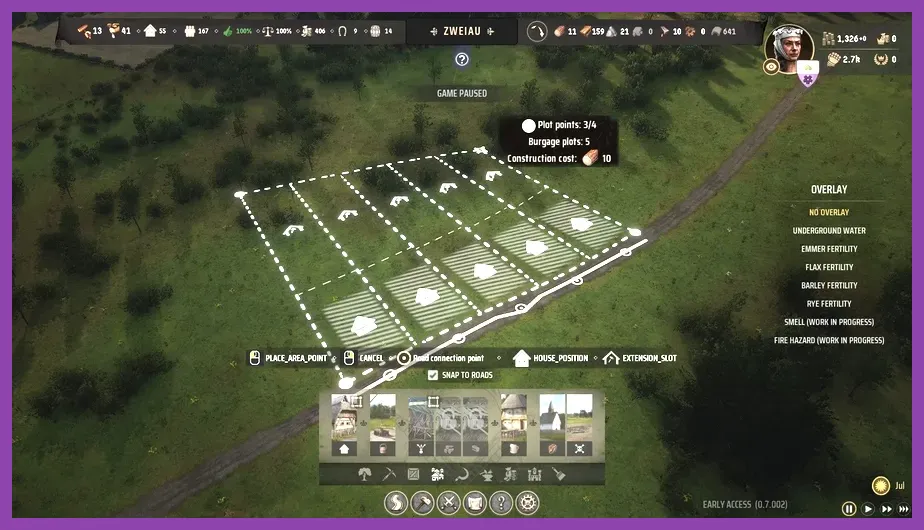
Burgage plots are far more than simple residential houses in Manor Lords; they are the primary driver of your economy and military recruitment. When drawing out burgage plots, do not make them tiny squares. Instead, draw long, deep plots. This creates a massive backyard area behind the home, which unlocks lucrative backyard extensions such as vegetable gardens, chicken coops, and apple orchards.
Vegetable plots are an absolute necessity for early-game food variety. Assigning a family to a large vegetable plot yields massive amounts of food come harvest time, completely offsetting reliance on hunting and foraging. Chicken coops provide a steady passive trickle of eggs, while goat sheds produce hides used by tanners to craft leather.
Furthermore, upgrading burgage plots to Level 2 requires church proximity, clothing, and water access, but doing so increases your regional wealth tax collection potential and unlocks artisanal workshops. Artisans can specialize into bowyers, cobblers, or armorers, shifting your settlement from a basic farming village into a self-sustaining industrial powerhouse. For strategic progression tips reminiscent of complex economic trees, review this tower of fantasy beginner blueprint.
Optimize Farming and Soil Fertility Mechanics
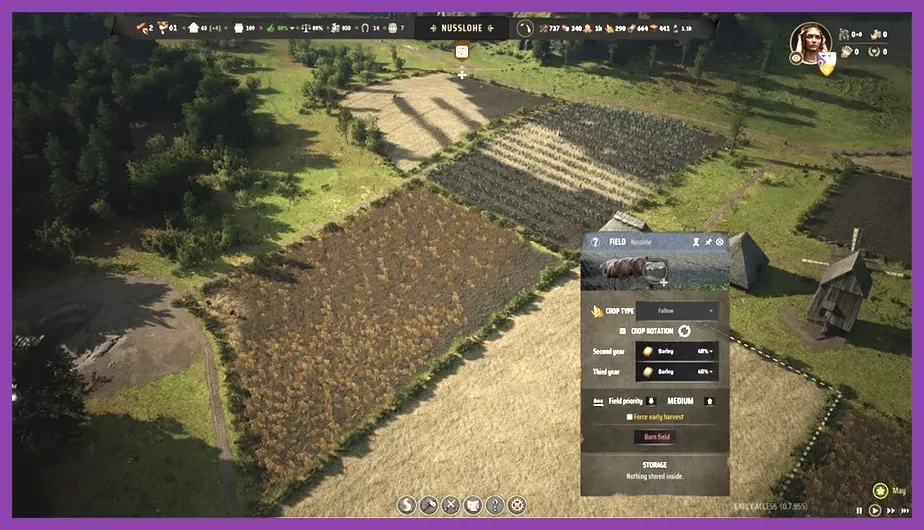
Farming in Manor Lords is notoriously unforgiving if you ignore soil mechanics. Before placing giant wheat or barley fields, build a Farmhouse and use the fertility overlay (shortcut 'Z') to inspect the land. Avoid planting crops on low-fertility soil, as your yields will be abysmal.
Implement a strict three-field crop rotation system consisting of Wheat, Fallow, and Peas or Barley. When a field is left Fallow, its fertility slowly regenerates over the year. If you plant wheat in the same field year after year, the soil fertility drops to zero, destroying your bread production. Furthermore, make sure your Farmhouse is staffed with enough families during September and October to harvest crops before the brutal winter weather ruins the yield.
Barley harvested from your fields can be processed in a Malthouse and sent to a Tavern, which increases village approval and fulfills the requirements needed to upgrade your burgage plots to higher tiers. Proper agricultural planning prevents devastating famines that can wipe out your entire population in a single year.
Generate Steady Regional Wealth via Trade
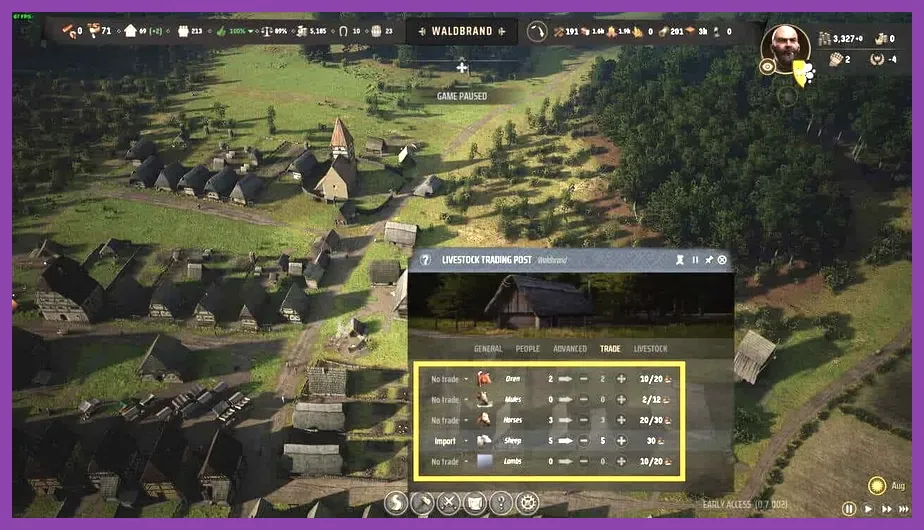
Regional wealth is distinct from personal wealth and is required to purchase livestock, upgrade buildings, and import foreign goods. The fastest way to generate regional wealth early in the game is by exporting surplus items through the Trading Post.
Examine your region's rich deposits—such as rich iron ore, rich clay, or rich berry patches. If you spawn with rich iron, build a Mining Pit and a Smelter, then turn surplus iron slabs into spear components or sidearms to export to neighboring AI lords. Alternatively, if you have excess leather from trapping or surplus planks from your Sawmill, set up trade routes via the Trading Post menu using regional wealth.
Be mindful that establishing trade routes costs regional wealth upfront, but it permanently unlocks continuous import and export of that specific good. Keep your trade routes balanced so you aren't bleeding money on imports before your export economy is fully functional. For combat and economic management tactics, take a look at the foundational strategies found in this tactical starting build resource.
Build a Resilient Militia for Baron and Bandit Threats

Combat in Manor Lords is tactical, realistic, and unforgiving. You do not recruit instant mercenary armies out of thin air; instead, your militia consists of your actual working villagers wielding sidearms, spears, and bows stored in the Armory.
To prepare for bandit camps and the rival AI Baron's expansion, construct a Manor as soon as you reach the Small Village development tier. Building the Manor grants you a retinue of five elite armored bodyguards who act as your heavy shock troops. For your main militia, form units of Spearmen and Footmen. Spearmen excel at holding defensive lines and bracing against enemy charges, while archers pepper enemy flanks with arrows.
Always position your militia on high ground when possible. Fatigue and morale matter immensely; if your troops run across the entire map to engage the enemy, they will enter combat exhausted and rout quickly. Use the 'F' key to brace spearmen facing charging cavalry or aggressive infantry units to absorb the impact and turn the tide of battle.
Plan Your Development Points Wisely
Every time your settlement level increases, you earn Development Points. These points can be spent in the development tree to unlock game-changing technologies across agriculture, industry, and trade. Because points are strictly limited per region, you must choose your path carefully.
For a reliable start, invest your first point into Rye Cultivation if your soil fertility is poor, or Deep Mines if you have rich iron or stone deposits, ensuring infinite resource extraction. Avoid spreading your points too thin across unrelated categories; lean heavily into either specialized industrial production or advanced farming depending on what your local region naturally provides.
By keeping your logistical loops tight, protecting your soil fertility, managing trade routes wisely, and preparing your militia for combat, you will easily conquer the challenges of the official Manor Lords Discord community recommendations and build a legendary medieval domain.