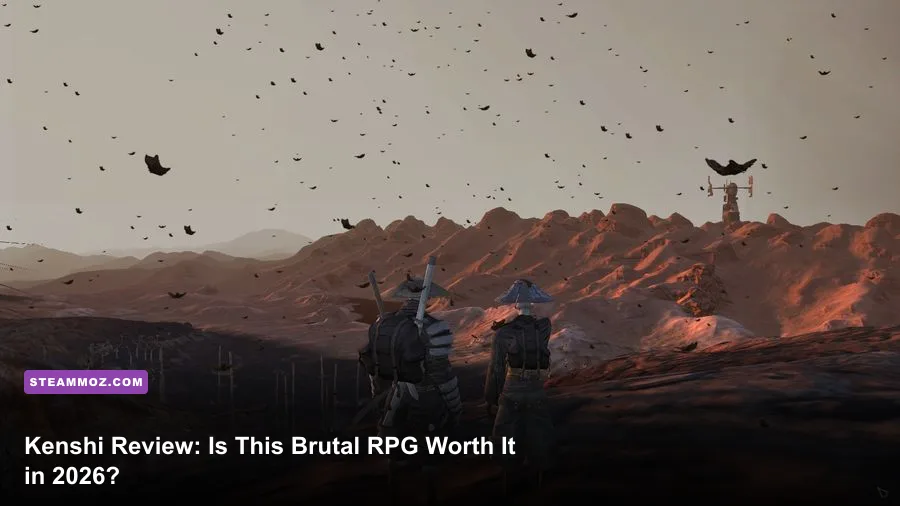
Yes, Kenshi is still worth playing in 2026—but only if you want a punishing sandbox that gives you almost no scripted direction. Its ugly-beautiful world, ruthless combat, squad management, base building, and emergent storytelling remain remarkably distinctive. If you need polished animations, a cinematic campaign, or a gentle tutorial, this is probably the wrong RPG. If you want to lose a leg, rebuild your character, and eventually return with an army to settle the score, Kenshi still has few rivals.
Developed by Lo-Fi Games, Kenshi is a single-player open-world RPG where you control anything from one desperate drifter to a squad of 30 or more survivors. There is no chosen one, no quest marker pointing toward the final boss, and no guaranteed heroic ending. You train by surviving failure, earn money through scavenging or trade, and gradually turn weak recruits into a force capable of challenging the Holy Nation, United Cities, Shek Kingdom, or the world’s more terrifying wildlife.

What Makes Kenshi Still Special in 2026?
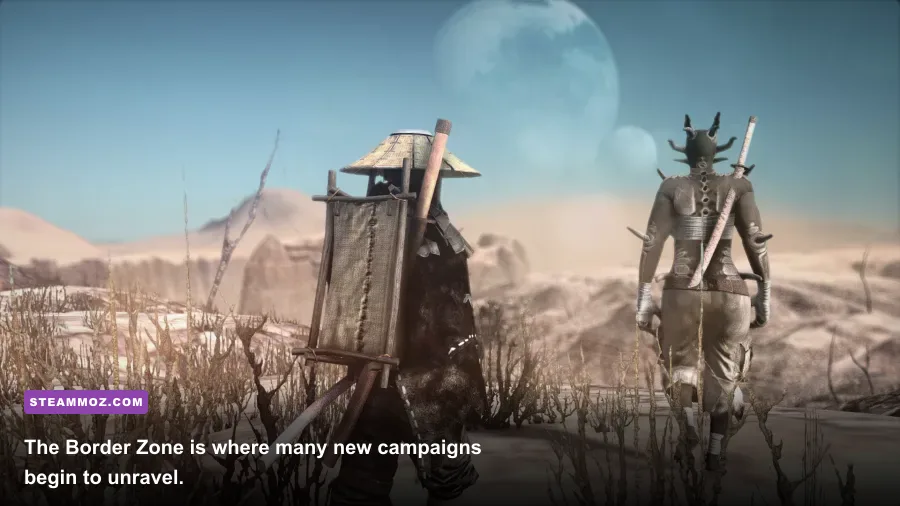
Kenshi’s greatest strength is that its systems constantly collide. A hungry bandit attack can knock out your miner, forcing another squad member to carry them through the Border Zone. That detour can lead to a ruined outpost, a new recruit, or a fight with Dust Bandits that raises your toughness. Later, the same character may become a heavily armored swordsman who returns to the region and dismantles the gang that once bullied you.
That story is not a cutscene. It is the result of simulation, injuries, faction relations, weather, hunger, patrol routes, and your own bad decisions. The game tracks skills from 0 to 100, and the early climb is intentionally painful. A character with 1 Toughness is fragile; a veteran with 50 or more Toughness can stay conscious through punishment that would instantly drop a novice. You do not level up because a designer wants you to enter the next chapter. You improve because the world beat you up and you learned how to absorb it.
The official Kenshi Steam page still sells the core experience without seasonal systems, battle passes, or live-service clutter. That matters in 2026. Kenshi feels like a complete, strange PC sandbox rather than a product built around keeping you logged in.
The catch is its age
Kenshi launched in 2018, and its presentation shows it. Character faces are stiff, animations can look comical, pathfinding occasionally sends a squad member on an unnecessary expedition, and loading large settlements can be rough. The interface also demands patience. You will spend time learning what the medic command does, why your characters are not eating, and why a pack animal has decided to stand 80 meters away from the gate.
Those flaws are real, but they rarely erase the game’s identity. Kenshi is not a beautiful open-world RPG pretending to be a simulation. It is a simulation wearing a rough, low-budget shell.
🎮 Kenshi
Looking to experience this game? Grab your digital key directly on our store for $11.99.
View on Steammoz Store →How Kenshi’s Progression and Combat Really Work
Kenshi combat is not about clicking faster. Once a fight starts, characters use weapon skills, defense, attack, strength, dexterity, armor coverage, and body-part health to determine what happens. A fighter can lose an arm, become unconscious, suffer blood loss, or survive long enough to recover. This makes positioning and medical preparation more important than simply buying a better sword.
Attack and defense are especially important. Melee Attack affects how reliably a character lands blows, while Melee Defense helps them block incoming attacks. Weapon skills improve performance with the relevant category, such as Katana, Sabre, Heavy Weapons, or Martial Arts. Strength influences the ability to use heavy weapons effectively and carry weight; a character swinging an oversized Falling Sun without enough strength will attack slowly and inefficiently.
Weapon choice also changes the kind of campaign you are building. A Nodachi offers strong cutting damage and suits agile fighters, while a Fragment Axe delivers devastating heavy-weapon hits but demands serious strength and has a slower rhythm. Sabres are excellent defensive choices, particularly early on, because they pair useful cutting damage with defensive bonuses. Hackers sit between weapon roles and are valuable against armor and robotic enemies. Martial Arts can become spectacular at high skill, but training from the bottom is dangerous and equipment choices matter.
| Weapon or Style | Best Strength | Main Weakness | Best Use |
|---|---|---|---|
| Nodachi | Fast cutting damage and reach | Less reliable against heavy armor | Agile human or Shek frontline fighters |
| Sabre | Strong defense and flexible damage | Lower burst than heavy weapons | Early-game tanks and caravan guards |
| Fragment Axe | Huge heavy-weapon damage | High strength requirement and slow attacks | Late-game bruisers with strong armor |
| Falling Sun | Exceptional endgame damage | Expensive and strength-hungry | Veterans fighting armored targets |
| Martial Arts | No weapon cost and excellent scaling | Terrible early survivability | Specialist builds and experienced players |
Armor is not a simple upgrade ladder. Heavy armor protects better but can reduce dexterity and combat performance. Samurai Armor gives excellent protection, yet its penalties can make a low-skilled recruit feel helpless. Martial artists typically prefer lighter gear, while dedicated tanks can accept slower attacks to keep vital body parts alive. Head coverage is particularly important because a damaged or unconscious head can end a fight instantly.
The most reliable early plan is simple: carry a good medic, use beds whenever you find them, avoid fighting alone, and let experienced enemies train your defense only when you have a path to survival. The classic “get beaten, heal, repeat” method works because Toughness improves when you recover from being knocked out, but deliberately provoking enemies without backup is how new saves become corpse piles.
Building a Squad That Can Actually Survive
Your first recruit changes Kenshi dramatically. A solo character can sneak, run, and mine safely, but a two- or three-person group gives you rescue options when somebody loses a leg. Ruka, found in Shark or various bars depending on the campaign, is a useful Shek recruit for players who want an early frontline fighter. Beep, available in Mongrel, is one of the game’s most memorable recruits and can eventually become an extraordinary cyborg warrior, but reaching him means surviving the fog around Mongrel.
Burn, found in the northern floodplains, is a Skeleton recruit with strong narrative value and no hunger requirement. Skeletons are mechanically unusual because they need repair beds rather than standard medical treatment, and they are unwelcome in many areas. That makes them powerful but inconvenient. Sadneil, found in Black Desert City, is another Skeleton who can become useful in a tech-focused or research-heavy squad.
Do not rush to recruit every drifter. Food costs scale with squad size, and a large group of weak characters attracts more trouble without providing enough combat power. A useful early squad has one dedicated medic, two or three fighters, one scout or thief, and eventually a laborer focused on mining, farming, or engineering. Put Athletics training on anyone who needs to escape. A fast character can save an entire team by reaching a town gate or dragging a wounded ally out of a fight.
| Role | Priority Skills | Recommended Early Gear | Why It Matters |
|---|---|---|---|
| Frontline tank | Toughness, Melee Defense, Strength | Sabre, heavy armor, backpack avoided in combat | Absorbs attacks and protects specialists |
| Damage dealer | Melee Attack, weapon skill, Dexterity | Nodachi, katana, or hacker | Ends fights before the squad is overwhelmed |
| Scout | Athletics, Stealth, Assassination | Light armor and a small backpack | Escapes danger and retrieves resources |
| Medic | First Aid, Robotics, Athletics | Splint kit, medkits, repair kits if needed | Prevents injuries from becoming deaths |
| Engineer | Engineering, Science, Farming | Light armor and labor-friendly equipment | Unlocks walls, research, production, and food |
The game’s carry-weight mechanics also deserve attention. Heavy loads train Strength, but they slow you down and can turn a routine trip into a death march. Carrying a dead body adds weight and can be useful for training, but it is not a substitute for actual combat experience. Keep combat backpacks off frontline characters when a fight is likely; their encumbrance and attack penalties are rarely worth the extra inventory space.
For more squad-based survival ideas, our coverage of games like Iratus is a useful comparison, though Kenshi is far more open-ended and less turn-based.
Base Building, Factions, and the Cost of Ambition
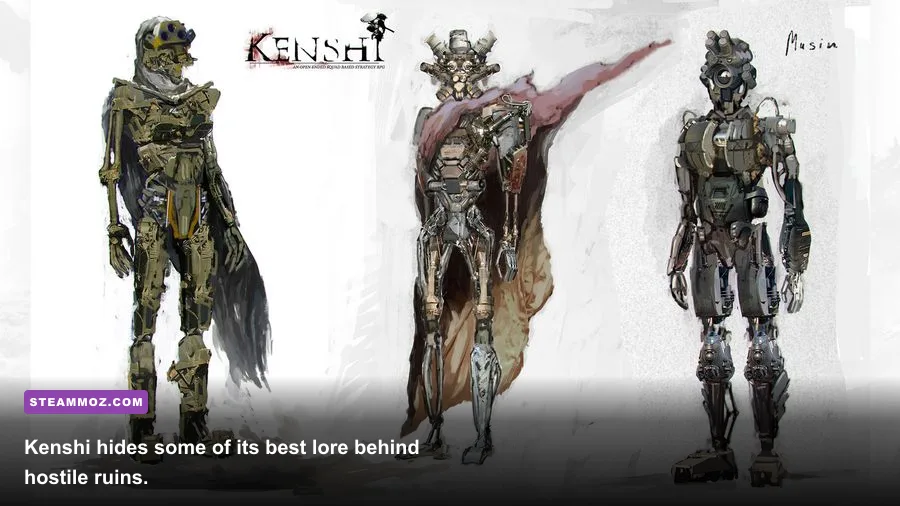
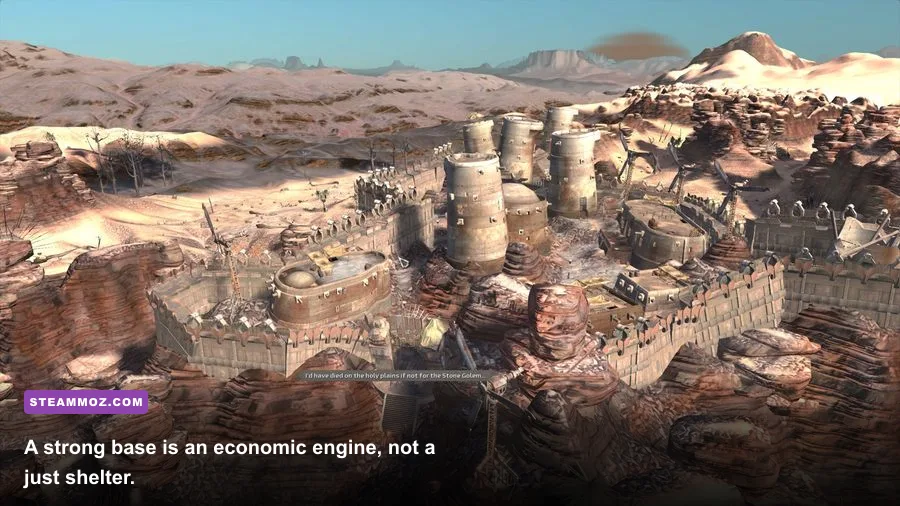
Kenshi lets you build almost anywhere, but that does not mean you should. A settlement near the Border Zone is accessible and relatively manageable, while a base inside Holy Nation territory can attract attention if you have Skeletons, non-humans, or characters who do not satisfy the faction’s religious expectations. United Cities territory brings taxes, slavery, and noble politics. The Shek Kingdom is less hostile to warriors but can still create problems if your reputation is poor.
Starting a permanent base too early is one of Kenshi’s classic traps. Walls, turrets, farms, wells, power generators, storage, and production stations all sound productive until raids arrive and your six undertrained recruits discover that a gate is not a strategy. Research first. A small outpost with a storm house, beds, storage, and a reliable food source is safer than an enormous fortress with no trained defenders.
Food is the hidden limit on expansion. Wheatstraw farms support bread production, while cactus is particularly practical in arid regions. Grog and hashish can make money, but trade legality varies by faction, and carrying contraband through United Cities or Holy Nation territory can create a very expensive fight. Hashish production near flats or swamp regions can be profitable, but the route to market is more dangerous than the production itself.
Faction relations also create consequences that many RPGs avoid. Helping the Anti-Slavers can put you at war with the United Cities. Attacking a Holy Nation leader can change patrol behavior and alter parts of the world. The legendary Phoenix is not merely a quest target; major faction leaders are tied to world-state changes. Kenshi rewards curiosity, but it does not protect you from the political fallout.
Before settling, check nearby water, fertility, iron, stone, enemy patrols, and the distance to a town. A scenic location in Shem may offer room and resources, but a remote base can become a logistical nightmare. The best base is not always the safest location—it is the location your squad can defend while maintaining supply lines.
Performance, Mods, and What to Expect on PC
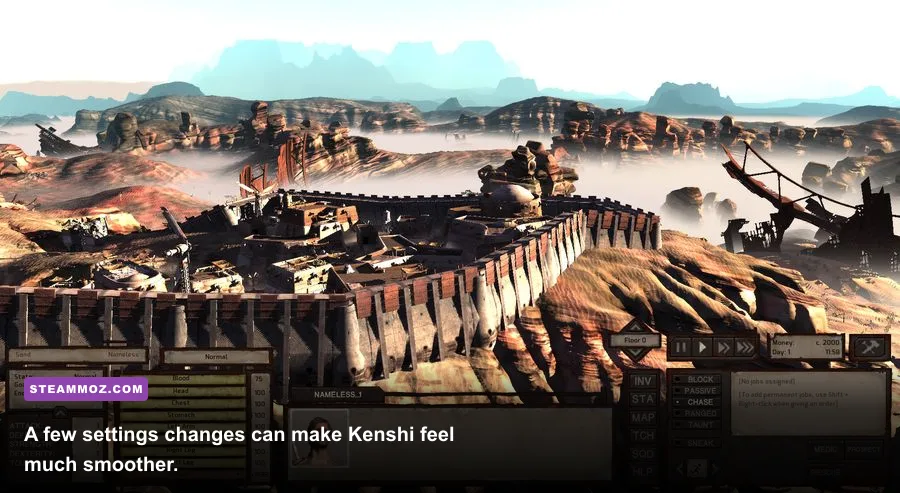
Kenshi is not a demanding modern game in the usual sense. Its real performance problems come from loading large areas, rendering many characters, and moving the camera quickly across a dense settlement. On modern hardware, high frame rates are possible in quiet wilderness, but crowded cities and multiple loaded squads can still produce stutter.
The most useful setting changes are usually texture quality, shadows, view distance, and the number of loaded characters. Lowering shadows has a noticeable visual impact with a modest performance benefit, while reducing view distance can help when flying across the map. If you use an integrated GPU or older laptop, start with a lower texture preset and avoid maxing out shadows.
| Setting | Recommended Value | FPS Impact | Visual Trade-Off |
|---|---|---|---|
| Texture Quality | High on dedicated GPU; Medium on integrated graphics | Medium | Lower settings soften terrain and character detail |
| Shadow Quality | Low or Medium | Medium to High | Less definition around buildings and characters |
| View Distance | Medium | Medium in open areas | Far terrain and objects appear later |
| Water Reflections | Low | Low to Medium | Water looks flatter but remains readable |
| Fast Zone Hopping | Enabled if stable | Reduces travel waits | Can increase stutter on slower drives |
Install Kenshi on an SSD if possible. It will not magically eliminate every hitch, but it reduces loading frustration when entering towns or switching regions. Keep autosaves enabled, especially before entering ruins, major cities, or faction territory. Save corruption is uncommon, yet Kenshi’s world can change in ways you did not anticipate, and a backup is worth more than hours of stubborn pride.
Mods are a major reason Kenshi remains relevant in 2026. The Steam Workshop has quality-of-life tools, new weapons, expanded recruit pools, animation adjustments, and overhaul collections. Start with small improvements rather than installing a total conversion on your first run. Interface upgrades, better storage, map additions, and performance-conscious fixes can smooth rough edges without removing the survival tension.
If PC tuning is a priority, Steamoz’s guides to higher FPS settings and stable performance profiles cover the same practical approach: reduce expensive effects first, then protect image quality where it matters.
Who Should Play Kenshi in 2026?
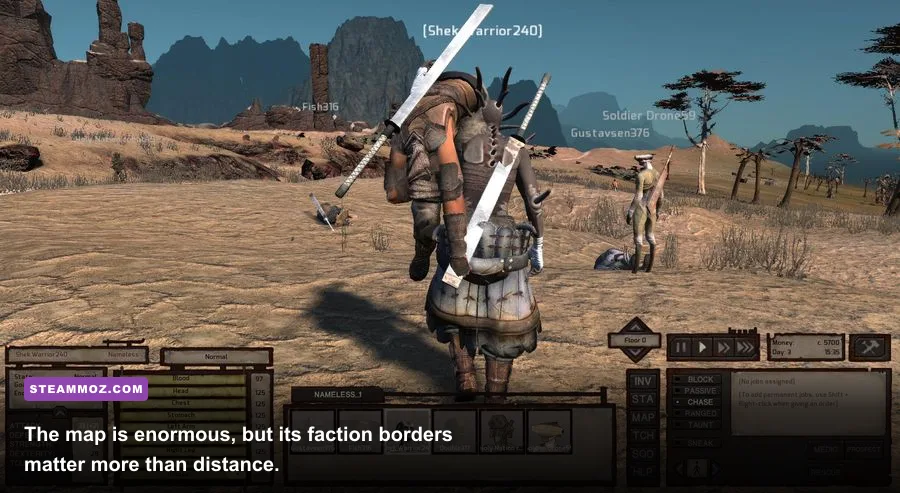
Kenshi is worth buying if you enjoy games that let you make your own objectives. You might become a trader, bounty hunter, martial artist, skeleton researcher, hashish smuggler, anti-slavery revolutionary, or settlement builder. The game does not care which fantasy you choose. It gives you tools, factions, enemies, and enough empty space to create the rest.
It is also ideal if you enjoy learning through consequences. Getting captured by Reavers, losing a limb to a Beak Thing, or angering the Holy Nation can feel brutal, but each disaster teaches you something concrete. You learn which roads are safe, which animals can outrun you, how many medkits to carry, and why a scout should never be the slowest person in the squad.
You should skip Kenshi—or at least wait for a deep sale—if you want immediate narrative momentum. There are lore discoveries, named characters, ancient ruins, and powerful faction arcs, but the story is scattered across books, environmental details, dialogue, and world-state changes. You will need to care enough to investigate locations such as Black Desert City, Mongrel, World's End, the Ashlands, and the Deadlands.
The closest modern comparison is not a conventional RPG. Kenshi sits somewhere between a colony simulator, survival game, squad tactics sandbox, and open-world adventure. Players who enjoy the emergent storytelling of story-focused RPGs may appreciate its consequences, while fans of a guided cinematic campaign may find its freedom exhausting.
Final verdict
Kenshi earns a strong recommendation in 2026, with one major warning: you have to meet it halfway. Its combat is clumsy, its interface is dated, and the opening hours can be merciless. Yet no other game quite matches the feeling of watching a starving nobody become a feared commander through nothing but scars, planning, and stubbornness.
Start with the Wanderer opening if you want the cleanest introduction. Keep the squad small, train Athletics early, buy medkits before weapons, and do not build a permanent base until you can reliably defeat local bandits. Once you understand those fundamentals, Kenshi stops feeling like a hostile game and starts feeling like a world that remembers what you did.
That is why it remains worth playing in 2026: not because it has aged gracefully, but because its strange combination of freedom, cruelty, and consequence still feels completely its own.
For the official developer background, visit Lo-Fi Games, and check the official Kenshi Steam community for current Workshop and technical discussions.