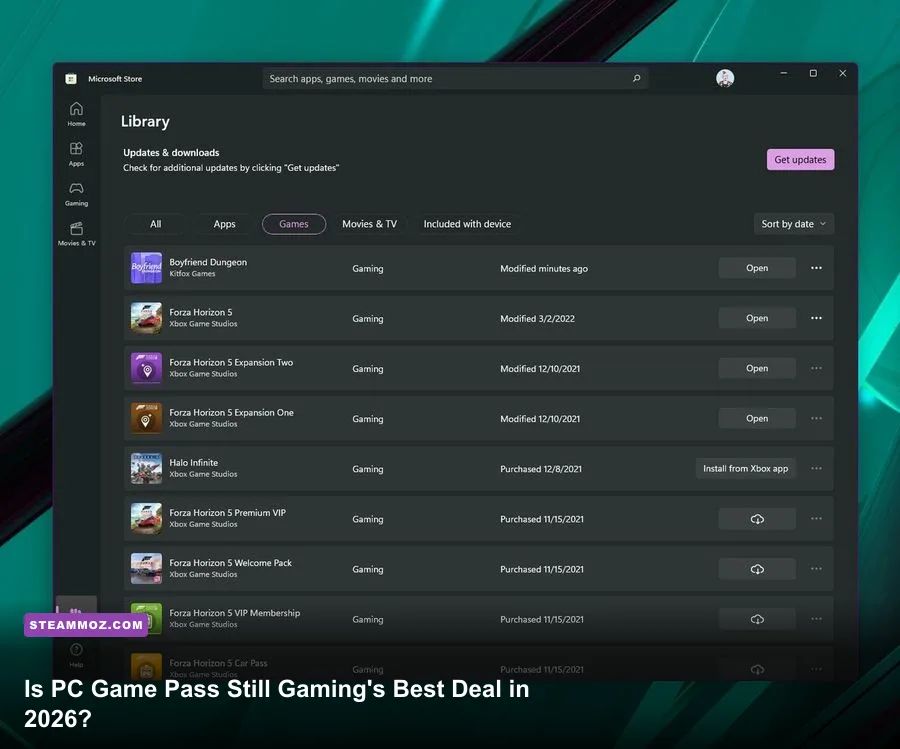
If you play at least two brand-new AAA releases every twelve months, PC Game Pass is undeniably worth your money in 2026. At $11.99 per month, Microsoft's subscription delivers immediate Day One access to massive first-party blockbusters, an immense vault of indies, and the entire base EA Play catalog without forcing you into the pricier console-oriented Ultimate tier. However, if you are a single-game obsessive sinking 800 hours a year into live-service shooters, or a strict modding purist who treats Steam Workshop like sacred ground, the subscription transforms into dead weight on your monthly bank statement.
Pricing Tiers and What PC Gamers Actually Get
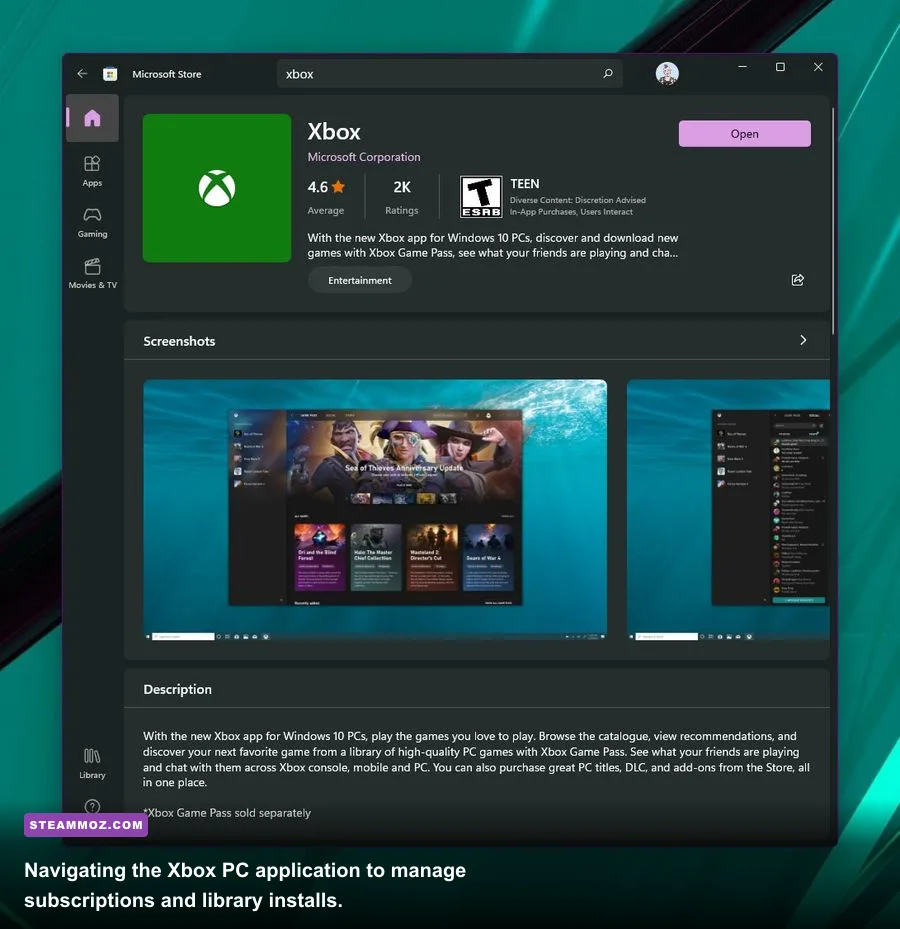
Navigating Microsoft's subscription branding used to feel like parsing a dense RPG skill tree, but the PC landscape has settled into clear battle lines. Unlike console owners who were pushed into stripped-down tiers devoid of Day One launches, PC players kept their standalone tier intact. The standard PC Game Pass subscription sits at $11.99 a month, giving you the complete PC library, all Day One releases from Xbox Game Studios, Bethesda, and Activision Blizzard, alongside the standard EA Play membership. You also retain member discounts of up to 20% on purchasing catalog games permanently, plus 10% off select add-ons and downloadable content.
By contrast, Xbox Game Pass Ultimate costs $19.99 a month. For dedicated desktop enthusiasts, that extra eight dollars monthly is largely wasted unless you actively utilize Xbox Cloud Gaming on a phone or laptop, or you own an Xbox Series X in the living room. Ultimate provides online console multiplayer perks, exclusive Cloud streaming access, and periodic cosmetic drops for games like Apex Legends and Overwatch 2. If you sit exclusively in front of a keyboard, mouse, and high-refresh monitor, base PC Game Pass is the only tier you should consider.
| Subscription Tier | Monthly Price | Day One Releases? | EA Play Included? | Target Audience |
|---|---|---|---|---|
| PC Game Pass | $11.99 / mo | Yes (Full Access) | Yes (Standard Tier) | Pure PC Gamers wanting raw value |
| Game Pass Ultimate | $19.99 / mo | Yes (Console + PC) | Yes (Console + PC) | Cross-platform players & Cloud users |
| Ubisoft+ Premium | $17.99 / mo | Yes (Ubisoft Only) | No | Franchise diehards (Assassins Creed, Far Cry) |
| EA Play Pro (PC) | $16.99 / mo | Yes (EA Only) | Native Service | Madden, EA FC, and Battlefield veterans |
When stacked against rival platform passes, Microsoft's pricing leverage shows its teeth. Ubisoft+ Premium charges a hefty $17.99 monthly for a catalog restricted to a single publisher. While it includes DLC-loaded editions—something we dissected when covering the Far Cry 6 beginner builds—it lacks the diverse genre coverage of Microsoft's service. Sony's PlayStation Plus remains shackled to its console ecosystem with no true standalone PC native client, leaving Microsoft without direct, identical PC competition.
The Raw Math: Does the Math Actually Check Out?

Evaluating subscription value requires strict arithmetic rather than marketing hype. A year of continuous PC Game Pass costs exactly $143.88 before local sales taxes. With the industry standardizing AAA retail releases at $69.99 on storefronts like the Steam Store, your annual break-even point is mathematically straightforward: you must complete or thoroughly play exactly two new major full-price games per calendar year, plus one mid-tier $20 indie, to cross into positive territory.
Consider a typical 12-month release cycle under Microsoft's first-party umbrella. A player diving into Doom: The Dark Ages ($69.99), Obsidian's fantasy RPG Avowed ($69.99), and the annual Call of Duty campaign and multiplayer package ($69.99) consumes $209.97 worth of software. You have surpassed your entire annual subscription cost by over $66, and that calculation completely ignores the dozens of experimental indie releases you downloaded on a whim on Friday nights.
| Gamer Profile | Annual Spend (Sub) | Retail Equivalent Played | Net Value / Loss | Strategic Verdict |
|---|---|---|---|---|
| The Blockbuster Binger | $143.88 | $279.96 (4 AAA Games) | +$136.08 | Essential annual subscription |
| The Indie Explorer | $143.88 | $195.00 (7-8 Indiez) | +$51.12 | High value, zero financial risk |
| The On-and-Off Tactician | $47.96 (4 months) | $139.98 (2 AAA Games) | +$92.02 | Optimal mathematical strategy |
| The Dedicated Specialist | $143.88 | $69.99 (1 Game + F2P) | -$73.89 | Financial trap; buy on Steam instead |
The math shifts dramatically depending on your gaming habits. If your rig exists primarily to run competitive live-service titles like Counter-Strike 2, Dota 2, or Valorant (even with Game Pass unlocking all Valorant agents), paying month-after-month for an idle game catalog is money lit on fire. The smartest players treat the subscription like a utility knife: they activate the pass for two months during dense release windows, consume the big-ticket campaigns, and promptly cancel until the next wave hits.
The Games Library: Heavyweights, Day One Drops, and Hidden Gems

The operational strength of PC Game Pass rests entirely on its rotating catalog of roughly 400 titles. Microsoft's historic shopping spree—absorbing ZeniMax Media and Activision Blizzard—means the subscription holds exclusive Day One catalog dominance over gargantuan franchises. Having instant access to release-day campaigns from id Software, MachineGames, Arkane, and Treyarch without dropping 70 bucks a pop fundamentally alters how PC players construct their seasonal backlogs.
Beyond the headliners, the service functions as the premier discovery engine for mid-tier masterpieces and strategic PC indies. Titles like Slavic Magic's Manor Lords, pocket-sized tactical roguelikes, and sprawling space sims thrive here. Instead of agonizing over whether to spend $30 on a niche genre piece, you hit install and run it unencumbered. If you love deep space combat, titles like Everspace 2 and its secret locations offer dozens of hours of exploration that feel like found money when pulled from an active subscription.
The inclusion of the basic EA Play tier adds substantial muscle to the PC offering. While you don't get immediate day-and-date access to brand-new EA sports releases (which remain gated behind EA Play Pro), games reliably enter the basic vault six to nine months post-launch. Masterpieces like the Dead Space remake, Star Wars Jedi: Survivor, and the complete Mass Effect Legendary Edition sit ready to download. For retro fans who love fast, arcade-fueled action, jumping into classics like Far Cry 3: Blood Dragon or checking out combat systems across different eras shows the breadth of historical shooters bundled into partner apps.
The Windows App and Technical Friction: Where PC Game Pass Stumbles
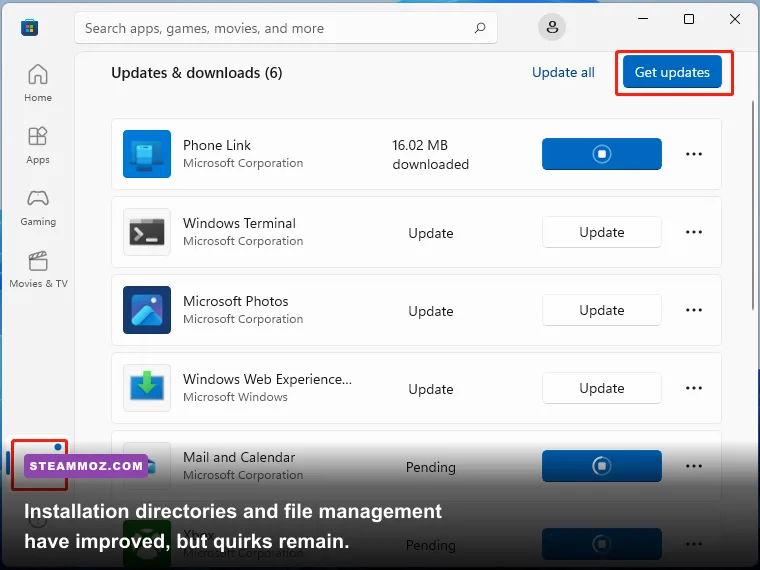
While the economic argument for PC Game Pass is nearly airtight, its technical execution remains its Achilles' heel. The Windows Xbox app has evolved significantly from the horrific, broken days of encrypted UWP (Universal Windows Platform) containers, but it still pales in comparison to the rock-solid reliability of Valve's Steam client. You will occasionally run into phantom download queues, failed drive allocations, and sync errors between the Xbox app, the Microsoft Store background daemon, and Windows Gaming Services.
Modding continues to be a contentious battleground. While Microsoft now allows users to install games into custom, unencrypted directory folders—meaning you can easily alter config .ini files, swap save files, and drop ReShade presets into game directories—deep engine modding is a mixed bag. Titles requiring specialized script extenders (such as Starfield Script Extender or Skyrim Script Extender) frequently fail or run into compatibility roadblocks on Game Pass builds because executable signatures differ from their Steam counterparts. When community patches are required to resolve stability blunders—much like applying Elex PC crash fixes and FPS stabilization—Steam builds give you unfettered low-level access that the Xbox client occasionally throttles.
| Feature / Capability | PC Game Pass (Xbox App) | Steam Platform | Performance / Practical Impact |
|---|---|---|---|
| File Access & Directory Control | Custom Folders (Limited MSIXVC) | Full Direct Access | Minor hurdles with deep DLL injection |
| Modding Support | Basic Mods / Manual Files | Steam Workshop + Script Extenders | Game Pass struggles with complex mods |
| Cloud Saves & Cross-Progression | Seamless across PC & Xbox Console | Steam Cloud (PC Ecosystem Only) | Game Pass wins for console cross-players |
| Download Stability & Speeds | Inconsistent (Gaming Services dependent) | Industry Benchmark (Max Bandwidth) | Xbox app occasionally throttles gigabit lines |
Storage management is another genuine pain point. Modern blockbusters routinely demand between 90GB and 150GB of NVMe SSD real estate. Because Game Pass encourages you to download three or four massive games simultaneously, an average 1TB drive fills up instantly. Unlike Steam's smooth shader pre-caching pipeline, Game Pass titles compile shaders on first launch, occasionally introducing initial stuttering that requires fine-tuning graphics settings, similar to optimizing Far Cry 6 for maximum FPS.
The Churn Trap: Games Leaving, DLC Baggage, and Digital Ownership
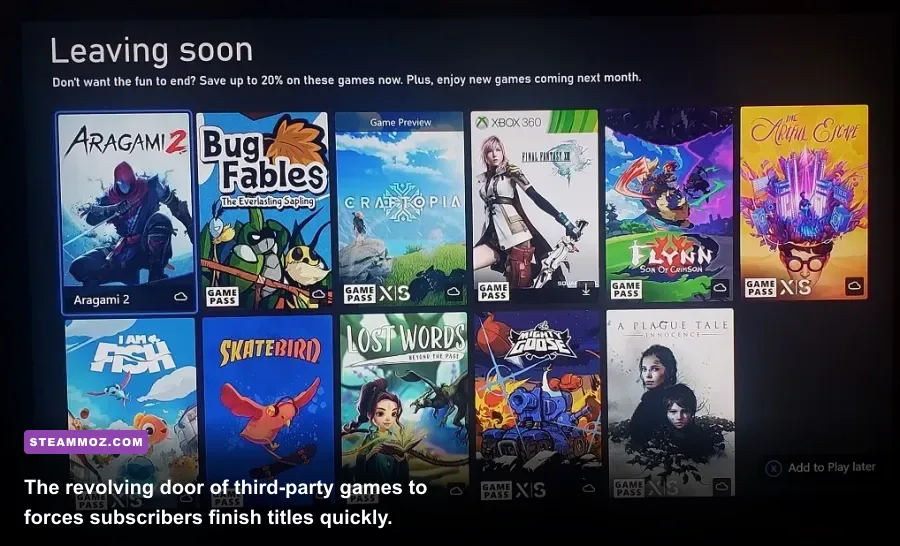
The most psychological hazard of PC Game Pass is what veteran subscribers call the "Churn Trap." While Microsoft-owned studios remain on the service permanently, third-party agreements operate on strict licensing timers—typically 12 to 18 months. Microsoft announces departures with a two-week warning window through their Xbox Wire announcements. If you are 60 hours into a massive 120-hour Japanese RPG like Persona or a sprawling tactical strategy title, that sudden departure banner creates immense completion anxiety.
Then comes the DLC trap. Game Pass provides the *base version* of almost every game. If an expansion drops—such as a story DLC or weapon pack—you have to buy it out of pocket. If the game later leaves Game Pass, you are left holding paid DLC for a base game you no longer have access to unless you buy the base game at retail or re-subscribe. This friction is particularly annoying in gear-heavy titles where end-game equipment is locked behind expansions, reminiscent of deciding whether weapons in an Everspace Deluxe Upgrade are worth actual cash over the base campaign.
There is also the philosophical reality of digital ownership. When you cancel PC Game Pass, your massive library vanishes overnight. Save files remain safely tethered to your Microsoft cloud account, but your access evaporates. For players who love building a permanent, curated digital shelf that they can revisit a decade later, the rental model of Game Pass feels ephemeral and ungrounded.
Final Verdict: Who Should Subscribe and Who Should Walk Away
PC Game Pass in 2026 remains the most powerful economic engine in modern PC gaming, but it is not a one-size-fits-all mandatory tax. It represents a staggering discount for the curious, dynamic gamer who wants to jump across varied genres, burn through single-player campaigns, and try out indie hits without opening their wallet for every single transaction. If your gaming habits mirror a wide buffet, Microsoft is practically subsidizing your hobby.
If you fit into that category, the optimal play is simple: keep your $11.99 PC Game Pass subscription running, enjoy Day One drops from Bethesda and Activision, play indies until your SSD groans, and leave your Steam account for deep-sale classics, heavily modded RPGs, and forever-games you intend to keep for life. But if you find yourself logging into the same tactical shooter five nights a week while the subscription fee quietly auto-renews in the background, hit the cancel button without hesitation. On PC, flexibility is king—and you should never pay rent on a playground you aren't actively using.