The fastest Indoorlands progression loop is simple: build a compact attraction cluster, keep guests happy, reinvest in throughput, and avoid expensive decoration until your daily balance is comfortably positive. You don't need a giant park to level quickly. A small, clean venue with short walking routes generates more guest activity, reputation progress, and spendable gold than a sprawling floor plan packed with attractions nobody can reach.
This guide focuses on the management systems that actually move the needle: attraction demand, guest needs, pathing, staff coverage, research unlocks, and cash-flow timing. Indoorlands has changed through updates, so treat the money figures below as safe operating targets rather than universal hard-coded payouts. Your scenario, difficulty, attraction availability, and ticket settings can shift the exact numbers.
Build the Smallest Park That Can Loop Guests
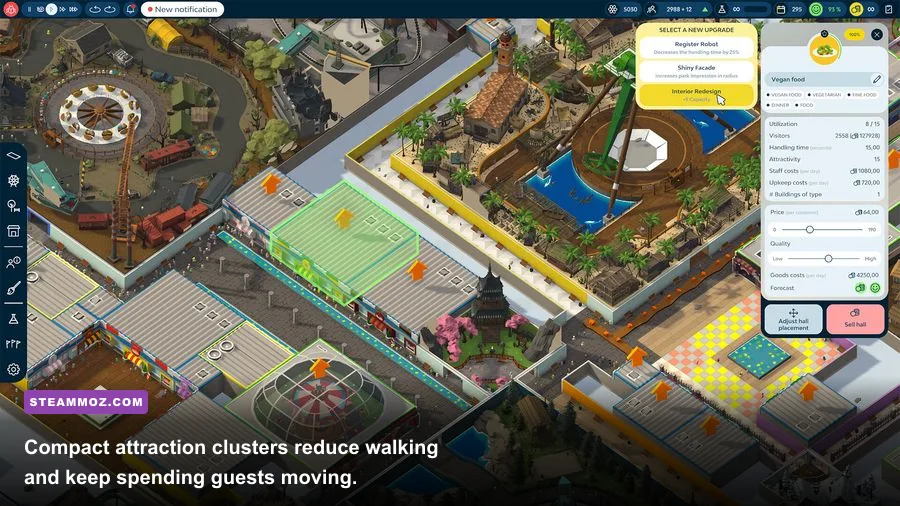
Your first priority is a loop, not a landmark. Put the entrance, a compact attraction group, toilets, seating, and your basic service facilities within a short walk of one another. A rectangular path around the first attraction cluster works better than a long corridor because guests naturally circulate instead of reaching the end of a dead route and turning around.
Start with two or three attractions that serve different guest preferences, then add a toilet and rest area before buying another major attraction. The goal is continuous activity: guests enter, find something appealing, satisfy a need, spend money, and encounter another attraction before leaving. If your first room is too large, resist filling it. Unused floor space is harmless; a second room with long paths and no revenue is not.
Use the guest and attraction information panels constantly. If an attraction spends most of the day idle, it isn't automatically a bad purchase. Check whether the real problem is distance, price, a missing facility, low appeal, or a guest need that is being ignored. The fastest way to throw away early gold is to demolish a useful attraction because your pathing is inefficient.
| Early investment | Recommended timing | Why it helps leveling | Gold risk |
|---|---|---|---|
| Basic attraction | Immediately | Creates the first source of guest activity and experience | Low |
| Toilets and seating | Before the second cluster | Prevents guests leaving with unmet needs | Low |
| Food or drink facility | Once traffic is consistent | Adds a second spending opportunity during each visit | Medium |
| Decorative objects | After positive cash flow | Can improve appeal, but rarely pays back first | Medium |
| Large expansion | After a reserve is saved | Raises capacity without risking a cash crash | High |
For a useful comparison, the compact-room principle also appears in our Dungeon Tycoon performance guide: in both management games, preventing wasted movement and wasted simulation time is more valuable than building wide for appearance alone.

🎮 Indoorlands
Looking to experience this game? Grab your digital key directly on our store for $4.74.
View on Steammoz Store →How to Turn Guest Satisfaction Into Fast Progress
Indoorlands rewards a functioning park, not an expensive one. Guests who can quickly reach attractions, restrooms, food, and relaxation points are more likely to stay long enough to generate several actions. Those actions are what push your progression forward. A guest who walks across an empty hall to discover a full facility is effectively lost revenue and lost experience.
Watch the needs panel during a busy period and identify the first need that repeatedly turns red or falls low. Fix that bottleneck before upgrading anything else. If hunger or thirst is the problem, place the relevant facility beside the main traffic loop. If tiredness is the problem, add seating near the attractions rather than at the entrance. If queues are forming, add capacity or improve the route before purchasing a premium attraction.
Keep attraction clusters mixed. A room containing only one type of activity can look efficient, but it gives guests fewer reasons to remain in the venue. Pair an active attraction with a lower-intensity option and a nearby need-filling facility. This creates a reliable rhythm: activity, recovery, spending, then another activity. It also makes your park less vulnerable when one attraction has weak demand.
Use the pause button as a planning tool
Pause before every major build. Rotate the camera, inspect path connections, and check that staff can reach the facilities they serve. Build the path first, then the attraction, then the supporting objects. That order prevents the classic mistake of placing a large attraction where the only usable walkway should be.
During the first few in-game days, don't chase a perfect satisfaction score. Chase stability. A park holding roughly 70 percent or better satisfaction while earning a positive daily balance is healthier than a beautiful park that only survives because you are constantly selling objects. Once that stable loop exists, each new attraction accelerates progress instead of widening the deficit.
| Symptom | Likely cause | Best fix | What not to do |
|---|---|---|---|
| Guests leave quickly | Unmet needs or excessive walking | Move facilities onto the main loop | Buy another distant attraction |
| Attraction is idle | Low appeal, poor route, or wrong audience | Inspect demand and shorten the route | Assume every idle attraction needs replacing |
| Queues or crowding appear | Too much demand for current capacity | Add capacity or duplicate the bottleneck | Expand the entire park |
| Daily income is negative | Overbuilt facilities or staff costs | Pause expansion and audit recurring costs | Take on another expensive unlock |
Best Gold Farming Order for New Parks
Gold farming in Indoorlands is really cash-flow farming. You make money by increasing the number of profitable guest actions per minute while keeping recurring costs under control. The strongest early sequence is attraction first, basic needs second, food and drink third, and cosmetic upgrades last.
Save a reserve equal to at least two or three days of operating expenses before expanding. This matters because a new attraction may take time to reach full demand, while staff wages and facility costs continue immediately. If your balance is already close to zero, one slow day can force a painful sell-off. Selling a decorative item is manageable; selling an attraction that generates your core traffic can collapse the whole loop.
Don't spam staff. Hire enough employees to keep the key facilities functioning and to prevent service delays, then watch their workload. An idle employee is a recurring expense with no direct return. Conversely, a constantly overloaded employee can create downtime that costs more than another hire. Check the staff panel after opening hours and again during the busiest guest period; those two snapshots reveal whether your staffing is genuinely efficient.
Ticket income and facility income should support each other. If raising the ticket price causes satisfaction or attendance to drop, the extra charge may lose more money than it creates. Make small changes, wait through a full operating cycle, and compare the next day's balance. The same rule applies to attraction pricing: a slightly cheaper, heavily used attraction often beats a costly attraction that guests avoid.
For broader economy-minded play, our Citizen Sleeper 2 credit-farming guide makes a similar point: the best grind is usually a repeatable low-risk loop, not a flashy high-value gamble.
| Park stage | Spend gold on | Hold back on | Safe financial target |
|---|---|---|---|
| Opening | One attraction, paths, toilet, seating | Large rooms and decorations | Positive balance before expansion |
| Early growth | Food, drink, and a complementary attraction | Premium attractions with weak demand | Two to three days of reserves |
| Midgame | Capacity, staff efficiency, research unlocks | Duplicating low-traffic facilities | Stable income during peak periods |
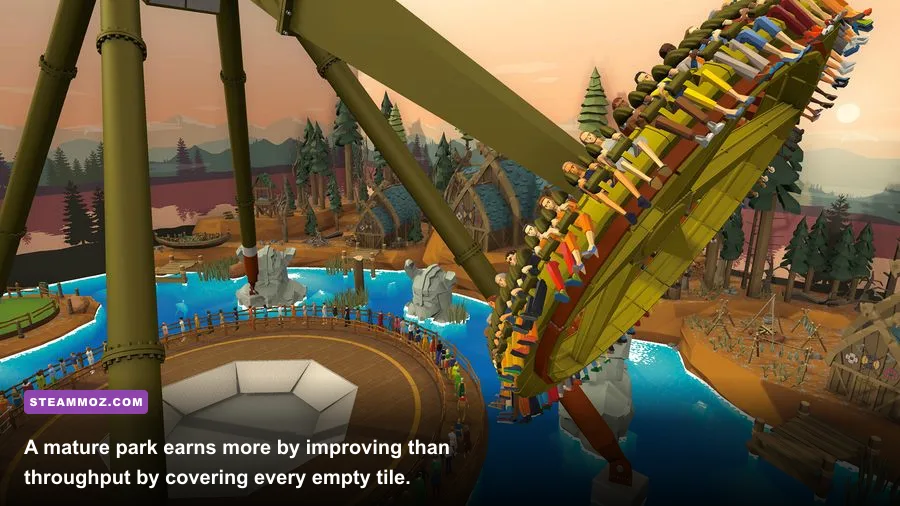
| Late expansion | High-appeal attractions and themed areas | Expanding every empty tile | Expansion paid from operating profit |
Research and Unlocks: Spend Progress Without Killing Profit
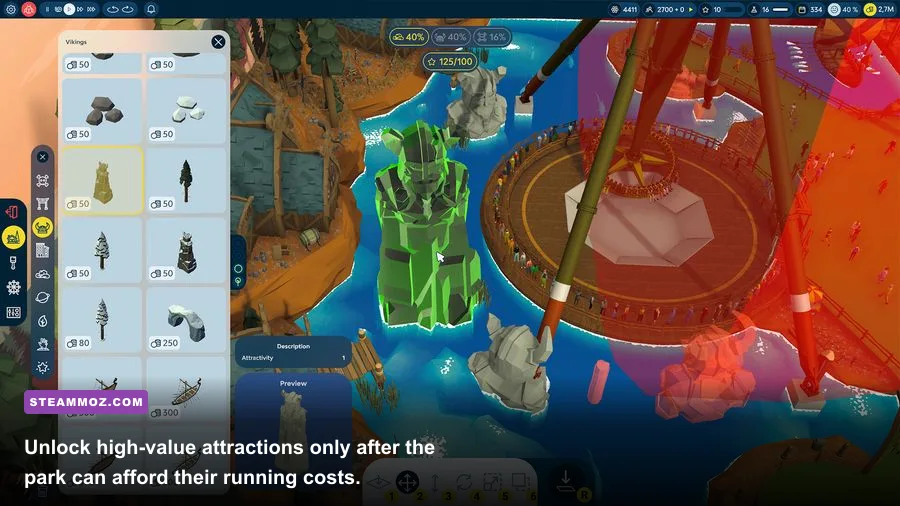
Research unlocks are tempting because they visibly promise a stronger park, but unlocking something doesn't mean you should build it immediately. Prioritize options that improve guest throughput, satisfy an unmet need, or diversify a busy attraction cluster. A new attraction with high construction and running costs is a liability if your current park still has empty queues.
Use a simple unlock test: can the new item serve the guests you already have, can your staff support it, and can your reserve absorb several quiet days? If the answer to any of those is no, keep earning with the current setup. Progress continues through a healthy operating park; there is no prize for reaching a new unlock and immediately going bankrupt.
Research is also a good reason to avoid decorative spending early. Decoration can make a venue feel finished, but an attraction or facility that generates repeated guest actions usually accelerates progression faster. Once the core loop works, decorate the routes guests actually use. That way any appeal benefit is concentrated where it can influence the most visitors.
Keep an eye on the official Indoorlands Steam page and the developer's official site for patch notes. Balance updates can change attraction costs, progression requirements, or the value of specific facilities. The Steam community discussions are useful for checking whether a reported payout or unlock condition belongs to the current build.
Late-Game Expansion Without Losing Your Gold Loop
When your first cluster is consistently profitable, copy its logic rather than abandoning it. Build a second loop beside the original, connect it with a short path, and place shared services where both areas can reach them. This creates a larger park without doubling every expense. It also makes troubleshooting easier: if income drops, you can inspect the new cluster without dismantling the proven one.
Separate noisy, high-traffic attractions from quiet rest and food areas when crowding begins. The point isn't aesthetic zoning; it's keeping guests from blocking routes and making long detours. Use the busiest path as your diagnostic line. If guests repeatedly bunch up at one turn, doorway, or facility, fix that point before adding more capacity elsewhere.
Run a final three-cycle test after every major expansion. Check the opening balance, peak guest period, and closing balance. If the park ends each cycle richer while satisfaction remains stable, the expansion is working. If gold falls, close the spending spree, remove unnecessary recurring costs, and let the original attractions rebuild your reserve.
For more management-game lessons about profitable layouts and controlled growth, see our Darklands beginner build guide and Dins Legacy gear breakdown. The games are very different, but the principle carries over: invest in the systems you use constantly, not the impressive option you can barely afford.
The winning Indoorlands routine is deliberately boring: compact loop, short walking routes, balanced needs, controlled staffing, and expansion paid for by profit. Let guests complete more actions per visit, reinvest only after your reserve is safe, and your park will level faster than a sprawling build that looks busy but quietly bleeds gold.