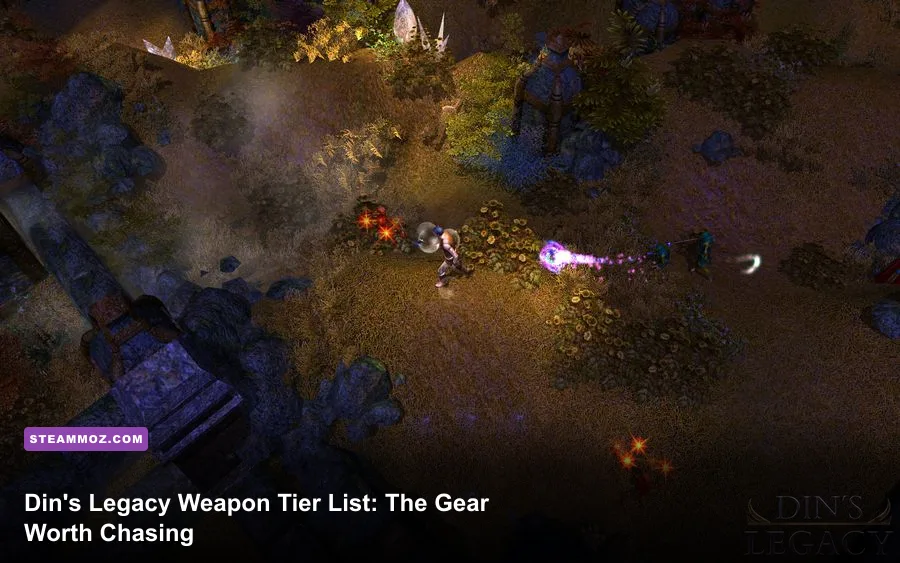
The best Din's Legacy weapons are not fixed legendary drops. Because Soldak's action RPG builds much of its loot from randomized bases, affixes, and level scaling, the winning strategy is to rank weapon families by role and then judge every individual drop by damage, attack speed, range, and defensive value. For most characters, one-handed weapons sit in S-tier for flexibility, bows and crossbows lead safe ranged builds, and staves or wands become S-tier only when your skills and mana economy support them.
That distinction matters. You cannot simply memorize a permanent list of named swords and expect it to work across every new world. A rare axe found early may be incredible for ten levels and obsolete after the next dungeon. Din's Legacy is a procedural game, so the real equipment skill is learning which numbers and modifiers deserve your attention before you sell, salvage, or replace an item.
How this Din's Legacy weapon tier list works

This ranking measures practical value rather than raw tooltip damage. I am judging each weapon type across the situations that actually end runs: crowded dungeon rooms, ranged enemies, elite packs, boss arenas, and the awkward transition between character levels. A weapon earns a high tier when it remains useful without demanding a narrowly optimized build.
There is no universal “best weapon” because Din's Legacy ties equipment to class skills, mutations, and the attributes your character has accumulated. A fast blade with mediocre damage can outperform a slow hammer if it lets you interrupt enemies, recover from mistakes, and trigger on-hit effects more often. Conversely, a heavy two-handed weapon can delete dangerous targets before they reach you, but its slower attacks make missed swings expensive.
| Tier | Weapon family | Why it ranks here | Best users |
|---|---|---|---|
| S-Tier | One-handed sword, axe, mace | Reliable damage, flexible off-hand options, forgiving recovery | Warrior, cleric, hybrid melee builds |
| S-Tier | Bow and crossbow | Safe damage and excellent control of engagement distance | Ranger, rogue, ranged hybrids |
| A-Tier | Two-handed sword and axe | High burst potential, but slower attacks and fewer defensive options | Strength-focused melee builds |
| A-Tier | Staff and wand | Strong when paired with offensive magic and mana support | Mage, elemental hybrids |
| B-Tier | Spear and other reach weapons | Useful spacing, but more dependent on positioning and skill selection | Control-oriented melee characters |
| B-Tier | Shield-focused setups | Excellent survival value, though slower clear speed | Defensive tanks and solo beginners |
Think of this as a decision filter, not a command to equip every S-tier base immediately. A lower-tier weapon with a major damage bonus, attack-speed increase, resistance, or attribute boost can easily beat a clean S-tier base with dead modifiers.

🎮 Din's Legacy
Looking to experience this game? Grab your digital key directly on our store for $6.79.
View on Steammoz Store →S-tier melee weapons deliver the safest progression

One-handed swords, axes, and maces form the strongest general-purpose category. Their biggest advantage is not a hidden damage multiplier; it is the freedom to pair a weapon with a shield, a second one-handed weapon, or utility equipment while keeping your character mobile. That flexibility is worth more than a small amount of theoretical damage in a game where enemies can arrive from multiple directions.
One-handed swords
Swords are the cleanest starter recommendation. Their balanced attack profile makes them comfortable for basic attacks while you learn your class skills, and their speed makes missed swings less punishing than slow heavy weapons. They are particularly good for builds that rely on repeated contact, life recovery, or status-trigger effects.
Look for a sword whose displayed damage is competitive with your current weapon while also carrying attack speed or a useful attribute. Do not throw away a sword with slightly lower damage if it makes your attacks noticeably faster and your character survives through reliable on-hit recovery. Pair it with a shield when your defenses are shaky, then switch to dual wielding only after your resistances and health pool can absorb mistakes.
Axes and maces
Axes are the more aggressive choice. They suit strength-heavy characters that want each successful hit to matter, especially when a class skill already supplies crowd control or mobility. Maces are the steadier defensive pick: they fit characters who need to stand in a pack, keep attacking, and let armor, shields, and resistances do their work.
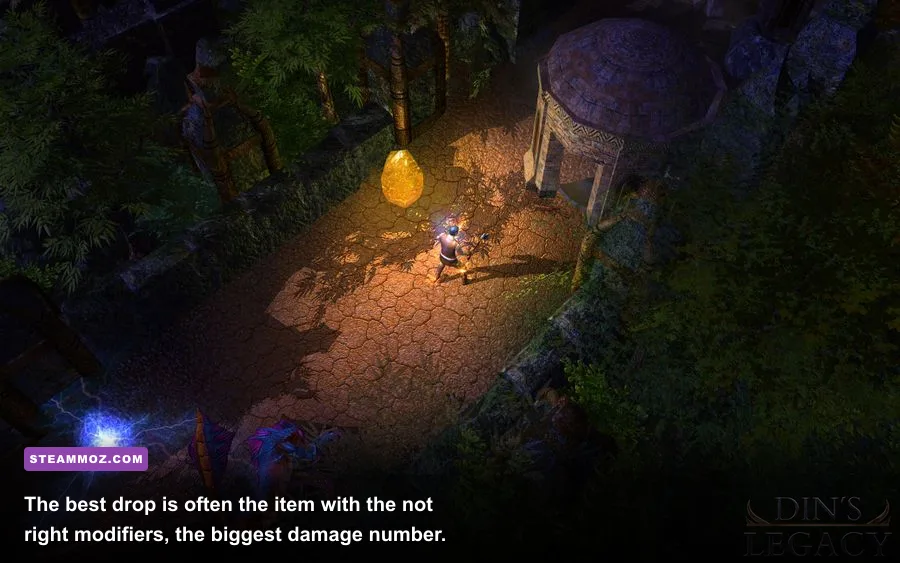
The key trap is chasing the largest damage number. A slow weapon can look spectacular in the inventory and still feel awful when a fast enemy circles behind you during its recovery. Test the weapon against ordinary enemies, not only a stationary target. If you cannot complete a basic attack before an enemy reaches melee range, the extra tooltip damage may be costing you more health than it saves.
Ranged weapons are the strongest answer to dangerous rooms
Bows and crossbows belong in S-tier for a different reason: distance is a defensive stat. A ranger or rogue who keeps enemies moving through open ground can avoid damage that a melee build must directly absorb. This is especially valuable when a procedural dungeon generates mixed packs containing fast melee attackers, ranged threats, and tougher elites.
Bows generally feel better for sustained combat because their attack rhythm supports constant movement. Crossbows are better when you prefer deliberate shots and short bursts between repositioning. The ideal ranged item improves more than damage. Attack speed, projectile-related bonuses, movement speed, and attributes that support your class can all increase real combat output.
Use corners carefully. Breaking line of sight can force ranged enemies to approach, but it can also stack an entire pack on the other side of the doorway. Pull one group at a time, fire while retreating, and keep an escape route visible. A bow build that stands still to maximize paper DPS will often perform worse than one that gives up a few shots to maintain distance.
Ranged weapons also make early exploration safer, but they do not remove the need for defense. Fast enemies can close the gap quickly, and cramped rooms can invalidate your ideal spacing. Carry a secondary close-range option when your inventory allows it, or choose skills that create breathing room before committing to a pure ranged setup.
Staves and wands need the right skill bar
Magic weapons are often misunderstood in Din's Legacy. A staff or wand is not automatically powerful because it looks like a caster item. Its value depends on whether your active skills actually scale with the attributes and bonuses attached to the weapon. If your damage comes from a spell, compare the weapon's contribution to the spell's output rather than judging its basic attack alone.
Staves are the natural choice for characters that want reach, spell support, or a two-handed offensive setup. Wands are easier to combine with defensive or utility equipment when you need flexibility. Either can reach S-tier in a dedicated mage build, but both drop toward A or B-tier when used by a character whose damage comes mainly from physical attacks.
Mana management is the make-or-break issue. A high-damage spell rotation is worthless if it leaves you relying on weak basic attacks halfway through every room. Prioritize equipment that supports your resource pool, recovery, relevant attributes, and survivability. Keep one reliable low-cost skill available for cleanup, then reserve your expensive abilities for elites and dense packs.
Fire-based skills such as Fireball are at their best when enemies are grouped or forced through a narrow approach. Defensive skills and movement tools matter just as much as the spell itself. A mage who can create space gets more value from every cast, while a mage who is trapped in melee range may never complete the animation safely.
The modifiers that turn an average drop into best-in-slot gear

Weapon family is only the first pass. When two items have similar base damage, compare the modifiers in the context of your build. Damage bonuses are easy to notice, but defensive affixes can produce a larger increase in actual clear speed by preventing retreats, potion use, and interrupted attacks.
| Modifier priority | Why it matters | Who benefits most | Common mistake |
|---|---|---|---|
| Base damage | Raises the foundation for physical attacks | Warriors, rogues, weapon-focused hybrids | Ignoring attack speed and assuming bigger is always better |
| Attack speed | Improves sustained output and makes recovery less punishing | Fast melee and bow users | Taking speed on a build that rarely attacks directly |
| Relevant attributes | Supports class skills and overall damage scaling | Every specialized build | Keeping a high-level item with irrelevant stats |
| Resistances | Reduces the danger of elemental and status-heavy rooms | Solo characters and front-line builds | Trading all defense for a small damage increase |
| Health and resource bonuses | Extends the number of fights you can handle before retreating | Casters, tanks, new players | Only valuing the item’s weapon damage |
| Range and utility effects | Improves positioning and reduces incoming hits | Ranged and control builds | Standing still because the tooltip DPS looks higher |
Use a simple replacement rule: upgrade immediately when the new weapon improves your main damage stat and keeps your survival profile intact. If the new item has a large damage increase but removes your only meaningful resistance or resource bonus, test it in a normal dungeon before selling the old one. Din's Legacy punishes blind upgrades because enemy danger rises with your progression and procedural layouts can suddenly become much less forgiving.
Equipment level matters, but it should not be treated as an absolute command. A lower-level weapon with several relevant modifiers can remain excellent for a while. The moment your attacks start taking too long to finish ordinary enemies, however, stop protecting the old item out of sentiment. Slow clears give enemies more opportunities to surround you, and that hidden defensive cost is real.
Best equipment pairings by build
The most reliable setups create a loop between offense, defense, and positioning. A weapon that looks perfect in isolation may be a poor choice if it leaves your skill rotation without an answer to fast enemies. These pairings are strong because they cover the gaps each archetype naturally creates.
| Build goal | Primary weapon | Secondary equipment | Combat plan |
|---|---|---|---|
| Safe beginner melee | One-handed sword | Shield, health, resistances | Stay mobile, attack in short windows, retreat before surrounded |
| Aggressive strength build | Two-handed axe or sword | Health, armor, crowd-control skills | Open with control, then commit to burst damage |
| Ranged kiting | Bow | Movement speed, attack speed, defensive utility | Pull enemies into open space and fire while moving |
| Defensive solo tank | Mace and shield | Resistances, health, resource recovery | Hold a safe position and win through consistency |
| Dedicated caster | Staff or wand | Mana support, relevant attributes, defenses | Pre-position, cast burst skills, use low-cost cleanup |
For beginners, the one-handed sword and shield pairing is still the best learning platform. It gives you room to understand enemy telegraphs, weapon recovery, and procedural map layouts without demanding perfect kiting. Once you recognize which enemy groups threaten your character, you can trade some defense for damage with confidence.
How to shop, compare, and replace gear efficiently
Do not inspect every drop with equal attention. First filter by weapon family and required role. Next compare the current item's base damage, attack speed, and relevant attributes. Finally check whether the new item removes a resistance, health bonus, or resource benefit that your build quietly depends on.
Keep a spare weapon when entering an unexplored dungeon if your current item is badly under-leveled. This is particularly useful for casters and ranged characters whose primary weapon may be excellent against ordinary enemies but uncomfortable when a room collapses into melee. The extra inventory slot is cheaper than losing a strong run to a bad matchup.
Town visits should be purposeful. Sell obsolete gear, repair or replace weak equipment when available, and avoid spending all your currency on a tiny upgrade just before entering a new area. Procedural loot can replace that purchase minutes later. Save resources for meaningful jumps in weapon damage or for defensive pieces that solve a clear weakness.
If you enjoy optimizing unusual builds, compare this system with our Bang-On Balls Chronicles weapon ranking. For broader build fundamentals, our guides to beginner builds and early-game RPG decisions cover the same habit: build around repeatable strengths instead of one flashy number.
Final Din's Legacy equipment ranking
For a blind recommendation, choose a one-handed sword, axe, or mace and pair it with equipment that protects your health and resistances. Pick a bow when you are confident at controlling distance. Choose a staff or wand only when your skill bar, attributes, and mana economy are built around spell damage. Two-handed weapons are excellent burst tools, but their slower rhythm makes them less forgiving. Spears and niche reach setups can work brilliantly, though they ask more from your positioning.
The deeper lesson is that Din's Legacy's best gear is contextual. The strongest drop is the one that improves your complete combat loop: damage arrives quickly, enemies stay at the range you want, and your defenses let you keep fighting after the first mistake. For current game information, check the official Din's Legacy Steam page and Soldak Entertainment's game page before planning around a specific patch or feature.
Keep the tooltip open, test suspicious upgrades in real combat, and never confuse a higher item level with a better build. That approach will carry you farther than any static list of fictional legendary drops—and it is exactly why the S-tier weapons in Din's Legacy stay useful across wildly different characters and worlds.