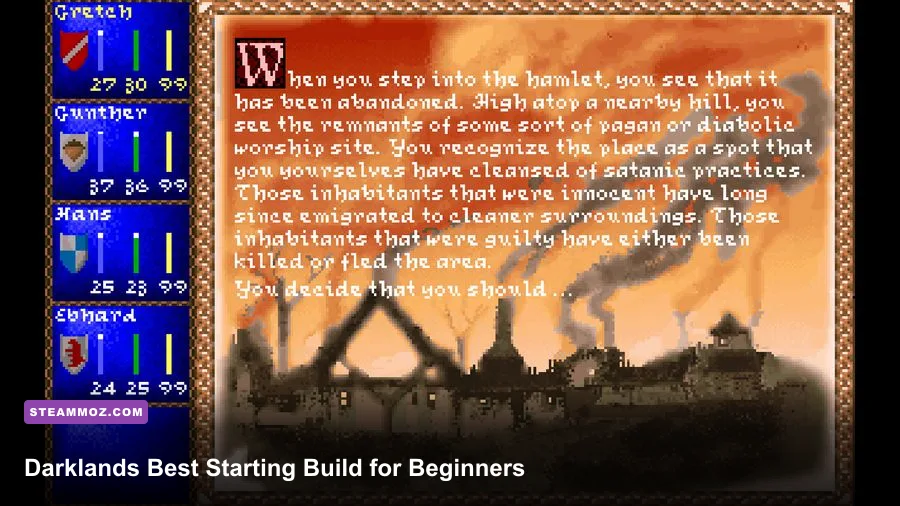
The best Darklands starting build for beginners is a balanced five-person party built around two front-line Sword specialists, one Polearm fighter, one Missile specialist, and one Alchemist-Healer. Give your main fighters high Strength, Agility, and Endurance, keep at least one character focused on Healing and Alchemy, and avoid creating five generalists. Darklands is brutally old-school: a party with obvious jobs survives, while a party where everybody is merely “pretty good” gets dismantled by bandits, wolves, and unlucky morale checks.
This guide targets the original GOG release of Darklands, including its DOS-era rules and interface. The game does not hand you a tidy class system or a modern quest marker. Careers shape your starting skills, age changes your attributes, and equipment can matter more than a few extra points on the character sheet. Treat this build as a reliable launch platform, not a rigid endgame template.
The safest beginner party composition
Build four custom characters and recruit a fifth companion as soon as your funds allow. The party should cover damage, defense, ranged pressure, healing, alchemy, and social interaction. You can win with stranger combinations, but this setup teaches the game without forcing every encounter to become a reload marathon.
| Party Role | Primary Skills | Priority Attributes | Job in Combat |
|---|---|---|---|
| Shield fighter | Sword, Defense | Strength, Agility, Endurance | Holds the enemy line and protects fragile allies |
| Two-handed fighter | Sword or Axe, Defense | Strength, Endurance | Delivers heavy melee damage after enemies commit |
| Reach fighter | Polearm, Defense | Agility, Strength | Attacks over the front rank and controls approach lanes |
| Ranged specialist | Missile, Perception | Agility, Perception | Softens targets before they reach the formation |
| Support specialist | Alchemy, Healing, Theology | Intelligence, Perception, Personality | Brews potions, treats injuries, and supports morale |
The key is separation of responsibility. Your shield fighter should not waste creation points chasing Alchemy, and your alchemist should not stand in the front line merely because they rolled decent Strength. Darklands makes injuries and fatigue meaningful. A specialist who stays in the correct lane is worth far more than a character with five middling skills.
For more old-school party discipline, compare this approach with our Door Kickers raid tips. The games are very different, but both punish improvising after the fight has already started.

🎮 DARK
Looking to experience this game? Grab your digital key directly on our store for $2.99.
View on Steammoz Store →Character creation priorities that actually matter
Start with attributes rather than chasing a particular career title. Strength improves your ability to fight effectively and carry equipment; Agility supports action speed and weapon performance; Endurance helps a character remain useful through punishment and fatigue. Intelligence is the foundation for technical and scholarly roles, Perception supports missile work and awareness, and Personality helps with social encounters and recruitment.
For the two melee characters, aim for a clear physical profile: Strength and Agility first, Endurance immediately behind them. The shield fighter benefits from the most Defense you can buy, while the damage fighter should place more creation points into Sword or Axe. Don’t cripple either fighter’s Perception completely, though. A character who repeatedly fails to notice danger is expensive to keep alive.
The ranged character wants Agility and Perception, followed by enough Endurance to survive a bad engagement. Missile weapons are powerful when enemies must cross open ground, but a ranged specialist trapped in melee is in serious trouble. Give this character a backup sword or short weapon and keep them behind the main line.
Your support character should be the youngest sensible build rather than an elderly master with impressive starting skills. Age can provide experience, but it also makes physical weaknesses more punishing. Prioritize Intelligence and Perception, then buy Alchemy and Healing. Theology is useful as a secondary skill, especially when you want a more versatile support character, but don’t dilute the build before its two core skills are functional.
| Character | Career Direction | Spend First On | Do Not Overinvest In |
|---|---|---|---|
| Shield fighter | Soldier or Noble | Defense, Sword, Endurance | Alchemy and scholarly skills |
| Damage fighter | Soldier | Sword or Axe, Strength, weapon quality | Personality |
| Reach fighter | Soldier | Polearm, Agility, Defense | Heavy armor before training is stable |
| Ranged specialist | Hunter or Soldier | Missile, Agility, Perception | Close-combat skill points early |
| Support | Alchemist, Physician, or Scholar | Alchemy, Healing, Intelligence | Front-line weapon specialization |
Career names can vary depending on the character-generation route and version, so judge the final skill spread rather than blindly selecting a label. The practical rule is simple: if a career gives you the core skill you want without destroying the relevant attributes, keep it. If the roll is awful, reroll. Darklands expects experimentation.
Weapons, armor, and the first shopping trip
Buy functional equipment before luxurious equipment. A shield fighter needs a shield and dependable sword; a reach fighter wants a spear or other polearm that can attack from behind the first rank; the ranged character needs a bow or crossbow with ammunition; and the support character should carry a light weapon rather than heavy armor that slows the entire expedition.
There isn’t one universally best weapon because Darklands mixes skill, reach, encumbrance, and availability. Swords are the easiest beginner choice because the skill remains useful across many weapon upgrades. Axes hit hard and suit a dedicated damage character, while polearms are excellent when your formation is intact. Missile weapons shine during the opening seconds of a fight, not when enemies are already touching your back row.
| Equipment Choice | Best User | Strength | Beginner Warning |
|---|---|---|---|
| Sword and shield | Shield fighter | Reliable defense and flexible melee use | Damage is modest without strong Sword skill |
| Heavy sword or axe | Damage fighter | Excellent finishing power | Fatigue and encumbrance punish reckless swings |
| Spear or polearm | Reach fighter | Attacks from behind the front rank | Becomes awkward if the formation collapses |
| Bow or crossbow | Ranged specialist | Free damage while enemies approach | Requires ammunition and protection from melee |
| Light weapon | Support character | Keeps encumbrance manageable | Never treat the support slot as a spare tank |
Armor deserves the same discipline. Put your strongest protection on the character who must absorb contact, but don’t turn every party member into a walking furnace. Heavy equipment increases the cost of movement and makes long travel more dangerous. If you’re short on money, upgrade the front rank first, then buy ammunition and ingredients. A perfect helmet won’t save a party that cannot heal or fight at range.
Your combat formation and opening rotation
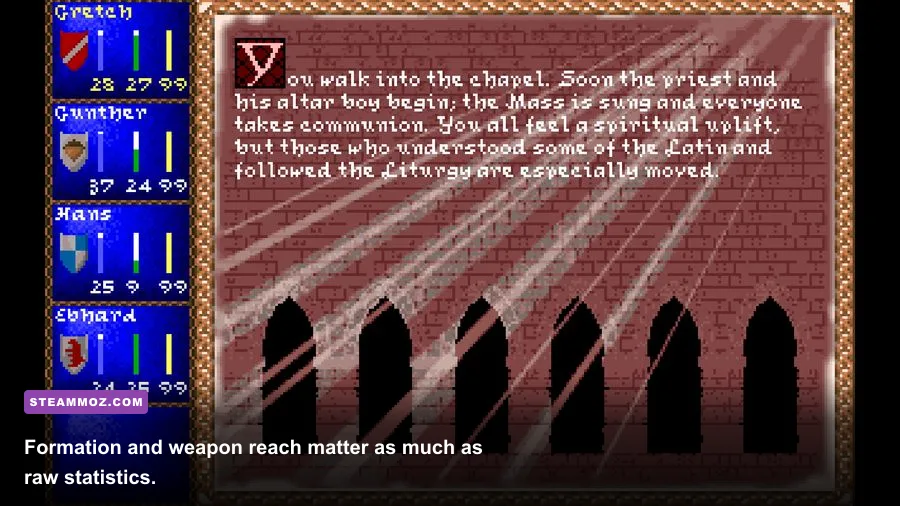
At the start of combat, pause long enough to identify the threat and establish a line. Put the shield fighter in front, the damage fighter beside them, and the polearm user directly behind or just offset from the front rank. Keep the missile character behind everyone with a clear firing lane. The support character belongs in the safest rear position, not beside the enemy because they happened to have a spare sword.
The first ten seconds
Open with missile fire against the fastest or most dangerous target. You’re not trying to win the whole battle with arrows; you’re buying time and forcing the enemy to cross ground while damaged. As contact begins, stop the ranged character from firing if allies are blocking the lane. Accidental friendly fire and wasted movement are classic ways to turn a winning fight into a reload.
Use the shield fighter to pin the first attacker. Let the damage fighter strike targets already committed to the line instead of sprinting around the flank. The polearm user should attack over the front rank whenever possible. This is the central Darklands rhythm: hold, focus, and punish. Chasing individual enemies breaks the formation and exposes the support characters.
When someone is injured, rotate them backward rather than waiting for them to collapse. Healing after combat is safer than trying to patch a fighter while blades are moving, but your healer can use emergency support when a character is close to being disabled. Retreat is also a legitimate tactic. Darklands is not a power fantasy, and surviving with damaged equipment is better than losing a veteran.
| Encounter Threat | Danger Signal | Counter | Best Tool |
|---|---|---|---|
| Fast melee rush | Enemies reach the back line quickly | Close ranks and stop the missile attack | Shield fighter and polearm |
| Large enemy group | Front rank starts getting surrounded | Fall back rather than splitting the party | Formation and controlled retreat |
| Ranged enemies | Health drops before contact | Advance under cover or focus their shooters | Missile specialist |
| Armored target | Repeated weak hits and stalled damage | Use your strongest melee fighter and avoid scattering | Axe or heavy sword |
| Injured party member | Reduced combat effectiveness or movement | Rotate them out and heal after battle | Healing skill and potions |
Alchemy, healing, and the early travel loop
Alchemy is the difference between a fragile beginner party and a party that can keep moving. Your support character should practice it consistently and turn suitable ingredients into useful restorative or combat potions whenever the game allows. Don’t hoard every ingredient forever. Darklands’ economy rewards converting supplies into survival, especially before long journeys between towns.
Healing is not just a combat button. Injuries reduce your effective strength over the next several encounters, and repeatedly marching wounded characters into danger creates a downward spiral. After a hard fight, return to a town when the party’s condition makes another encounter risky. Use inns, doctors, and local services as part of the route rather than as an emergency panic button.
Travel with a purpose. Pick a nearby town, sell excess loot, rest, replace ammunition, and check for better equipment before pushing farther across the map. The game’s historical setting can tempt you into wandering, but early wandering burns food, time, and health. Keep enough cash for recovery and don’t spend the entire purse on one impressive weapon.
If you enjoy games where preparation matters more than button speed, our Decay: The Mare starting build guide and Cthulhu: The Cosmic Abyss build guide explore the same idea from very different RPG angles.
Leveling plan for the first campaign
For the opening stretch, improve the skill that defines each character before adding clever secondary options. Raise Sword or Defense on your main fighter, Polearm on the reach fighter, Missile on the ranged character, and Alchemy or Healing on the support slot. Once those jobs work reliably, add utility. A support character with excellent Alchemy and no social skill is still useful; a support character with five half-trained skills may fail at every critical moment.
Recruitment lets you patch weaknesses later, so don’t restart because one attribute roll is merely average. Restart when the party lacks a core function, when your healer cannot contribute, or when the front line has no reliable defensive skill. Darklands’ best victories often come from adapting to imperfect people rather than manufacturing five flawless heroes.
Finally, keep a reserve of money, food, ammunition, and healing supplies. Save before major travel and before risky engagements, but don’t reload every time a character takes a hit. Learn which threats your formation handles, which ones demand retreat, and when a town is more valuable than another fight. With this five-role setup, Darklands becomes tense instead of opaque—and every successful journey starts to feel earned.
For the original rules context, consult the official GOG Darklands listing and its included documentation. You can also browse MicroProse’s official site for the publisher’s current catalog. For another demanding beginner experience, see our Dariusburst: Chronicle Saviours starter build and ExZeal beginner guide.