
Yes, Hogwarts Legacy is still worth playing today, but only if you buy it on sale and calibrate your expectations before boarding the carriage. Avalanche Software crafted an undisputed masterpiece of digital architecture: walking the stone corridors of Hogwarts, browsing the shops of Hogsmeade, and dueling rival wizards delivers an initial 15-hour high that every fantasy fan deserves to experience. However, once the pristine veneer of school life peels away to reveal an oversized, repetitive open-world checklist crammed with identical bandit camps and physics puzzles, the spell breaks. If you want a lavish, atmospheric wizard simulator, you will love it; if you expect a deep, branching roleplaying experience with meaningful choices, you will walk away disappointed.

The Castle Atmosphere: An Architectural Triumph That Spoils You Early
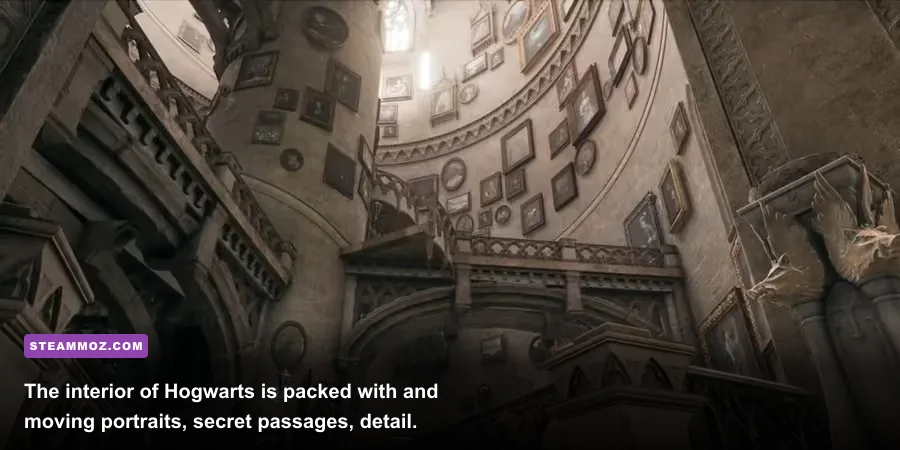
No game has ever translated the sheer wonder of a beloved literary location into 3D space as faithfully as Avalanche Software's official Hogwarts Legacy portal demonstrated with the school itself. Stepping into the Great Hall while hundreds of enchanted candles hover beneath an overcast vaulted ceiling is breathtaking. The castle is not merely a skybox or a linear corridor hub; it is a sprawling, interconnected labyrinth where every archway, spiral staircase, and hidden doorway feels deliberate.
The sound design elevates this immersion to dizzying heights. Ghostly choirs echo down empty corridors at midnight, suits of armor hum quietly before violently swatting at each other, and Peeves cackles as he torments first-years near the Clock Tower. The four Common Rooms deserve special praise. The emerald-tinted, underwater dungeon of Slytherin looks out into the shadowy depths of the Black Lake, where the giant squid occasionally slaps against the reinforced glass. Meanwhile, the Ravenclaw dormitory offers breezy, sunlit balconies and acoustic wood panels that make you want to put down your wand and linger for hours.
During the opening 10 to 15 hours, exploration feels pure and rewarding. You cast Revelio not out of routine chore-clearing, but out of genuine curiosity to see what piece of obscure Wizarding World lore is tucked behind a portrait of a sleeping gorgon. Tracking down Moth Mirrors, solving Arithmancy door puzzles by calculating animal symbol values, and finding hidden Field Guide pages provide instant gratification. Much like hunting down rare artifacts in Everspace 2 secret locations and hidden rewards, the earliest castle secrets deliver an authentic dopamine rush. The tragic irony is that Hogwarts itself is so masterfully built that every hour you spend outside its walls feels like a downgrade.
🎮 Hogwarts Legacy
Looking to experience this game? Grab your digital key directly on our store for $59.99.
View on Steammoz Store →Spell Combat and Combos: The Surprising High Point of the Journey
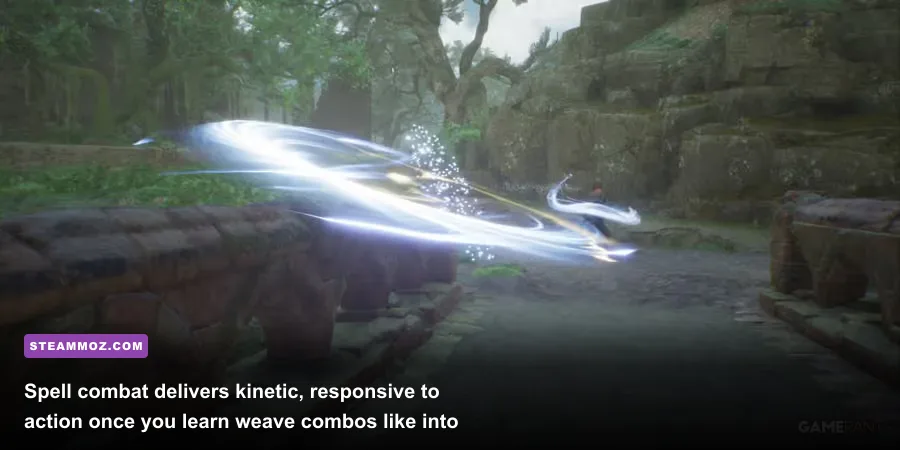
When the game was first revealed, skeptics assumed wand combat would feel like a sluggish third-person cover shooter with glowing particle effects. In practice, the combat engine is easily the game's most polished mechanical system. It is fast, acrobatic, and delightfully vicious once you unlock multiple spell diamonds.
Combat revolves around breaking color-coded shield charms: Yellow for Control spells (Levioso, Arresto Momentum), Purple for Force spells (Accio, Depulso, Flipendo), and Red for Damage spells (Confringo, Diffindo, Bombarda, Incendio). The game achieves true mechanical flow when you juggle airborne enemies while deflecting incoming projectiles using Protego followed by a frame-tight Stupefy counter-curse. The juggle physics are responsive and snappy; you can yank an Ashwinder Ranger toward you with Accio, roast them with short-range Incendio, blast them into a stone wall with Depulso, and finish them off before their boots touch the cobblestone.
The damage multipliers reward aggressive experimentation. If you freeze an enemy using Glacius and immediately follow up with a sliced Diffindo strike, you trigger a shattering critical hit that deals roughly 400% baseline damage, vaporizing high-tier Loyalist goblins in an instant. Add the Enchanted Loom inside the Room of Requirement, and you can stack traits like Concentration III across your legendary gear to turn your basic spell kit into a devastating tactical armory, reminiscent of tuning endgame weapon synergies in Far Cry 6 beginner builds.
| Spell Combination / Build Synergy | Key Spells & Talents | Mechanical Interaction | Combat Effectiveness |
|---|---|---|---|
| Glacial Shatter Combo | Glacius + Diffindo + Concentration III | Freezes target; subsequent slashing damage gains a 4x damage multiplier and area-of-effect shard burst. | S-Tier: Erases elite Ashwinders and Executioners instantly. |
| Kinetic Wall Slammer | Accio Mastery + Incendio Mastery + Depulso | Groups multiple targets at point-blank range, ignites a radial fire wave, then blasts them outward for severe collision impact. | A-Tier: Premier crowd-clearing rotation against melee swarms. |
| Forbidden Chain Reaction | Crucio + Blood Curse + Curse Sapper + Avada Kedavra | Curses primary target; Basic Casts spread curse marks to every nearby foe. Avada Kedavra cast then executes every cursed target simultaneously. | S-Tier: Complete battlefield wipe in a single spellcast. |
| Aerial Suspension Loop | Levioso Mastery + Descendo + Flipendo | Lifts grouped foes into anti-gravity suspension, slams them into the floor, and flips them for sustained vulnerability frames. | B-Tier: Excellent single-target boss control against trolls and Dugbogs. |
The Dark Arts skill tree is undeniably entertaining, even if it completely shatters whatever narrative morality the game attempts to construct. Cursing a room full of poachers with Crucio, spreading that curse through your Basic Cast upgrades via Blood Curse, and watching seven enemies simultaneously collapse into dust the moment you unleash Avada Kedavra is peak villainous power fantasy. Combat stays engaging right through the final encounters, even when other elements begin to fray.
The Highlands Trap: Repetitive Puzzles and Open-World Fatigue
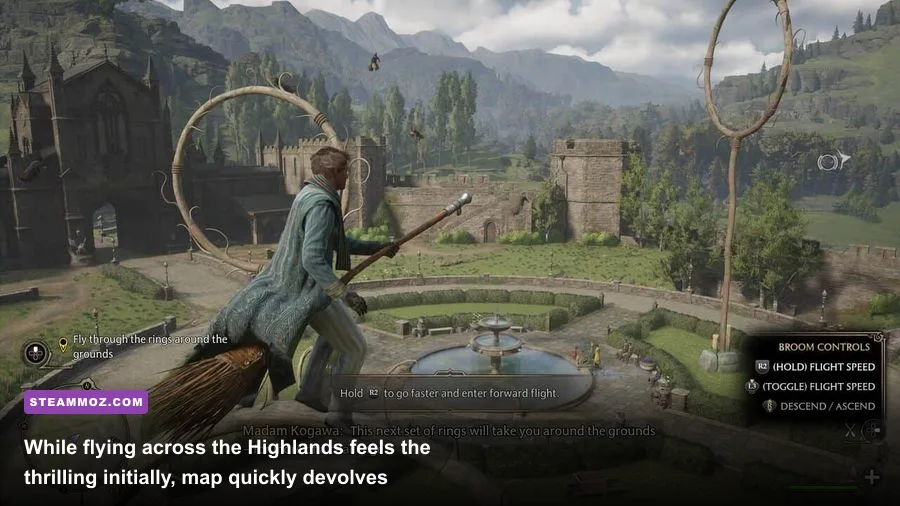
If Hogwarts Legacy had restricted its map boundary to the castle, the Black Lake, the Forbidden Forest, and Hogsmeade, it could have been an airtight classic. Instead, the developers extended the map south across the Scottish Highlands into Feldcroft, the South Sea Bog, and Manor Cape. This southern half of the map accounts for over 60% of the landmass, and it is almost entirely filler.
The most glaring offender is the sheer quantity of Merlin Trials. There are nearly 100 of these micro-puzzles scattered across the landscape, required purely to expand your painfully restrictive gear inventory. You will find yourself rolling giant stone spheres into depressions, igniting three stone braziers before they sink, and hopping across stone pillars dozens of times. By your twentieth trial, any sense of wonder has vanished, replaced by the weary realization that you are performing administrative busywork in wizard robes.
Exploration outside the castle suffers from generic open-world tropes:
- Bandit Camp Clones: You clear dozens of interchangeable poacher outposts and goblin dig sites that recycle the exact same visual assets, tents, and enemy waves.
- Tedious Lockpicking: The Alohomora mini-game requires you to manually rotate two tumblers on every single locked door in the world, long after you have upgraded the spell to Level 3.
- Demiguise Moon Chores: Upgrading your lockpicking requires scouring dark corners across identical hamlets at nighttime to collect Demiguise statues.
- Hamlets Without Life: Small settlements like Keenbridge and Pitt-upon-Ford feel like lifeless stage sets occupied by static NPCs who exist purely to offer you mundane fetch quests.
Broom flight feels responsive when cruising over hills, yet Avalanche's decision to decouple free-look vertical camera pitch without controller remapping or specific mod configurations frustrates navigation. Furthermore, mounted beasts like the Hippogriff feel heavy and redundant when your upgraded broom summons instantly with the tap of a button. The game falls into the classic open-world trap of prioritizing quantity over bespoke design. The experience begins to mirror the repetitive grind loops critiqued in leveling breakdowns like level fast and farm zeni in Kakarot Master Edition.
Narrative Depth and Morality: The Missing RPG Foundations
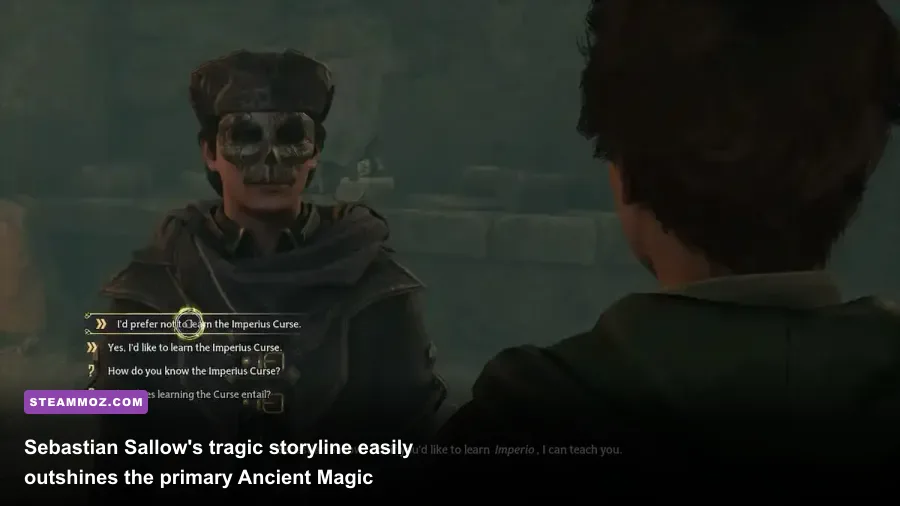
Hogwarts Legacy was marketed as an immersive action RPG where you forge your own path as a fifth-year transfer student. In reality, it is a linear action-adventure game with shallow RPG dressing. Your character choices carry virtually zero weight, dialogue trees are largely cosmetic, and the school lacks any functioning morality or discipline system.
You can wander the corridors past midnight, step directly into the Headmaster's office, and casually throw the Killing Curse in front of your Herbology professor during a combat trial without so much as losing a single House Point. There is no curfew mechanic, no stealth requirement after dark outside of two scripted story quests, and no detention system. By eliminating the rules and structure of Hogwarts, the game inadvertently strips away the very tension that made Harry Potter's clandestine adventures exciting in the first place.
The main narrative, centered on a goblin rebellion led by Ranrok and the mysteries of ancient magic, is functional but forgettable. Ranrok is a cartoonishly evil antagonist whose motives lack nuanced shades of grey. In stark contrast, the companion questline featuring Slytherin student Sebastian Sallow—titled In the Shadow of the Relic—is outstanding. Sebastian's desperate, tragic descent into dark magic to cure his sister Anne's chronic curse presents genuine moral dilemmas, intense familial conflict, and genuine emotional resonance. Ominis Gaunt, his blind friend scarred by his family's Cruciatus-torturing heritage, provides an extraordinary moral counterweight.
Whenever you are engaged in Sebastian's personal tragedy or Poppy Sweeting's beast-poaching rescue operations, the game shines. Whenever you return to the primary ancient magic trial chambers with Keeper Percival Rackham, you are subjected to repetitive, floaty archway puzzles that feel disconnected from the student experience. For fans seeking deep choice-and-consequence design, checking community retrospectives and performance breakdowns on the Steam Store page for Hogwarts Legacy will confirm that narrative branching remains essentially non-existent.
Technical State and Performance: Benchmarking the Modern PC Experience
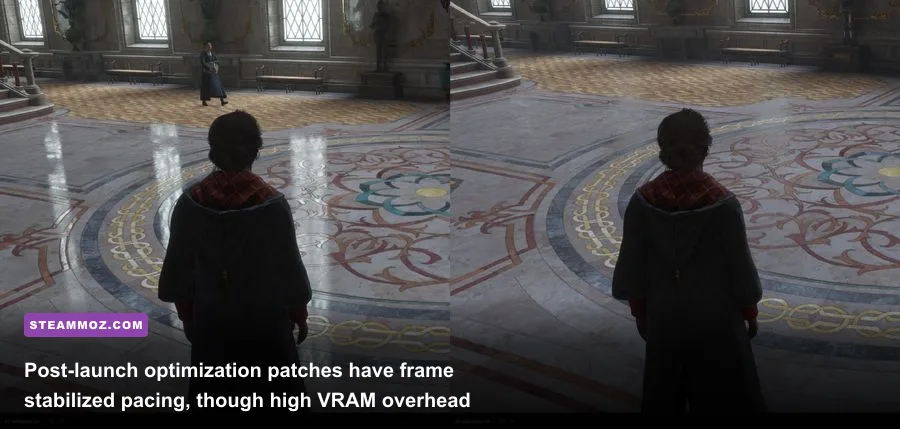
At launch, Hogwarts Legacy gained notoriety for severe PC performance issues, including aggressive shader compilation stutters, catastrophic frame rate drops in Hogsmeade, and memory leaks that devoured system VRAM. Several substantial patches, driver updates, and engine-level refinements have significantly stabilized the game. However, Unreal Engine 4's underlying streaming architecture still exhibits noticeable stutter when crossing asset thresholds into Hogsmeade or passing through the Grand Staircase arches.
Ray tracing remains the biggest performance trap in the graphics menu. The ray-traced ambient occlusion, reflections, and shadows add subtle depth to stone walls, but they carry an absurd 40% to 50% hit to average frame rates while frequently causing visual noise on water surfaces. Disabling Ray Tracing completely and relying on the game's high-quality screen-space reflections yields a much smoother frame-time curve. Just as we analyzed in our tuning guides for Far Cry 6 settings for max FPS and performance stabilization in Elex PC fixes that stop crashes and rescue FPS, dialing in the right graphic profile makes the difference between erratic stutter and a butter-smooth 100+ FPS run.
| Graphic Setting | Recommended Value | Performance / FPS Impact | Visual Impact & Editorial Recommendation |
|---|---|---|---|
| Upscaling Method | DLSS / FSR Quality | +25% to +35% FPS Gain | Mandatory for 1440p and 4K displays. Dramatically sharpens internal rendering while stabilizing frame pacing. |
| Ray Tracing (All Options) | OFF | +40% to +55% FPS Gain | Massive frame rate penalty. Ray tracing introduces severe VRAM caching spikes and occasional reflection artifacts. Leave off. |
| Population Quality | Medium / High | Moderate (CPU-bound) | Controls NPC density in corridors and Hogsmeade. High drops CPU frame times by ~8% in markets without noticeable crowd loss. |
| Effects Quality | High | ~7% FPS Impact | Determines spell particle clarity, fire persistence, and shatter physics during intense multi-wizard duels. |
| Fog & Sky Quality | Medium | ~10% FPS Gain | Volumetric fog inside the Forbidden Forest is heavy on mid-tier GPUs. Medium preserves atmosphere while regaining smooth frame times. |
| Material & Texture Quality | Ultra (12GB+ VRAM) / High | Negligible (VRAM dependent) | Stunning stone and cloth detail. Drop to High if playing on an 8GB VRAM GPU to prevent sudden texture popping. |
If you play on PC, enabling modern Frame Generation (via DLSS 3 or FSR 3) resolves the majority of remaining traversal bottlenecks. Handheld enthusiasts will find that the game runs passably on portable PCs like the Steam Deck at 30 to 40 FPS using Medium-Low presets and aggressive upscaling, though battery drain remains ferocious. For low-end rigs struggling to maintain frametimes, applying lightweight optimization methods similar to those explored in Filament settings for higher FPS will stabilize overall system delivery.
Modding Community and Post-Launch Additions
Official post-launch content has been modest. The formerly PlayStation-exclusive Haunted Hogsmeade Shop quest was eventually distributed across all platforms, offering an atmospheric, psychological-horror detour featuring the poltergeist Fastidio that ranks among the game's best side content. The accompanying Photo Mode added welcome screenshot tools, but Avalanche intentionally refrained from launching major story expansions or DLC, directing their resources toward sequel development.
Consequently, the PC modding scene has done the heavy lifting to address longstanding design omissions. Talented creators have built mods that address player complaints, including:
- Broom Flight Overhauls: Adding genuine mouse-directed 6DOF flight controls to replace the awkward dual-stick default system.
- Curfew and Stealth Mods: Injecting genuine risk into night exploration by sending prefects and ghosts on patrol across the corridors.
- Companion Systems: Allowing you to invite Sebastian, Poppy, Ominis, or Natty along during free-roaming exploration and dungeon clears.
- Custom Wand & Robe Packs: Introducing lore-accurate film props and cosmetic items to enhance character customization.
These player-made enhancements breathe vital second life into the game. If you plan to play on PC, a modest loadout of quality-of-life mods transforms an otherwise rigid sandbox into a considerably richer roleplaying environment.
Final Verdict: The Ideal Witch or Wizard Profile
So, should you pick up Hogwarts Legacy today? The answer comes down to what you prioritize as a player.
If you grew up dreaming of receiving an owl-post letter, wandering the cobblestones of Diagon Alley, and discovering secrets hidden behind oil paintings, this game is an absolute must-play. The first dozen hours deliver an emotional resonance and visual majesty that no Harry Potter fan should skip. The sound of the dinner chimes echoing through the Grand Staircase, the flutter of golden snitches around the pitch, and the responsive wand combat are worth the cost of admission alone on any modest digital discount.
On the other hand, if you are a discerning RPG enthusiast looking for the deep consequence trees of The Witcher 3, the boundless emergent physics of Tears of the Kingdom, or the immersive student schedules of Persona 5, you will find Hogwarts Legacy shallow. It is a competent, beautifully rendered, formulaic open-world action game that spends all its best ideas inside the school grounds before stretching itself thin across the Scottish countryside.
Play it for the castle, savor Sebastian's questline, master the Glacius-Diffindo combo in the battle arenas, and feel entirely free to ignore the ninety-fifth Merlin Trial when the Highlands begin to wear you down. Keep your expectations anchored, grab it on sale via Warner Bros. Games support hub or Steam, and you will find an enchanting journey that still holds its magical charm.