
Yes, Hogwarts Legacy on PC is still worth playing, but your enjoyment hinges entirely on what you expect out of it. If you are showing up for the definitive digital realization of Hogwarts Castle, punchy spellcombos, and an atmospheric power fantasy, it delivers in spades. However, if you are looking for deep, choice-driven roleplaying mechanics with meaningful schoolhouse schedules or branching narrative outcomes like an Obsidian or Larian RPG, the cracks that showed at launch run even deeper today. Fortunately, modern GPU upgrades, aggressive engine patches from Avalanche Software, and an ambitious PC modding community make the current build far superior to the stuttering mess players encountered at release.
The PC Performance Reality: From Stuttering Disaster to Modern Polish
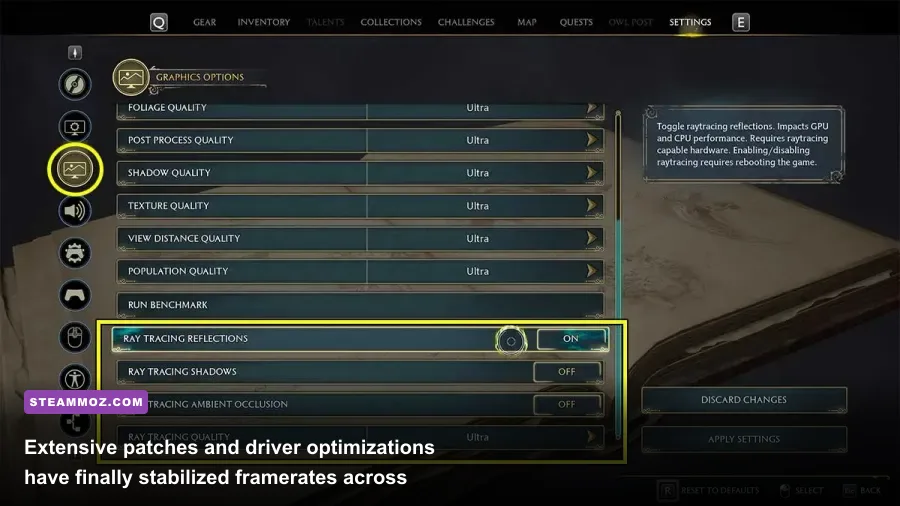
When the game launched, it tortured high-end rigs. Even an RTX 4080 would choke inside Hogsmeade due to ruthless VRAM memory leaks, unoptimized asset streaming, and catastrophic shader compilation stutters. Stepping through the front gates of the school would often plummet your frame counter from 110 FPS straight down to 24 FPS with gut-wrenching frame times. Much like players battling engine hitches in our ELEX PC performance and crash troubleshooting guide, Hogwarts Legacy players spent hours digging through Engine.ini files just to stop the hitching.
Today, the narrative on PC has changed dramatically. A series of deep engine refactors, alongside updated DLSS 3.7, FSR 3.1 frame generation, and Intel XeSS implementations, make hitting a locked 60 to 120 FPS realistic on mid-tier hardware. If you are running an RTX 3060 or Radeon RX 6700 XT, you no longer have to dread visiting the high-density vendor shops in Hogsmeade. That said, ray-traced shadows and ambient occlusion still deliver an absurdly high performance penalty for minimal visual payoff; turning them off remains the single best optimization choice you can make, similar to the tweaks detailed in our Filament settings guide for higher framerates.
| Setting Preset | Recommended Value | Performance Cost | Visual & Tactical Impact |
|---|---|---|---|
| Ray Tracing (Reflections/Shadows) | Off | Extreme (-35% to -45% FPS) | High VRAM consumption causing micro-stutters; screen space reflections look nearly identical in motion. |
| View Distance Quality | High | Moderate (-8% FPS) | Crucial for broomstick flight; minimizes jarring tree and terrain pop-in across the Scottish Highlands. |
| Effects Quality | High | Low to Moderate (-5% FPS) | Directly impacts particle density for spells like Confringo and ancient magic finishers without tanking GPU compute. |
| Population Quality | Medium | Low (-3% FPS) | Balances dynamic student density in the Great Hall and corridors while drastically reducing CPU draw-call bottlenecks. |
| Upscaling (DLSS / FSR) | Quality Mode | Significant Boost (+30% to +45% FPS) | Sharpens spell edge resolve while eliminating temporal anti-aliasing ghosting on fast-moving wand animations. |

🎮 Hogwarts Legacy
Looking to experience this game? Grab your digital key directly on our store for $59.99.
View on Steammoz Store →Spellcraft and Combat: The Undeniable High Point
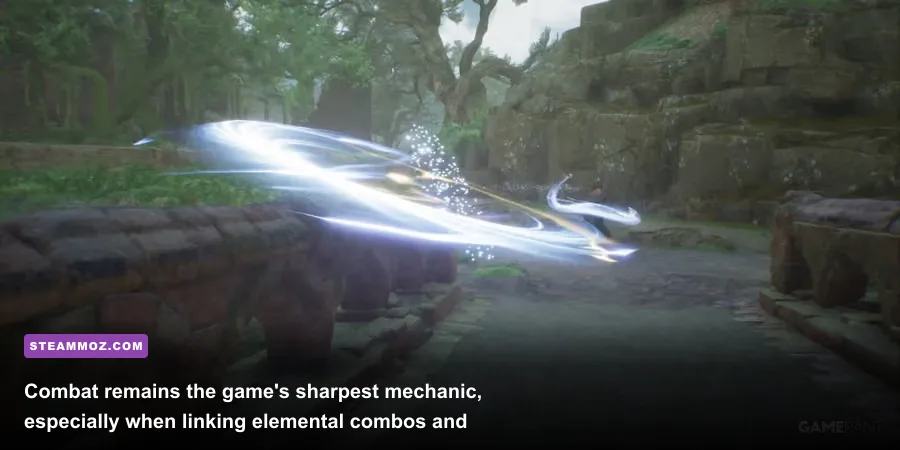
Where Hogwarts Legacy continues to excel is its kinetic, highly responsive combat loop. Many open-world action games settle for loose lock-on targeting and floaty strikes, but the wand mechanics here hit with razor-sharp precision. Combat plays out like a rhythm brawler disguised as a third-person shooter. You weave basic wand casts to juggle enemies in mid-air, break colored ward shields with matching spell types, and execute split-second Protego parries into Stupefy counter-attacks.
The spell synergies offer exceptional room for personal mastery. Launching a Loyalist Assassin with Levioso, yanking them closer with Accio, and detonating them point-blank with Incendio feels immensely satisfying. If you lean into late-game gear customization, the buildcraft opens up even further. By socketing Concentration III (+20% damage to all damage spells) across your six legendary gear pieces, you gain a massive 120% flat damage multiplier that lets an upgraded Glacius followed by a Diffindo strike slice through mountainous Trolls in seconds. Much like experimenting with high-output combat builds in our Far Cry 6 beginner loadout and build guide, dialing in your gear traits in the Room of Requirement turns your fifth-year student into an absolute wrecking machine.
Enemy encounter design also holds up better than critics initially gave it credit for. Poacher Executioners force you to stay mobile to dodge delayed lightning strikes, Dugbogs demand precise dodge-roll timing before exposing their tongues to a Levioso counter-slice, and Ashwinder Duelists require immediate shield-breaking before they can channel red unblockables. It is dynamic, flashy, and remains one of the best combat systems in modern action RPGs.
The Open World Bloat: Merlin Trials and Map Fatigue

If combat is the game's shining light, the sprawling open world south of Hogwarts is where the pacing begins to unravel. The sheer scope of the Scottish Highlands initially feels impressive from atop your broomstick, but you quickly realize the map suffers from classic open-world checklist syndrome. There are 95 Merlin Trials scattered across the terrain, and after you have solved your tenth rolling-ball puzzle or jump-on-stone-pillar challenge, they morph into pure chores designed to expand inventory slots.
The same fatigue creeps into the bandit camps, Demiguise moon hunting, and the repetitive Alohomora lockpicking mini-game. Exploring the castle's secret passages, discovering the Slytherin Scriptorium, and solving the Arithmancy door puzzles inside the school delivers authentic wonder. In contrast, galloping across the South Sea Bog hunting generic spider dens feels like filler borrowed from a mid-2010s Ubisoft title. Players looking for genuine exploration incentives—similar to tracking elusive anomalies in our Everspace 2 secret locations and hidden rewards guide—might find the generic loot chests full of green-tier scarves a bit underwhelming.
The Modding Scene: Why PC is the Only Platform to Buy
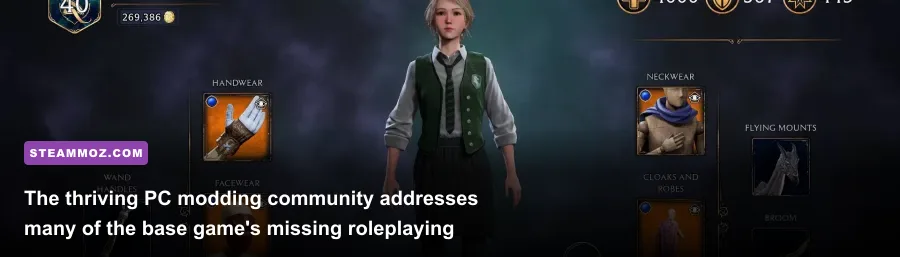
The most compelling argument for picking up Hogwarts Legacy on PC today is the active modding community hosted on Nexus Mods. Vanilla Hogwarts Legacy has several notable roleplaying omissions: you cannot bring classmates along on free-roam adventures, there is no in-game curfew system, and your moral choices have zero consequences (you can casually cast the Unforgivable Curse Avada Kedavra in broad daylight without a single professor batting an eye).
The modding scene bridges these gaps with impressive ambition. Community developers have introduced fully functional companion mods that let you recruit Sebastian Sallow, Natsai Onai, or Poppy Sweeting to fight alongside you anywhere on the map. Other mods overhaul the lighting engine to restore cut beta ambiance, remove the intrusive spell HUD for cinematic immersion, and even add flying broomstick races with customized physics models. Much like our optimization breakdowns for mod-heavy space shooters in the Everspace 2 technical troubleshooting overview, running these community scripts breathes entirely new life into a game that Warner Bros. largely left untouched in terms of post-launch expansions.
The Retrospective Verdict: Who Should Play It Today?
Years after the initial cultural whirlwind, Hogwarts Legacy stands tall as a thoroughly entertaining, visually breathtaking action-adventure game that occasionally stumbles under the weight of its own open-world ambition. It is not an intricate life simulator, nor does it let you shape the fate of the Wizarding World through deep moral branching. But as a love letter to the architecture, mystery, and thrill of stepping inside Hogwarts Castle with a wand in hand, it has no equal.
| Core Gameplay Pillar | Current State on PC | Retrospective Verdict |
|---|---|---|
| Castle Exploration | Flawless visual fidelity, zero interior load screens, packed with deep lore secrets. | S-Tier: The gold standard of fantasy architectural design in modern gaming. |
| Wand Combat & Builds | Punchy spell chaining, high mechanical ceiling, satisfying trait synergy. | A-Tier: Exceptionally fun, though enemy variety tapers off in the late game. |
| Performance & Stability | Patched VRAM management; smooth DLSS/FSR integration; RT still inefficient. | B+ Tier: Miles ahead of launch; stable 60+ FPS easily reachable on mid-range rigs. |
| Narrative & Roleplaying | Linear story, static dialogue options, no house points or morality mechanics. | C-Tier: Serviceable action-game plot, but fails to deliver true school RPG roleplay. |
| Highlands Open World | Gorgeous vistas dragged down by 95 identical puzzles and checklist bloat. | C+ Tier: Worth flying through once; tedious if you attempt 100% completion. |
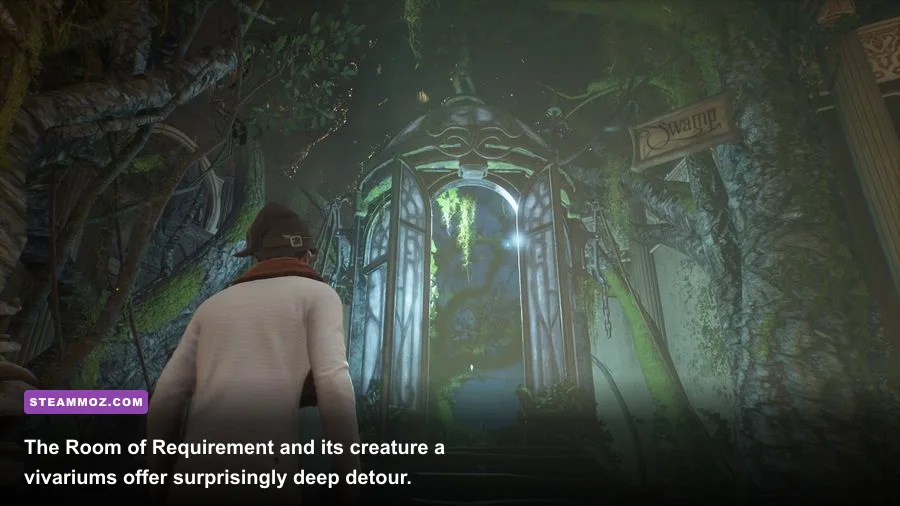
If you have never experienced it, grabbing Hogwarts Legacy during a seasonal Steam sale is an easy recommendation. The smooth PC performance, combined with essential community mods, means you are getting an experience vastly superior to what day-one buyers played. Focus heavily on the main story quests, immerse yourself in Sebastian's brilliant dark-arts questline, build your dream vivarium in the Room of Requirement, and don't feel pressured to clear every icon on the world map. Approached as a 35-hour curated magical adventure rather than a 100-hour checklist slog, the magic is still very much alive.