
The best Rogue Realms equipment is not automatically the item with the biggest damage number. For most campaigns, rank Sword of Swiftness, Dragon Slayer, and Staff of the Archmage at the top, then build around your hero’s role, army composition, and the encounter ahead. Speed wins early fights, Dragon Slayer punishes elite targets, and the staff becomes terrifying once your spell economy is online.
This Hero’s Hour Rogue Realms weapon tier list focuses on practical campaign value rather than flashy tooltip damage. Hero’s Hour mixes turn-based map decisions with real-time battles, so an item must help you reach the fight, survive its opening seconds, and scale with the army you are actually fielding. A weapon that looks mediocre on paper can be a monster when its effect aligns with your hero skills.
How this Rogue Realms equipment ranking works
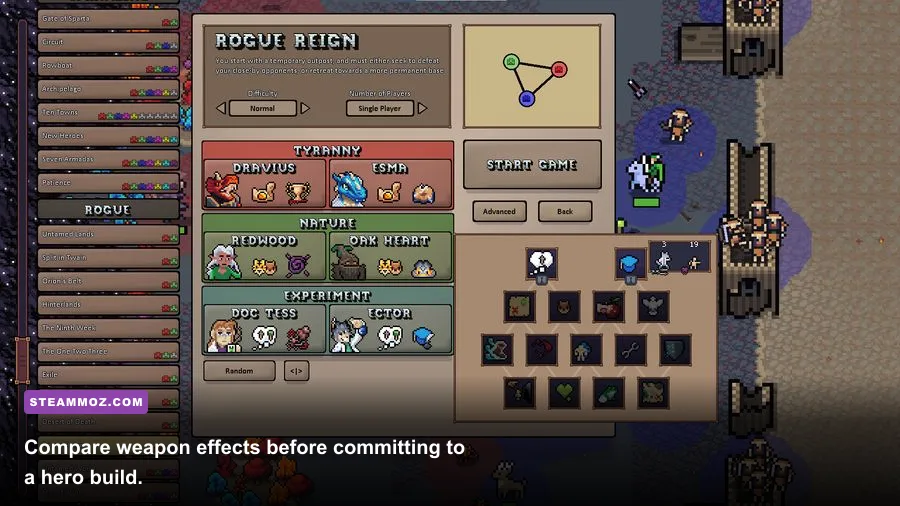
Rogue Realms equipment is easiest to judge through four questions: does it improve your first engagement, does it scale with hero abilities, does it protect your army while the battle runs, and does it remain useful after tier-one units stop carrying fights? That is why speed and general-purpose bonuses consistently outperform narrow effects during the opening half of a run.
There is also an important technical wrinkle. Hero’s Hour uses procedural maps, variable enemy stacks, faction bonuses, and item rolls. The exact numerical values attached to an artifact can differ by version, map, or generated loot pool. Treat the tier labels below as a ranking of the named item’s function and best roll, not a promise that every copy has identical numbers.
| Tier | Equipment | Best scaling | Why it ranks here |
|---|---|---|---|
| S | Sword of Swiftness | Melee, hybrid heroes | Earlier contact, better pursuit, and more reliable pressure |
| S | Dragon Slayer | Elite and boss encounters | Exceptional single-target value against durable threats |
| S | Staff of the Archmage | Spellcasters | Converts spell power and mana investment into battle control |
| A | Crown of Command | Army-focused commanders | Excellent leadership value, but less explosive in small fights |
| A | Ring of the Magi | Magic-heavy armies | Strong spell economy and consistent mid-game scaling |
| A | Armor of Protection | Frontline heroes | Prevents opening volleys from collapsing your formation |
| B | Boots of Speed | Scouting and skirmishing | Useful movement utility, but weaker than a complete weapon spike |
| B | Ring of Vitality | Attrition campaigns | Safe and dependable, though it rarely ends fights faster |
For patch notes and current item availability, check the official Hero’s Hour Steam page and the developer’s Moonstone Games site. If your copy labels an item differently, follow its active effect and stat roll rather than the name alone.
🎮 Heros Hour - Rogue Realms
Looking to experience this game? Grab your digital key directly on our store for $3.99.
View on Steammoz Store →S-Tier weapons and artifacts for most campaigns

Sword of Swiftness
This is the safest best-in-slot weapon for a general-purpose hero. Speed is not merely a movement stat in Hero’s Hour: it helps you connect with vulnerable units sooner, retreat from bad trades, and exploit a broken flank before the enemy can reform. On a melee hero, the sword turns a slow army into an aggressive one. On a hybrid hero, it buys the time needed to cast a first buff or debuff before the opposing line reaches you.
Pair it with fast units and any skill that rewards repeated attacks, pursuit, or battlefield mobility. Don’t waste the advantage by charging directly into a mass of ranged units. Use the campaign map to choose the engagement, then hit the side of the enemy formation where your speed creates a surround.
Dragon Slayer
Dragon Slayer is the more specialized S-tier pick. It loses some general usefulness when you’re clearing weak stacks, but it becomes absurdly efficient against high-health elites, summoned monsters, and late-game bosses. If Rogue Realms has given you a hero with strong base attack or a single-target damage skill, this weapon lets you focus the same threat until it disappears.
Its best users are not reckless duelists. They are heroes supported by healers, shields, summons, or disposable frontline units. Let the army pin the target, then send the equipped hero in after the enemy’s first burst has been spent. That sequence preserves your damage dealer and prevents a great weapon from becoming an expensive casualty.
Staff of the Archmage
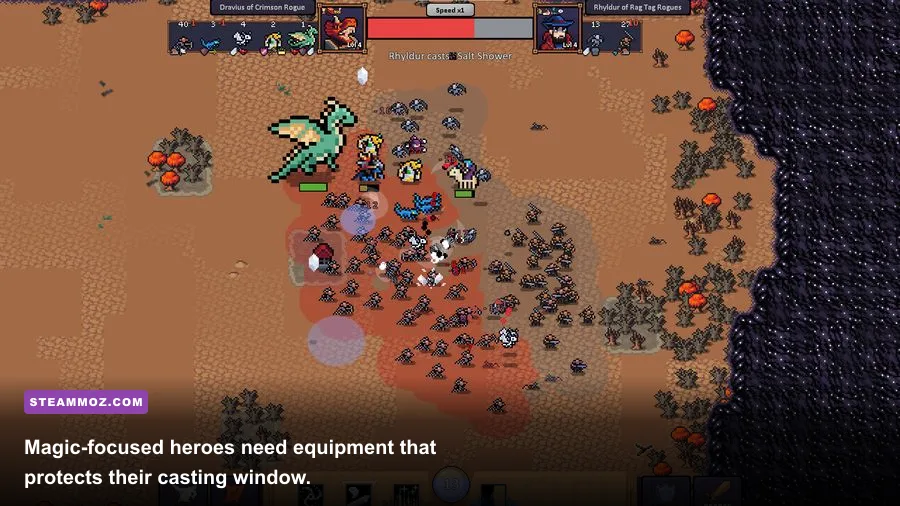
The staff is the premier caster weapon once your hero has enough mana, spell power, and cooldown support to cast repeatedly. Early in a campaign, it can feel underwhelming because one spell rarely justifies sacrificing physical pressure. By the mid-game, however, a single area spell, summon, or crowd-control effect can decide the entire battle.
Use it with an army that buys casting time. Ranged units, summons, durable shield units, and terrain advantages all matter more than raw troop count. Open with control rather than damage when possible: stopping the enemy’s advance gives your second and third casts a chance to land while the opposing army is still grouped.
A-tier equipment that wins with the right build
Crown of Command
Crown of Command is the best choice for players who treat the hero as an army multiplier instead of a duelist. Its value rises with the size and quality of your force, especially when your faction depends on a coordinated frontline. It won’t produce the same immediate burst as Dragon Slayer, but it makes every battle less fragile.
Equip it before attacking forts, large neutral stacks, or enemy heroes. Those encounters punish narrow builds. A commander with the crown can afford a longer engagement, rotate damaged units, and keep the formation intact while the enemy spends its best abilities.
Ring of the Magi
Ring of the Magi belongs in the same conversation as Staff of the Archmage for spell-heavy commanders. The distinction is simple: the staff improves the quality of your casting package, while the ring helps you cast it more consistently. If your hero has two or more important spells on cooldown, consistency usually beats a small increase to one spell’s impact.
It is especially strong with summons and battlefield control. A summon can absorb the opening charge, a control spell can split the enemy, and the ring helps maintain that tempo. Avoid stacking every magical item on a hero whose army cannot protect them; mana does nothing if the caster is overwhelmed before the second cast.
Armor of Protection
Armor of Protection is a quiet A-tier item that saves campaigns. It shines against factions built around early ranged pressure, fast assassins, or sudden burst damage. The best time to equip it is before a fight you expect to win narrowly, not after your hero has already lost half their health to the opening volley.
Frontline heroes should value this armor over a greedy damage item when they are the only source of leadership or healing. Losing the commander can turn a favorable fight into a rout, particularly when your army depends on a hero skill to keep morale and formation stable.
| Hero role | Primary weapon | Secondary priority | Battle plan |
|---|---|---|---|
| Melee bruiser | Sword of Swiftness | Armor of Protection | Flank, pressure ranged units, disengage before the counterattack |
| Elite hunter | Dragon Slayer | Ring of Vitality | Let troops pin the target, then focus one durable enemy |
| Spellcaster | Staff of the Archmage | Ring of the Magi | Control the first wave and preserve mana for the second cast |
| Army commander | Crown of Command | Armor of Protection | Win the long fight through formation stability and leadership |
B-tier gear and the traps that waste good runs
Boots of Speed are useful, but they sit below Sword of Swiftness because movement alone doesn’t solve a bad damage profile. They’re excellent on scouts, ranged commanders, and heroes who need to reach map objectives quickly. Swap them out when a major battle demands stronger combat stats.
Ring of Vitality is dependable in long campaigns, especially when healing opportunities are limited. Its weakness is tempo. More survivability cannot help if the enemy keeps replacing units faster than you can remove them. Choose it for attrition, not as a default item on every hero.
Common low-value mistakes include equipping a caster with a purely physical weapon, taking a defensive ring on a hero who already survives comfortably, and chasing a perfect artifact while ignoring a nearby neutral army. Equipment is only one part of the economy. Gold, recruitment timing, faction bonuses, and map distance often matter more than a single upgraded slot.
For broader PC optimization advice, our guides to stable graphics settings and smooth FPS profiles are useful references, although Hero’s Hour is light enough to run comfortably on modest hardware.
Best loadouts for bosses and late-game battles
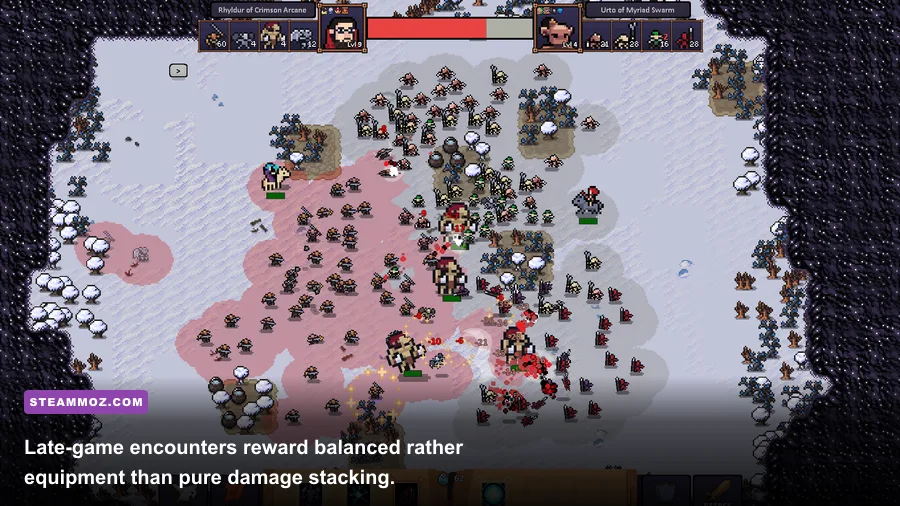
Late-game Rogue Realms fights punish single-stat builds. The winning setup usually combines one damage weapon, one survival or economy item, and an army that covers the hero’s weakness. A Dragon Slayer hero still needs a frontline. A Staff of the Archmage hero still needs protection. A Crown of Command hero still needs enough damage to finish targets before the battle drags into a war of attrition.
| Encounter | Best equipment | Main danger | Counterplay |
|---|---|---|---|
| Enemy hero duel | Dragon Slayer | Focused burst and body-blocking | Send expendable units first, then isolate the commander |
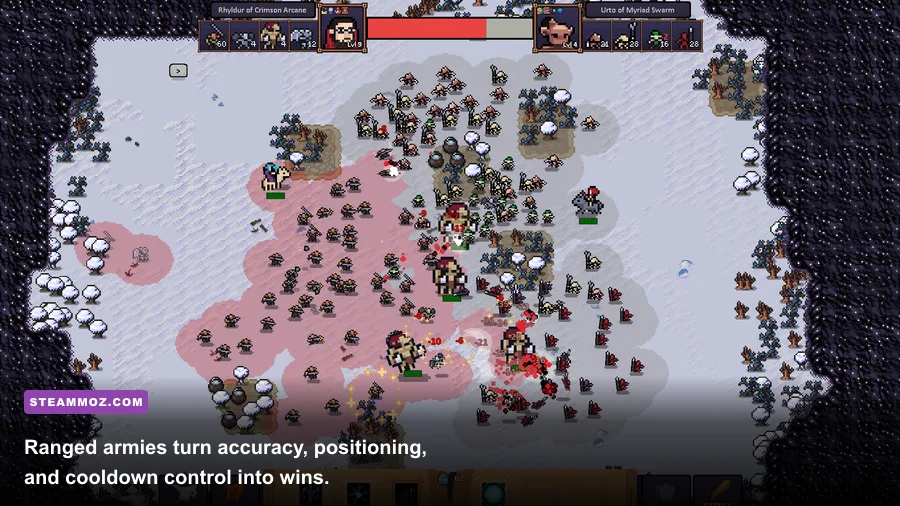
| Large ranged army | Sword of Swiftness | Opening volley | Use terrain, split the formation, and close distance quickly |
| Summoner or caster stack | Staff of the Archmage | Repeated crowd control | Interrupt the backline and save your strongest spell for reinforcements |
| Fortress assault | Crown of Command | Long attrition fight | Rotate damaged units and avoid feeding troops into chokepoints |
Before a boss fight, save the campaign, inspect the enemy composition, and change equipment with the encounter in mind. Don’t blindly preserve an old loadout because it carried the previous ten battles. Hero’s Hour rewards adaptation more than loyalty to a tier list.
That flexibility is the real Rogue Realms advantage: S-tier weapons create the highest ceiling, but A-tier equipment often produces the better run when it fixes a specific weakness. If you want more strategy-focused reading, see our beginner build guide for Bounty Train and the best games like Iratus. For Hero’s Hour, start with speed, protect your win condition, and change your gear before the battlefield forces you to.