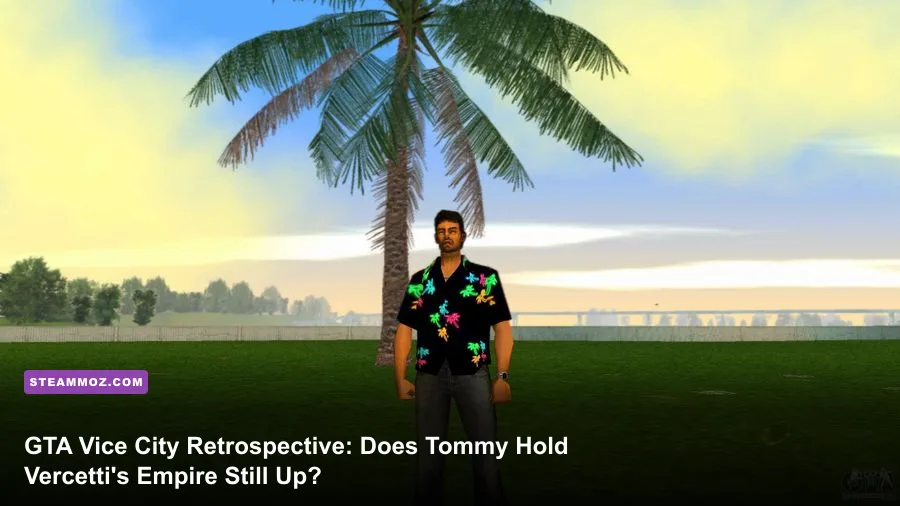
Yes, Grand Theft Auto: Vice City is still worth playing, but strictly as a playable piece of pop-culture history rather than a frictionless modern sandbox. If you dive into Tommy Vercetti's pastel-drenched criminal empire expecting fluid third-person shooting, forgiving mission checkpoints, or sophisticated enemy AI, you will bounce off hard within two hours. However, if you treat it as an interactive 1980s neon time capsule powered by the greatest licensed soundtrack ever pressed to digital media, Vice City delivers a concentrated swagger and narrative pacing that bloated 100-hour modern open worlds simply fail to replicate.
The Ocean Beach Vibe: Why Vice City's Aesthetic Still Destroys Modern Clutter
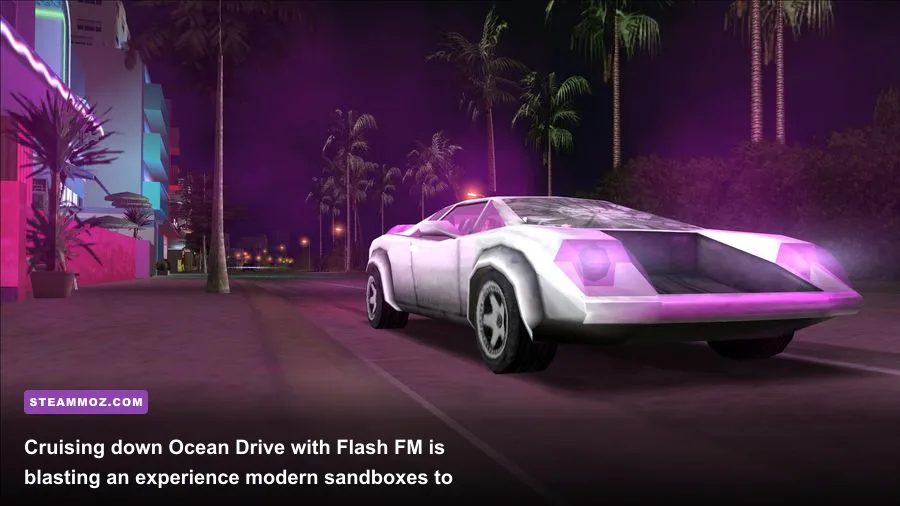
Vice City was never about map scale; it was about map soul. Spanning roughly 5.6 square kilometers across its two primary landmasses, Vice City's map is a puddle compared to Los Santos in GTA V or the sprawling wilderness of New Austin. Yet, despite being radically smaller, every square block feels intentional. Cruising down Ocean Drive at dusk in a white Infernus while Michael Jackson's "Billie Jean" or Laura Branigan's "Self Control" hums through the radio waves remains an untouchable gaming mood. If you love that retro synth-wave flavor, it evokes the same high-octane neon attitude we broke down when reviewing Far Cry 3 Blood Dragon's retro aesthetic.
Rockstar's genius was mining Miami Vice, Scarface, and Carlito's Way to create a hyper-stylized caricature of American excess. Tommy Vercetti, brought to life by the late Ray Liotta's gritty, cold-blooded voice performance, cuts through the Miami humidity with genuine menace. Unlike modern protagonists who constantly justify their moral shortcomings through endless melodramatic cutscenes, Tommy is an unapologetic, Hawaiian-shirt-wearing mobster out for revenge, power, and cold cash. The atmosphere carries the entire experience, masking environmental limitations through bold art direction, pink-and-turquoise sunsets, and razor-sharp satire across classic radio stations like V-Rock and Flash FM, detailed extensively over at the GTA Wiki Vice City archives.
Combat and Movement Mechanics: The Agony of Pre-Modern Controls
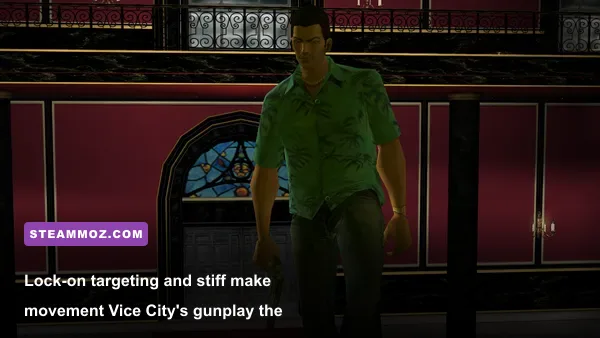
Here is the unvarnished truth: returning to Vice City's mechanical core without nostalgia goggles can be a jarring shock to the system. Tommy controls like a shopping cart loaded with wet cement. You cannot swim—hitting water deep enough to submerge Tommy's ankles triggers instant death. There is no dynamic cover system, no weapon wheel on the original release, and aiming rifles locks Tommy's boots to the pavement in a stiff first-person stance that leaves you wide open to crossfire.
Gunfights in Vice City are games of raw mathematical attrition rather than skill. Enemies do not flank with tactical coordination; they spawn in clusters, sprint toward you in straight lines, and open fire with pinpoint hitscan accuracy. If three Cuban gangsters armed with Micro-SMGs round a corner simultaneously, Tommy's 100 Health and 100 Armor pool can vanish in less than 1.5 seconds. Your combat viability heavily depends on securing high-tier ordnance early. The .357 Colt Python, which deals a monstrous 140 damage per shot, turns enemy infantry into red mist with a single tap, while the M4 assault rifle remains the only reliable tool for mid-range crowd control when storming compound gates.
The Infamous Missions: Nostalgic Challenge or Pure Bad Game Design?
Without checkpoints, failing a Vice City mission means dying, respawning at the Ocean View Hospital stripped of your weapons (unless you exploit specific asset rewards), hailing a cab, driving back to the quest giver, and re-watching the opening cinematic. This brutal feedback loop turns several mid-game missions into absolute stress tests of player sanity.
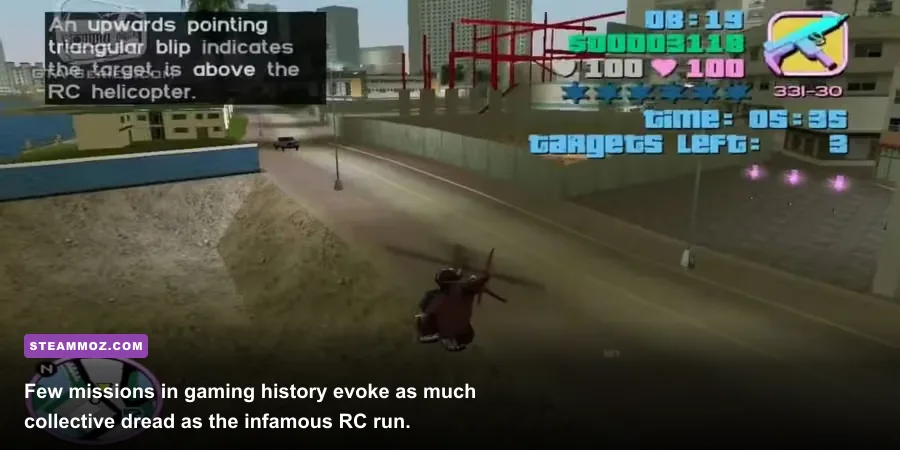
Everyone remembers the sheer agony of "Demolition Man." Tasked with piloting an RC Goblin helicopter inside a multi-story construction site to plant four timed explosives, the player is forced to fight archaic pitch-and-yaw flight controls while construction workers beat the brittle toy chopper with hammers. But it is far from the only friction point. Missions like "The Driver" pit your sluggish Sentinel against Hillary King's hyper-tuned Sabre Turbo in a rainstorm where AI cars rubber-band aggressively, while the seaplane logistics in "Dildo Dodo" test the patience of even the most dedicated pilots.
| Mission Name | Core Obstacle | Why It Angered Players | Modern Mechanical Workaround |
|---|---|---|---|
| Demolition Man | Avery Carrington's 7-minute RC helicopter bombing run | Atrocious yaw controls, tight stairwells, and aggressive melee worker AI | Enter the building *before* picking up the first bomb to decapitate all guards with the rotor blades with no timer running. |
| The Driver | Street race against Hillary King through Vice Beach | Hillary drives a faster car (Sabre Turbo) with unnatural physics weight and aggressive scripted rubber-banding | Shoot out Hillary's front tires before stepping into the mission marker, or trigger a 2-star police chase to let cop cruisers PIT-maneuver him. |
| Dildo Dodo | Distribute flyers using the fragile Skimmer seaplane | Appalling takeoff physics, high fuel burn rate, and unforgiving building collision hitboxes | Fly a wide, high-altitude perimeter loop first, hitting checkpoints on the descent rather than banking between skyscrapers. |
| Keep Your Friends Close... | Defend the Vercetti Estate against mob hit-squads and Lance Vance | Massive enemy health pools, relentless hitscan shotgun damage, and sudden flank spawns | Stockpile 500+ rounds of M4 ammunition and camp the main staircase landing to choke-point enemies as they breach the foyer. |
Asset Acquisition: Vice City's Greatest Mechanical Masterstroke
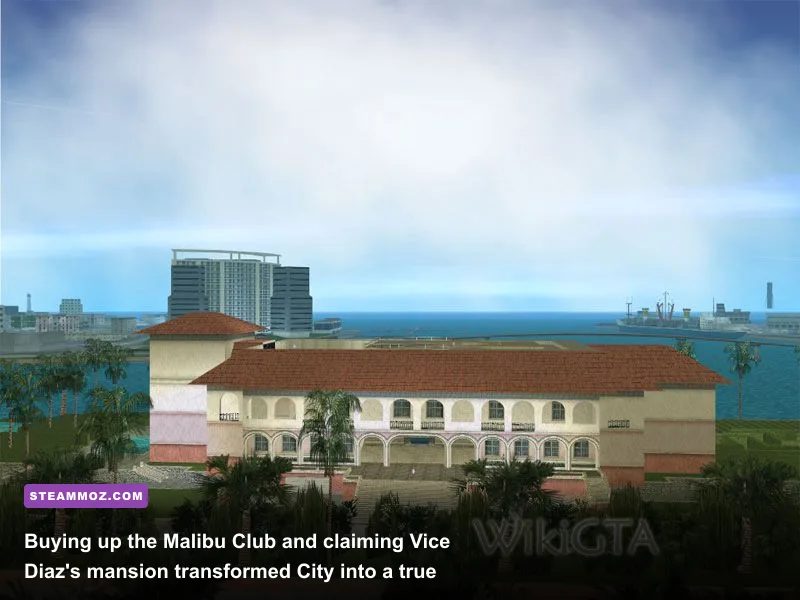
Where Vice City completely outshines GTA III—and arguably sets a blueprint that modern titles still struggle to execute cleanly—is its mid-game asset acquisition loop. Once Tommy eliminates Ricardo Diaz and takes ownership of the Starfish Island mansion, the game shifts from a traditional errand-boy mob story into an aggressive real-estate syndicate simulator.
Buying up properties across the city gives Tommy genuine ownership over his environment. Each acquired business requires completing a unique storyline or mechanical challenge before it begins generating passive daily income, topped off with a cash pickup right outside the door:
- The Malibu Club ($120,000): Unlocks an elaborate heist crew recruitment storyline culminating in "The Job," awarding a massive $50,000 payout and a daily yield of $10,000.
- Sunshine Autos ($50,000): Demands completing four distinct showroom car collection lists, unlocking exotic sports vehicles and generating up to $9,000 per day.
- The Print Works ($70,000): Serves as the narrative catalyst for the final act, manufacturing counterfeit plates to establish Tommy's financial autonomy with a $2,000 daily payout.
- Cherry Popper Ice Cream Factory ($20,000): Tests your evasion skills by tasking you with completing 50 consecutive street-level drug deals in a slow delivery truck without getting busted.
Once you collect all assets, your empire pumps out an astonishing $50,000 in passive daily cash flow. It is a deeply rewarding loop that gives tangible mechanical purpose to your accumulated wealth, a feature severely missing in newer titles where cash stockpiles simply rot in your virtual bank account.
How to Actually Play It Today: Original 1.0 Modded vs. Definitive Edition
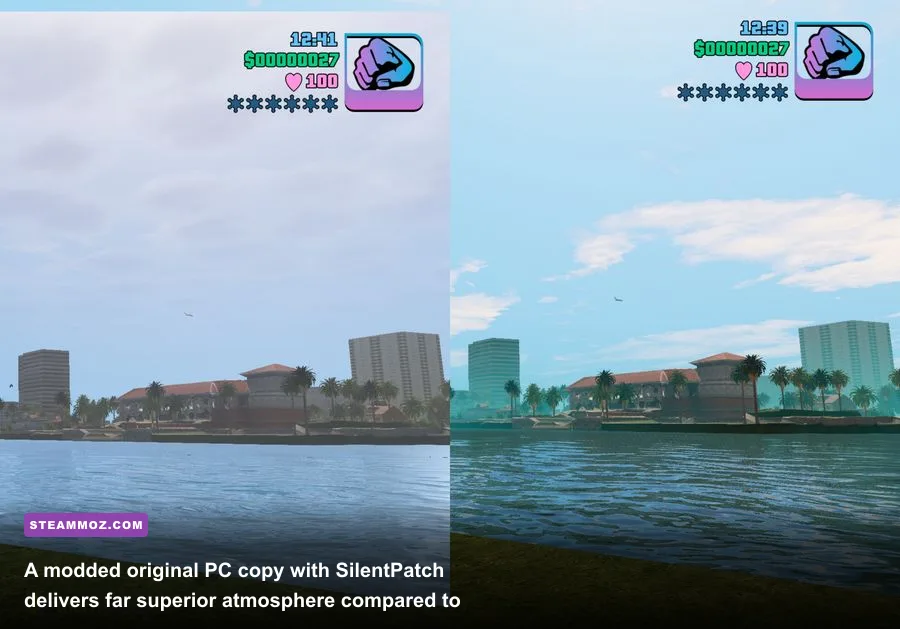
If you decide to fire up Vice City today, you face a major dilemma: which version should you actually play? In late 2021, Rockstar released Grand Theft Auto: The Trilogy – The Definitive Edition via the official Rockstar Games store. While recent patches have patched out broken rain shaders and restored classic lighting profiles, the Definitive Edition still suffers from weird character geometry, missing licensed radio tracks due to expired music rights, and broken physics hitboxes.
For PC gamers, tracking down a classic release (Version 1.0) and installing essential community modifications remains the undisputed gold standard for stability and authenticity, as documented on the community-driven PCGamingWiki Vice City setup guide. The classic RenderWare engine is notoriously finicky on modern multi-core rigs; running the game past 30 frames per second breaks car braking calculations, makes boat physics drift erratically, and causes Tommy to sink during specific jumps. Much like diagnosing old engine stutters using our PC fixes that stop crashes or stabilizing modern titles using frame limiter and rendering tweaks, older code bases require targeted tuning.
| Version / Setup | Frame-Rate Cap | Visual Authenticity | Soundtrack Integrity | Best For |
|---|---|---|---|---|
| Classic PC 1.0 + SilentPatch | Locked 30 or 60 FPS | Flawless PS2 post-processing via SkyGfx; original character models intact | 100% complete (original audio files including Michael Jackson tracks) | The ultimate, authentic enthusiast experience on PC hardware. |
| The Definitive Edition (PC/Console) | Unlocked (60 - 144 FPS) | Unreal Engine 4 lighting overhaul, but cartoonish clay-like character faces | Incomplete (several iconic 80s songs removed due to licensing expiration) | Casual players who want plug-and-play modern controller mapping and autosaves. |
| Emulated PS2 (PCSX2) | Native 30/60 FPS | Original motion blur, scanlines, and authentic low-res particle trails | 100% complete original release soundtrack | Purists craving the exact analog CRT television look and sound mixing from 2002. |
If you build a modded classic copy, the must-have plugins are SilentPatch (fixes engine crashes, frame pacing, and mouse polling), ThirteenAG's Widescreen Fix (native 16:9 and 21:9 support with un-stretched UI elements), and SkyGfx (re-enables the dreamy, sun-bleached PS2 color grading that was stripped out of the original PC port). Ensuring these tweaks work seamlessly is very similar to checking older performance baselines like our breakdown of Far Cry 2 PC specs and compatibility, preventing engine glitches before you sink hours into the campaign.
Final Verdict: An Essential Time Capsule That Demands Modern Patience
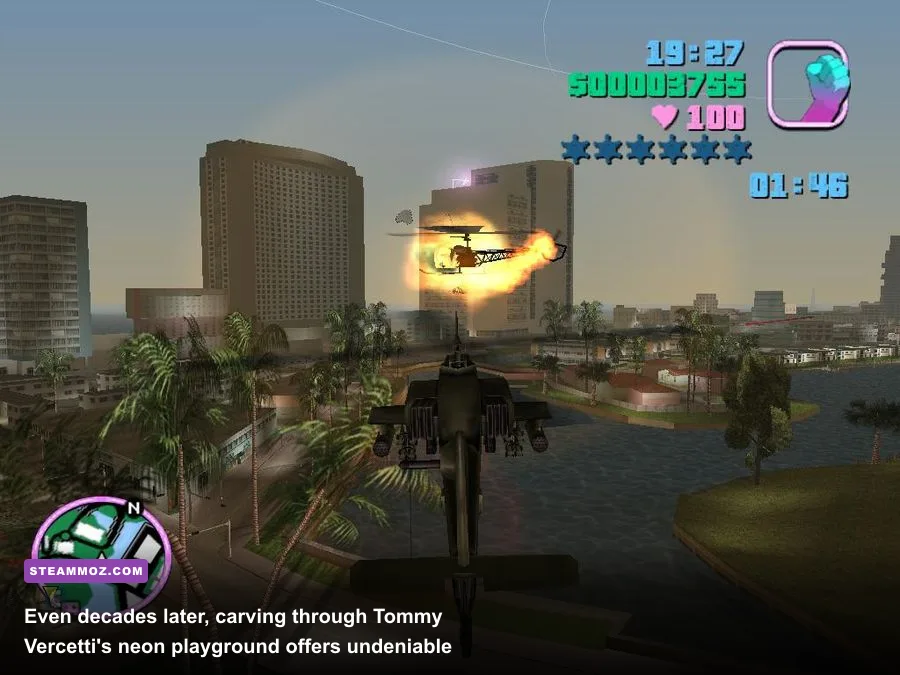
Grand Theft Auto: Vice City is fundamentally uneven by contemporary gameplay standards. Its gunplay is clunky, its mission checkpointing is downright disrespectful of your free time, and its pedestrian AI possesses the situational awareness of a wooden fence post. If you approach it seeking the fluid stealth, responsive cover shooting, or systemic emergent sandboxes of modern gaming, frustration is guaranteed.
Yet, none of those mechanical shortcomings can erase the game's lightning-in-a-bottle aura. Vice City remains an electrifying cultural artifact—a concise, 15-hour masterclass in tone, world design, and unforgettable music selection that modern mega-productions spend hundreds of millions trying to recapture. If you have the patience to adapt to early-2000s design quirks (or install the necessary community patches on PC), Tommy Vercetti's sun-soaked empire still earns its crown. It is not just worth playing today; it is required reading for anyone who wants to understand why open-world gaming conquered the industry in the first place.