Gas Station Simulator has no weapons, damage stats, or combat tier list. Its best equipment is ranked by speed, customer impact, and how much work it removes from a busy shift: the fuel nozzle and cleaning tools sit at the top, while novelty and convenience equipment belong lower until your station can afford them. That distinction matters because searching for a conventional “Gas Station Simulator weapon tier list” leads to advice for a game that simply does not contain guns, melee weapons, enemies, or combat missions.
This is the 2021 management simulator from DRAGO Entertainment. You inherit a neglected roadside gas station, restore it, serve drivers, handle deliveries, clean up litter, and gradually turn a dusty stop in the middle of nowhere into a profitable business. Equipment is functional rather than combat-focused. There are no weapon rarities, DPS rolls, ammo types, character classes, or enemy weaknesses to exploit.
So this ranking uses the useful definition of a tier list: which tools and station services deserve your attention first. It also separates handheld equipment from permanent upgrades, because confusing the two is one of the easiest ways to waste early money. If you expected a shooter, check out Steamoz’s Enemy Front weapon tier list; if you want to run the station efficiently, keep reading.
The Real Gas Station Simulator Equipment Tier List
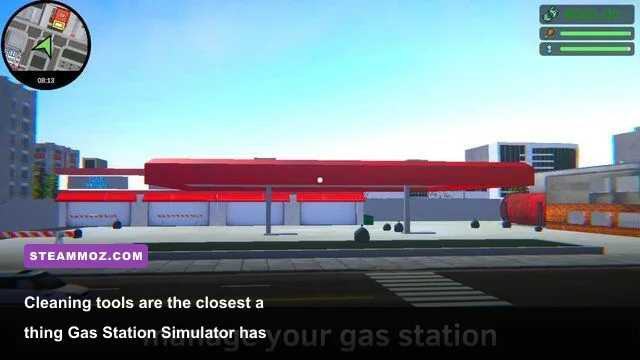
The S-tier group contains equipment you use constantly or services that directly prevent the station from falling behind. The fuel nozzle is the clearest example. Every completed fueling interaction produces revenue and keeps the core business moving, so learning its interaction range and moving between pumps efficiently pays off from the first shift onward. It is not flashy, but it has the best practical return because it is attached to the station’s primary income loop.
Cleaning tools also belong in S tier, particularly the broom and trash picker. Litter is not just visual clutter. A dirty station makes the property feel unfinished and can interrupt the rhythm of serving customers, especially while you are still doing most tasks yourself. The broom handles broad floor cleanup quickly, while the trash picker is better for individual pieces of rubbish and awkward outdoor spots. Use the right tool instead of trying to force one interaction onto every mess.
A-tier equipment is valuable but more situational. The mop becomes important when indoor grime accumulates, while the checkout and stocking systems become stronger as the shop gains more shelves and products. Vehicle-service equipment can be excellent once the relevant service area is operational, but it should not outrank the tools that support every shift. B-tier items are conveniences or expansion purchases that feel good after the basic workflow is stable, but they rarely solve an early bottleneck by themselves.
| Rank | Equipment or service | Why it ranks here | Best use case |
|---|---|---|---|
| S tier | Fuel nozzle | Supports the station’s core customer transaction | Every shift, especially during pump queues |
| S tier | Broom | Fast, repeatable cleanup for large dirty areas | Outdoor forecourt and high-traffic floors |
| S tier | Trash picker | Removes scattered litter without slow manual searching | Early-game cleanup and exterior maintenance |
| A tier | Mop | Handles indoor messes the broom cannot efficiently solve | Shop floor and interior maintenance |
| A tier | Checkout and stocking setup | Converts shop traffic into reliable extra revenue | After the store has regular foot traffic |
| A tier | Car-wash equipment | Adds a profitable service once unlocked and staffed | Mid-game station expansion |
| B tier | Decorative and comfort upgrades | Improves presentation but rarely fixes immediate queues | After core services are running smoothly |
That table is a utility ranking, not an official in-game scorecard. Gas Station Simulator does not expose weapon-style values such as attack power, cooldown, armor penetration, or critical chance. Treating a broom like a “low-damage melee weapon” would be funny, but it would also give you the wrong upgrade priorities.

🎮 Gas Station Simulator
Looking to experience this game? Grab your digital key directly on our store for $9.99.
View on Steammoz Store →Why the Fuel Nozzle and Cleaning Tools Dominate
The fuel nozzle wins because it aligns with the game’s most dependable loop: customers arrive, vehicles occupy pumps, you complete the service, and the station receives income. Early on, every wasted trip matters. If you ignore a customer while chasing a distant piece of rubbish, you are trading a direct transaction for maintenance that can usually wait a few seconds. The best players do not clean constantly; they clean during gaps in demand.
Use a short route through the forecourt. Start near the active pump, complete the fueling interaction, scan nearby pumps for the next customer, and only then deal with litter that sits directly in your path. This reduces backtracking and keeps your camera pointed toward the places where the next task appears. Running in random circles feels busy but creates a hidden time tax.
The broom and trash picker complement each other rather than compete. Sweep broad patches with the broom when several pieces of rubbish are grouped together. Switch to the picker when litter is isolated, tucked near objects, or scattered across a route you are already walking. The distinction is especially useful before you hire enough staff to cover cleaning. Your objective is not to maintain a perfectly spotless property every second; it is to keep cleanliness from becoming the reason customers wait.
The mop belongs in A tier because it solves a narrower problem. Indoor messes still matter, but the shop floor usually gives you more control over movement than the open forecourt. Clean it during low-traffic periods, after restocking, or before a rush rather than abandoning an active pump. If your station is struggling financially, the mop is a maintenance tool, not a replacement for better staffing or more efficient service routing.
For a useful comparison, think of tools through three practical measurements: interaction frequency, travel saved, and revenue protected. The fuel nozzle scores high on frequency and revenue. The broom scores high on travel saved. The mop scores well on cleanliness but appears less often in the critical path. That is why all three are useful, but they should not receive equal priority.
| Tool | Primary task | Workflow strength | Common mistake |
|---|---|---|---|
| Fuel nozzle | Serve vehicles at pumps | Directly supports core income | Leaving active customers to perform low-priority cleanup |
| Broom | Clear broad dirty areas | Fast cleanup when rubbish is clustered | Using it for isolated or awkward litter |
| Trash picker | Collect individual rubbish | Precise cleanup along existing routes | Crossing the entire property for one piece of trash |
| Mop | Clean indoor grime | Protects shop presentation during quiet periods | Prioritizing it during a pump rush |
Best Upgrade Order for a Profitable Station
The strongest equipment ranking changes as the station develops. During the opening phase, your biggest enemy is not a boss or an enemy telegraph; it is task overload. You are cashier, cleaner, fuel attendant, stock handler, and delivery manager at once. Spend early money on improvements that shorten travel or let the station absorb more customers without demanding your attention every second.
Begin with the core station loop. Keep the forecourt usable, serve pumps quickly, and restore the shop enough that customers can move through it without unnecessary obstruction. Do not pour your first profits into decoration simply because it produces an immediate visual transformation. A prettier station that still leaves you sprinting between every task is not an efficient station.
Next, improve the shop and staffing flow. More merchandise only helps when customers can reach it and someone can keep the shelves supplied. A store expansion can raise revenue, but it also increases the number of tasks competing for your time. Watch the station for several shifts after each expansion. If queues get longer, hire or reassign help before adding another service.
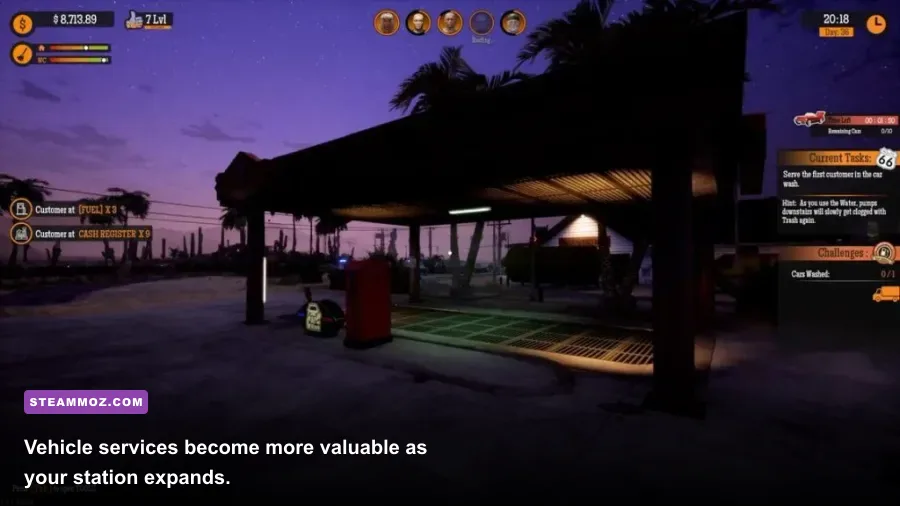
Car-wash equipment is an excellent mid-game target because it adds another reason for vehicles to stop, but it should come after you can comfortably handle ordinary fueling and shop demand. New services create new traffic patterns. If you unlock one while already drowning in litter, restocking, and checkout work, its theoretical earning power will not translate into real profit.
The same principle applies to the resource priorities discussed in our Ciel Fledge farming guide: a purchase is only strong when it supports the loop you can actually maintain. Gas Station Simulator rewards sustainable throughput more than glamorous expansion.
| Progression stage | Priority | What to delay | Reason |
|---|---|---|---|
| Opening shifts | Fueling, basic cleanup, usable shop layout | Heavy decoration spending | Protects income while you perform most tasks yourself |
| Early expansion | Staffing, stocking flow, customer movement | Too many simultaneous services | Prevents new tasks from overwhelming the core loop |
| Mid game | Car wash and additional station services | Expansions with no labor coverage | Turns new customer demand into usable revenue |
| Late development | Convenience, appearance, and full automation | Nothing essential; optimize to preference | Your business can now absorb lower-impact purchases |
Shift Tactics That Beat Any Fake Weapon Build
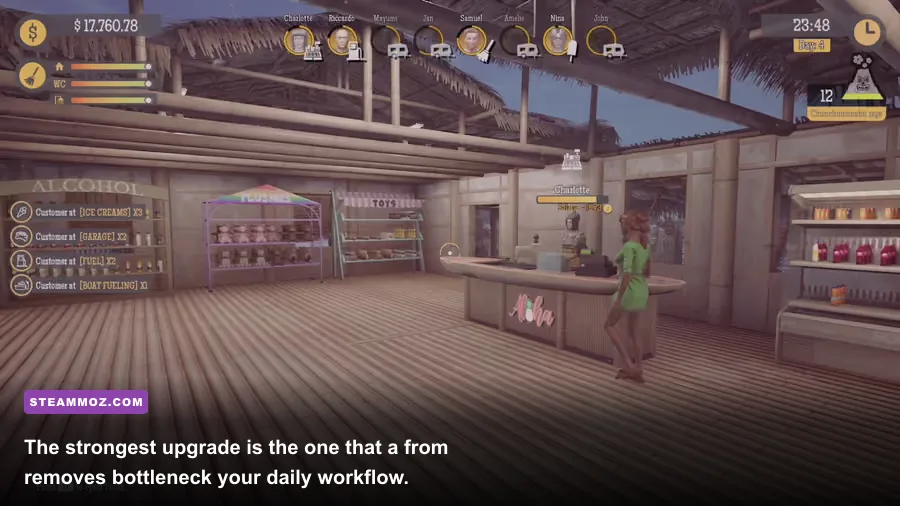
Because there is no combat system, the closest thing to a “build” is a shift routine. Start by checking the forecourt and identifying the next customer interaction. Serve fuel before wandering toward the shop. Once demand drops, collect visible rubbish along the route back to the station. Then restock or clean inside while watching for new vehicles. This rotation keeps your attention on revenue without allowing maintenance to snowball.
Do not treat every alert as equally urgent. A customer waiting at a pump is usually more valuable than one piece of litter near the perimeter. A nearly empty shelf can matter more than a clean corner because stock affects the shop’s ability to generate sales. The correct response depends on whether the task blocks a customer, creates a queue, or merely lowers the station’s presentation.
Deliveries deserve planning too. Clear a path before dealing with incoming supplies, and avoid triggering a long restocking run immediately before a predictable customer rush. If you have employees, assign them to the job that causes the most repeated interruption rather than the task you personally enjoy least. A worker handling cleanup can free you to fuel cars; a worker on stocking can prevent the shop from becoming a second full-time job.
Camera and movement discipline help more than people expect. Keep the view wide enough to see pumps and approaching vehicles, but do not waste time spinning the camera after every sound. Learn the station’s physical layout so you can move in straight lines between the forecourt, shop, and service areas. The game’s difficulty often comes from poor routing, not from demanding mechanical execution.
If you want a broader performance-minded comparison, Steamoz’s Breathedge settings guide covers a different kind of optimization, while the Cthuloot graphics guide shows how to separate visual settings from gameplay priorities. The same editorial rule applies here: identify the bottleneck before buying a solution.
What the Game Actually Rewards
Gas Station Simulator rewards prioritization, not a fictional weapon meta. There is no pistol to unlock, no shotgun that outranks a rifle, and no boss encounter where a particular damage type wins. The best “loadout” is the fuel nozzle for immediate service, the broom and trash picker for fast maintenance, the mop for indoor cleanup, and carefully timed station upgrades that increase revenue without multiplying chaos.
That is also why official information matters. The Steam store page describes the management and renovation premise rather than a combat system, and DRAGO Entertainment’s official site is the right place to check announcements and DLC details. The game’s official Steam Community hub can also help separate genuine updates from made-up tier-list terminology.
For players coming from action games, the adjustment is straightforward: replace damage-per-second thinking with revenue-per-minute thinking. Ask which tool prevents a queue, which upgrade saves the most walking, and which service you can support with your current staff. Those questions produce a useful ranking. Searching for “best weapon” does not.
Final ranking: the fuel nozzle, broom, and trash picker are S tier; the mop, checkout and stocking improvements, and car-wash equipment are A tier; decorative and comfort upgrades are B tier until your station is financially stable. There is no weapon tier list because Gas Station Simulator is not a combat game. Its real challenge is keeping every small job from becoming a crisis—and the right equipment makes that management puzzle much easier to win.