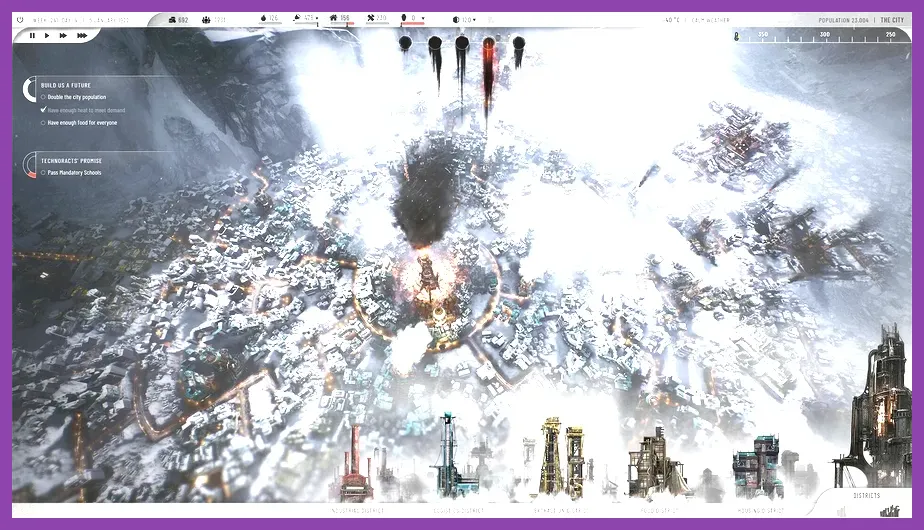
To farm financial reserves and maintain a healthy cash flow in Frostpunk 2, you must pivot your city's economy away from basic raw material stockpiling and focus heavily on manufactured goods, efficient district specialization, and the exploitation of Frostland trade routes. Unlike the original title's reliance on simple coal and wood counts, Frostpunk 2 introduces a dynamic economy driven by Workforce, Heat, Materials, Goods, and Thermal Hubs, where your ultimate currency—Thermal Units and financial backing—relies directly on how efficiently your industrial logistics operate under sub-zero pressure. If your treasury is constantly dipping into the red and citizen trust is plummeting due to poverty, you need to completely overhaul your production pipelines, enact specific economic laws, and aggressively exploit the frostlands.
Enacting Key Economic Laws in the Council Hall

The absolute fastest way to stabilize your economy and generate surplus funds is by passing targeted laws through the 11 bit studios developer vision of governance. Open your Council Hall interface immediately during Chapter 1 and push for laws that monetize your workforce and industrial output rather than favoring pure welfare. Welfare policies are necessary to avoid civil unrest, but they drain your operational budget early on.
Prioritize passing the Goods Rationing and Shift Optimization decrees. Shift Optimization increases the workforce output per district by 15% at the cost of slightly higher sickness rates, which can easily be mitigated by building proper advanced healthcare infrastructure nearby. Furthermore, look for laws that introduce taxes on luxury goods or mandate overtime. These legislative choices instantly translate idle hands into high-yield taxable citizens, effectively filling your treasury every single fiscal cycle without requiring massive new land expansions.
Specializing Extraction and Industrial Districts
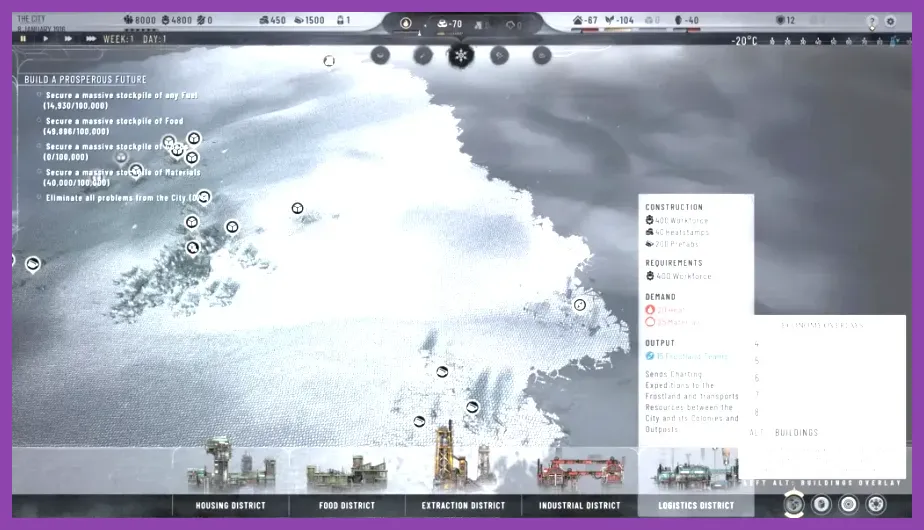
Randomly placing buildings is a guaranteed way to bleed money in Frostpunk 2. To maximize your financial throughput, you must create dedicated Extraction Districts paired directly with adjacent Industrial Districts. When placing an Extraction District, always target high-yield deposits of Oil or Coal, and ensure you use deep-drill technologies as soon as they become available in the Idea Tree.
Once raw materials are flowing, your Industrial Districts must convert those materials into finished Goods. Finished Goods are the primary commodity you can trade with external settlements or sell domestically to boost your capital reserves. To optimize this pipeline further:
- Always construct Logistics Hubs between your extraction and industrial zones to eliminate transport delays.
- Keep your Frostbreaking teams active to clear paths toward rich deposits, minimizing the distance workers travel.
- Upgrade your districts with mechanized equipment to reduce the total human workforce requirement, freeing up citizens to work in revenue-generating administrative buildings.
Exploiting Frostland Scouting and Trade Routes
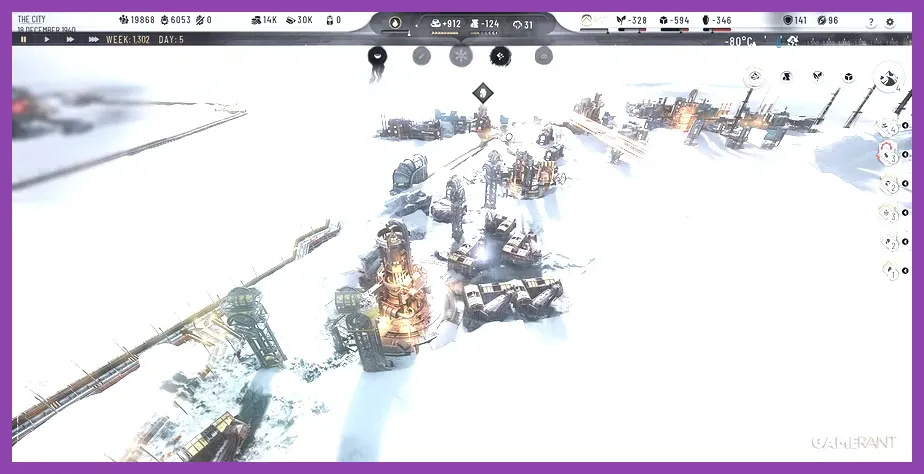
Your inner city can only produce so much wealth before it hits a hard capacity ceiling governed by available land tiles. To truly break open your economy, you must look outward into the frozen expanse. Build the Frostland Teams facility as early as possible and dispatch scouts to map out all surrounding nodes.
When you discover outposts like the Old Dredger, the Salt Mine, or nomadic settlements, do not just plunder them for a one-time resource bonus. Instead, establish permanent Trade Routes. Trading surplus coal, oil, or manufactured goods with external factions brings in a steady, reliable stream of financial backing and rare materials that cannot be harvested locally. Check the economic ledger frequently to ensure your export value outweighs the upkeep costs of the trade paths, and adjust your manufacturing focus based on which exterior faction is currently paying the highest premium for your specific goods.
Researching Financial and Efficiency Technologies in the Idea Tree
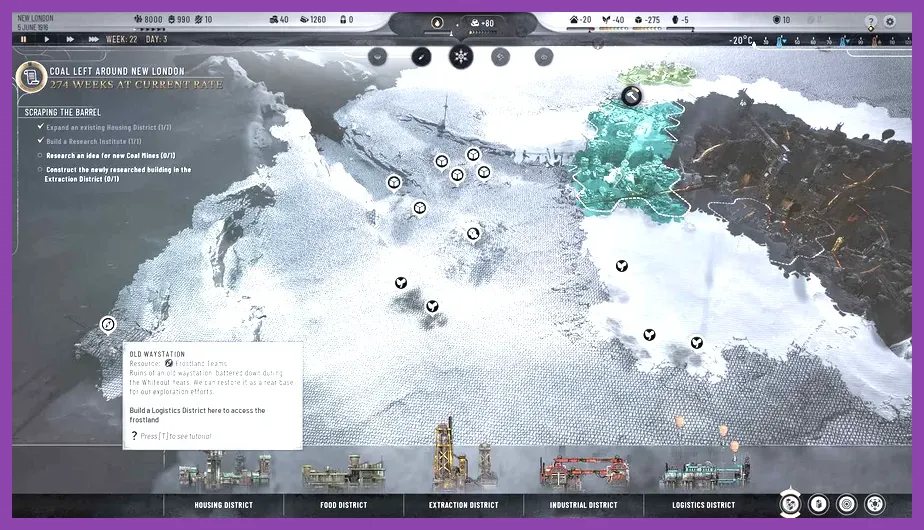
Farming money fast isn't just about making more; it is about aggressively cutting down massive operational expenditures. Head into the Idea Tree research menu and prioritize technological upgrades that reduce the Heat demand and Material upkeep of your districts. Every unit of coal or oil you save from burning needlessly in the Central Generator is a resource you can redirect toward profitable manufacturing.
Focus on researching the Advanced Heatmanagement branch and automated logistics networks. Automated logistics reduce the number of paths required to maintain district connectivity, which drastically lowers your overall infrastructure maintenance budget. Pair these technological upgrades with efficient character skill synergies among your faction leaders to maintain political stability while you reallocate funds toward growth.
Balancing Faction Demands to Avoid Economic Sabotage

No matter how optimized your extraction districts and trade routes are, your financial progress will instantly screech to a halt if your city falls into civil war or general strike. Factions like the Icebloods, Technocrats, Stewards, and Overseers will actively sabotage your economy if their trust levels drop too low.
Keep your financial farming smooth by regularly appeasing the dominant factions through targeted promises and building concessions. If a faction demands lower pollution or warmer housing, weigh the short-term cost against the devastating economic penalty of a prolonged strike. When workers walk off the job, your district output drops to zero, instantly flipping your positive cash flow into a catastrophic deficit. Use your administrative abilities and political capital to keep production humming uninterrupted, and you will quickly amass a colossal treasury capable of weathering any whiteout storm Frostpunk 2 throws your way.