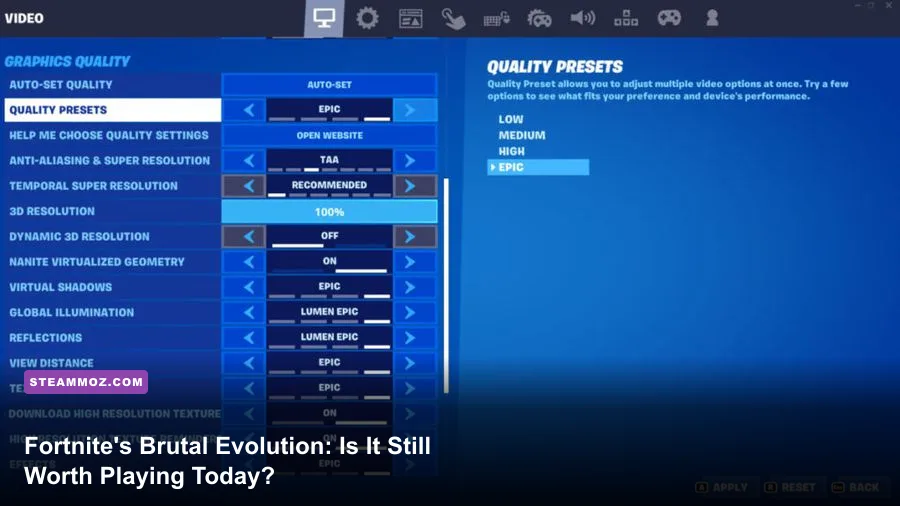
Yes, Fortnite is still undeniably worth playing, but only if you abandon your nostalgia for the simplistic 2018 sandbox and accept the modular, hyper-tactical live-service titan it has grown into. If your definition of Fortnite is still tied to spamming wooden 90s, chugging shield potions in tilted towers, and wrestling with bloom-heavy hitscan rifles, modern Fortnite will feel like an alien product. Epic Games has methodically dismantled the old mechanical fundamentals, introducing projectile-based ballistics, modular weapon attachments, robust mantling and hurdle movement physics, and visual tech powered by Unreal Engine 5.4 that brings flagship GPUs to their knees. It is no longer just a battle royale; it is an sprawling operational ecosystem that demands a recalibration of what you expect from a third-person shooter.
Zero Build vs. Classic Mechanics: How Gunplay Actually Feels
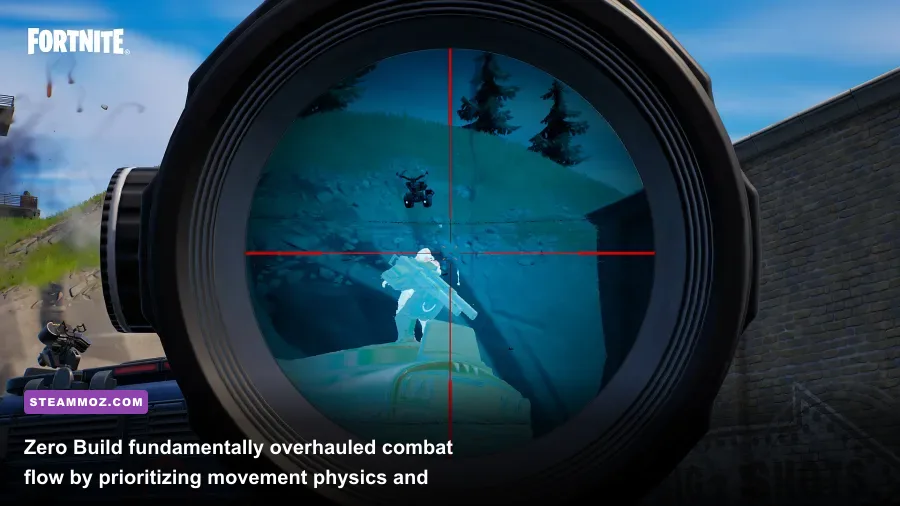
The single greatest structural watershed moment in the game's lifespan remains the permanent introduction of Zero Build. Before Zero Build, returning to Fortnite after a six-month hiatus felt like volunteering for cognitive whiplash. Running into an opponent meant watching them conjure a four-story wooden fortress within 1.2 seconds, forcing you into claustrophobic box fights where piece control and pump shotgun editing dictated every single exchange. Zero Build stripped away that construction layer, exposing Fortnite's gunplay to raw mechanical scrutiny—and surprisingly, that gunplay has evolved to become one of the tightest third-person shooting experiences on the market.
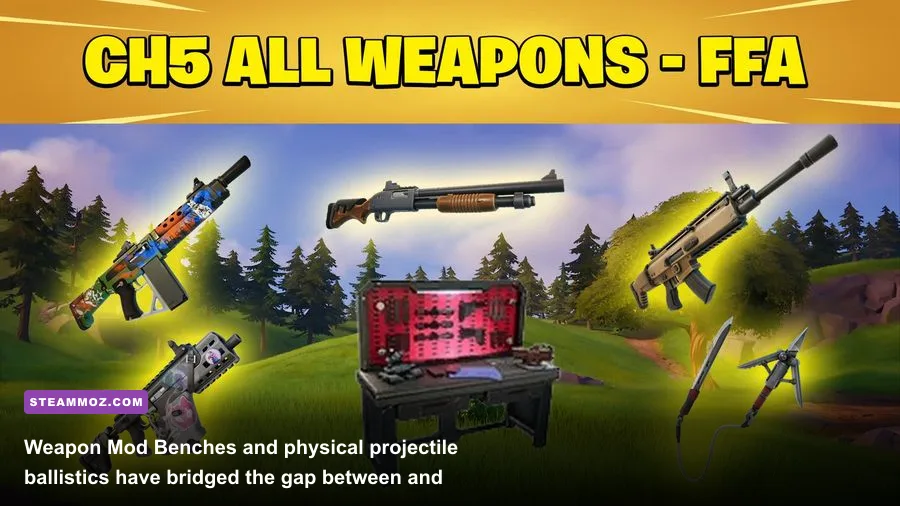
Modern firefights no longer rely purely on RNG bloom. The weapon arsenal leans heavily on real projectile physics where bullet drop, velocity travel time, and recoil patterns dictate the outcome of long-range engagements. When you fire a Reaper Sniper Rifle or line up a tap-fire burst with a Striker AR, you are compensating for leading targets at distance rather than praying to hitscan server calculations. The addition of Underground Bunkers and Weapon Mod Benches scattered across the island lets you customize base drops with drum magazines, angled foregrips, muzzle brakes, and thermal optics. A weapon found as standard floor loot can be tuned from a jumpy, high-recoil liability into a surgical laser if you hold the territory long enough to spend your gold bars.
Movement tech completely synchronizes with this gunplay. Tactical sprinting drains a dedicated stamina meter, sliding down terrain builds serious momentum, and dynamic mantling allows you to traverse rooftops without ever placing a ramp. In close-quarters duels, weapons like the Gatekeeper Shotgun reward disciplined crosshair placement; its devastating burst damage punishes sloppy positioning because you cannot instantly conjure a defensive wall between yourself and an incoming drum spread. If you enjoy crisp weapon balance and tactical pathing, you will find plenty of similarities with our breakdown of iconic weapon balancing and tier systems, where individual firearm identity transforms casual skirmishes into high-stakes duels.
| Core Weapon Archetype | Optimal Engagement Range | Key Mechanical Advantage | Primary Weakness |
|---|---|---|---|
| Gatekeeper Shotgun | 0 – 8 meters | Extremely rapid 3-round burst burst damage with tight spread | Small base magazine size; punishing reload window |
| Thunder Burst SMG | 5 – 25 meters | High-velocity projectile burst; zero visual muzzle kick when modded | Burns light ammo reserves rapidly in multi-team scrambles |
| Warforged / Striker AR | 20 – 60 meters | Sustained mid-range DPS; excellent armor shredding capability | Steep vertical recoil without underbarrel attachments |
| Reaper Sniper Rifle | 70+ meters | One-shot headshot elimination potential; variable optic zoom | Pronounced bullet arc requiring manual lead compensation |
| Monarch / Ranger Pistol | 10 – 35 meters | Lightning-fast weapon swap speeds; surgical hipfire bloom | Severe damage drop-off beyond mid-range thresholds |
The Unreal Engine Overhaul: Visual Spectacle and Hardware Cost
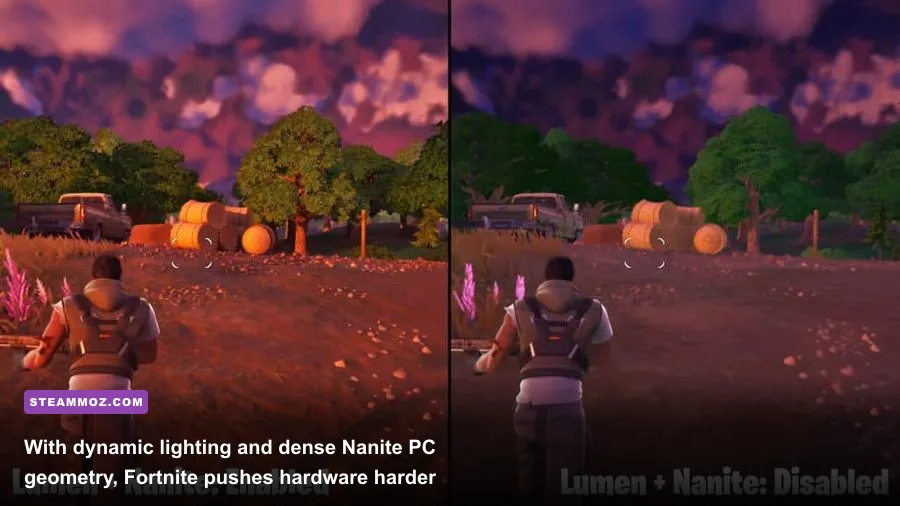
Fortnite functions as Epic Games' premier commercial tech demo, showcasing the cutting edge of Unreal Engine architecture directly to consumers. The implementation of Nanite (virtualized micropolygon geometry), Lumen (real-time dynamic global illumination), and Virtual Shadow Maps transformed the island from a vibrant cartoon playground into a stunning, dense graphical benchmark. Tree foliage now boasts individual geometric leaves that flutter and cast mathematically accurate penumbra shadows, while sunlight dynamically bounces off interior stone floors inside lavish POIs like Mount Olympus, Grand Glacier, and lavish high-tier vaults.
However, this bleeding-edge visual fidelity comes with steep hardware demands. If you run the game at native 1440p or 4K with Nanite and Hardware-Accelerated Ray Tracing enabled, even modern enthusiast GPUs will sweat. Micro-stutters during high-speed vehicle rotations or explosive chaotic multi-squad engagements can occur if your system experiences asset-streaming bottlenecks. Much like resolving complex performance hitches detailed in our PC crash fixes and frame stabilization methods, extracting rock-solid framerates out of Fortnite requires careful settings management rather than blindly cranking everything to Epic.
For competitive players who prioritize 240Hz or 360Hz refresh rates, switching to DirectX 12 with TSR (Temporal Super Resolution) or using the stripped-back Performance Mode remains the standard meta. Performance Mode reduces mesh geometry, disables complex particle simulations, and runs simplified lighting shaders, ensuring input latency stays at near-zero levels. If you want a great balance between gorgeous visual presentation and competitive clarity, tuning your graphic sliders makes a transformative difference.
| Graphical Setting | Competitive Profile | High-Fidelity Profile | Framerate Impact (%) |
|---|---|---|---|
| Rendering API | DirectX 12 / Performance | DirectX 12 | Baseline (5-12% CPU delta) |
| Nanite Virtualized Geometry | Off | On | 15% – 22% Framerate Cost |
| Lumen Global Illumination | Off | Lumen High / Hardware RT | 20% – 30% Framerate Cost |
| Virtual Shadow Maps | Low / Medium | High | 12% – 18% Framerate Cost |
| Temporal Super Resolution (TSR) | Off (Native / 100% 3D) | TSR Quality / Balanced | +25% to +40% FPS Recovery |
| View Distance | Medium / Far | Epic | 6% – 10% Framerate Cost |
If you have struggled with system thermals and rendering overhead in dense open-world sandboxes, taking notes from our guide on modern settings profiles for maximum FPS will give you the exact tactical mindset needed to keep frame times perfectly flat when the storm circle closes.
Battle Pass Fatigue, Monetization, and the Metaverse Shift
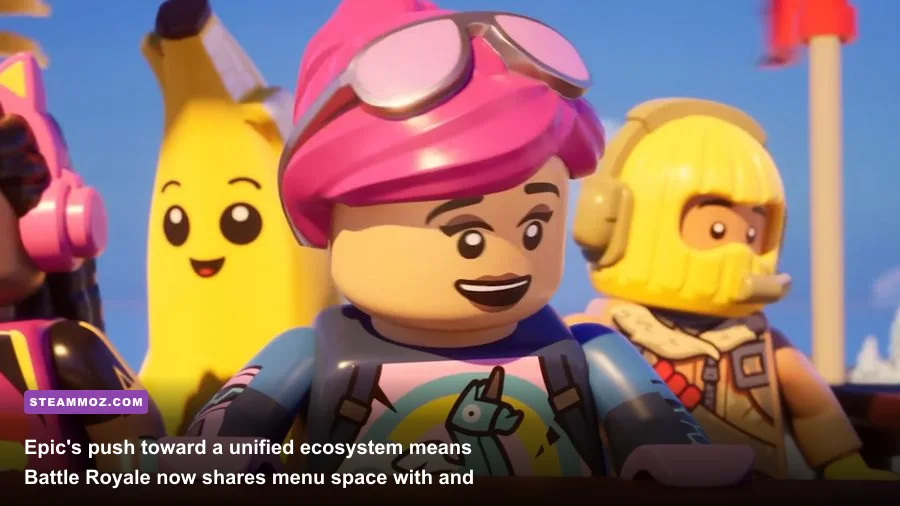
You cannot have an honest discussion about modern Fortnite without addressing the elephant in the lobby: Epic's relentless campaign to turn this title into an all-encompassing "Metaverse." Launching the client today no longer deposits you directly into a crisp Battle Royale menu. Instead, you are confronted with a streaming-service-style interface overflowing with custom islands, developer collabs, and internal spin-offs like LEGO Fortnite, Fortnite Festival (engineered by the rhythm geniuses at Harmonix), and Rocket Racing (developed by Psyonix).
This ecosystem sprawl has drastically altered progression. Seasonal Battle Passes are no longer confined strictly to Battle Royale survival XP. You can earn levels while assembling automated crop farms in LEGO survival worlds, nailing guitar solos in Festival, or lingering in creative XP maps. The system borrows the addictive progression psychology we analyzed in our breakdown of rapid leveling loops and resource efficiency, meaning you are constantly showered with rewards regardless of which mode you boot up. If you are burned out on getting third-partied in sweaty Solo lobbies, hopping over to a cozy survival sandbox without sacrificing your seasonal progression is a genuinely consumer-friendly perk.
On the flip side, cosmetic bloat is at an all-time high. The locker UI redesign has faced widespread community criticism for fragmenting weapon wraps, character skins, emotes, and vehicle chassis into separate disconnected screens. The monetization machine is as aggressive as ever, with crossover IP packages—from anime icons and Marvel superheroes to real-world musicians and legendary gaming protagonists—rotating through the shop daily. While gameplay itself remains 100% free of pay-to-win mechanics (cosmetics are purely aesthetic, despite occasional hitbox or visibility parity debates), the persistent FOMO (fear of missing out) can be exhausting if you do not possess the discipline to ignore the storefront.
Skill Gap, Matchmaking, and the Modern Casual Experience
How does it actually feel to jump into a lobby today as a solo player or a casual squad? The experience hinges on the game's internal Skill-Based Matchmaking (SBMM) and its implementation of AI bots. When you launch a match after an extended break, your initial lobbies will be populated with a significant percentage of Epic's computational bots. These bots mimic low-level player behavior, miss shot spreads deliberately, and drop convenient heals upon defeat. For casual players, this provides a soft landing and an immediate dopamine boost; for competitive veterans, it can occasionally make the early game feel hollow until the lobby culls down to the final ten players.
Once your hidden MMR stabilizes, however, the real Fortnite rears its head. In public Zero Build matches, the endgame turns into an intense exercise in rotation discipline, medallion tracking, and high-ground control. Boss Medallions—dropped by elite NPC commanders inside guarded fortresses—paint your location on the mini-map for every player in the match in exchange for active combat buffs like passive shield regeneration, infinite sprint stamina, or damage multipliers. This mechanic injects brilliant risk-versus-reward tension into every circle phase. You are actively incentivized to hunt down medallion holders to strip them of their supernatural utility before the safe zone collapses into an open field.
Ranked play (spanning Bronze through to Unreal) offers a separate sanctuary for pure sweat. In high-tier Ranked lobbies, players exploit movement items—such as Shockwave Grenades, grapple blades, or nitro power boosts—with terrifying efficiency. Mouse-and-keyboard snipers battle against controller players utilizing close-range aim assist tracking. Yet despite the high skill ceiling, the existence of distinct playlists means you can tailor your session to your personal tolerance for stress. If competitive shooter bottlenecks are something you enjoy analyzing, check out our insights on mitigating hardware latency bottlenecks to make sure your rig isn't dropping critical input polling frames when tracking frantic targets.
| Core Game Mode | Primary Appeal | Target Audience | Skill Floor / Ceiling |
|---|---|---|---|
| Zero Build Battle Royale | Gunplay, cover discipline, fluid movement tech, dynamic vehicle combat | Shooter fans, returning veterans, tactical squads | Low Floor / High Ceiling |
| Classic Battle Royale | Fast-paced piece control, lightning editing, defensive structure mastery | Mechanical purists, competitive building specialists | Extremely High Floor / Insane Ceiling |
| Ranked Play (Both Formats) | Strict tournament scoring, medal progression, zero bot tolerance | Hardcore competitive grinders aiming for Unreal rank | High Floor / Elite Ceiling |
| LEGO Fortnite | Co-op survival crafting, village management, chill dungeon exploration | Casual gamers, families, survival sim enthusiasts | Very Low Floor / Moderate Ceiling |
| UEFN / Creative 2.0 | Custom mini-games, extraction shooters, deathruns, horror experiences | Players seeking endless variety and community innovations | Variable (Content Dependent) |
The Definitive Verdict: Should You Install It Today?

Fortnite is no longer just a trend, an internet meme, or a temporary playground for young kids; it is a permanent pillar of modern gaming infrastructure. What keeps it relevant is not just the billions of dollars Epic pours into high-profile pop culture crossovers, but a relentless refusal to let core gameplay stagnate. Every few months, the entire mechanical rhythm of the island resets. Entire weapon pools get vaulted, movement systems receive sweeping systemic tune-ups, new map biomes rewrite rotation routing, and innovative sandbox items transform how squads approach tactical skirmishes.
If you hated the hyper-fast building meta of 2019, Zero Build provides an exhilarating, visually splendid third-person shooter that rivals the gunplay of any contemporary military battle royale on PC or console. If you love building, the classic modes preserve the deepest, most distinct mechanical skill ceiling in gaming history. And if you are simply exhausted by standard multiplayer deathmatches, the integrated ecosystem of alternate experiences ensures there is always something low-stress to explore with friends while chatting on Discord.
Modern Fortnite demands hard drive space and asks you to navigate a busy, commercialized user interface, but the moment boots touch the island and the first circle begins to shrink, it delivers some of the most dynamic, chaotic, and satisfying multiplayer action in the medium. It has survived its copycats, adapted past its own limitations, and earned its position at the top of the food chain. You owe it to yourself to jump back in and experience just how radically it has evolved.
To keep tabs on live balance adjustments, competitive rulesets, and upcoming engine iterations, consult the official Fortnite official website, download client patches through the Epic Games Store, or read technical breakdowns of their rendering innovations on the Unreal Engine portal.