
The best beginner build in Daymare: 1998 is a flexible survival loadout, not a skill-tree setup: use Liev first, carry the Glock 17 for controlled 9mm kills, reserve the assault rifle for emergencies, keep the shotgun for close-range threats, and protect at least one healing item and one free inventory slot. Daymare has no traditional character stats, perks, or class talents, so your real build is built from weapon choice, ammunition discipline, crafting materials, and how efficiently you manage the limited inventory.
That distinction matters. This is a fixed-camera-inspired survival horror game with modern controls, deliberately scarce resources, and three playable characters—Liev, Raven, and Samuel—who approach the HADES disaster from different angles. You are not creating a damage-focused RPG character. You are building a routine that keeps you alive while the game constantly asks whether one more magazine is worth the space it occupies.
Start with Liev and learn the core loop

Liev is the strongest starting point because his early sections teach nearly every system without immediately forcing you into the most awkward resource decisions. He is the H.A.D.E.S. operative sent into the Hexacore facility, and his campaign introduces exploration, key-item hunting, computer terminals, environmental puzzles, weapon swapping, and the infected enemies that define the game’s opening hours.
There is no permanent skill investment to ruin, and switching characters later does not mean your first choices have locked you out of a build. Liev simply gives beginners the clearest baseline. Raven and Samuel bring different perspectives and equipment situations, but their chapters are easier to appreciate after you understand Daymare’s rhythm: search every room, read documents, identify locked routes, and only fight when the fight is worth the ammunition.
Play Liev on the default difficulty for a first run unless you already know classic survival horror. Higher difficulty makes ammunition, healing, and enemy stagger windows much less forgiving. Before starting, check the official Steam page for current system requirements and controller notes. Daymare’s atmosphere is built around detail, but a stable frame rate makes aiming and dodging substantially more comfortable.
| Build Element | Beginner Choice | Why It Works | When to Change |
|---|---|---|---|
| Starting character | Liev | Best introduction to movement, puzzles, and inventory pressure | Move to Raven or Samuel when the story switches perspective |
| Primary weapon | Glock 17 | Uses common 9mm ammunition and supports controlled headshots | Use the assault rifle when multiple enemies collapse on you |
| Close-range weapon | Shotgun | High stopping power when a zombie breaches your space | Save shells if the area offers safe kiting room |
| Emergency weapon | Assault rifle | Fast damage output against groups and dangerous targets | Do not use it as a replacement for the pistol |
| Healing policy | Carry one ready-to-use heal | Prevents a bad hit from becoming a reload | Carry two before a boss or forced combat sequence |

🎮 Daymare: 1998
Looking to experience this game? Grab your digital key directly on our store for $2.99.
View on Steammoz Store →Build your loadout around three weapon jobs
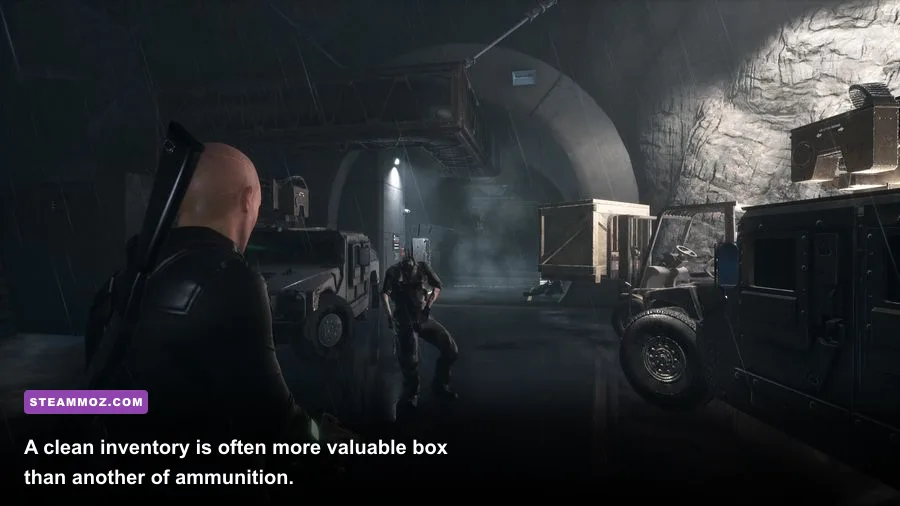
Think of the Glock 17 as your default answer, not your weak backup. Its 9mm ammunition is generally easier to justify spending than rifle rounds, and the pistol lets you slow down, line up shots, and preserve louder tools. Aim for the head when the target is stationary, but do not stand still waiting for a perfect hit while an infected enemy is already inside striking range. Two safe body shots are better than taking damage for a single stylish headshot.
The shotgun is your space-making tool. Its job is not to clear every corridor; its job is to stop the enemy that has survived your retreat and is now close enough to interrupt your movement. Fire at short range, immediately create distance, and reload only when you are safe. The shotgun is especially valuable around doorways, stairwells, and narrow laboratory passages where a group can remove your ability to sidestep.
The assault rifle is the panic button and the best weapon for a dangerous cluster. Automatic fire can solve a problem quickly, but it also burns through ammunition and makes missed shots expensive. Use short bursts whenever the room gives you space. Hold the trigger only when a target is close, a boss exposes a vulnerable window, or multiple infected are already surrounding you.
Daymare does not present a clean damage spreadsheet for these weapons, so there is no honest in-game “+15% damage” build to chase. The meaningful statistics are practical: ammunition availability, range, stagger potential, reload risk, and the amount of inventory space consumed. That is why the pistol-shotgun-rifle triangle beats carrying every weapon you find.
| Weapon | Ammo Type | Best Role | Beginner Mistake |
|---|---|---|---|
| Glock 17 | 9mm | Routine kills, isolated infected, precision shooting | Emptying the magazine while backing into a wall |
| Shotgun | 12-gauge shells | Stopping close threats and breaking a surround | Using shells on enemies that can be safely avoided |
| Assault rifle | Rifle ammunition | Groups, high-pressure rooms, exposed boss windows | Spraying at long range and wasting rare rounds |
Inventory management is the real character build
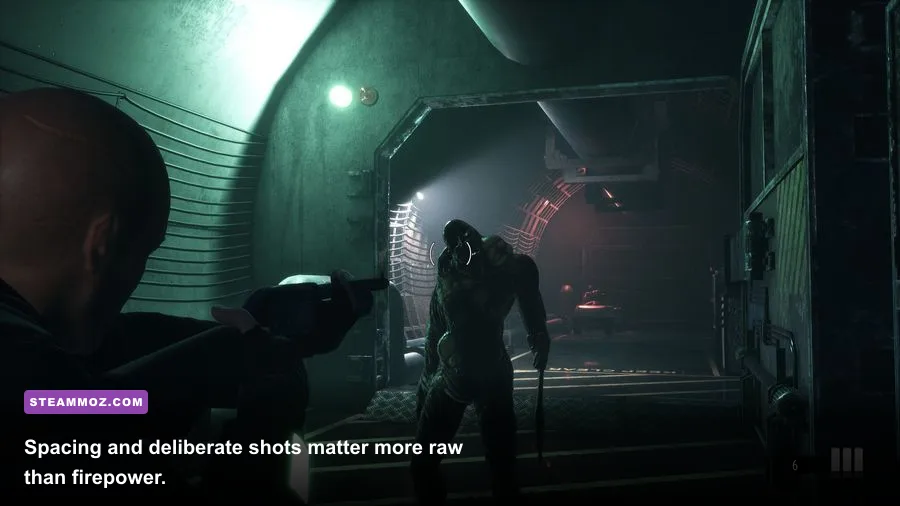
The inventory is where Daymare’s difficulty is won or lost. Every ammunition stack, weapon, healing item, key item, and crafting component competes for limited space. Before opening a new room, ask what you actually need to carry. A key item for the next objective deserves priority; a second healing item may be smart before a combat arena; a nearly empty weapon often does not deserve a permanent slot.
Keep your weapons organized in predictable positions. Put the Glock 17 first, the shotgun second, and the assault rifle third if the interface allows your preferred arrangement. Muscle memory is valuable when an infected enemy rushes during a reload. Store excess ammunition rather than carrying every round, and revisit storage when you pass a safe area. The game’s safe points and item boxes are not just conveniences—they are the backbone of a successful run.
Do not combine healing items casually. Daymare’s crafting system lets you turn collected resources into useful supplies, but crafting while your inventory is full can create a nasty chain reaction: the new item fails to fit, components remain scattered, and you lose the chance to pick up something important. Leave one or two spaces open before searching a large room or starting a puzzle sequence.
Use the in-game map and documents as navigation tools, not decoration. HADES contains backtracking routes, locked doors, security areas, and rooms whose value becomes obvious only after a later objective. If a corridor is safe and you have not finished the local objective, mark its landmarks mentally. A player who remembers where the item box and save point are will spend far fewer bullets on panic detours.
Spend ammo according to enemy behavior

The infected in Daymare: 1998 are dangerous because they punish indecision. Watch the animation before firing. A shambling target that has not noticed you is a different problem from one already sprinting or reaching through a doorway. Backpedal into open space, keep a clear route behind you, and fire only when your movement will not carry you into another obstacle.
For a lone slow enemy, use the Glock 17 and reposition after each deliberate shot. If the target drops but has not clearly stopped moving, do not walk directly over it. Give the body room, confirm the threat is finished, and avoid wasting a follow-up magazine into an animation you cannot read. The game’s horror presentation can obscure whether an enemy is dead, staggered, or preparing to rise.
For a fast or unusually durable infected, switch earlier than your pride suggests. The shotgun is cheaper than a healing item if it prevents contact damage. Against a group, retreat through a doorway or around a large piece of scenery rather than trying to circle several enemies in a tight room. The assault rifle earns its place here, but burst fire keeps you from turning one ugly encounter into an ammunition crisis.
Some encounters are best handled by walking away. If the game gives you a broad hallway, a door, or a loop around laboratory equipment, use it. Survival horror rewards route knowledge more than kill counts. A skipped enemy cannot consume a healing item, interrupt a reload, or force you to spend rifle ammunition that would be far more useful later.
| Situation | First Response | Weapon Choice | Fallback |
|---|---|---|---|
| Single slow infected in open space | Back away and line up controlled shots | Glock 17 | Leave the area if the route is safe |
| Enemy reaches melee range | Create distance immediately | Shotgun | Heal only after reaching a safe angle |
| Several infected in a narrow room | Retreat through a doorway instead of circling | Shotgun, then assault rifle | Break line of sight and reposition |
| Forced combat or boss vulnerability window | Use the opening decisively | Assault rifle | Shotgun for close-range interruption |
Make each character transition work for you
Daymare’s multi-character structure can feel like a build reset, but it is really a lesson in adaptation. Liev, Raven, and Samuel do not share one giant RPG progression tree. Their chapters put you in different spaces with different immediate priorities, so the safest approach is to rebuild your habits at each transition rather than assuming your previous ammunition balance will continue.
When controlling Raven, take extra time to understand the route and available supplies before committing to fights. Raven’s sections lean into investigation and movement, and the temptation is to rush because you already know how survival horror works. That is exactly when you run into a locked route with a nearly empty weapon. Search thoroughly, note useful rooms, and preserve your strongest tools for spaces that do not offer an easy retreat.
Samuel’s portions benefit from the same rule but can feel more combat-focused because the story places him in different high-pressure situations. Do not transfer Liev’s exact ammunition assumptions into Samuel’s chapter. Reassess every weapon at the start: which gun has a usable reserve, where is the nearest healing supply, and which path lets you disengage? The answer changes with the character and location.
For boss-style encounters, enter with a full or nearly full magazine, at least one healing item, and enough open inventory space to collect rewards or ammunition afterward. Watch for repeated telegraphs rather than trying to memorize a damage number the game never displays. Most fights become manageable once you identify the attack that forces movement, the pause that exposes the target, and the moment when greed gets you hit.
Use settings that protect aiming and atmosphere
Daymare: 1998 is not a competitive shooter, but inconsistent performance still hurts. A stable 60 frames per second is more useful than a dramatic visual preset that causes hitching during combat. Start with the game’s recommended PC settings, then lower shadows and post-processing before touching texture quality. Textures preserve environmental detail; shadows and effects usually cost more while offering less help during a tense encounter.
| Setting Area | Recommended Starting Value | Performance Impact | Visual Trade-Off |
|---|---|---|---|
| Resolution | Native monitor resolution | High | Lower only if GPU usage is consistently maxed |
| Textures | High if VRAM allows | Medium | Improves facility surfaces and character detail |
| Shadows | Medium | Medium to high | Small loss in depth, useful FPS gain |
| Post-processing | Medium | Medium | Reduces glare and some cinematic effects |
| Anti-aliasing | High or the stable default | Medium | Keeps railings and laboratory edges cleaner |
| Motion blur | Off if aiming feels soft | Low | Sharper camera movement and target tracking |
If you are troubleshooting stutter or low frame rates, compare the steps in Steamoz’s PC crash and FPS fixes guide and the hardware-focused Can Your PC Run Children of Morta? breakdown. They are not Daymare-specific, but the same basics—updated drivers, sensible background processes, and checking hardware load—apply.
The beginner build in one clean routine
Before leaving a safe room, reload the Glock 17, check that the shotgun is ready, and carry the assault rifle only when the next section suggests forced combat. Pack one healing item, keep a free inventory slot, and store excess ammunition. In the next room, search before shooting, identify the retreat route, and listen for enemy audio cues. Use the pistol for isolated threats, the shotgun to reclaim personal space, and the rifle only when speed matters more than economy.
Save after meaningful progress, especially after solving a puzzle, opening a shortcut, or surviving a major encounter. Do not burn every resource simply because the room contains an enemy. Daymare: 1998 is at its best when you feel slightly underprepared but still capable of making a smart choice.
For broader survival-game weapon advice, Steamoz’s weapon tier-list coverage is a useful reminder that the strongest option is not always the most efficient one. Likewise, the Dead Island hidden-rewards guide shows the value of exploring thoroughly instead of sprinting from objective to objective.
Finally, use the Invader Studios website and the developer’s official Daymare: 1998 Steam listing for current game information. The winning beginner build remains simple: Liev, Glock 17 discipline, shotgun spacing, assault-rifle restraint, one reliable heal, and enough empty inventory space to react to whatever HADES throws at you next.