
If you've spent the last several years sidelining Cyberpunk 2077 on Steam because of memories of its broken December 2020 launch, the definitive answer is clear: yes, Cyberpunk 2077 on PC is absolutely worth playing today. In fact, calling it merely "worth playing" undersells what CD Projekt Red achieved. Between the transformative Update 2.0 system overhaul and the brilliant spy-thriller expansion Phantom Liberty, the PC version has evolved into one of the most mechanically fluid, narratively devastating, and graphically unmatched action RPGs available on modern hardware. Night City is no longer an empty promise running on broken engine code; it's a realized masterclass in urban atmosphere and visceral first-person combat.
Getting to this point wasn't an easy victory lap. It required an exhaustive teardown of the base game's fundamental systems—scrapping entire talent trees, re-engineering cop AI from scratch, and decoupling player defense from aesthetic jackets. Whether you're coming in fresh or contemplating a second playthrough on modern silicon, here is an honest, exhaustive breakdown of how Cyberpunk 2077 plays today, how its systems hold up, and whether its hardware tax justifies the trip back to Night City.
The 2.0 Overhaul and Phantom Liberty: How Night City Was Rebuilt
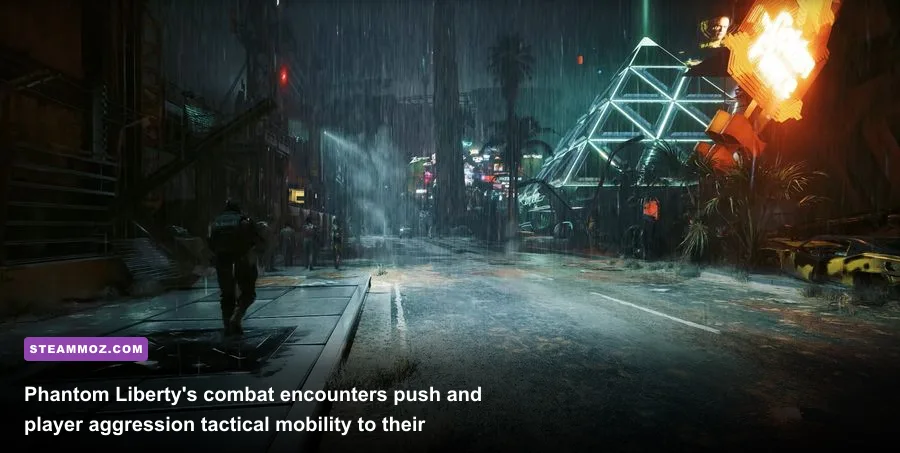
The turning point for Cyberpunk 2077 wasn't a minor patch; it was a scorched-earth redesign of the game's core gameplay loop via Update 2.0 and the subsequent 2.1 polish. Prior to these updates, combat boiled down to stacking passive critical hit percentages and stat-bloated weapon rolls. Clothing decided your armor rating, forcing V to look like a dumpster diver wearing a neon fedora and mismatched hot pants simply to survive a stray sniper shot in Pacifica. Looting felt like cleaning up spreadsheet litter rather than acquiring iconic tech.
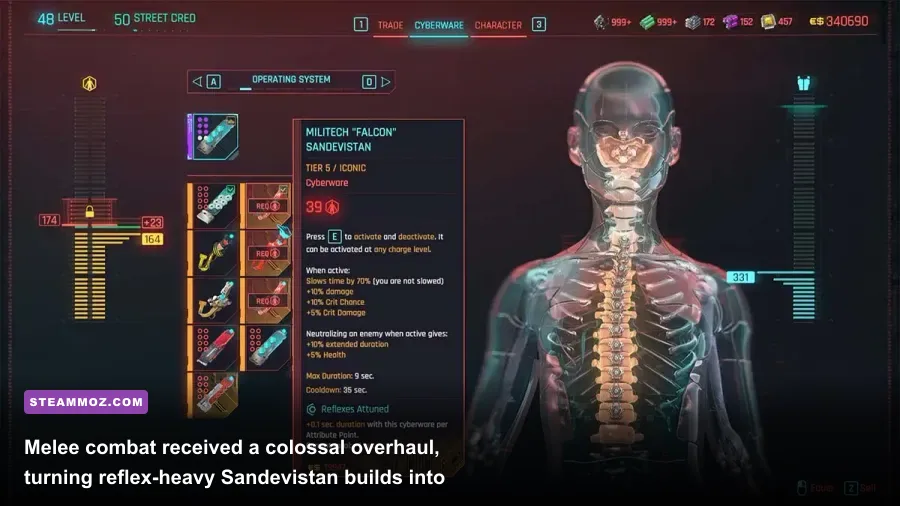
Today, character progression is completely restructured. Armor is now bound almost exclusively to your Cyberware installations, managed through a hard Cyberware Capacity limit that prevents players from turning into invulnerable gods without strategic sacrifices. The Edgerunner perk allows you to exceed your capacity at the cost of maximum health while offering a chance to enter a frenzied "Fury" state—a direct, thematic nod to the psychological risks of cyber-modification. Skill trees are no longer dull lists of +3% damage increments; they grant transformative active abilities like mid-air dashes, bullet deflections with katanas, brutal melee finishers, and on-demand cyberware overrides.
Then came Phantom Liberty, which introduced Dogtown—a walled-off combat zone run by Kurt Hansen's ruthless Barghest militia. Dogtown doesn't just look different; it is denser, vertically layered, and narratively tighter than any single district in the base game. Backed by standout performances from Idris Elba as Solomon Reed and Minji Chang as Songbird, the expansion brings espionage intrigue that rivals the best storytelling CD Projekt Red has ever produced. The introduction of the Relic Perk Tree adds specialized abilities like optical camo cloaking during mid-combat repositioning and structural vulnerability analysis, giving seasoned players fresh offensive vectors that make high-level skirmishes feel exhilaratingly technical.

🎮 Cyberpunk 2077
Looking to experience this game? Grab your digital key directly on our store for $59.99.
View on Steammoz Store →Combat Mechanics and Modern Build Diversity
Combat in modern Cyberpunk 2077 is lightning-fast, aggressive, and highly kinetic. The days of hiding behind low concrete barriers plinking away with basic assault rifles are long gone. The current meta encourages high mobility, rapid resource consumption, and distinct stylistic archetypes that completely alter your engagement distance and tactical decisions. In many ways, designing a build today feels as deliberate as crafting synergistic loadouts in other modern sandbox shooters.
Take the Reflexes / Melee loop. By slotting the Militech "Apogee" Sandevistan operating system, you can slow down time by up to 85% on demand. Synergized with the iconic katana Byakko (earned from completing all of Wakako Okada's fixer gigs) and the Lead and Steel perk tree, you can deflect oncoming automatic gunfire back into enemy skulls, dash 10 meters instantly to close gaps, and decapitate elite Arasaka security officers before they finish unholstering their sidearms. It delivers the definitive anime-grade cyber-ninja fantasy without feeling clunky or automated.
Conversely, the Intelligence / Netrunner loop is no longer about sitting in a camera feed and hitting "Contagion" until an entire warehouse dies passively behind closed doors. Enemies will actively track your digital trace when you upload combat hacks. To counter this, you must engage in active Quickhack Queuing. Popping Overclock sacrifices your current health pool in exchange for immediate RAM reserves, allowing you to chain Cyberware Malfunction directly into Short Circuit or load Memory Wipe before a lethal hack to break the netrunner tracing timeline completely. The risk-versus-reward tension keeps your pulse racing even when operating entirely behind digital interfaces.
| Build Archetype | Operating System | Signature Gear | Core Stat Priority | Combat Dynamic |
|---|---|---|---|---|
| Apogee Shinobi | Militech "Apogee" Sandevistan | Byakko / Errata (Thermal Katana) | Reflexes (20), Technical Ability (20) | Hyper-mobile temporal slowdown; deflecting bullets and chaining aerial dash executions. |
| Blackwall Netrunner | Tetratronic Rippler Mk.5 | Erebus SMG / Monowire | Intelligence (20), Technical Ability (20) | High-risk Overclock management, lethal quickhack queuing, and tech-weapon synergy. |
| Heavy Juggernaut | Berserk (Militech Berserk) | Ba Xing Chong / Gorilla Arms | Body (20), Technical Ability (20) | Invulnerable earth-shattering ground pounds, blunt weapon throw mechanics, and point-blank shotgun blasts. |
| Chrome Gunslinger | Dynalar Sandevistan or Cyberdeck | Malorian Arms 3516 / Archangel | Cool (20), Reflexes (15+) | Precision weak-point targeting, high headshot multipliers, deadeye focus, and active optical camo resets. |
PC Performance, Path Tracing, and Hardware Tuning
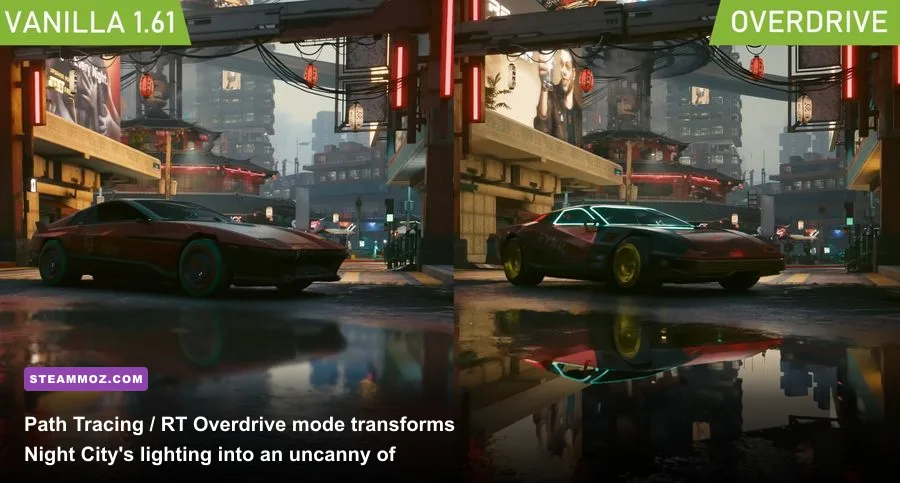
Cyberpunk 2077 remains one of the heaviest rendering benchmarks on the planet, but it is no longer the unoptimized engine disaster it was during its first year. The game scales remarkably well across modern hardware, provided you understand where the computational bottlenecks lie. Much like troubleshooting stuttering PC open worlds and optimizing performance, dialling in the RedEngine requires balancing rasterized assets against heavy ray-traced lighting pipelines.
The headline feature for high-end rigs is undoubtedly Ray Tracing: Overdrive Mode, which implements full unified path tracing. Instead of utilizing rasterized shadow cascades with selective ray-traced reflections, Overdrive calculates every ray of light, bounce, reflection, and ambient occlusion pass in real-time. Neon signs bleed accurate hues through rainy fog, car chassis reflect moving headlights with pinpoint geometric accuracy, and underground clubs in Watson cast moody, physically authentic soft shadows. The visual fidelity is jaw-dropping, but the performance toll is monstrous.
Running Path Tracing at native 1440p or 4K requires modern algorithmic heavy lifting: NVIDIA DLSS 3.5 with Ray Reconstruction is mandatory to prevent temporal denoising artifacts and maintain smooth frame pacing. For AMD users, FSR 3 frame generation has made high-refresh gameplay accessible on Radeon hardware, though path tracing remains disproportionately optimized for GeForce RTX architectures. If you're on mid-range hardware—such as an RTX 3060, RTX 4060, or RX 6700 XT—disabling full path tracing in favor of optimized raster settings yields an ultra-fluid 80–100 FPS presentation that still outclasses nearly every other open-world game on the market.
| Graphics Setting | Recommended Value | Performance Cost | Visual Impact / Tuning Context |
|---|---|---|---|
| Ray Tracing / Path Tracing | Off (Mid GPUs) / On + Ray Recon (RTX 4070+) | Very High (~40-60% FPS hit) | Transforms lighting realism completely, but requires modern upscalers and frame generation. |
| Crowd Density | Medium | Moderate (CPU bound) | High values will cripple older 6-core CPUs during heavy transit in Corpo Plaza and the Roundabout. |
| Volumetric Fog Resolution | Medium or High | Moderate (~8-12% FPS hit) | Ultra brings diminishing visual returns while placing severe strain on GPU compute units. |
| Screen Space Reflections Quality | High (Low if Ray Tracing is On) | Low to Moderate | Set to Low/Off if full RT reflections are enabled; otherwise, keep at High for crisp street puddles. |
| Cascaded Shadows Resolution | Medium | Low (~3-5% FPS hit) | Provides sharp character shadows without wasting VRAM bandwidth on distant background geometry. |
| DLSS / FSR / XeSS Mode | Quality (1440p) / Balanced (4K) | Massive Performance Boost (+45-70%) | Essential for smooth frame rates; DLSS 3.5 Ray Reconstruction cleans up specular shimmering. |
Fine-tuning these values is critical. Just as players look into optimizing settings for higher FPS in other resource-heavy titles, keeping Volumetric Fog at Medium and avoiding "Ultra" cascades can easily buy you 15% to 20% more frame budget without noticeably degrading Night City's rain-slicked visual majesty.
The PC Modding Renaissance: REDmod and Community Longevity
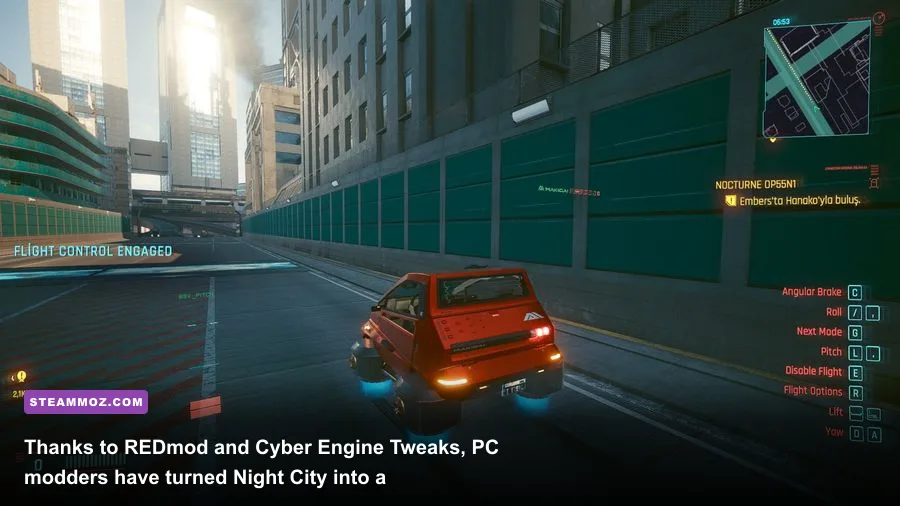
The PC version of Cyberpunk 2077 possesses a distinct, insurmountable advantage over its console counterparts: a thriving, mature modding ecosystem. Through official tools like REDmod and essential community frameworks like Cyber Engine Tweaks (CET), ArchiveXL, and TweakXL, the modding community on the Cyberpunk Wiki and Nexus Mods has addressed nearly every residual design grievance players have ever voiced.
Want more roleplay immersion? Mods like Night City Alive increase turf wars between rival gangs like the Tyger Claws, Maelstrom, and Valentinos, transforming street corners into dynamic war zones where the reformed police actually intervene. Real estate mods allow V to purchase dozens of custom apartments with interactive minibars and wardrobes throughout every sub-district. Quality-of-life overhauls offer configurable HUDs, complete radio expansions with hundreds of curated synthwave and industrial tracks, and custom flight mechanics for luxury aerodynes.
Furthermore, vehicle handling—which CD Projekt Red significantly tightened in Update 2.1—can be fine-tuned to your exact steering wheel or controller preferences through physics overhaul mods. If you encounter minor hardware hiccups or micro-stutters during vehicle combat, tweaking engine memory allocations via community config injectors provides the same stability relief seen when applying quick fixes for low FPS and performance drops. PC modding has effectively future-proofed the game, ensuring that Night City remains an adaptable sandbox long after official development has wrapped.
The Honest Verdict: Who Should Buy Cyberpunk 2077 Today?

It is important to maintain realistic expectations: Cyberpunk 2077 is not a dynamic, hyper-reactive life simulator in the vein of Grand Theft Auto V or Red Dead Redemption 2. Pedestrians on sidewalks don't have simulated 24-hour schedules with individual homes and personal daily routines. If you run around firing an LMG into the air, the civilian reactions remain relatively scripted. If you approach Night City hoping for an emergent criminal sandbox where you can build an empire, manage illegal storefronts, and customize houses down to the wallpaper, you will hit the game's structural boundaries.
However, if you judge Cyberpunk 2077 for what it was built to be—a story-driven action RPG with elite weapon handling, incredible character writing, meaningful branching questlines, and unrivaled art direction—it stands among the very best the genre has to offer. The dynamic relationship between V and Johnny Silverhand, the gut-wrenching cyber-tragedy of side characters like Judy Alvarez and Panam Palmer, and the tense corporate espionage of Dogtown constitute hundreds of hours of genuinely exceptional gaming.
Between frequent Steam seasonal discounts, rock-solid technical stability, and continuous community support, Cyberpunk 2077 on PC has rightfully earned its redemption. If your rig has the hardware to back it up, stepping into the rain-slicked, neon-bleached alleys of Night City is an experience no PC gamer should skip.